

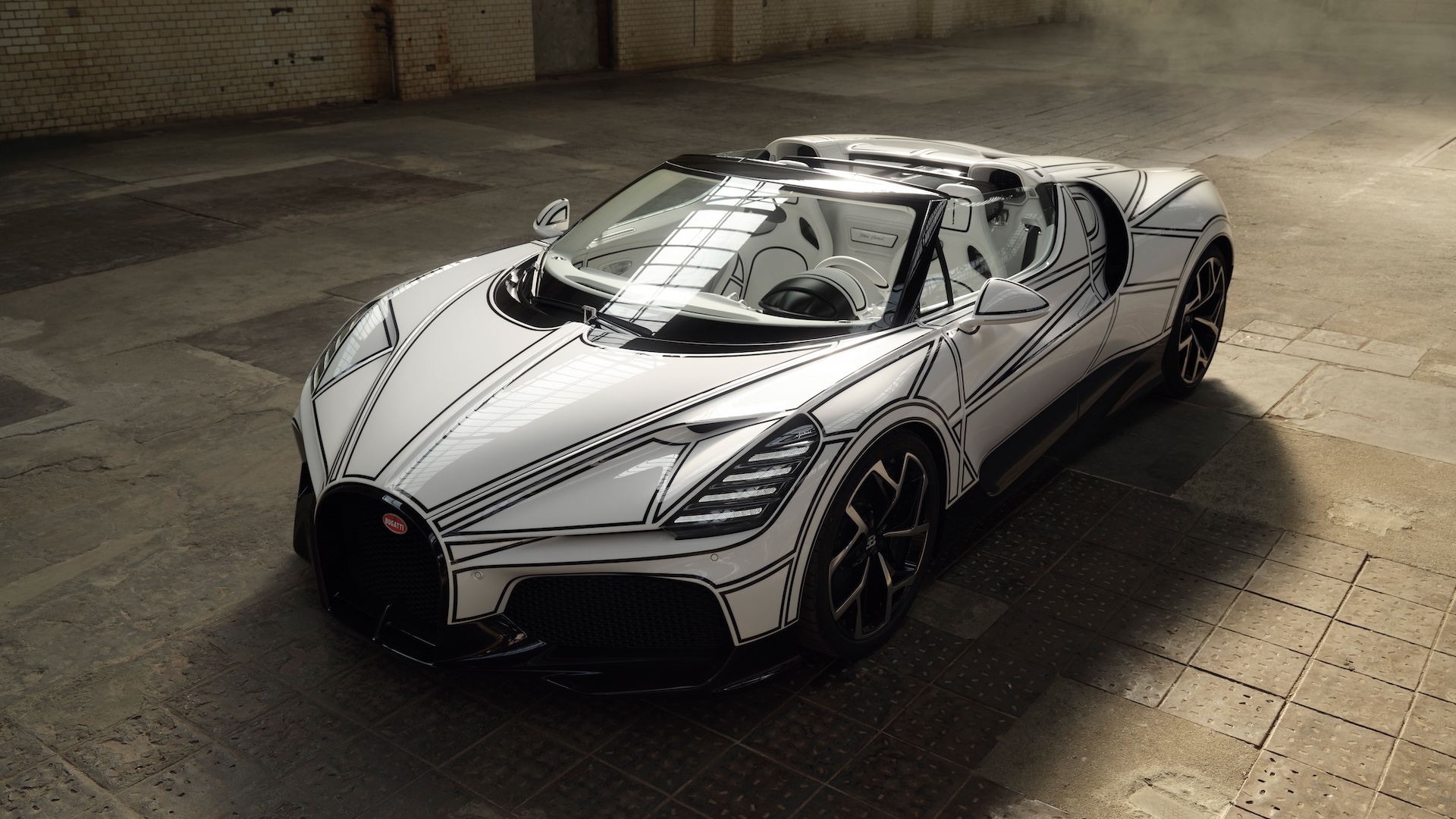
There are limited-production hypercars, there are one-offs, and then there are Bugattis that are bound to remain milestones and icons for decades to come. The Bugatti W16 Mistral Blanc Éternel belongs in that final category.
Created through Bugatti’s Sur Mesure bespoke division, the Blanc Éternel is a unique commission that celebrates the closing chapter of one of the greatest engines ever fitted to a production car: Bugatti’s legendary 8.0-litre quad-turbocharged W16. This isn’t a performance upgrade. It doesn’t need one.
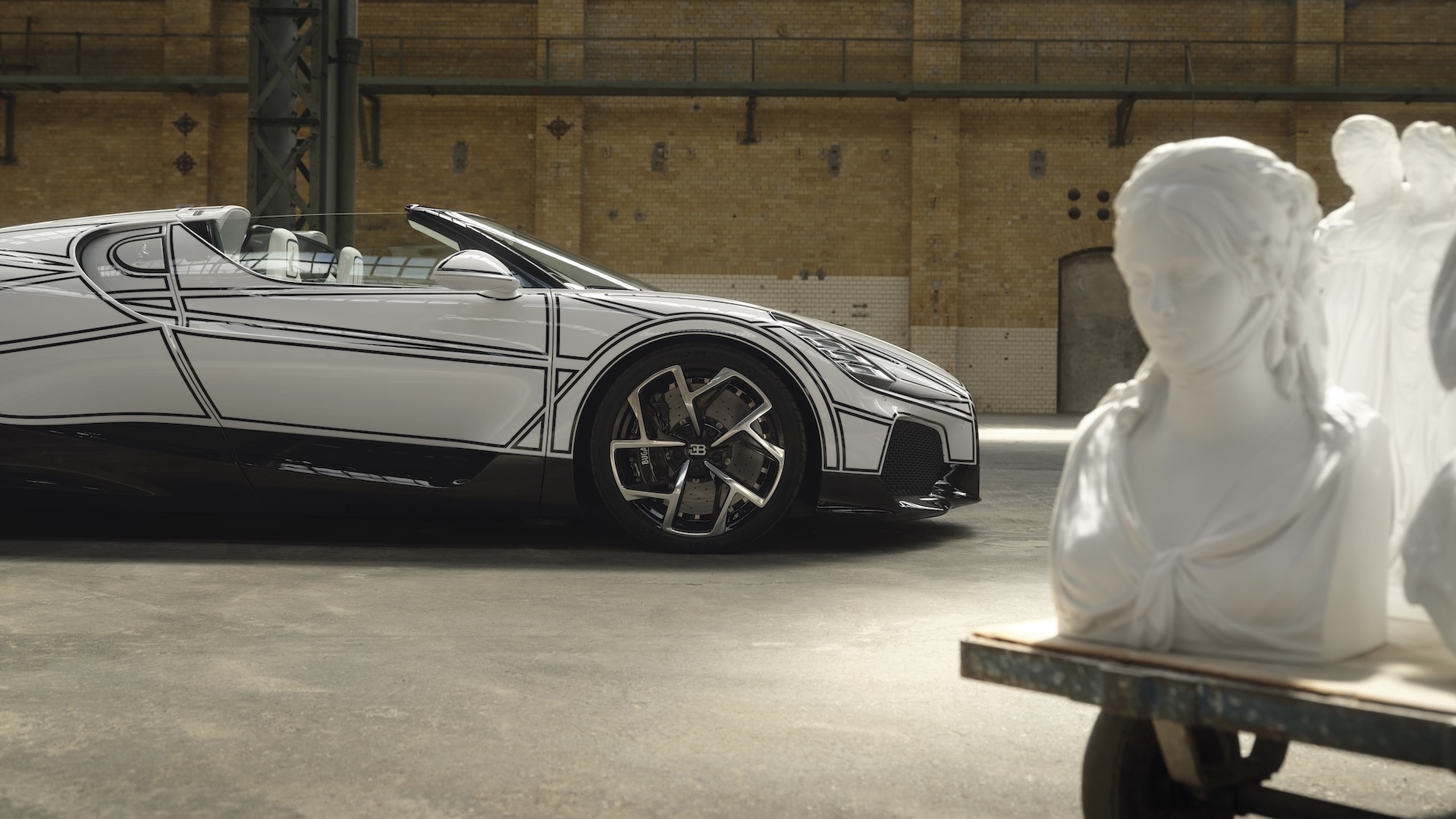
Instead, the Blanc Éternel transforms the already spectacular W16 Mistral into a showcase of design, hand-painted artistry, and genuine porcelain detailing created in collaboration with Königliche Porzellan-Manufaktur Berlin (KPM), one of Europe’s oldest porcelain manufacturers, founded in 1763.
A Tribute To The Legendary Veyron L’Or Blanc
If the idea of porcelain on a Bugatti sounds familiar, you’re well-versed with automotive lore. That’s because this story began 15 years ago. Back in 2011, Bugatti unveiled the Veyron Grand Sport L’Or Blanc, one of the earliest examples of what would eventually become today’s Sur Mesure customisation programme.
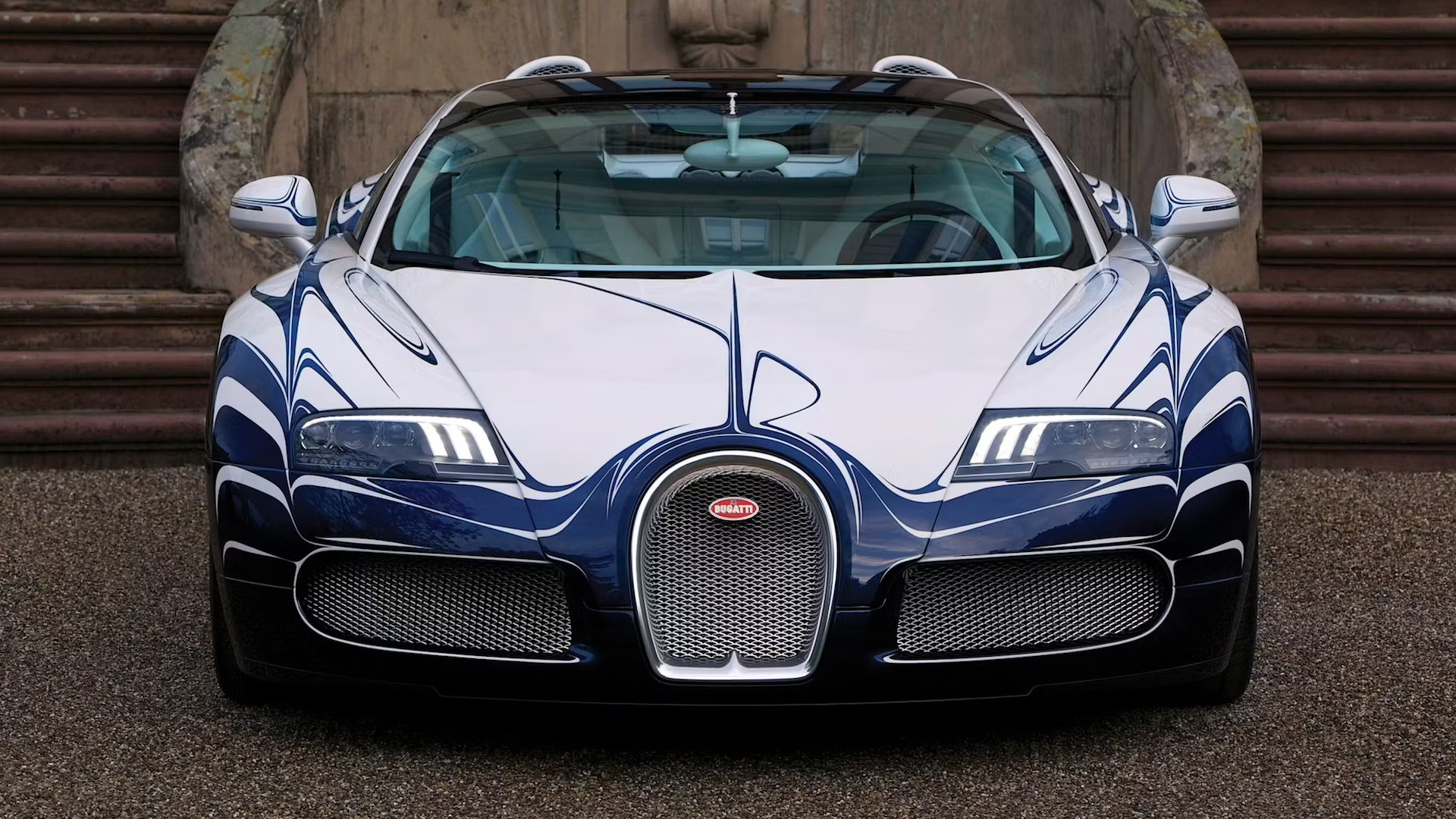
That car partnered with KPM Berlin to incorporate genuine porcelain into a production hypercar. This idea that sounded outrageous at the time, yet somehow worked beautifully. Its flowing blue brush strokes, inspired by a porcelain vase designed by renowned Italian designer Enzo Mari, made the Veyron look more like an art installation than a machine capable of exceeding 400km/h.
The Blanc Éternel doesn’t attempt to recreate that design but is an evolution of it. Rather than hand-painted brush strokes, this latest one-off celebrates something hidden beneath every modern Bugatti: the digital architecture used to create its bodywork. It’s also a fitting conclusion. The Veyron introduced the W16 era. The Mistral brings it to a close.
Also Read:
– Lamborghini Urus SE Performante Debuts With 800hp Hybrid Powertrain
– New BMW X5 Debuts: A New Chapter For One Of BMW’s Greatest Success Stories
– Six Legendary Lotus Essex Espirits To Be Displayed At Salon Privé 2026
Exterior Design Inspired By Digital Engineering
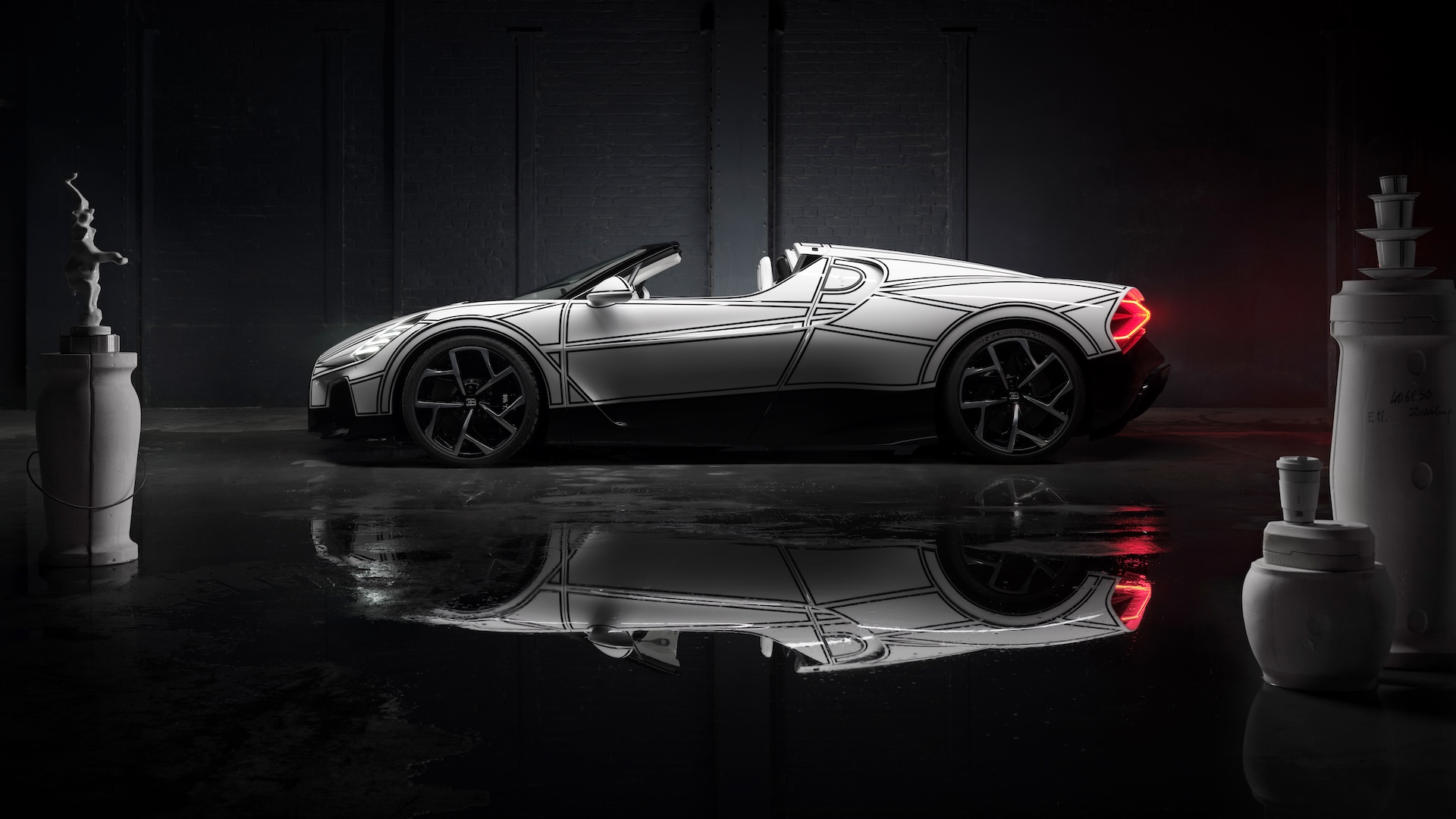
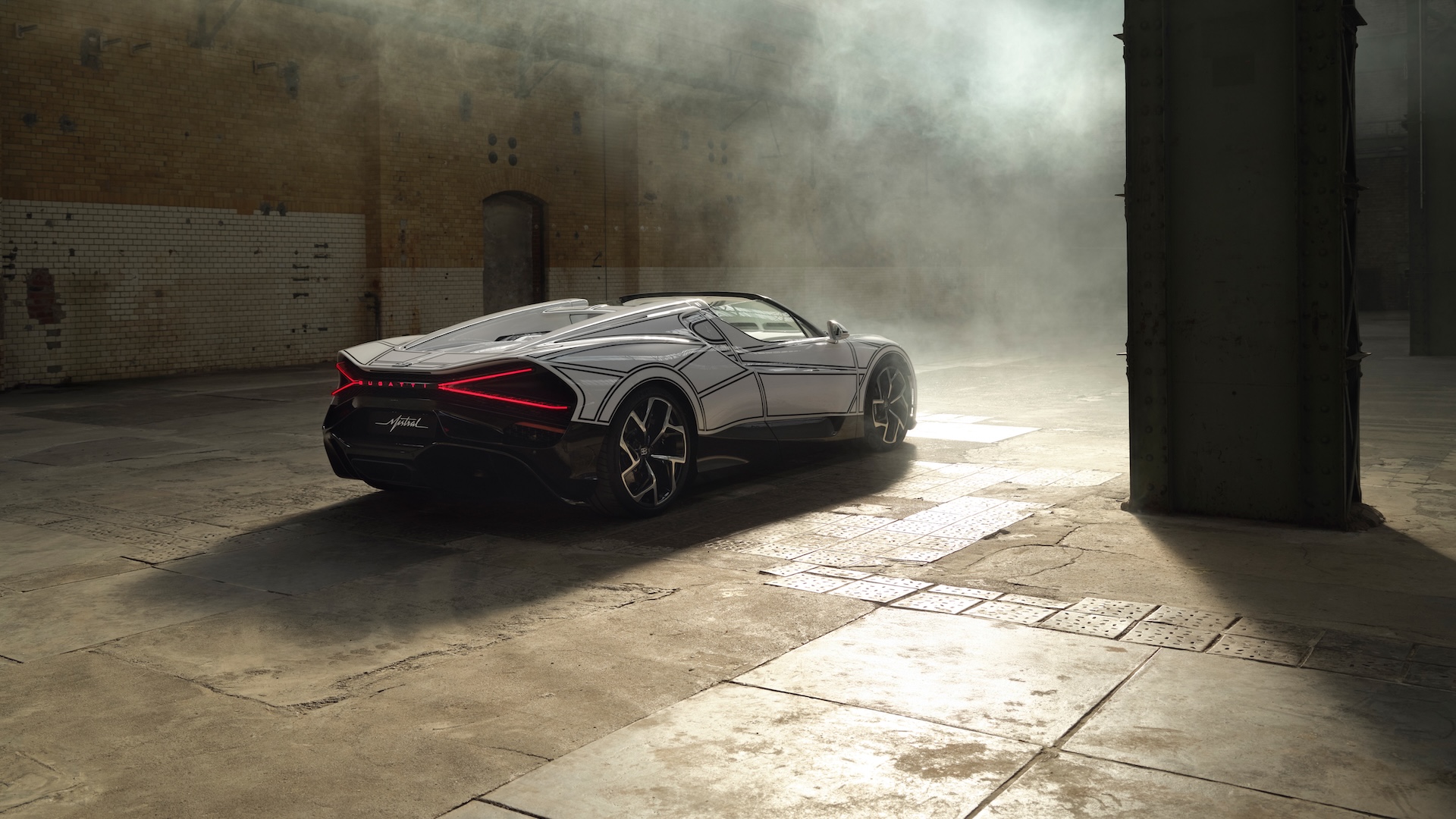
At first glance, the Blanc Éternel almost resembles a technical drawing that somehow escaped the designer’s computer screen. The roadster wears a pure white finish covered in intricate black geometric lines stretching across every panel. Unlike conventional graphics, these lines aren’t random decoration.
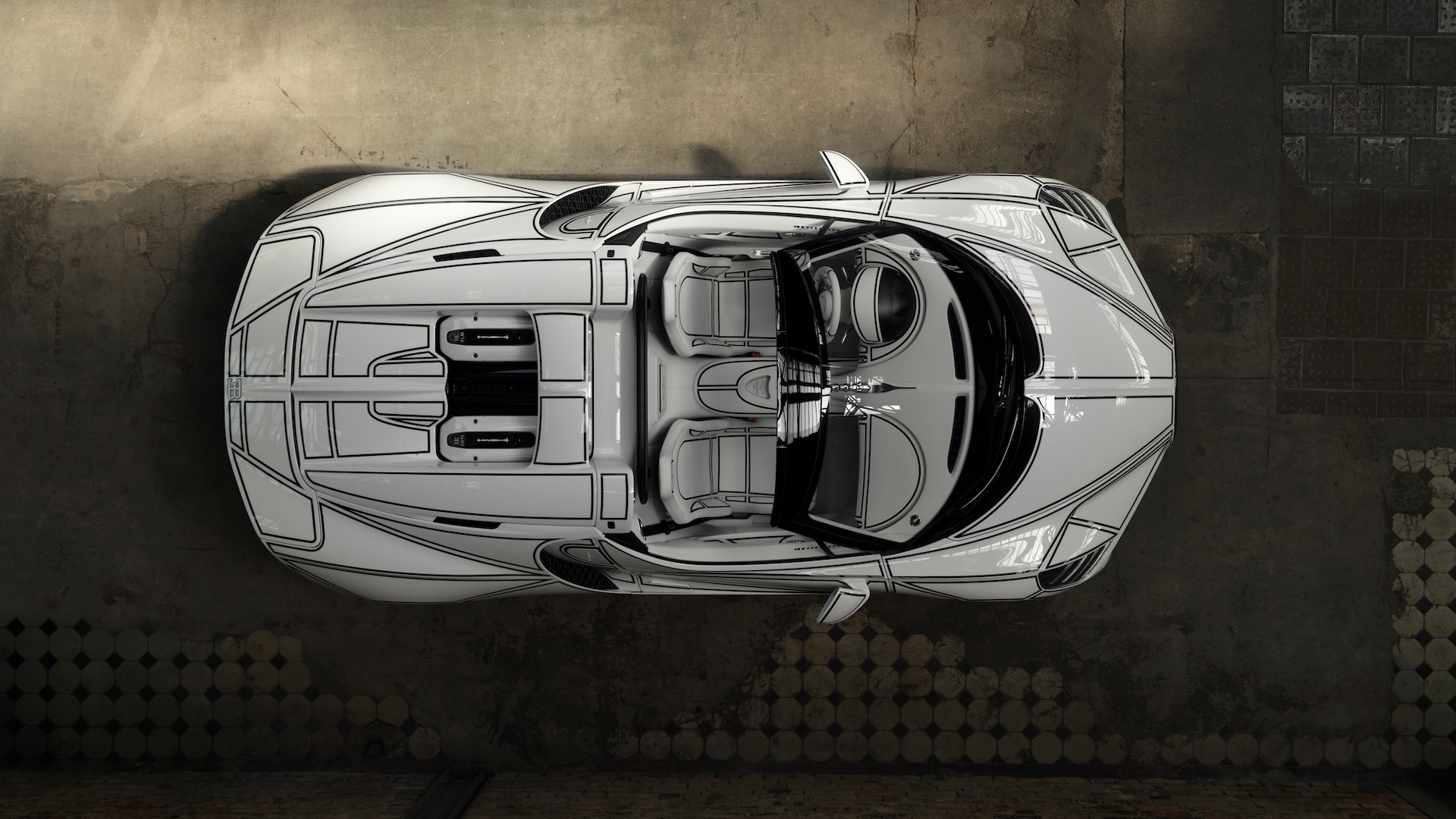
They trace the NURBS (Non-Uniform Rational B-Splines) digital surfaces used to design the W16 Mistral. In modern automotive development, designers no longer rely solely on full-size clay models. Instead, vehicles are sculpted digitally using thousands of interconnected mathematical surfaces that define every curve, crease and contour.
Normally, customers never see this digital framework. Bugatti decided to make it the artwork speak for itself. The result is fascinating. Depending on the viewing angle, the Mistral looks simultaneously skeletal, architectural and beautifully sculptural, as though its digital DNA has been painted permanently onto the finished car.
Every Line Was Painted Entirely By Hand
Ironically, despite celebrating digital design, almost nothing about creating Blanc Éternel was automated. Once the body received its white finish, Bugatti’s craftspeople individually positioned masking tape by hand for every single black line.
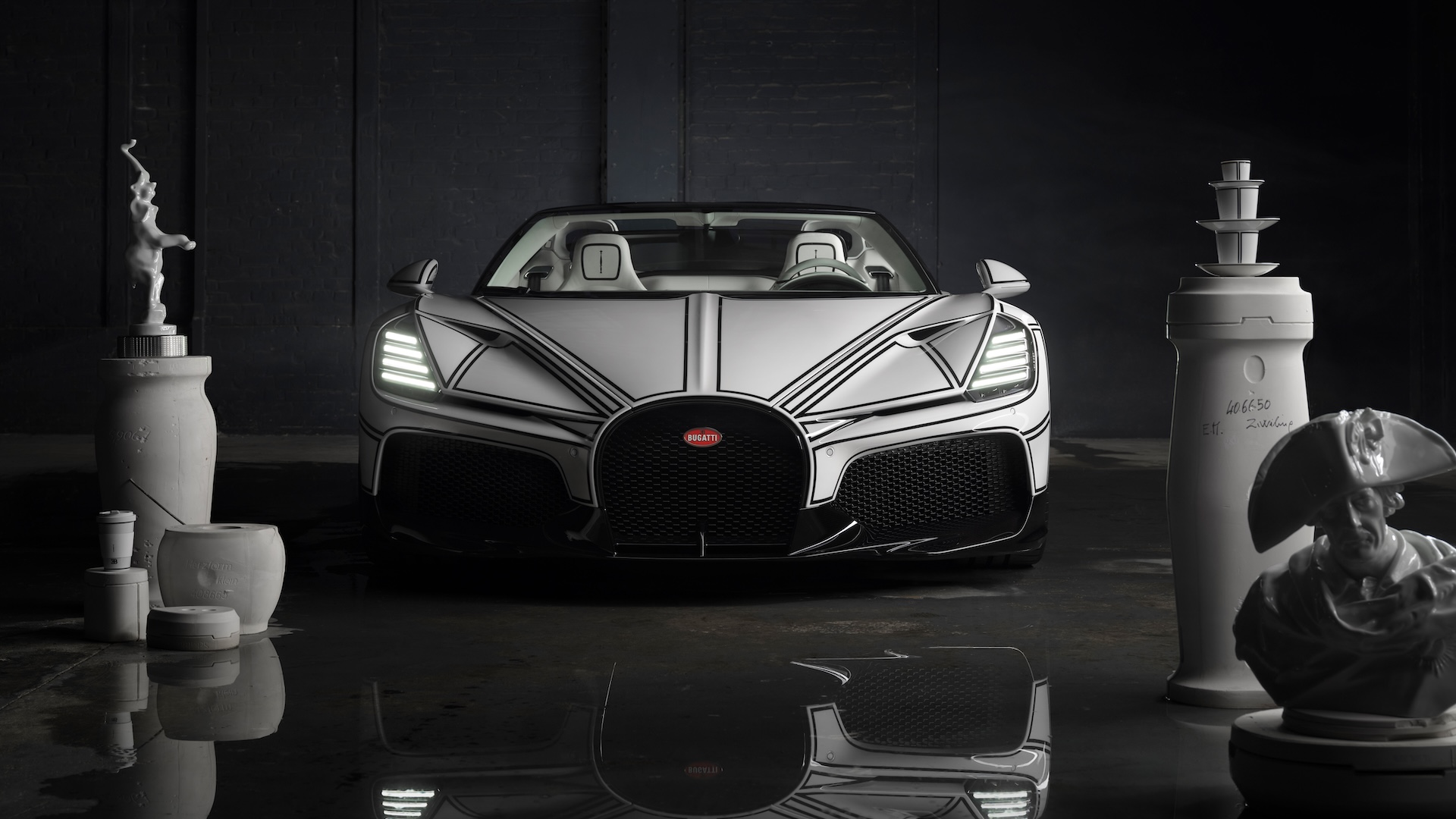
Sections surrounding each tape strip were then carefully masked before the exposed channels were painted black. Only after the paint cured, was every section of masking removed. This painstaking process demanded extraordinary precision because every line had to flow naturally across the Mistral’s complex bodywork without interruption.
Genuine Porcelain Inside And Out
The artwork doesn’t stop at the paint. True to its partnership with KPM Berlin, Blanc Éternel incorporates genuine porcelain throughout the car.
Exterior porcelain details include:
- EB emblem
- Fuel filler cap
- Oil cap
- Twin engine-cover inlays featuring KPM Berlin’s royal scepter logo
Producing these parts is unsurprisingly complicated. Unlike metals or plastics, porcelain shrinks by around 17% during firing inside the kiln. That means every component must be designed oversized before manufacturing, so it contracts into the exact final dimensions after curing. Get the calculations wrong, and a multimillion-dollar hypercar suddenly has a fuel cap that doesn’t fit. Fortunately, KPM has had over 260 years to perfect the process.
Does The Interior Continue The Porcelain Theme?
Open the butterfly doors and the digital artwork continues seamlessly into the interior. White leather upholstery is decorated with the same intricate black line pattern found on the exterior. Creating this required Bugatti to develop an entirely new production technique.
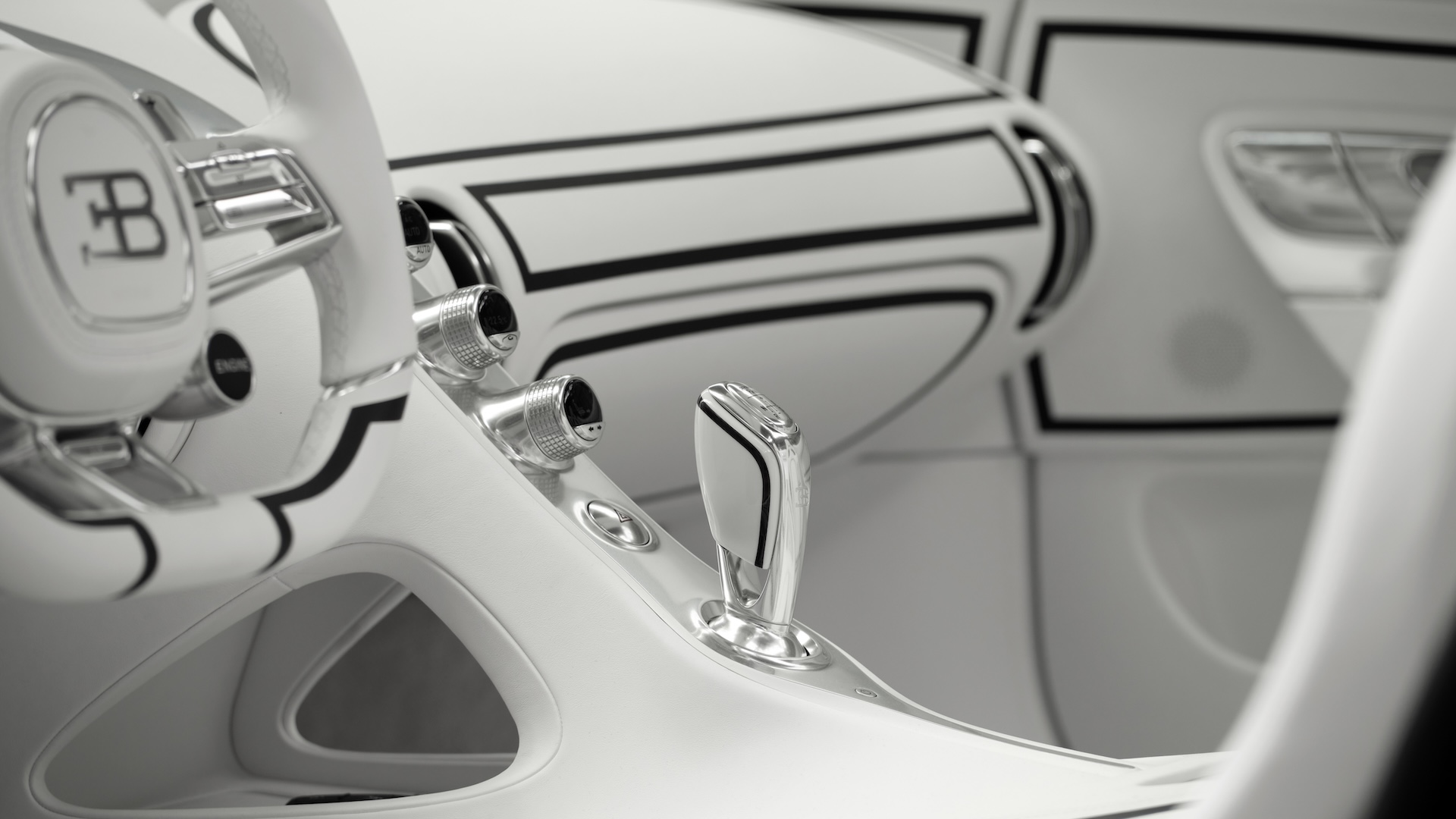
Each leather panel was individually masked before black paint was carefully applied directly onto the leather itself, ensuring sharp edges while maintaining long-term durability. The result feels less like automotive trim and more like wearable haute couture.
Porcelain appears throughout the cabin as well, including:
- Speaker grille
- Gear selector shells
- Window switches
- Centre armrest inlay
- Kneepad inserts
These aren’t simply decorative accents hidden behind glass. Drivers physically interact with genuine porcelain every time they shift gears, open a window, or rest an elbow on the centre console. It’s an unusual material choice, but then again, most manufacturers aren’t building 1,578hp open-top hypercars either.
The Last Road-Going W16 Is Special
Mechanically, Blanc Éternel remains identical to every other W16 Mistral. Power comes from Bugatti’s iconic 8.0-litre quad-turbocharged W16 engine:
- Power: 1,578hp
- Transmission: 7-speed dual-clutch automatic
- 0-100km/h: Approximately 2.5 seconds
- Top speed: 439km/h
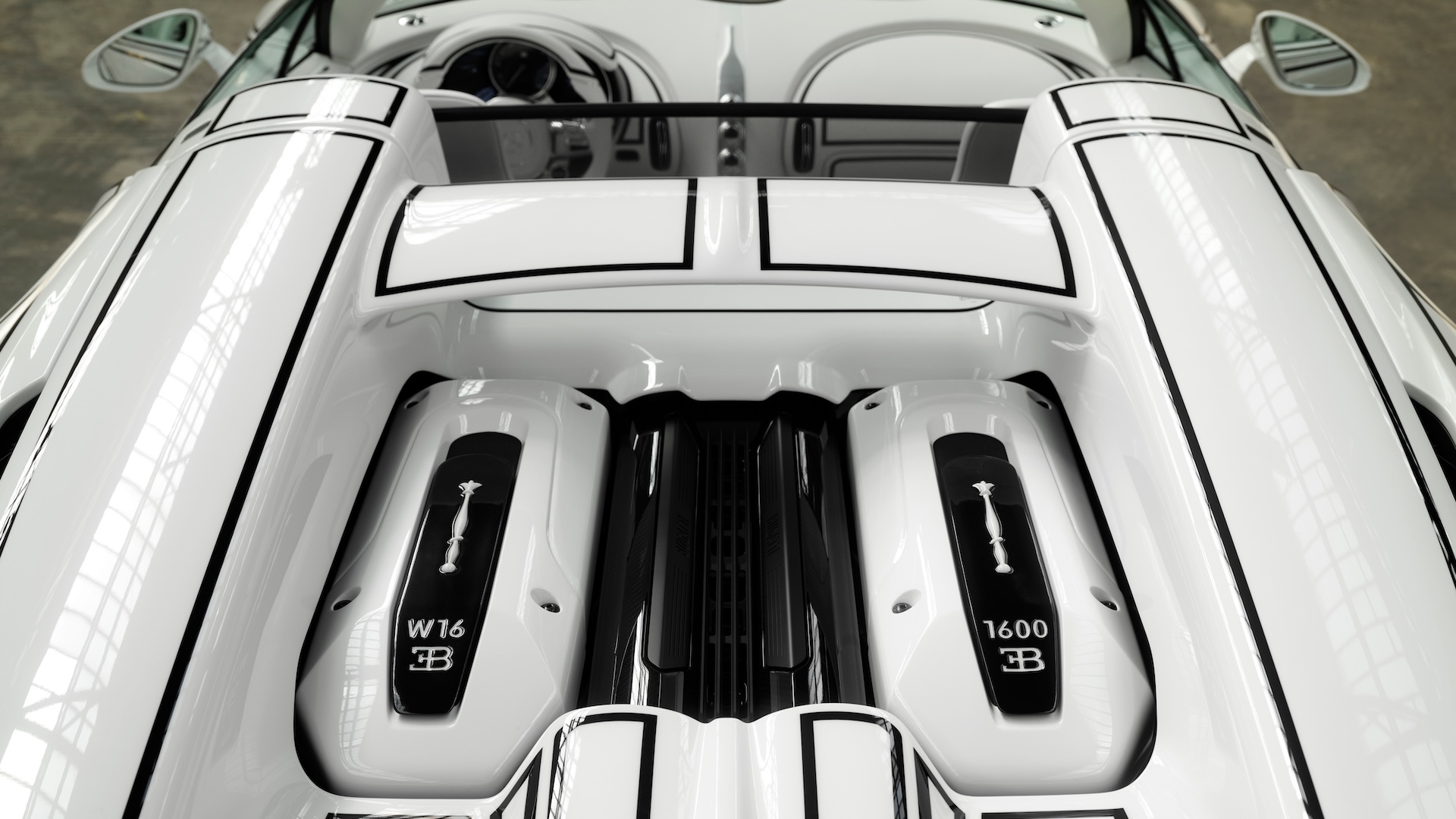
The W16 Mistral is the final road-going Bugatti ever to use the marque’s legendary 16-cylinder engine before the hybrid V16-powered Tourbillon takes over. In many ways, Blanc Éternel acts as the artistic farewell this extraordinary powertrain deserves. This is the latest one-off W16 Bugatti Mistral in a series that includes:
– The Poetic W16 Mistral ‘Le Retour du Jeune Prince’
– The Inspired By A Dragonfly W16 Mistral ‘Fly Bug’
– The Lavender & Floral Themed Bugatti W16 Mistral ‘Caroline’
Limited Blanc Éternel Porcelain Collection Also Announced
To mark the partnership, Bugatti and KPM Berlin have also created a commemorative porcelain collection inspired by Blanc Éternel.
The range includes:
- KPM To-Drive Cup
- KPM Aviator Cup (available in two sizes)
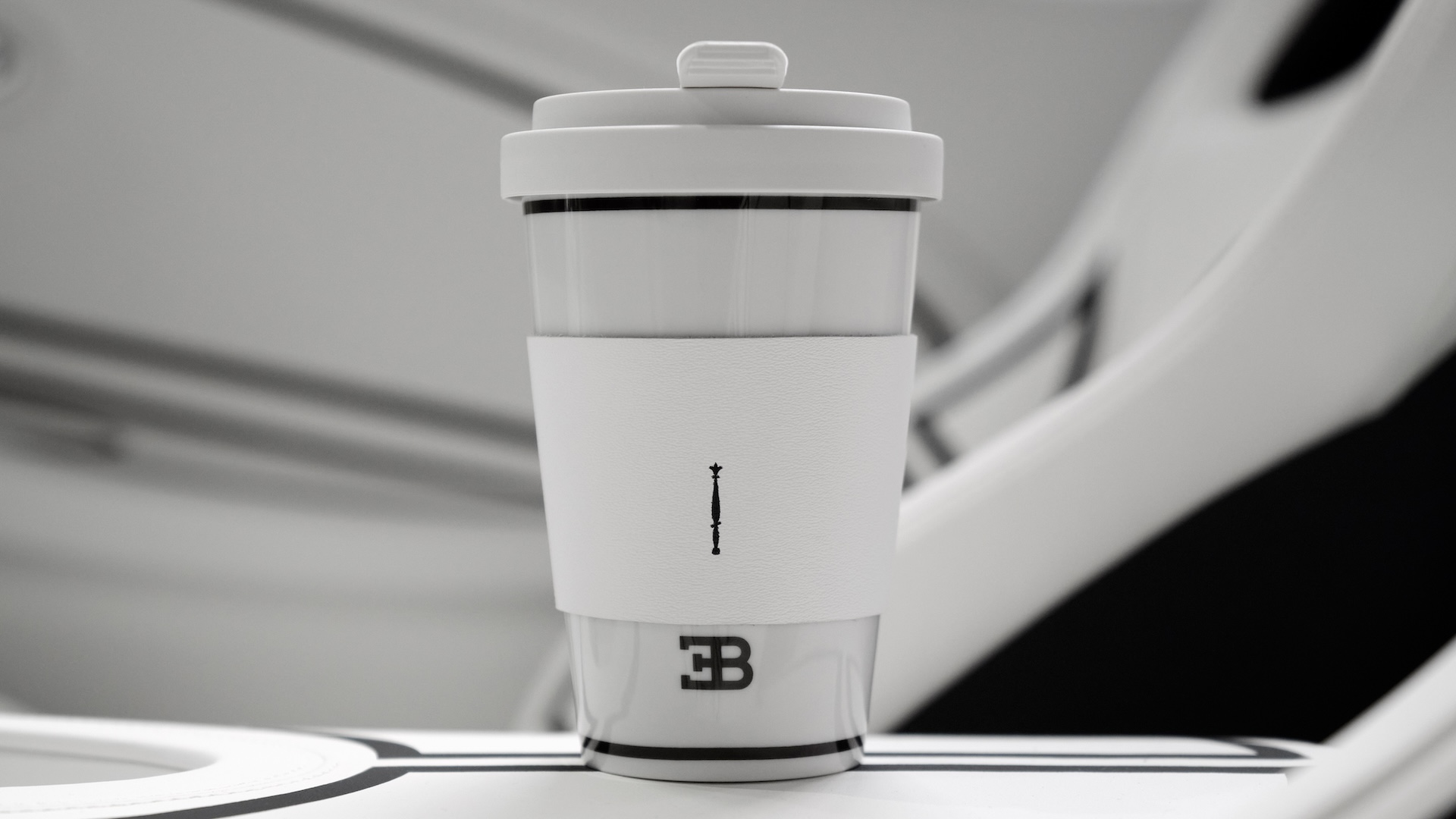
Production is limited to 1,000 handmade pieces, allowing collectors to own a small part of this collaboration without needing space for a multi-million-dollar Bugatti. Admittedly, the cups won’t reach 439km/h. But they do carry exactly the same philosophy of precision artisanship.
Bugatti W16 Mistral Blanc Éternel: Closing The Book On An Automotive Legend
The Blanc Éternel isn’t about extracting more speed from an already outrageous machine. It is about preserving a moment in Bugatti’s history. It combines digital design, centuries-old porcelain artistry, and one of the most extraordinary production engines ever created into a single commission that will almost certainly spend more time in private collections than on public roads.
As farewell acts go, the W16 couldn’t have asked for a more elegant curtain call. After all, when you’ve already conquered the performance world, perhaps the only thing left is to become art.