

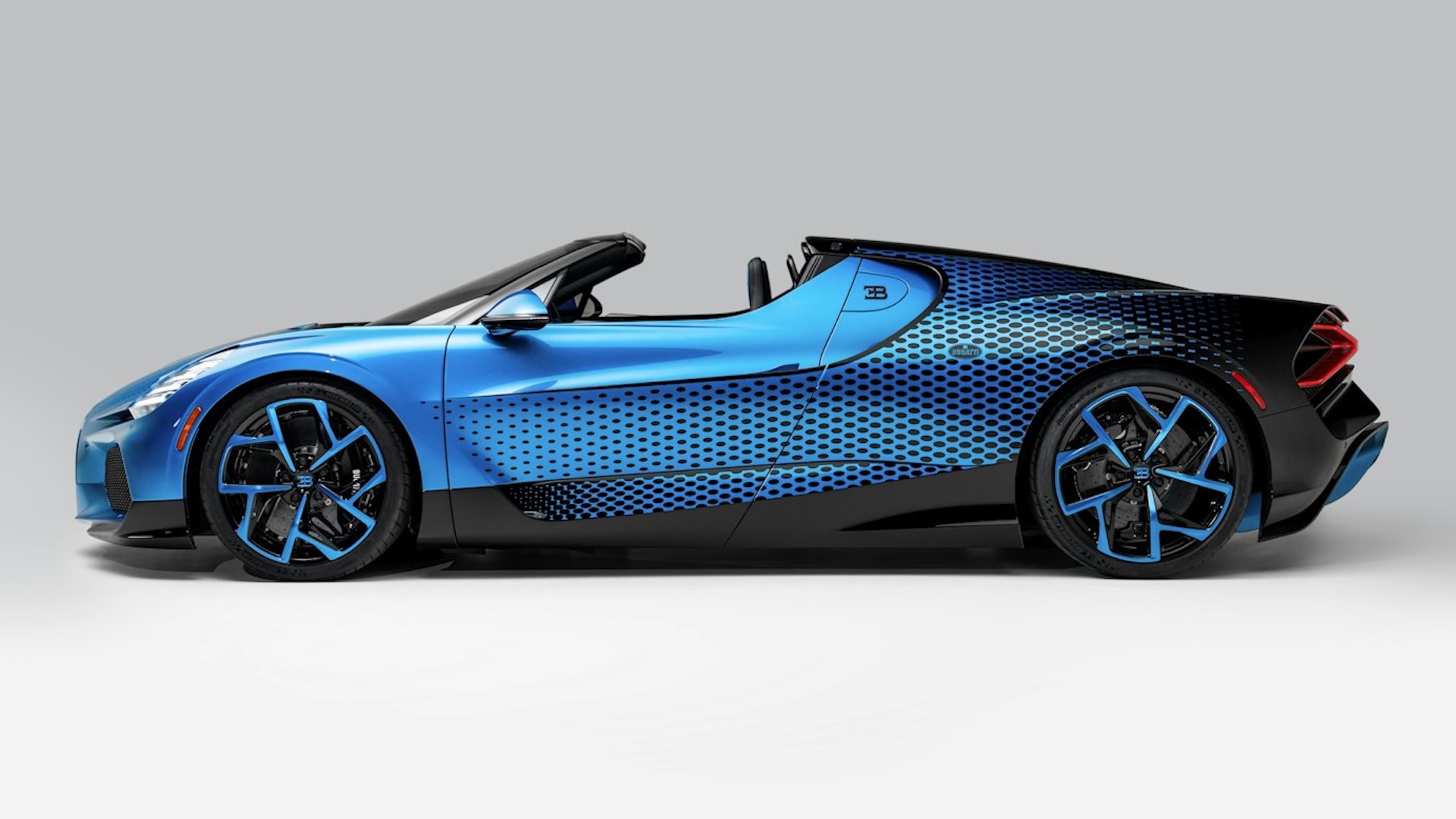
What Is The Bugatti W16 Mistral ‘Fly Bug’?
The Bugatti W16 Mistral ‘Fly Bug’ is a one-off Sur Mesure commission, created for a long-time Bugatti collector with a very specific obsession: insects. This is the fourth car in that collection, following the Veyron ‘Hellbug’, Chiron ‘Hellbee’, and Divo ‘Lady Bug’. This is coachbuilding at its peak. Every surface, every material, every graphic exists because one customer wanted it that way.
What’s The Story Behind The ‘Fly Bug’ Theme?
The inspiration here is the dragonfly. Not just visually, but philosophically. Lightness, precision, and that hypnotic shimmer when sunlight hits its wings. The project began as a direct collaboration between the owner and Frank Heyl, the director of design at Bugatti Rimac.

From there, Bugatti’s CMF (Color, Materials, Finish) team in Berlin translated that idea into something you can actually drive. Or more realistically, admire in a climate-controlled garage.
Exterior Design: Dragonfly Blue And That Insane Pattern Work
The headline act is the paint. The colour is called Dragonfly Blue, and it shifts between blue and turquoise depending on light and viewing angle. Then comes the ellipse pattern. It starts subtly and becomes denser toward the rear, almost dissolving into the air intakes. This is an evolution of the geometric madness seen on the Divo ‘Lady Bug’, which had around 1,600 individual shapes.
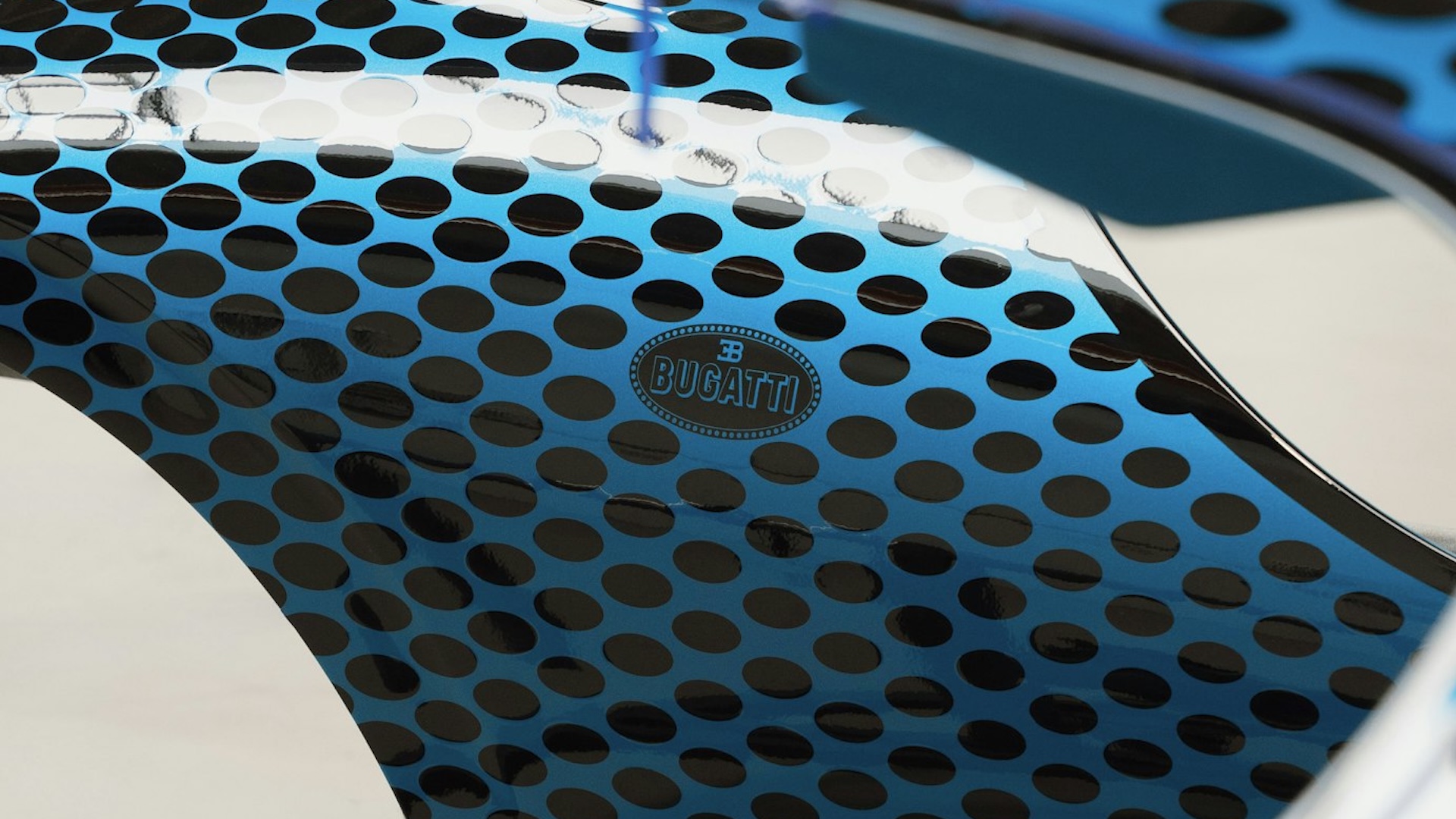
And here’s the real flex: the Bugatti Macaron badge is integrated into that pattern. For the first time ever, that oval logo has been placed perfectly within a flowing graphic. That’s the stuff of wet dreams for designers and pattern enthusiasts.
What’s The Interior Of The Bugatti Fly Bug Like?
Inside, Bugatti took things to the next level. A completely new material was developed: leather layered over Alcantara in a geometric layout, finished using a technique that gives it a three-dimensional effect. The ellipse motif continues across the door panels and even the armrests.
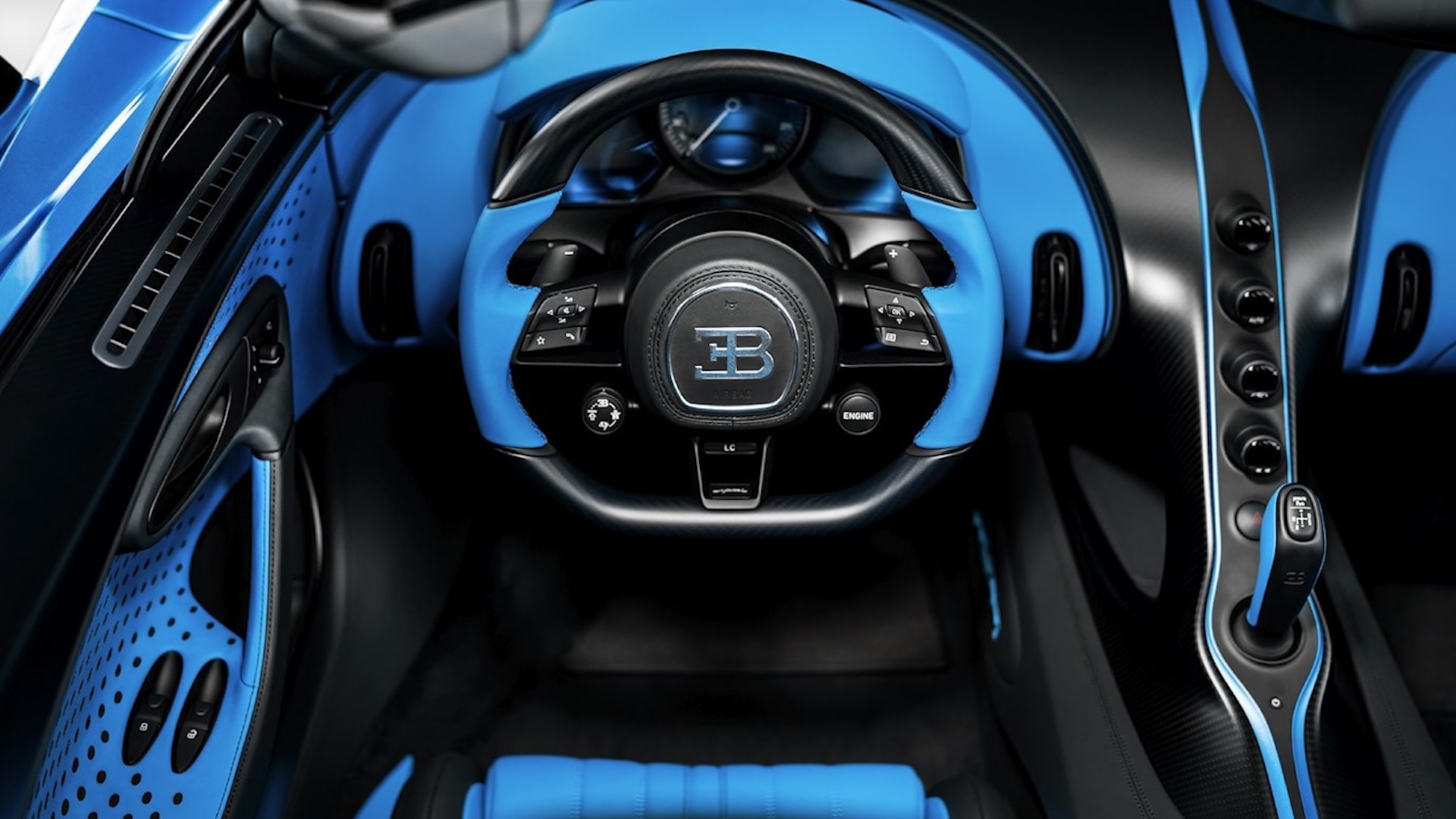
That last bit matters. This is the first time Bugatti has extended a graphic across both surfaces seamlessly. Sounds simple, but it isn’t. Especially when everything is curved, stitched, and expected to be flawless.
At the centre of the cabin sits a small but significant detail: the “Dancing Elephant” sculpture in the gear selector. It’s a tribute to Rembrandt Bugatti, whose animal sculptures are part of Bugatti’s DNA. It also ties neatly into the owner’s nature-inspired collection. Subtle. Expensive. Very Bugatti.
Is The Bugatti Fly Bug Powered By The Same W16 Engine?
Under all that artistry sits the same mechanical insanity that defines the Mistral.
- 8.0-litre quad-turbocharged W16
- 1,578hp & 1,600Nm
- 7-speed dual-clutch transmission
- All-wheel drive
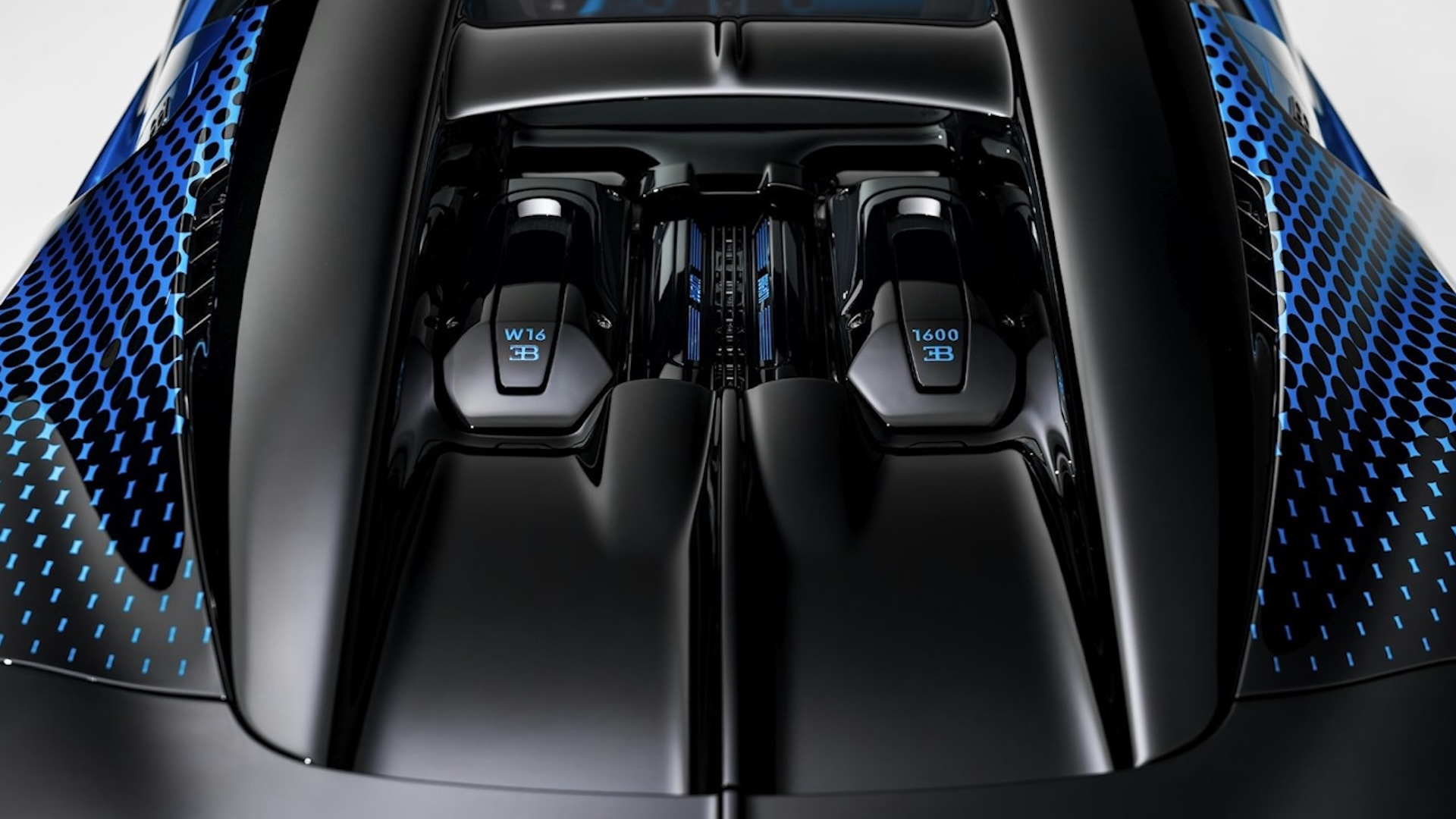
The performance figures are still ridiculous. It clocks the 0-100km/h run in 2.4 seconds and will go on to a top speed of 453 km/h. This is still one of the fastest open-top cars ever built. It just happens to look like it belongs in an art gallery.
Why This Car Matters & Why It is Special
The ‘Fly Bug’ isn’t about speed. Bugatti cracked that code years ago. This is about how far personalisation can go when money, engineering, and obsession come together. It’s also one of the final celebrations of the W16 era before Bugatti moves to the hybrid V16 in the Bugatti Tourbillon.
So think of this as the closing chapter of one of the wildest engines ever made. Except instead of going out quietly, it leaves behind something that looks like it could take flight.