


Why visit a watch manufacturer?
Watching an object take shape changes how you see the finished product. It challenges what you think you know and often deepens your respect. My recent visit to Le Sentier showed me how true that is of Bvlgari watchmaking.
The effect is especially strong in luxury. The price is obvious, but the craft, engineering and human effort behind each piece are not always so clear. I have always admired a beautifully designed watch. Yet admiring a watch and understanding what goes into it are two very different things.
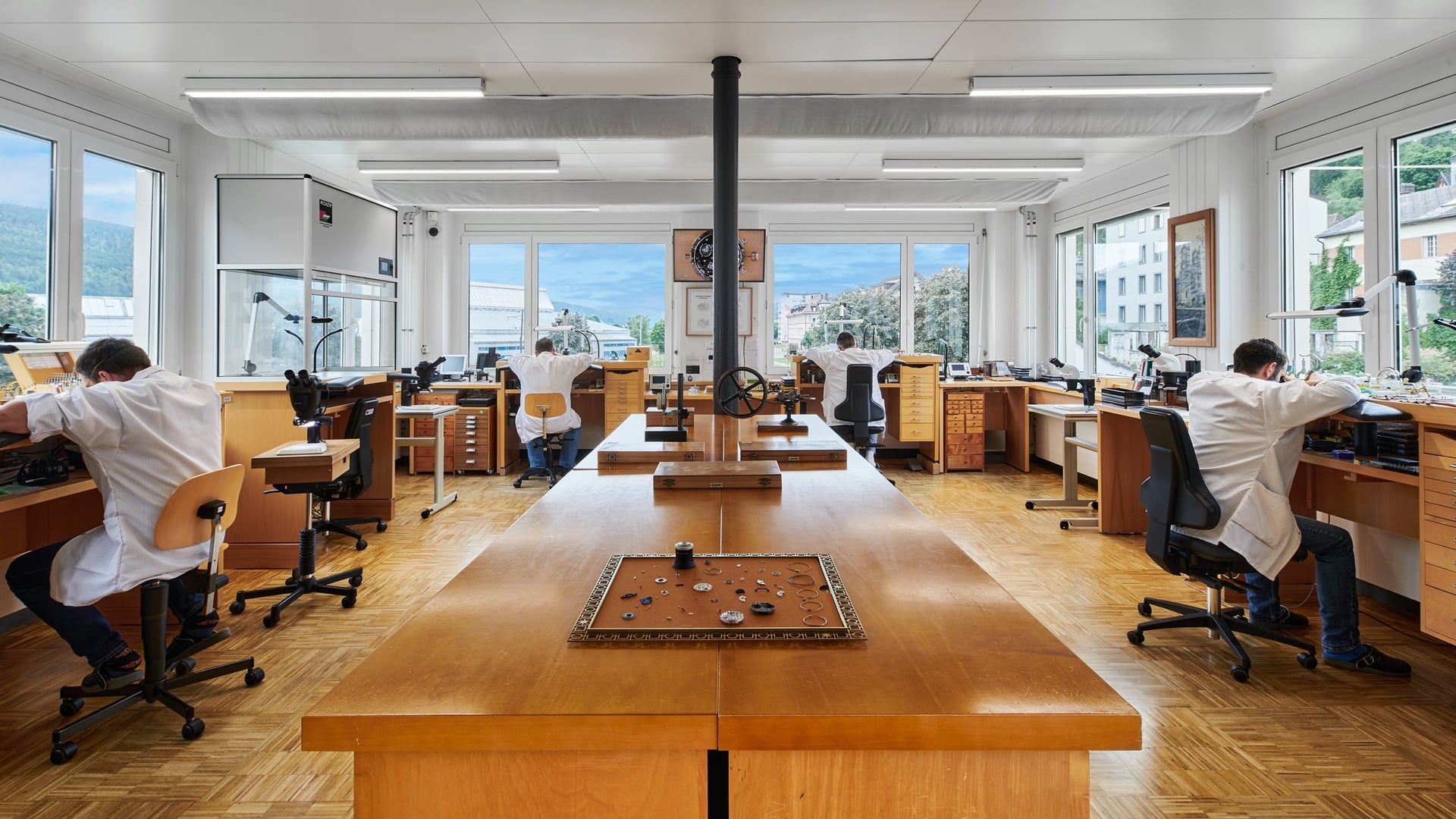
At the manufacture, I watched machines cut and finish parts. I saw watchmakers build Octo Finissimo movements and observed the care that goes into decorating them. I also heard an Octo Roma chiming watch in action. Those moments changed how I see what Bvlgari does.
Most people link Bvlgari with Italian luxury, jewellery and bold design. But its Swiss watchmaking deserves just as much attention.

Where does Bvlgari watchmaking take place?
Bvlgari makes its watches entirely in Switzerland. Le Sentier sits at the heart of its movement work. The village lies in the Vallée de Joux, a region with a long watchmaking history. Here, the brand develops and makes many of its own movements, including complicated and ultra-thin calibres.
The brand organises its Swiss operation around three main sites. Le Sentier focuses on movements and complications. Saignelégier works on exterior parts such as cases, dials and metal bracelets. Neuchâtel, meanwhile, is a centre for watch development, final assembly and quality control.
This matters because Bvlgari does not simply buy finished movements and fit them into handsome cases. It has invested in the machines, people, and skills specialist calibres require. Its 2000 purchase of the Gérald Genta and Daniel Roth firms helped speed up that effort.
That does not mean Bvlgari makes every part itself. Outside suppliers provide items such as mainsprings and synthetic ruby bearings. Still, Bvlgari’s own workshops handle much of the engineering and production. At Le Sentier, I began to see what that means in practice.
What happens before watch assembly starts?
Long before a watchmaker starts assembly, a great deal of work has taken place. Machines make and finish parts. Watching them was one of the most absorbing moments of my visit.
First, the CNC machines stood out. A movement relies on parts with intricate shapes and very tight tolerances. For example, take the mainplate, the base that supports much of the mechanism. Its holes, recesses and mounting points must sit precisely. Only then can wheels, pivots and bridges work together.
The cutting and polishing machines taught me something else. In fact, shaping a part is only one step in its journey. Each surface then needs preparing and finishing. Every dimension must stay accurate, and each part must be ready for the next stage.
The link between these steps caught my interest. We tend to picture Swiss watchmaking as one person at a bench, studying tiny parts through a loupe. That picture is accurate, but incomplete. Behind that watchmaker stands an industrial network of engineers, machinists, technicians, specialist tools and years of know-how. Bvlgari watchmaking depends on all of it.
The machines bring precision and repeatability. The people bring judgement, experience and the skilled hands to finish, assemble and regulate the movement. Seeing both worlds work side by side was impressive. It also showed me that making a movement is a challenge long before assembly starts.

Why is the Octo Finissimo so hard to make?
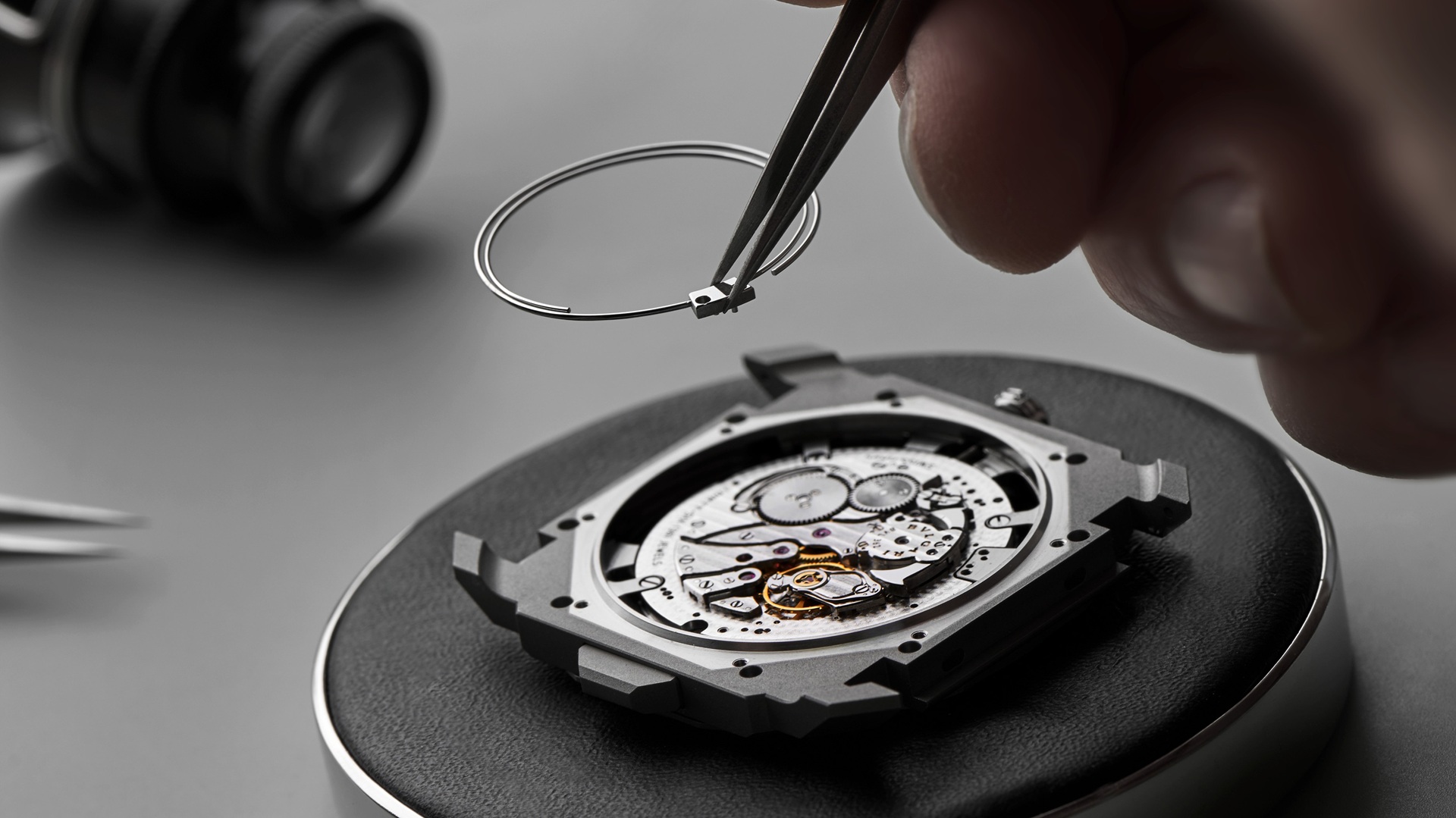
The Octo Finissimo is hard to make because its ultra-thin movements need a rethink of their layout. Watching them come together was another highlight of the visit. The watch itself is easy to recognise: sharply geometric, finely proportioned and very slim. Yet what lies beneath the dial makes that design possible.
The BVL 138 automatic movement, for example, measures just 2.23mm thick. Within that space sit the parts that store energy, transfer it, control its release, and show the time. The BVL 138 is a real technical feat.
Watching the assembly brought that home to me. The focus, patience and skill involved only become clear when you see them up close. Each part has a precise purpose and position, so that a tiny error can affect the whole movement.
Crucially, you cannot make an ultra-thin movement by simply shrinking a normal calibre. That raises several questions. Where can the winding system sit? How can the parts fit without losing strength? How do you keep the movement running reliably in such a tight space?
The finished watch must also keep working on the wrist, through motion and the demands of daily wear. The thinner the movement, the harder it becomes to meet those demands.
That is what impressed me about the watch. Its clean design hides a great deal of complex work. The slimness that looks so effortless on the wrist is anything but.
Also Read: Bvlgari partners with Vianney Halter for a new super cool dual time
Why finish watch parts that owners may never see?
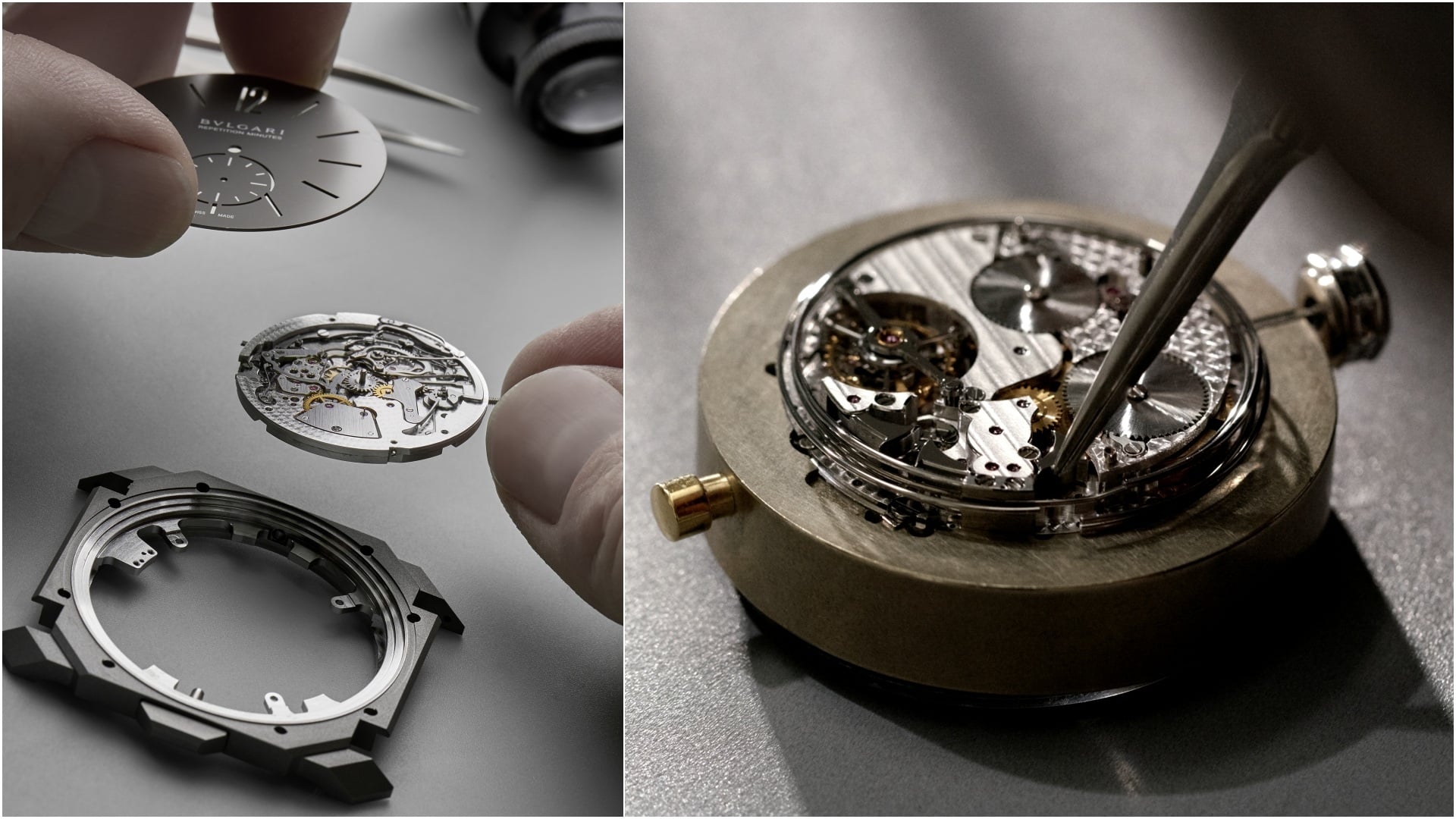
In Bvlgari watchmaking, as I saw at Le Sentier, finishers refine even parts that sit largely out of sight. For me, that commitment to the unseen is central to true luxury. Watching the finishers at work also showed me another side of craft.
Classic finishing techniques include circular graining, Côtes de Genève, satin finishing, polishing and bevelling. Some draw on advanced machines, while others depend heavily on the eye and hand of a skilled finisher. Their purpose goes beyond function, giving the movement a refined look.
What struck me was how much care finishers put into details that many owners will rarely, if ever, see. Some surfaces show through a clear caseback. Others stay largely hidden once the watchmaker assembles the movement.
And yet they do the work. They invest the time. They maintain the standard.
I find that admirable. The world prizes speed and efficiency. These finishers, by contrast, spend real time refining details that timekeeping alone does not need.
How does a chiming watch work?
A chiming watch strikes gongs with tiny hammers to sound the time. If the ultra-thin movements revealed a command of space, the chimes showed me a different side of Bvlgari watchmaking.
A minute repeater sounds the time on demand through a sequence of strikes. More advanced types, such as the grande sonnerie, can also chime on their own as time passes. In each, hammers, gongs, racks, snails, and other tiny parts must work closely together. The timing of each strike matters, and so do the tone and resonance. Bvlgari has its own Atelier de Sonnerie, or chiming workshop, in Le Sentier.
During the visit, we explored the work behind such watches. Then I heard an Octo Roma chiming watch in action.
That moment stayed with me.
There is something captivating about hearing a mechanical watch chime. The sound is not a digital recording or an electronic alert. Instead, it comes from stored energy, which a precise arrangement of parts releases as a sequence of notes.
The chime gave the watch a character beyond its looks. It also reminded me that watchmaking can be an art of sound, not just a visual and mechanical one. The design of the hammers and gongs, the movement and the case all affect that sound. As a result, a pleasing chime takes precision and a grasp of acoustics.
By then, we had watched the making, decoration and assembly of movements. For me, hearing that chime felt like the finale to everything we had seen. What could have been just an impressive sound became an expression of the engineering and human effort behind it.
Which chiming watches does Bvlgari make?
Bvlgari’s chiming pieces include the Octo Roma Carillon Tourbillon and an Octo Grande Sonnerie. The Carillon Tourbillon has three hammers in a platinum case designed to carry its sound. The brand says each Grande Sonnerie has over 1,000 parts and takes a master watchmaker a year to build. Bvlgari also makes the Octo Finissimo Minute Repeater, which brings chiming to its ultra-thin line.
Also Read: Bvlgari unveils a new version of its fantastic perpetual calendar
Who leads the design side of Bvlgari watchmaking?
Bvlgari’s Executive Director of Watch Design, Fabrizio Buonamassa Stigliani, leads the creative side of modern Bvlgari watchmaking. A former car designer at Fiat, he first joined the brand in 2001. He has played a key role in shaping the identity of its watches today.
Two designs bear his mark most clearly: the modern Serpenti Tubogas and the Octo Finissimo. The latter draws on the Octo’s earlier Gérald Genta design heritage but takes its architectural language in a new direction.
What interests me about his approach is the tension between a designer’s ambition and an engineer’s reality. A designer can imagine a watch that is thinner, smaller or more dramatic. Making it work, though, is another matter.
The Octo Finissimo shows what happens when the two sides work closely together. Designers and engineers cannot treat the case and movement as separate objects. Instead, their proportions and layout must evolve as one.
The Octo Finissimo 37mm, which Bvlgari unveiled at Watches and Wonders Geneva 2026, makes the point. Its smaller size called for a new self-winding calibre, the BVF 100, rather than simply shrinking the existing case. The brand also redesigned the watch’s proportions. The BVF 100 has a micro-rotor, measures 2.35mm thick and offers a 72-hour power reserve. It took three years to develop and validate.
After seeing Le Sentier, I have far more respect for the people who turn design ideas into reliable watches. The creative vision may begin on paper, but bringing it to life takes a huge team effort.
Which collections define Bvlgari watchmaking today?
Today, Bvlgari watchmaking spans the Octo, Serpenti, Bvlgari Aluminium, Bvlgari Bvlgari, and Lvcea collections. The Octo Finissimo may be Bvlgari’s strongest statement of modern engineering. But the range goes much further.
In the Octo family, the Finissimo focuses on ultra-thin construction and high complications. The Octo Roma offers a different take on the collection’s geometric design. Its chiming models combine that styling with demanding complications.
The Bvlgari Bvlgari collection, meanwhile, carries the brand name twice around its bezel, echoing inscriptions on ancient Roman coins. It continues the design language the brand set in the 1970s.
No single design language ties these collections together. What links them is the mix of Italian creativity and Swiss watchmaking. My visit showed me the workshops and skills behind that mix.
What lies behind a luxury watch’s price?
In my view, a luxury watch’s price often reflects work you cannot see at a glance. Visiting a manufacturer changes how you think about value.
Luxury watches are expensive, and there is no getting around that. Through a boutique window, it can be hard to see why one watch costs so much more than the next. Both may tell the time, look good and feel well made.
The difference often lies in the years spent developing a movement and the precision machines that make its parts. It lies in the skill of finishing and assembly, and in the time spent on adjustment, inspection and testing. It also lies in a willingness to solve hard technical problems when an easier route exists.
This does not mean every expensive watch is good value, or that complexity alone justifies any price. However, seeing this work gives context that no photo, spec sheet or boutique display can.
After everything I saw and heard at Le Sentier, I understand far better what Bvlgari watchmaking offers. The value lies not only in the materials, the name on the dial or the outward design. It also lies in the machines, research, engineering, skilled hands and know-how behind the finished watch.
What sets Bvlgari watchmaking apart?
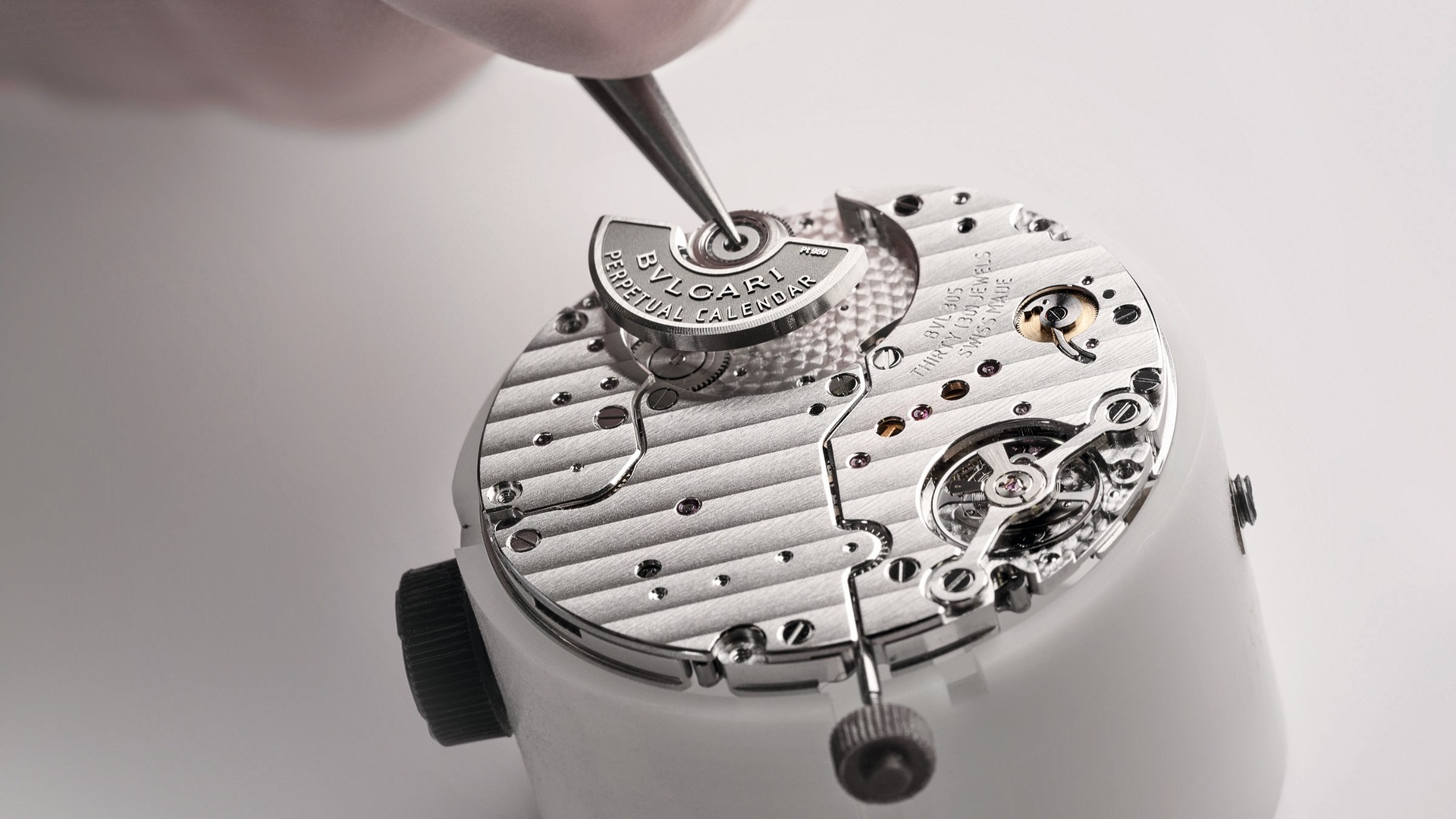
For me, Bvlgari watchmaking stands out for its blend of industrial precision, traditional craft, human patience, and creative ambition. That blend impressed me more than the machines or the complexity of the movements alone.
I walked into the Le Sentier manufacture already fond of Bvlgari’s watches. I walked out with a much deeper respect for the company. The whole visit was an eye-opener. Bvlgari may be Italian in style, but its investment in Swiss technical skill is very real.
There is a difference between admiring a watch and understanding all that goes into it. My visit to Le Sentier helped bridge that gap. Next time I see an Octo Finissimo, I suspect I will think more about what lies beneath its dial.
After visiting a manufacture, you no longer see just the watch. You see the work, ingenuity and passion that went into it.
Also Read: Bvlgari unveils a latest version of its phenomenal award-winning tourbillon