

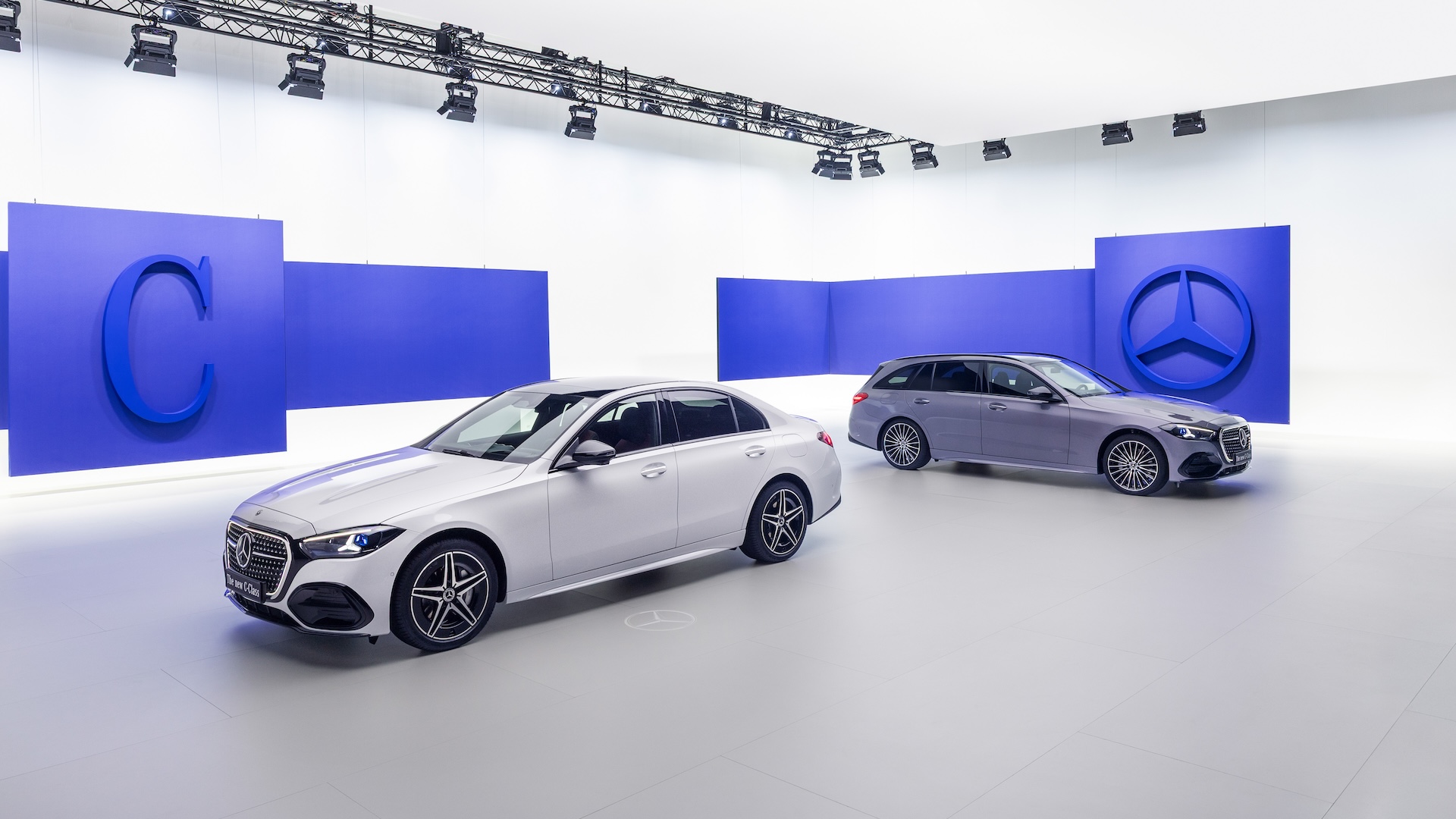
For more than four decades, the Mercedes-Benz C-Class has occupied one of the most demanding positions in the automotive world. It must deliver a convincing taste of S-Class luxury, retain enough athleticism to face the BMW 3 Series and remain practical enough to serve as the family’s only car.
It is also the Mercedes many enthusiasts grew up around. The bloodline began with the W201 190 in 1982, before the C-Class name arrived with the W202 in 1993. Since then, more than 12 million examples have been sold. Some were dependable diesel taxis, others were discreet executive saloons, and a select few left Affalterbach with enough V8 thunder to frighten considerably more exotic machinery.
Now, shortly after unveiling the electric C-Class, Mercedes-Benz has comprehensively updated the combustion-powered W206. The familiar proportions remain, but beneath the restrained facelift sit revised engines, a retuned chassis, new MB.OS and considerably more computing power.
A Familiar Shape With Far More Stars
Mercedes has resisted reshaping the C-Class for the sake of it. The long bonnet, short front overhang and cab-rearward silhouette remain, preserving the traditional rear-wheel-drive proportions and layout.
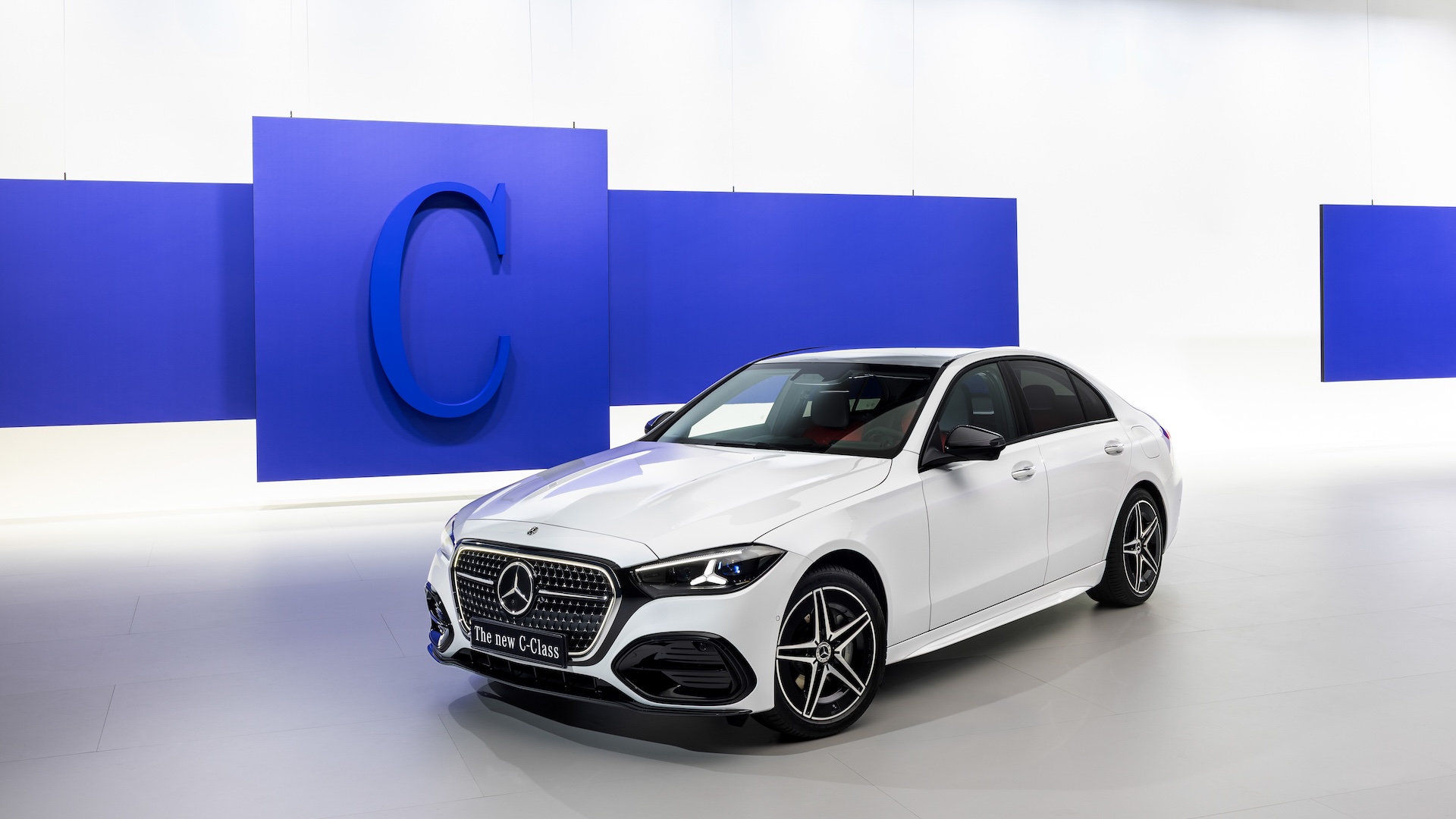
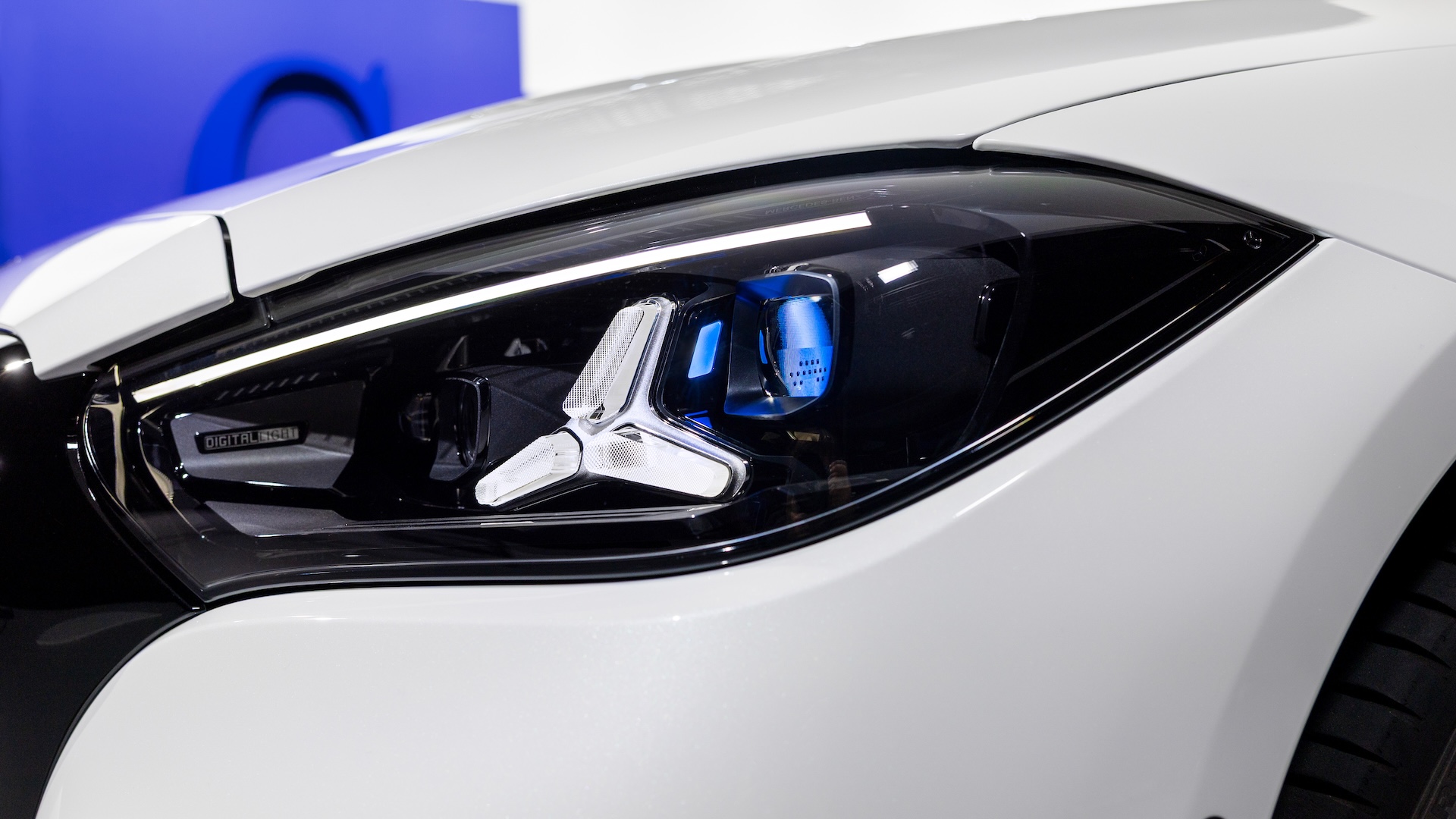
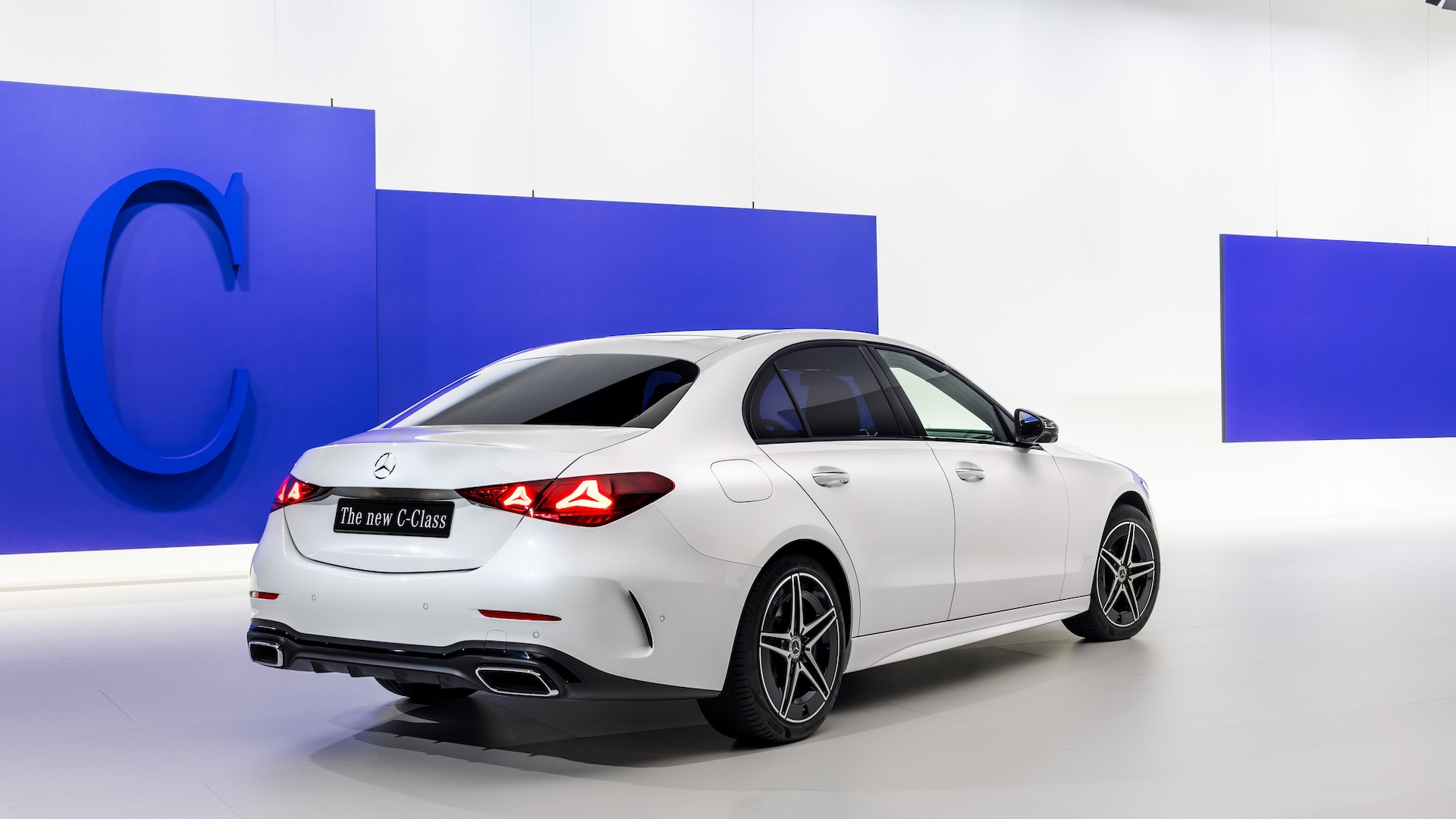
Most of the visual theatre is concentrated at the front. The redesigned radiator grille receives chrome three-pointed stars, an illuminated outer contour and, depending on the market, an illuminated central badge. New headlights carry twin-star daytime-running signatures, while the saloon gains star-shaped elements in its taillights.
There are reshaped bumpers, redesigned 17 to 19-inch wheels and two new finishes: Lavender Silver metallic and Moody Sky Grey metallic. The latter subtly shifts between blue and grey as the light changes, which sounds rather tasteful.
For the first time, buyers can specify an AMG Line Plus package. It adds high-gloss black tailpipe trim, a black spoiler lip, the Night Package, sports seats with red stitching and red seatbelts.
Also Read:
– All-New Mercedes-Benz C-Class EV Revealed With 483hp, 762km Range & Hyperscreen
– Updated 2026 Mercedes-Benz S-Class Debuts With New Lighting, MB.OS Software And More Comfort
– Mercedes-Benz Launches Birth Certificate For Modern Classics Built From 1986 To 2010
The C-Class Cabin Becomes Smarter, But More Usable Too
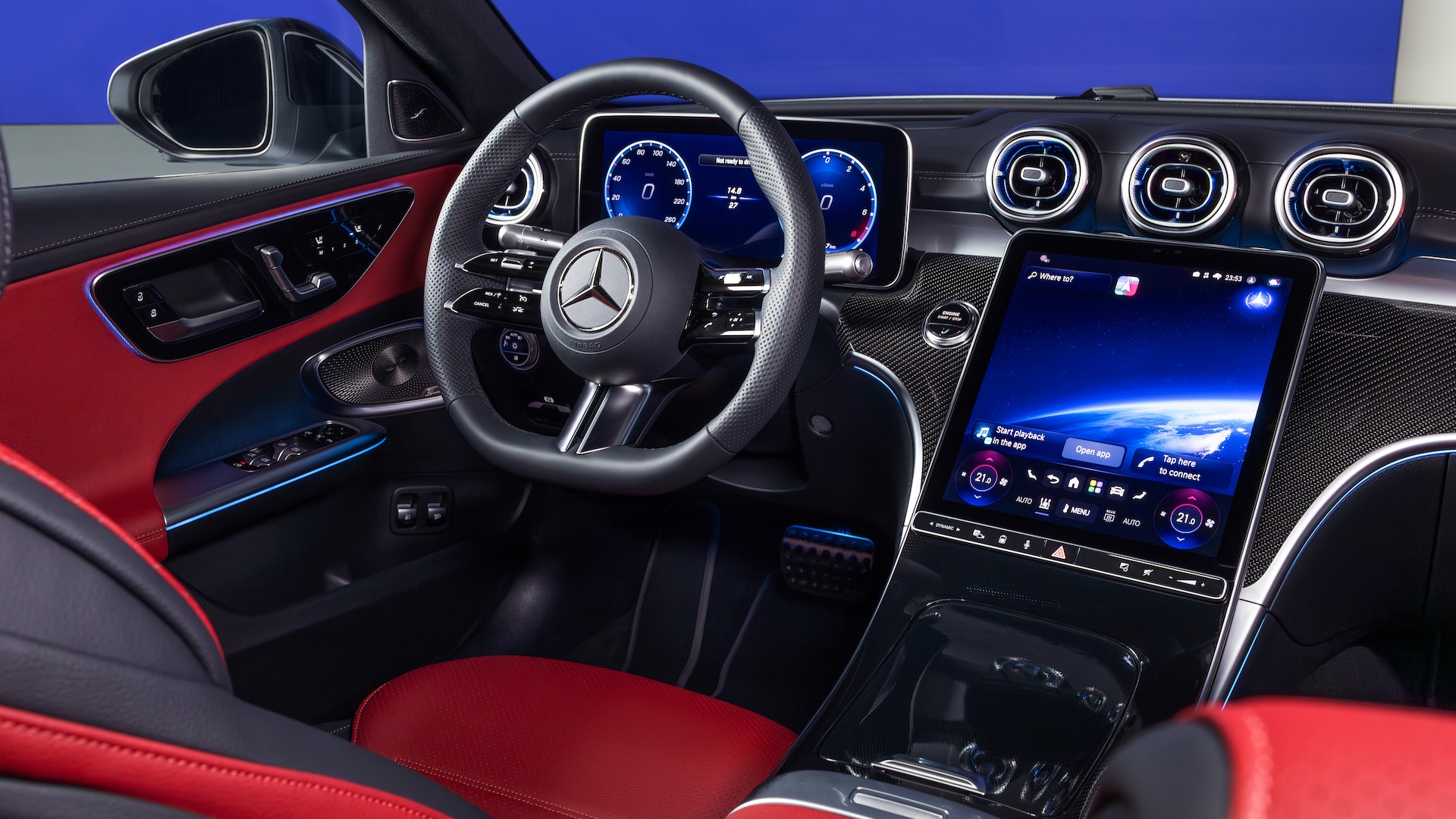
The dashboard architecture remains recognisably W206, centred around a 12.3-inch digital instrument cluster and an 11.9-inch portrait infotainment display. However, the system behind those screens is substantially different.
Fourth-generation MBUX now operates through Mercedes-Benz’s MB.OS architecture, enabling over-the-air software updates and Digital Extras after purchase. Its virtual assistant combines technology from ChatGPT, Microsoft Bing and Google Gemini, allowing it to hold multi-part conversations, remember recent details and answer more complicated questions.
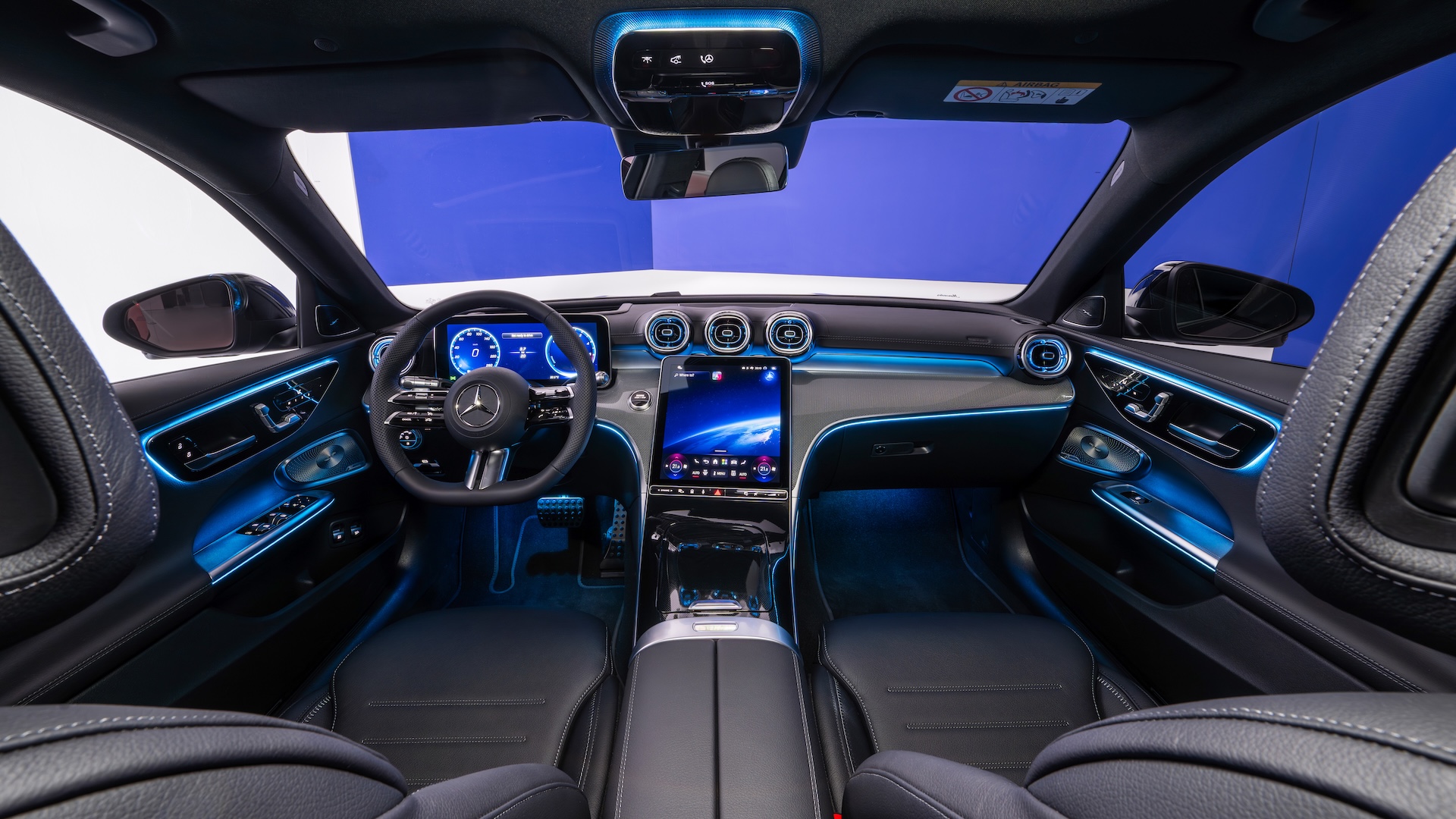
Google Maps-based navigation can provide information about destinations, parking and charging stations. MBUX Surround Navigation displays a real-time 3D representation of nearby vehicles, cyclists and pedestrians, while augmented-reality navigation technology previously associated with the S-Class and EQS can project guidance into the driver’s view.
Thankfully, Mercedes has also acknowledged the importance of physical controls, so the steering wheel regains a physical volume roller and a rocker switch for the limiter and DISTRONIC controls.
Optional multicontour front seats offer massage functions, inflatable side bolsters and four-way lumbar adjustment. The upgraded Burmester 3D surround system uses 15 speakers and a 710-watt amplifier, while the ambient-lighting system offers 64 colours, ten predefined schemes and four independently adjustable zones.
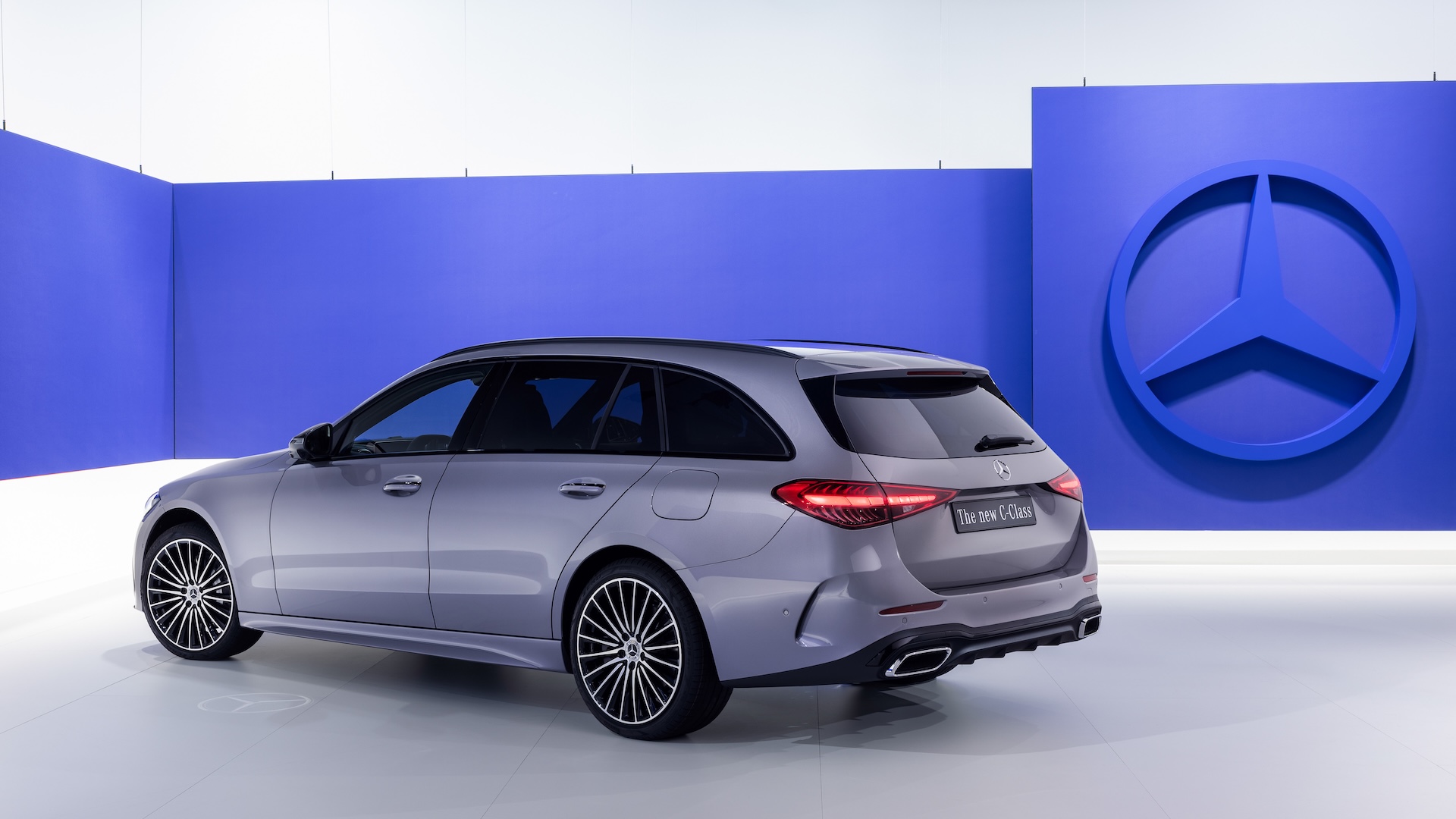
Estate buyers receive up to 490 litres of luggage capacity with the rear seats upright and 1,510 litres with the 40:20:40 split backrests folded.
New Mercedes-Benz C-Class: Petrol, Diesel And Plug-In Hybrid Power
The petrol range uses an extensively revised 2.0-litre M254 Evo turbocharged four-cylinder engine. A new 48-volt electric auxiliary compressor fills the gap before the conventional turbocharger reaches full boost, improving response when pulling away or accelerating out of a corner.
Every combustion engine also receives a second-generation integrated starter-generator. It can contribute up to 17kW and 205Nm, smooth the start-stop operation and allow the engine to shut down while coasting. The C200 produces 177hp and 270Nm, while the C250 raises those figures to 218hp and 320Nm. The C300 develops 258hp and 400Nm.
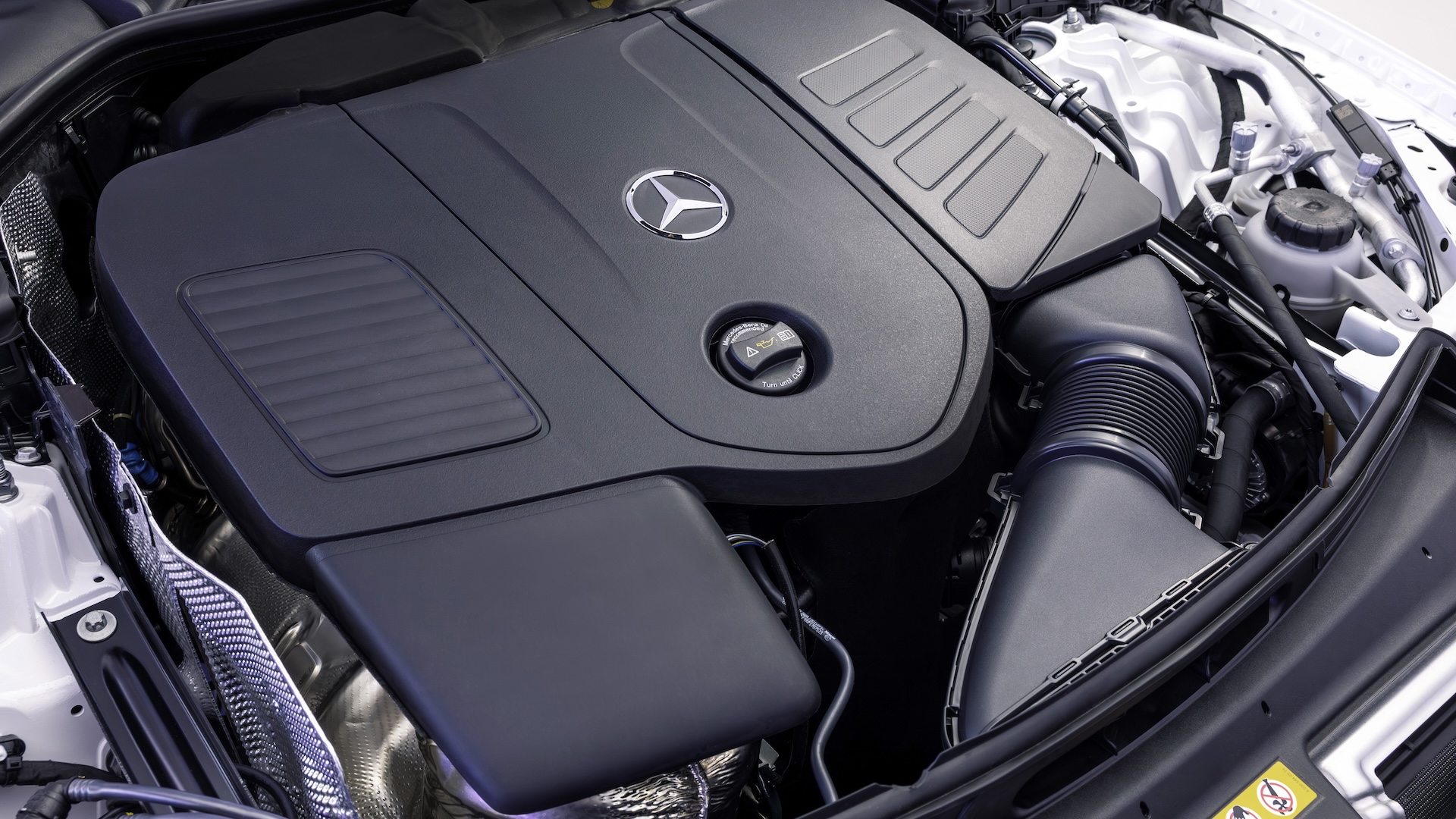
Diesel has survived too. The revised 2.0-litre OM654 Evo is offered with either 163hp or 200hp and uses 2,200-bar common-rail injection alongside a variable-geometry turbocharger. It is also compatible with HVO100, B10 and B20 fuels.
At the top of the regular range, the C400e 4MATIC plug-in hybrid combines its petrol engine with an electric motor to produce 395hp and 650Nm. Its 19.53kWh usable battery provides up to 100km of WLTP electric range and supports 11kW AC charging or a useful 55kW DC charging rate.
Has Mercedes Made The C-Class More Enjoyable To Drive?
Mercedes claims the revised C-Class is noticeably more agile, courtesy of firmer chassis and retuned adaptive dampers intended to reduce body roll without sacrificing its comfort and long-distance composure.
The four-link front and five-link rear suspension layouts remain, but the calibration promises more immediate responses and tighter wheel control. Optional rear-axle steering can turn the rear wheels by up to 2.5 degrees, reducing the turning circle.
Below 100km/h, the rear wheels turn opposite to the fronts for greater agility. Above that speed, they turn in the same direction, improving stability during fast lane changes.
Aerodynamic efficiency remains impressive, with a drag coefficient of 0.24 for the saloon and 0.26 for the Estate. Revised mirror mounts, extra windscreen sealing and improved insulation should make the cabin quieter at motorway speeds.
More Assistance, Brighter Lights
Depending on specification, the C-Class can carry as many as ten cameras, five radar sensors and 12 ultrasonic sensors. MB.DRIVE ASSIST can support steering, acceleration, braking and lane positioning, while ASSIST PLUS adds automatic motorway lane changes and can brake for red lights and stop signs.
The new DIGITAL LIGHT system uses micro-LED technology to increase the high-resolution illumination field by around 40 percent while consuming up to 50 percent less energy. Its ULTRA RANGE high beam can swivel dynamically, and the system can highlight poorly lit road users without dazzling oncoming traffic.
The C-Class Remains A Mercedes For Every Day
This update does not reinvent the C-Class, and that is arguably its greatest strength. At a time when manufacturers are splitting established nameplates across combustion and electric platforms, Mercedes has allowed the traditional C-Class to evolve without changing its character.
It remains a compact executive Mercedes with rear-driven proportions, a comfortable cabin and enough powertrain variety to suit everything from an autobahn commute to life between Dubai, Abu Dhabi and the occasional mountain road. Orders for all announced engine variants open on August 18, 2026. Market-specific specifications, UAE availability and pricing remain unconfirmed.