

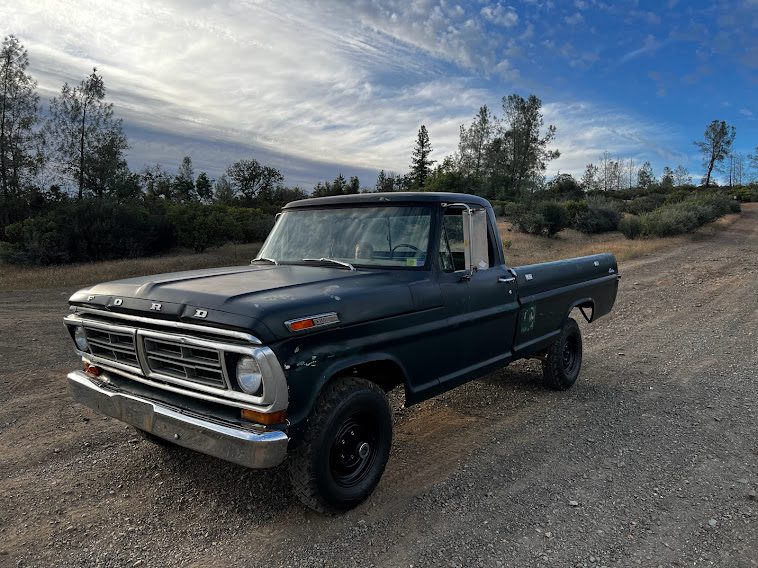
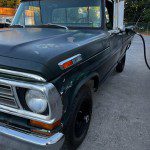
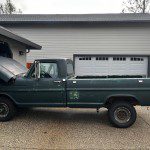
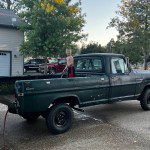
Fifty years ago this year, my 1972 Ford F100 rolled out of a dealership showroom in Oakland, California. It was “Seapine Green” (read: guacamole green) and equipped with an equally appropriate to the era vinyl green interior. It was ordered as a Custom trim, which means the lowest you could get. It was barebones a half-century ago and today, it’s like driving an ox cart full of firewood compared to the space shuttles we use for commuting. That doesn’t mean it’s all bad and no fun! Let me elaborate.
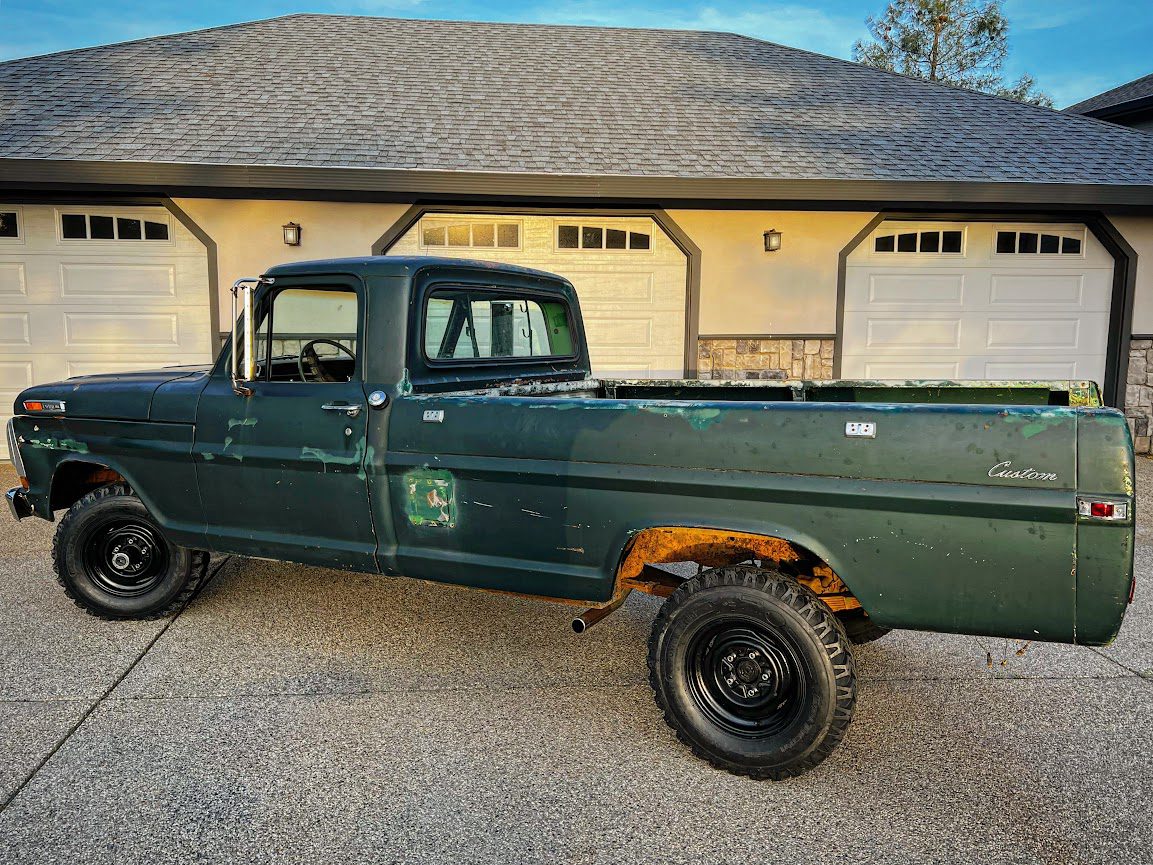
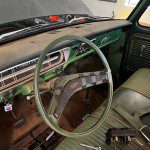
Unlike the trucks today, symbols of what you ‘could’ do, old trucks actually worked for a living. Believe it or not, people bought trucks as a workforce multiplier. They didn’t know anything about suspension lifts or stereo systems. None of that mattered. It was all about durability. The body was made from melted shovels and iron ore carts. Safety consisted of a lap belt. And the only soft touch item in the interior was a one-inch hard foam pad covering the metal dash. The people who worked these trucks were tougher than you and I.
Particularly desirable was four-wheel drive. This generation commonly cut their teeth in WW2 with a Jeep. They had the luxury of all four wheels putting down power as they conquered the hedgerows of France and the forests of Belgium. It took them from the shores of Normandy, all the way to Berchtesgaden. When these heroes came home, they wanted a 4×4. Alas, they’d end up waiting more or less twenty years until it started to become common.
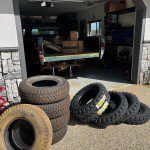

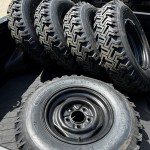
By 1972, owning a 4×4 was still a luxury item. Plenty of people worked 2wd trucks harder than any of us could imagine today. These salts-of-the-earth didn’t NEED four-wheel drive, but it sure helped. This truck was ordered with 4×4 to combat the one territory where their supremacy is unmatched: anywhere it snows and gets icy. A foot-long straight stick accesses this superpower. The knob reads “2wd – 4wd”. Shift, lock in the hubs, and go. All the ponies are fed through a single-speed Dana 20 transfer case—a leaky one at that. If you need low range, you’ve got a low 1st gear (aka granny low) to provide the low and slow torque for the more technical terrain.
That reminds me: this truck is slow. How slow do you ask? Slow enough for me to notice the world in a different way while I accelerate towards the speed limit. Your eyes wander as this truck gains speed. It’s a pace of life we should all experience. No wonder everyone knew each other when we all had horses and carriages, the speeds were slow enough to have a conversation with a pedestrian.
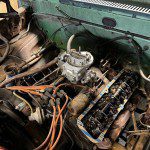
But let’s pretend you wanted to gain some speed at a rate that didn’t turn every neighbor into a forced gossip session. The first gear is too low–only good for crawling. Second gear is actually first, so start there. Setting off, the 360 cubic inch V8 makes a throaty grumble; it’s not happy, but few are after five decades of life. The RPM is unknown, there is no tach. Deciding to change gear is like tuning a Stradivarius violin that has been underwater, you just know when you know and say to yourself, “That sounds about right.” Shifting to third is accomplished once your arm has extended into the stratosphere—it’s there, but where? With an industrial click, chomp, and crunch is audible when you do find it. Fourth comes at around forty-five miles per hour, which is a bit too soon, and was still too soon even when highways were mandated at 55 MPH.
Don’t even think about using reverse either, that gear is found in another galaxy. You need to consult Neil deGrass Tyson on that journey so you don’t get sucked into a black hole. And if you’re still wondering how comically bad this truck is to drive, I’ll raise the stakes and tell you I nearly crashed it on the first outing. It wasn’t for the brakes, which are power, it was because of the steering, which is not. The steering box was so sloppy and wayward that every corner felt like I was in a boat, cresting a wave sideways and into oncoming traffic. After a butt-puckering two mile out and back, I added a couple of turns to the steering box so this would never happen again. There are far fewer cross lane excursions, but then again, the manual steering has turned me into a modern-day Popeye.
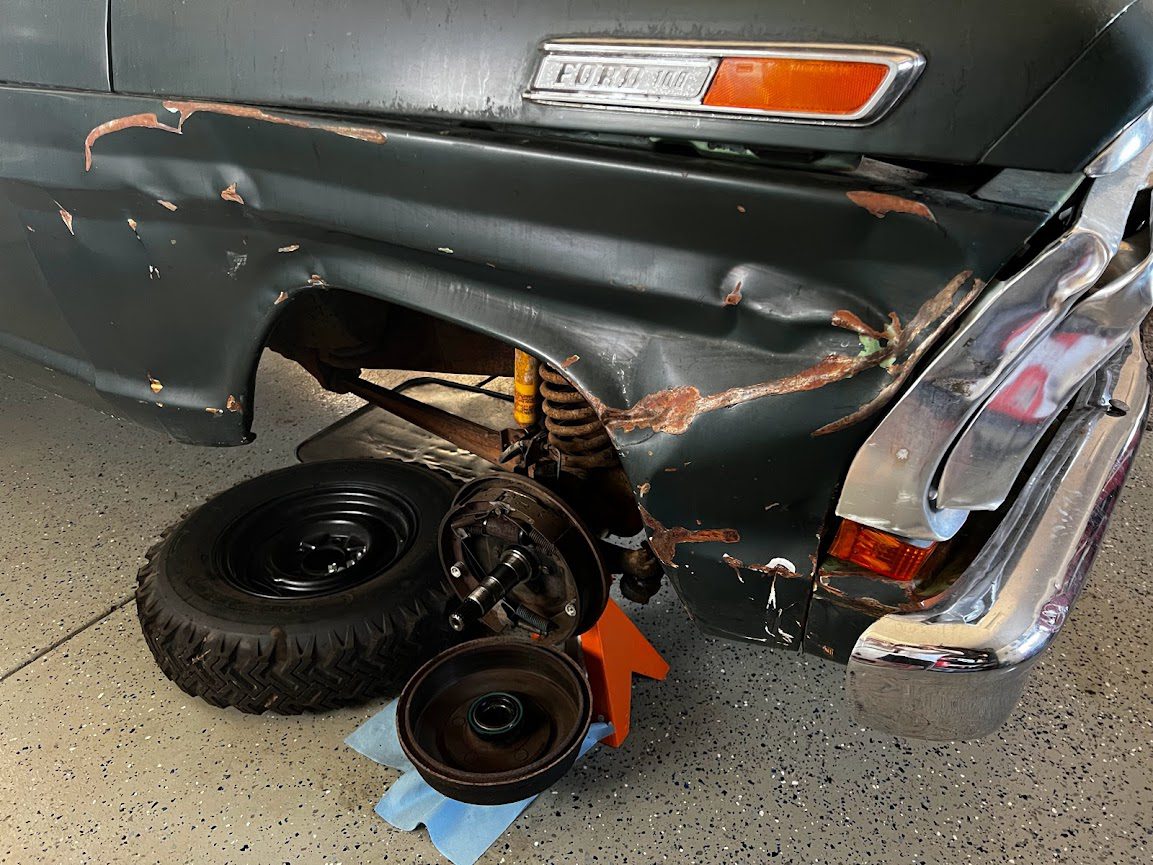
The brakes broke soon after this truck got home. I actually drove it down the street, not aware the rear brakes weren’t working. I just thought to myself, “Man these drum brakes sure do suck.” Drum brakes can be found on all four corners, the last year Ford ever did it. I could change them but I won’t be working this truck as God intended and since they work, I’ll use them! The booster is factory (somehow) yet the world still wasn’t ready for FM radio. AM is all you get in this truck. Which would bother me if the radio worked. The gauges mostly joined the radio in the afterlife–except the speedo and half of the fuel gauge.

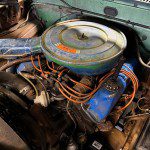
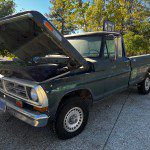


If you’re still with me, let’s recap. This truck has antiquated brakes, and steering that requires superhuman strength, the shifter could be a prop in Star Trek, and the soundtrack you hear while driving is ‘Slow Death of 50-Year-Old Bearings’ and ‘Deaf People Might Require a Tach” on repeat. Not to mention every neighbor can walk alongside as you try to achieve the speed limit–they’re all up in your business now. And that’s what’s so fun: it’s terrible.
Driving this truck teleports you to a time when everyone appreciated their surroundings and didn’t travel five times into town a day for pointless errands. You’re forced to appreciate the scenery because you can’t speed through it. You’re forced to pay attention, forced to listen, forced to move, shift, and USE the truck. It’s engaging. It activates the part of your brain that reminds you of your own fragility–you’re merely a piece of meat in a threshing machine if a crash happens. And I entertain all of you to go resurrect some old hunk of junk, for better or worse. It’s terrible, but much of history has been, and we all could use a better understanding of what our forefathers endured to build this place we call home.

– M. T. Blake (www.mtblake.net / IG _mtblake)