
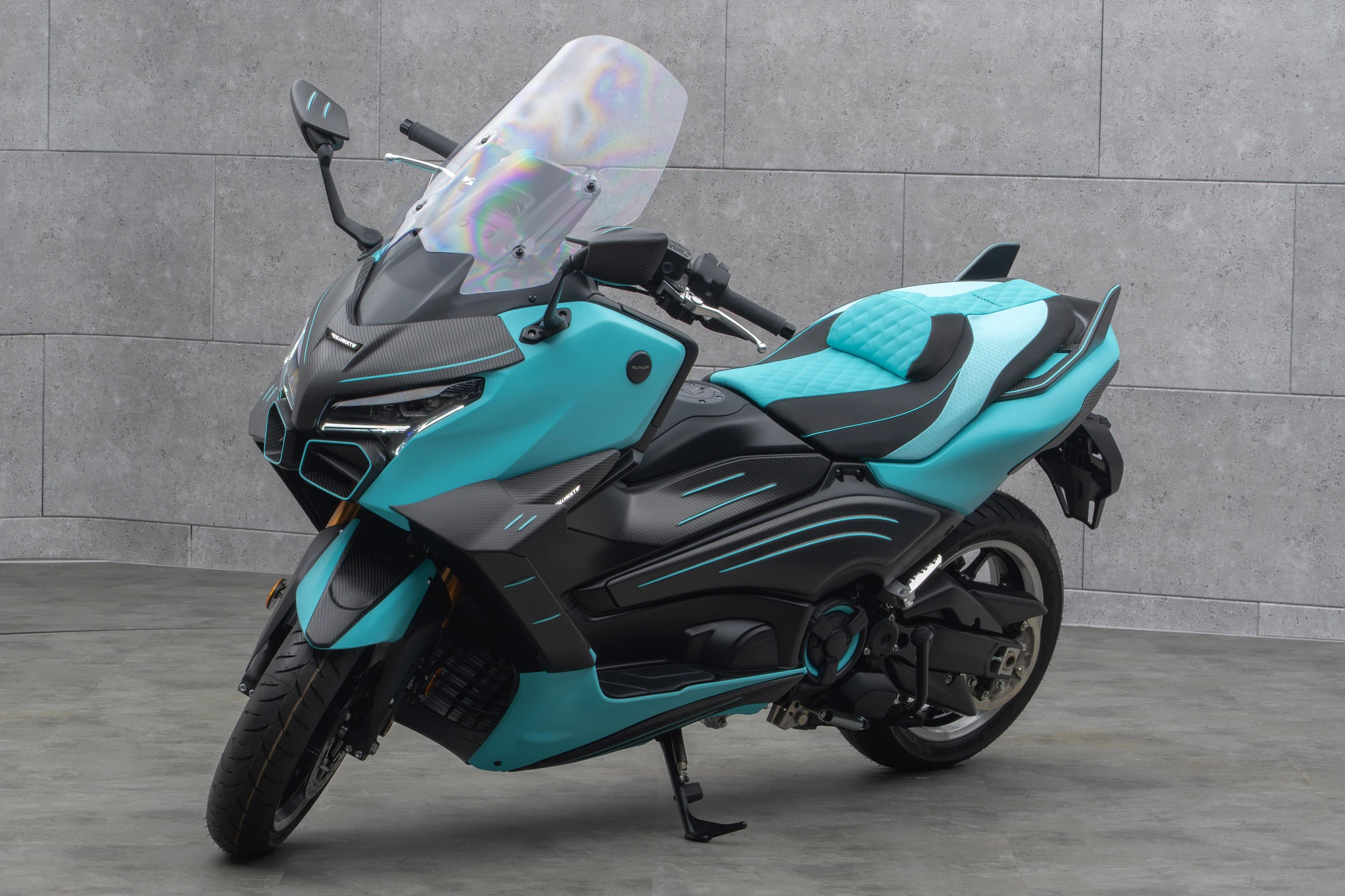
What is the Mansory Yamaha TMAX 560?
The Mansory Yamaha TMAX 560 is a highly customised version of Yamaha’s flagship maxi-scooter, built by Mansory, a German luxury vehicle customisation and tuning company renowned for its extravagant and unconventional designs.
Mansory’s portfolio typically includes custom body kits with exposed carbon-fibre components, redesigned interiors, bespoke paint finishes, alloy wheels and performance upgrades.
The company has made its name by customising luxury cars and SUVs However, it has from time to time shifted its focus to two-wheelers. Its Yamaha TMAX 560 project is an example of Mansory applying its outrageous carbon-fibre design language to a maxi-scooter.
What design changes has Mansory made?
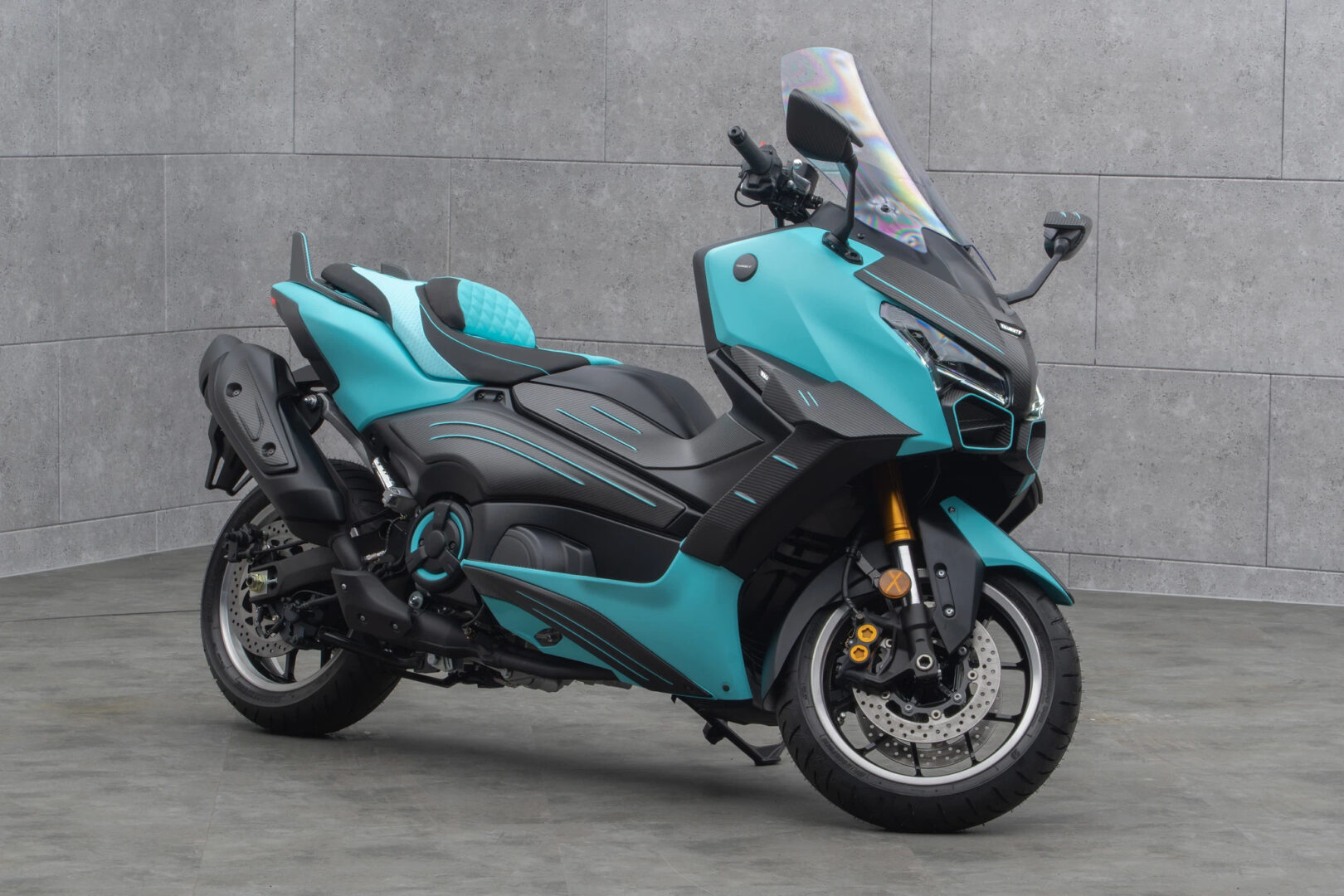
The Yamaha TMAX 560 receives a full-on Mansory treatment featuring extensive use of carbon components around the front bodywork, side panels, mirrors, front mudguard and exhaust cover.
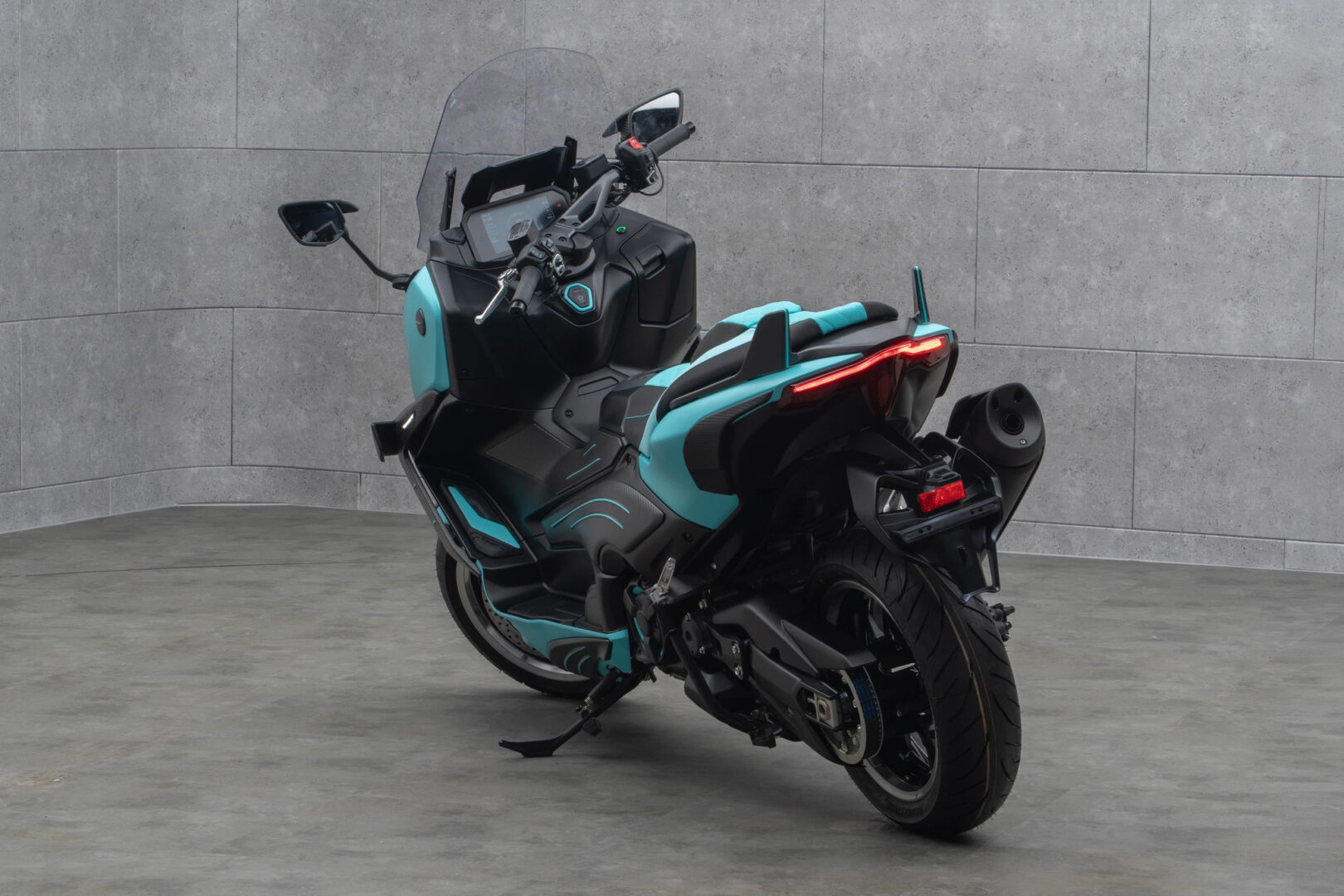
The Mansory TMAX 560 features a layered bespoke bodywork that adds upper and lower side panels and prominent Grand Prix-inspired winglets.
The Mansory Yamaha TMAX 560 is draped in a bright turquoise-and-black colour scheme. The turquoise shade nicely contrasts with the exposed carbon-fibre panels, making the additional aerodynamic bodywork stand out. Illuminated Mansory logos are incorporated into the front cover and side aero components, giving the maxi scooter an aggressive visual drama.
What engine powers the Mansory scooter?
The standard Yamaha TMAX 560 uses a 562cc, liquid-cooled, parallel-twin engine with DOHC and four valves per cylinder. The engine produces 47 hp at 7,000rpm and 55 Nm of peak torque at 5,250rpm.
How much does the Mansory scooter cost?
The Mansory Yamaha TMAX 560 is a built-to-order model, and the company hasn’t revealed the final pricing. The official product page provides a request-price option, suggesting that the final price depends on the customer’s specifications.