

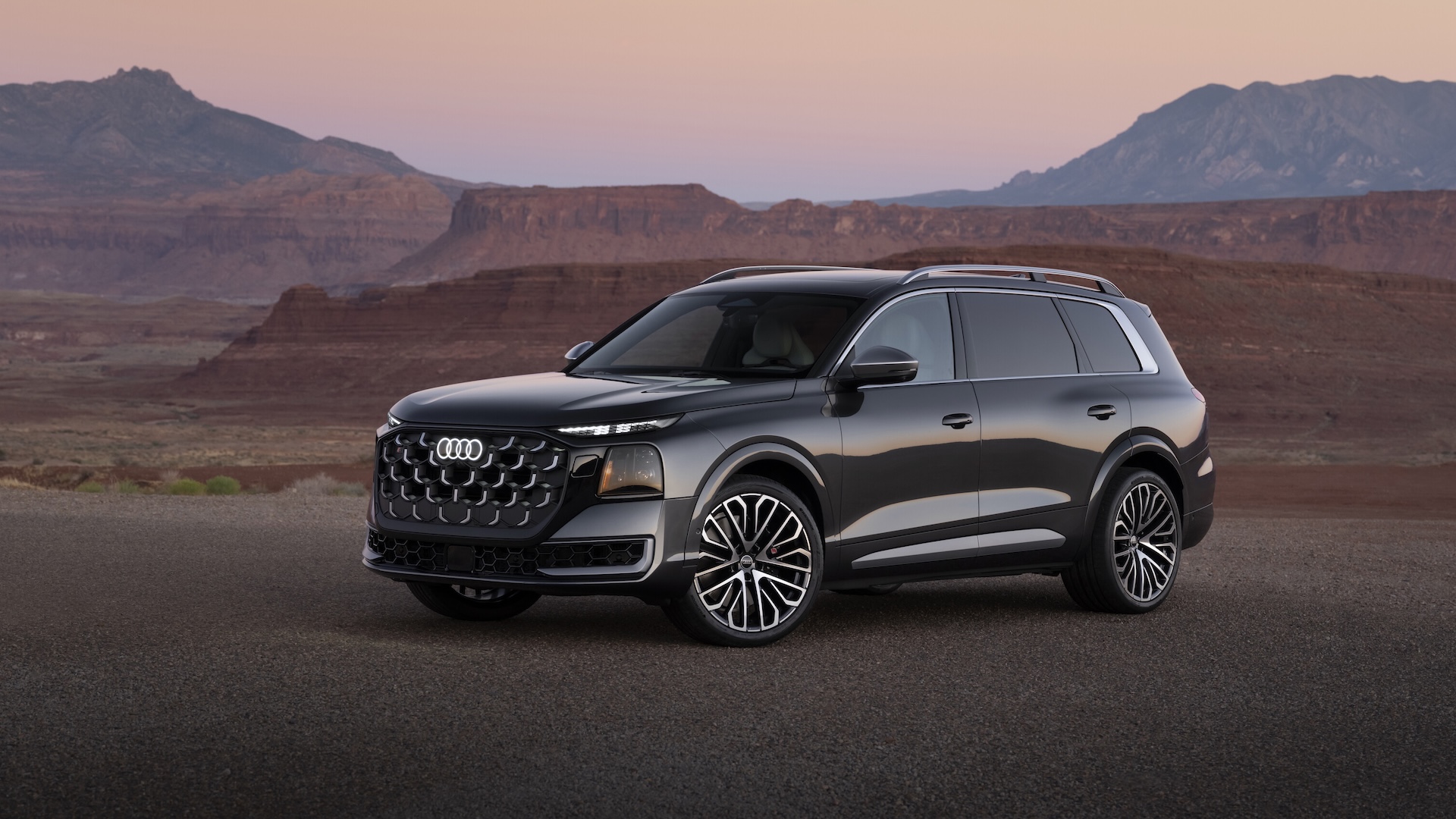
Audi has spent more than two decades watching the Mercedes-Benz GLS and, more recently, the BMW X7 dominate a highly profitable corner of the luxury SUV market. Ingolstadt finally decided that the Q7 is no longer quite large enough. Meet the all-new Audi Q9, the first full-size SUV in the German marque’s history and its new portfolio flagship.
Measuring 5.31 metres long and offering up to seven seats, it is the largest production Audi ever built. The Q9 also introduces its model designation at an interesting moment for the brand. Audi’s traditional flagship, the A8, is approaching the end of its current life cycle, while global buyers continue moving towards large, luxurious SUVs.
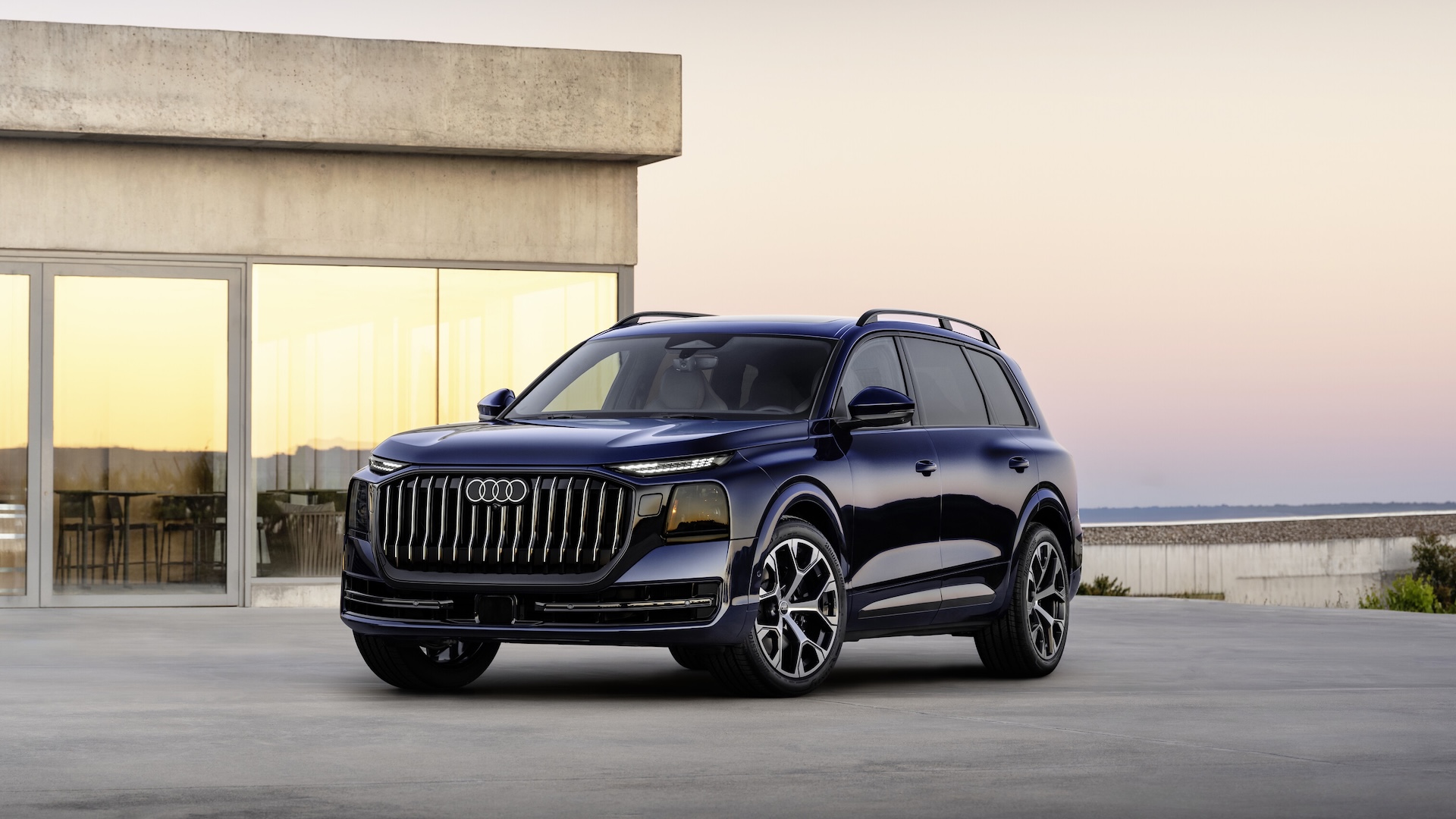
Consequently, the Q9 has effectively become Audi’s new mobile boardroom, with quattro all-wheel drive for the occasional board meeting held halfway up a mountain.
Where Does The Audi Q9 Fit In The Range?
The Q9 sits above the Q7 as Audi’s largest and most luxurious SUV. At 5,310mm long, 2,210mm wide and 1,810mm tall, it is 250mm longer and 200mm wider than the Q7. Its 3,140mm wheelbase is also 145mm longer.
That footprint places it directly alongside the BMW X7 and Mercedes-Benz GLS. It even has a longer wheelbase than a Chevrolet Tahoe, although Audi has kept its front and rear overhangs relatively compact.
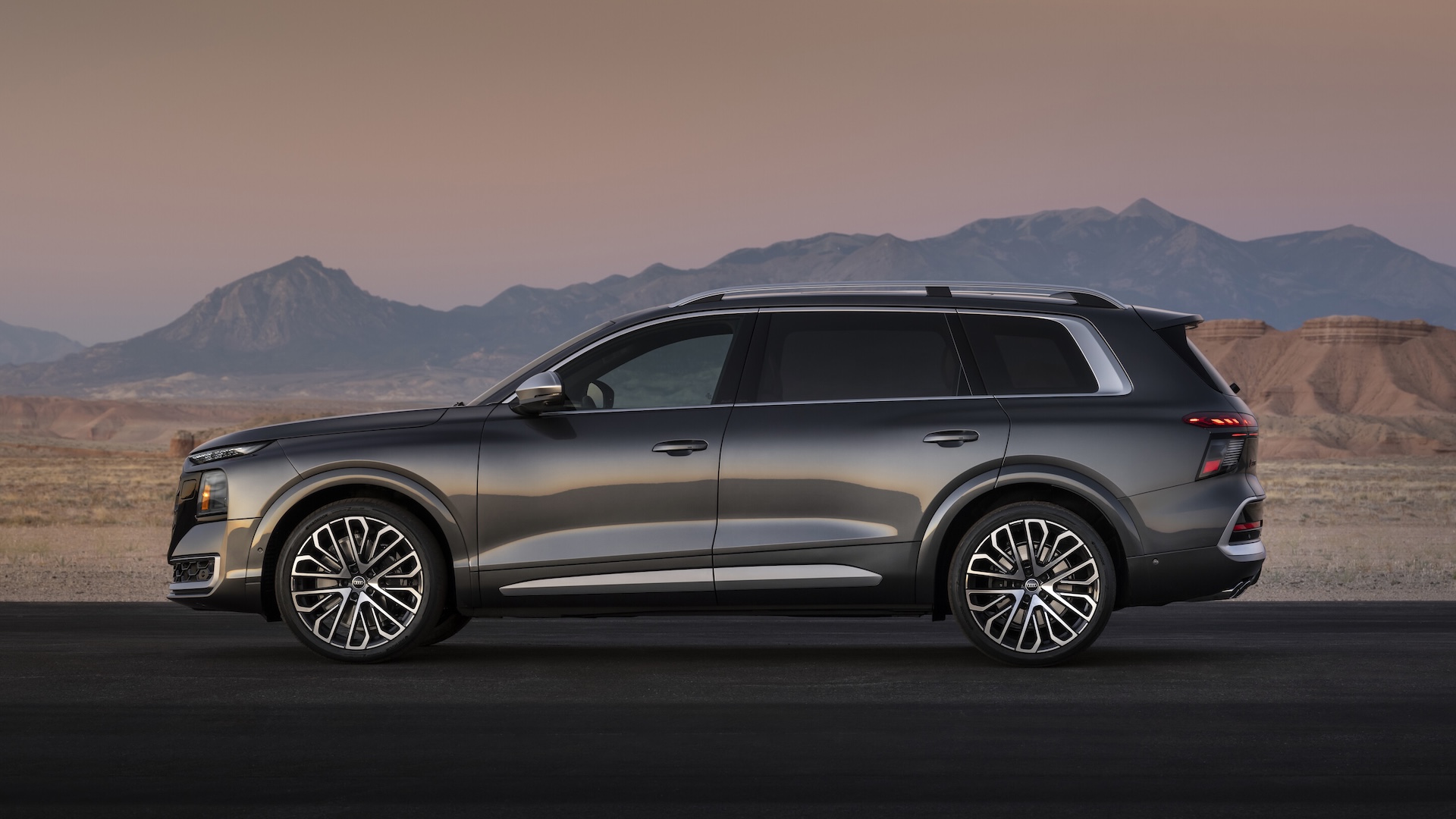
Its dimensions make the Q9 particularly relevant to markets such as North America, China and the Middle East, where large luxury SUVs remain highly desirable. European underground car parks may be slightly less enthusiastic.
The exterior follows Audi’s latest design direction but adds the visual weight expected of a flagship. Its upright nose features a large Singleframe grille, while a tall cabin, prominent roof rails and substantial rear overhang emphasise its size and practicality.
Two exterior styles will be available. The standard Advanced line uses vertical grille elements for a statelier appearance, while the optional S line adds a sportier character. Wheel sizes start at 21 inches and rise to 23 inches, because smaller wheels on a car this big would probably look as though they had been borrowed from an A3.
Also Read:
– New BMW X5 Debuts: A New Chapter For One Of BMW’s Greatest Success Stories
– Audi 2027 Q3 Has New Standard Equipment, Enhanced Driver Assistance, and Increased Towing Capacity
– 2027 Mercedes-Maybach GLS Unveiled With 603hp Hybrid V8
Audi Q9: What’s The Interior Like?
Seven seats are standard, with all three positions in the second row featuring child-seat mounting points. Audi will also offer a six-seat configuration that replaces the second-row bench with two individual electrically adjustable captain’s chairs.
These seats can be specified with heating, while every seat in the six-seat configuration is partially electrically adjustable. The third-row backrests can be folded individually at the press of a button.
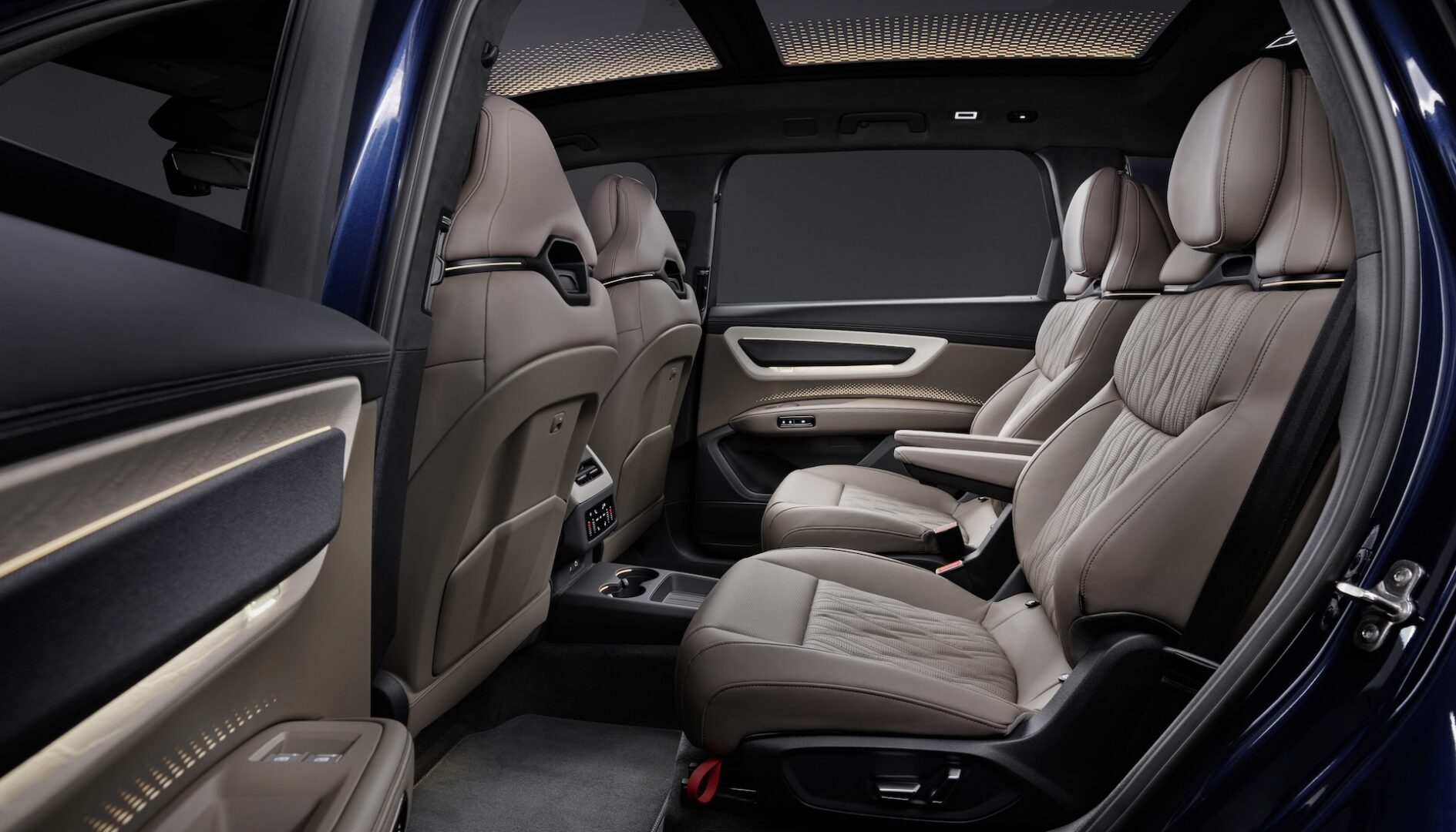
Up front, the optional Sports Seat Plus adds ventilation and massage functions. Buyers can choose between two principal interior variants, supported by different material and equipment packages.
The dashboard incorporates an 11.9-inch Audi virtual cockpit and a 14.5-inch central touchscreen within a curved display. A separate front-passenger display is also fitted, giving the passenger their own entertainment and vehicle functions.
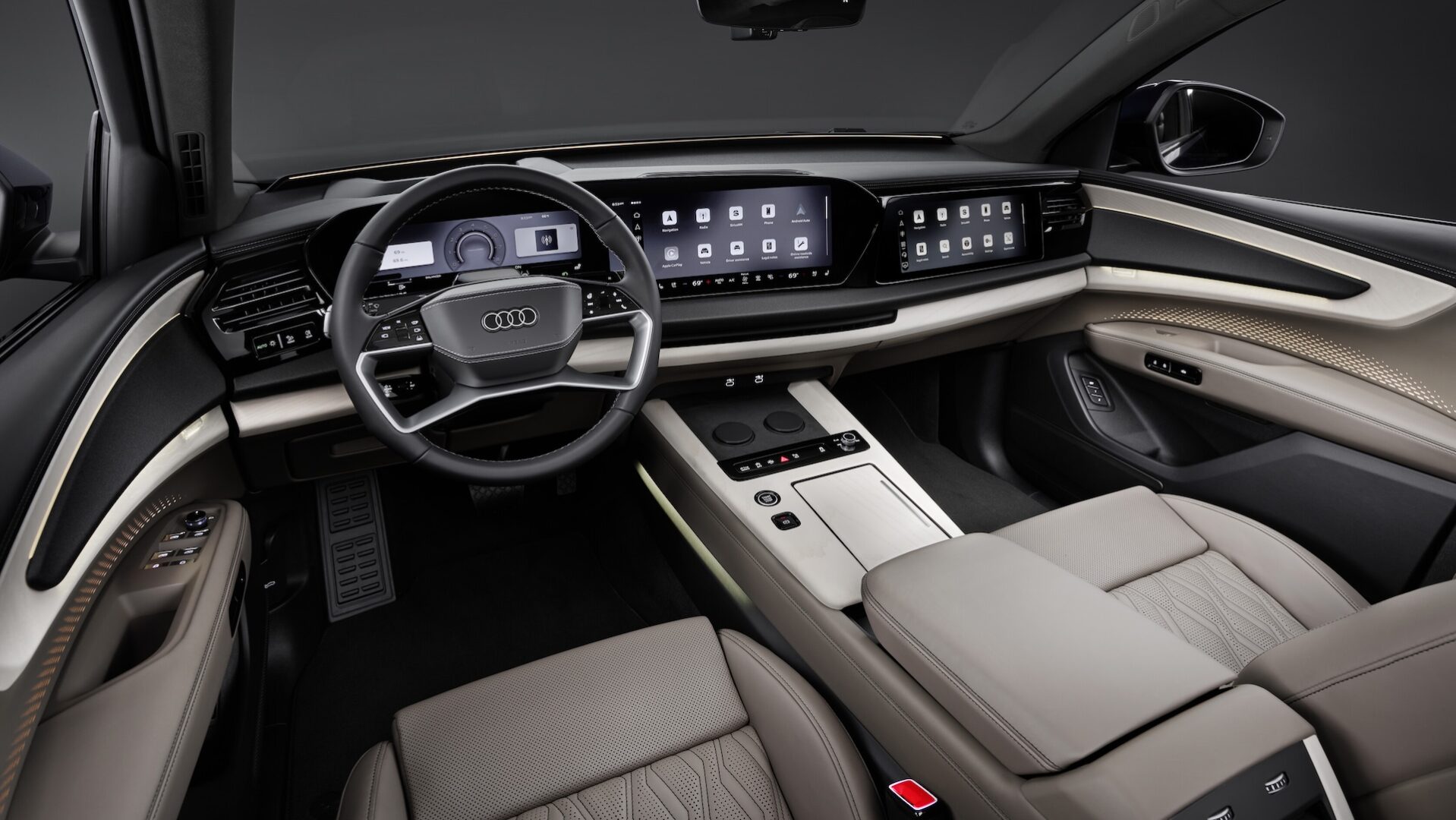
Material quality has received particular attention. Audi has reduced its reliance on glossy piano-black trim, using more wood, metal and premium upholstery across the cabin. An optional Bang & Olufsen audio system delivers 1,360 watts through 22 speakers. Actuators built into the seats can pulse in time with the music, while headrest speakers deliver navigation instructions and phone calls without disturbing the remaining occupants. Ultra cool tech.
Audi’s Largest Panoramic Sunroof
Every Q9 receives the largest panoramic sunroof fitted to an Audi. Its glass area exceeds 1.5 square metres and can be tilted or opened. An upgraded version divides the glass into nine electronically controlled sections, allowing occupants to adjust its transparency.
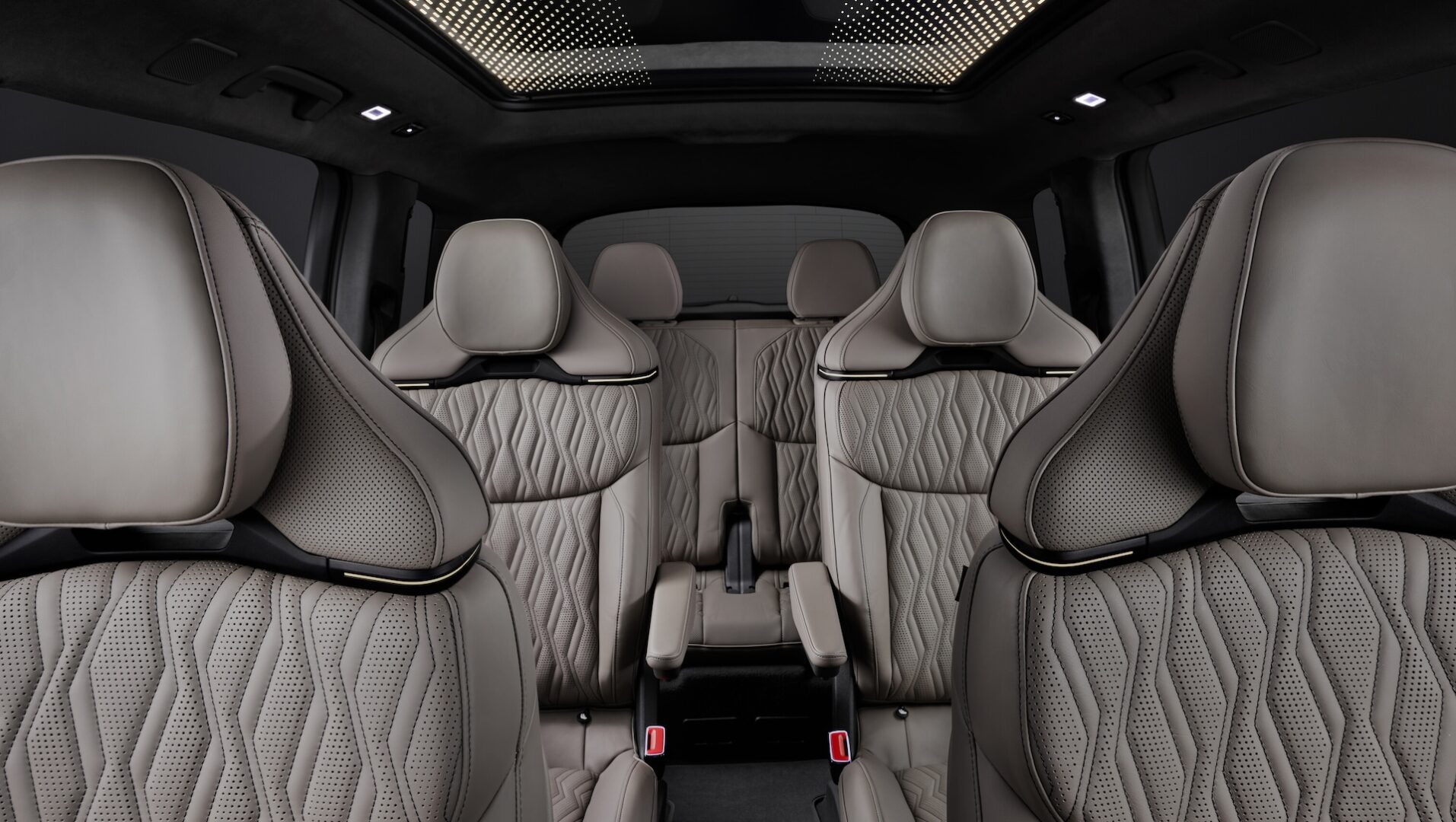
When the Q9 is parked, the roof can automatically become opaque, helping reduce heat. Audi also offers illumination integrated into the glass for the first time. A total of 84 LEDs can display up to 30 colours, coordinating with the personalised ambient lighting inside the vehicle.
Powered Doors With Obstacle Detection
The Q9 becomes the first Audi offered with fully automatic doors. They can open through an angle of up to 90 degrees and are operated using switches inside the vehicle, exterior controls or the myAudi smartphone application.
Surround sensors monitor the area beside the SUV and stop a door before it hits a nearby vehicle, wall, cyclist or pedestrian. Electric soft-close mechanisms then pull the doors shut gently. Powered doors have traditionally been associated with ultra-luxury saloons and SUVs, so their arrival on the Q9 reinforces its position at the very top of Audi’s range.
Curved Digital OLED Rear Lights
Lighting technology has long been one of Audi’s strongest technical signatures. The original R8 helped popularise LED daytime running lights, while subsequent models introduced Matrix LED, laser-light and digital OLED systems.
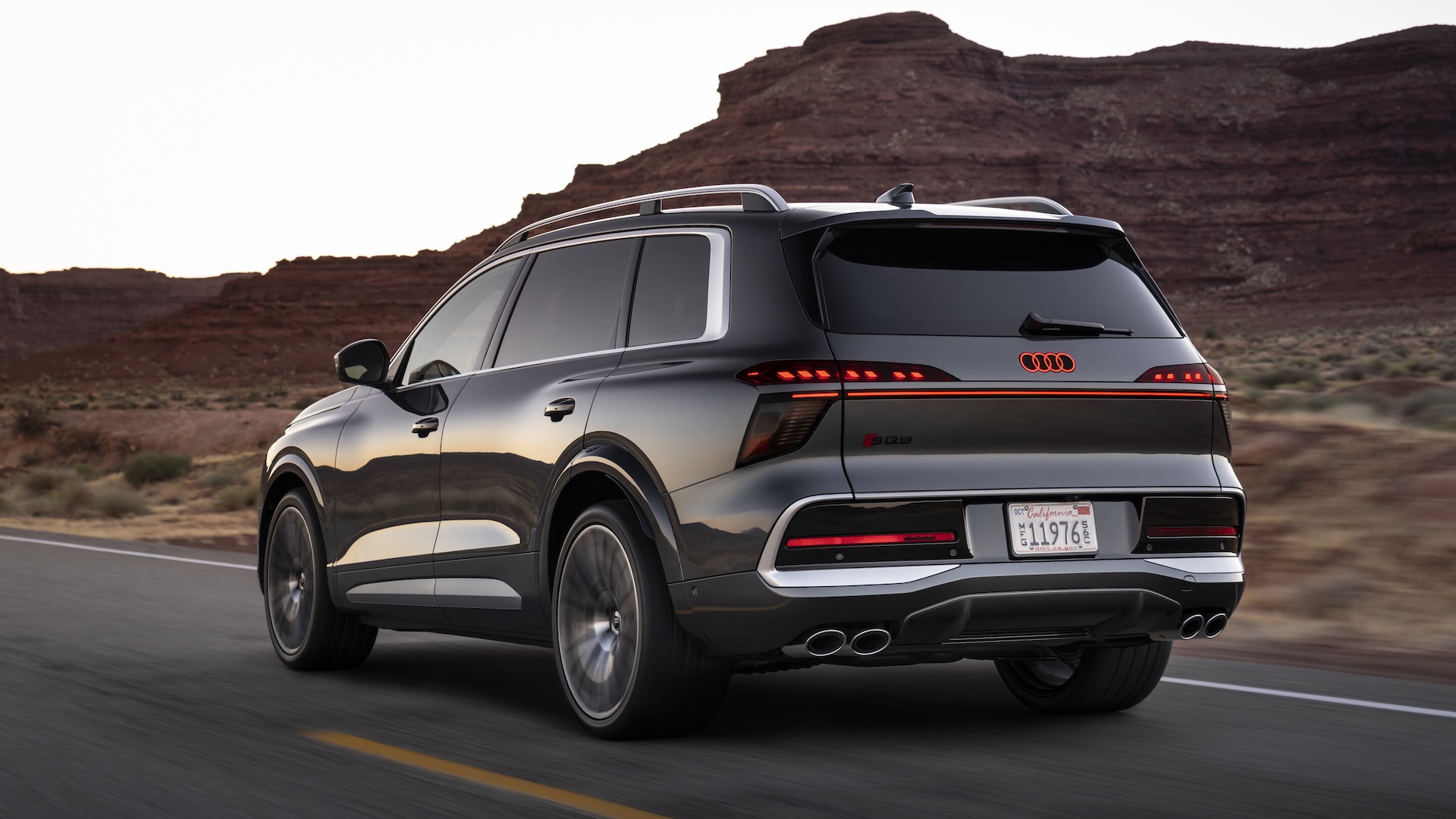
The Q9 moves that story forward with third-generation digital OLED rear lights. Audi claims the outer OLED panels are the world’s first to curve across three dimensions. Ultra-thin glass allows each panel to follow the vehicle’s bodywork rather than sitting on a flat surface. Besides giving Audi’s designers more freedom, the curve makes the lights visible from a wider range of angles.
The Q9 can also project animated turn indicators onto the road beside the vehicle. These ground projections operate in sync with the front and rear indicators, making the driver’s intended direction clearer to pedestrians, cyclists and surrounding motorists.
What Engine Options Does The Audi Q9 Have?
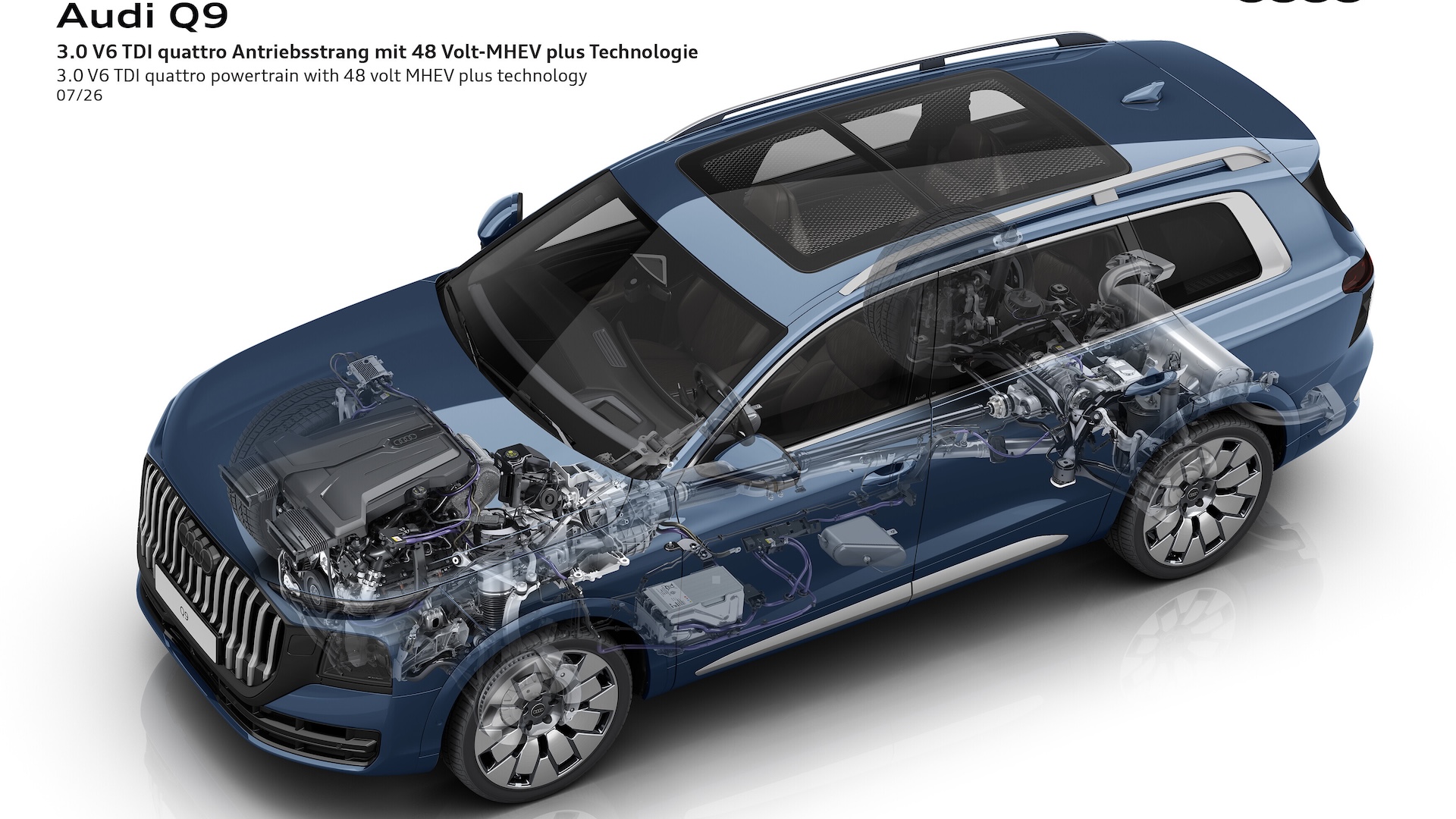
European versions of the Audi Q9 will initially be powered by a 3.0-litre turbocharged V6 diesel engine with MHEV Plus mild-hybrid assistance. The Q9 TDI produces 299hp and 630Nm of torque. A next-generation powertrain generator can briefly contribute up to 24hp, while an electrically powered compressor improves response before the conventional turbocharger builds boost.
Power reaches all four wheels through a fast-shifting eight-speed Tiptronic automatic transmission and Audi’s quattro permanent all-wheel-drive system. Despite its considerable size, the 299hp Q9 TDI can reportedly accelerate from 0–100km/h in 6.5 seconds. Selected European markets will also receive a detuned version producing 245hp and 500Nm.
North American customers receive a considerably more powerful petrol option. Their Q9 uses a 2.9-litre twin-turbocharged V6 producing 429hp and 599Nm. Audi claims it can accelerate from 0–60mph in 4.9 seconds. That engine is closely related to the unit previously used in the RS5. The same engine is expected to power the Middle East-spec Q9 as well, alongside the bigger V8.
The Audi SQ9 Gets A Big V8
Audi will also launch the SQ9, powered by a 4.0-litre twin-turbocharged V8 derived from the engine used in the RS6 Avant and SQ7. It produces 591hp and 800Nm, sending power through an upgraded eight-speed automatic gearbox and a rear-biased quattro system. A locking rear differential helps distribute the V8’s output under acceleration.
The SQ9 completes the 0–60mph sprint in a claimed 3.8 seconds and has a governed top speed of 250km/h. Those figures are particularly impressive considering it weighs approximately 2,520kg.
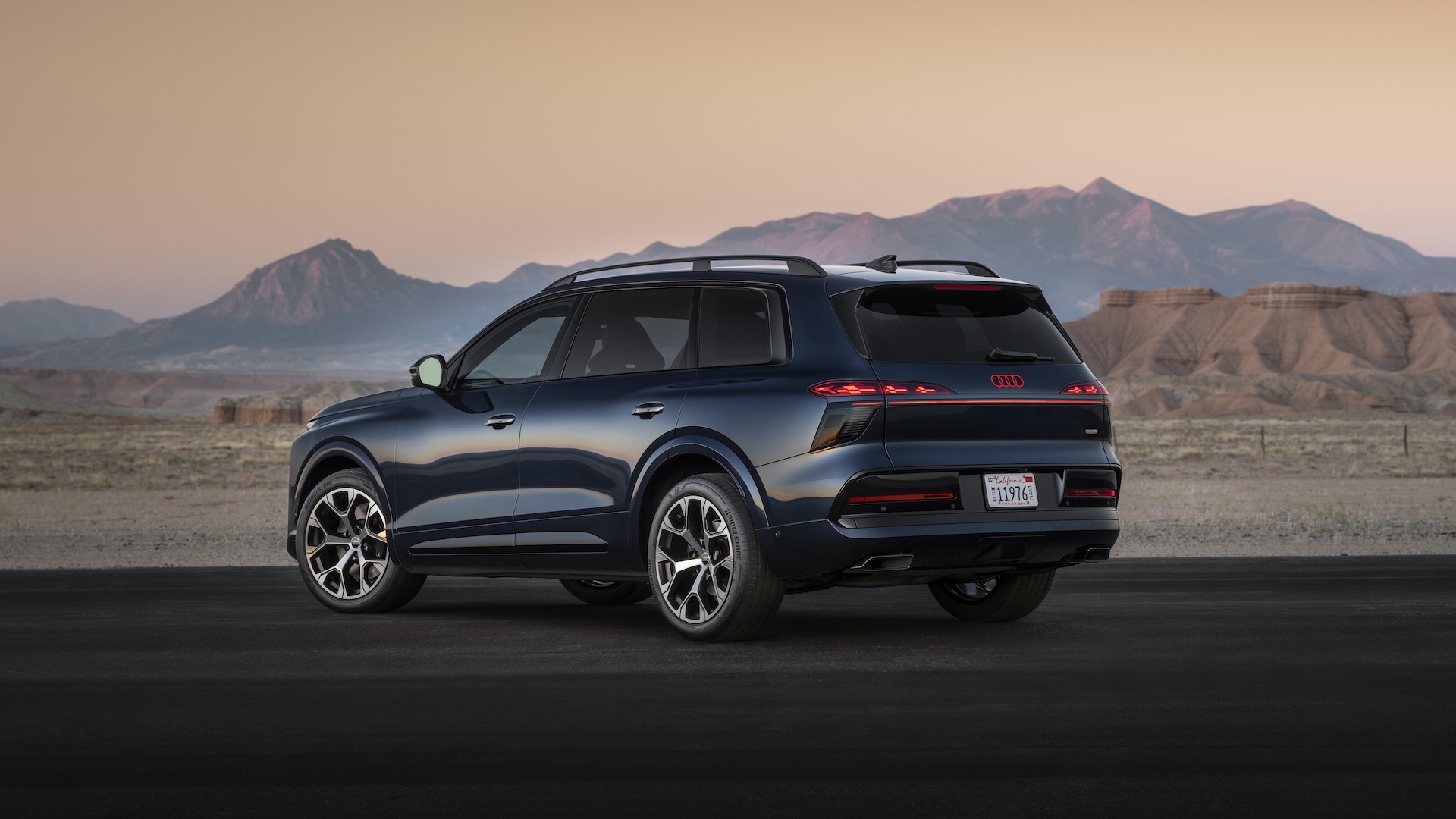
Standard 22-inch wheels wear staggered 285-section front and 305-section rear tyres. Optional 23-inch wheels are paired with 285-section front and 315-section rear performance tyres. Braking is handled by 419mm front discs with six-piston callipers. The regular Q9 is hardly under-braked either, using 399mm front discs and six-piston callipers.
Air Suspension And Rear-Wheel Steering
Adaptive air suspension is standard, giving the Q9 a total height-adjustment range of 90mm. It can lower the body for improved stability and efficiency at speed or raise it when additional ground clearance is required.
Standard all-wheel steering turns the rear wheels by as much as five degrees. At low speeds, they turn opposite to the front wheels to reduce the turning circle. At higher speeds, they turn in the same direction to improve stability during lane changes and fast bends.
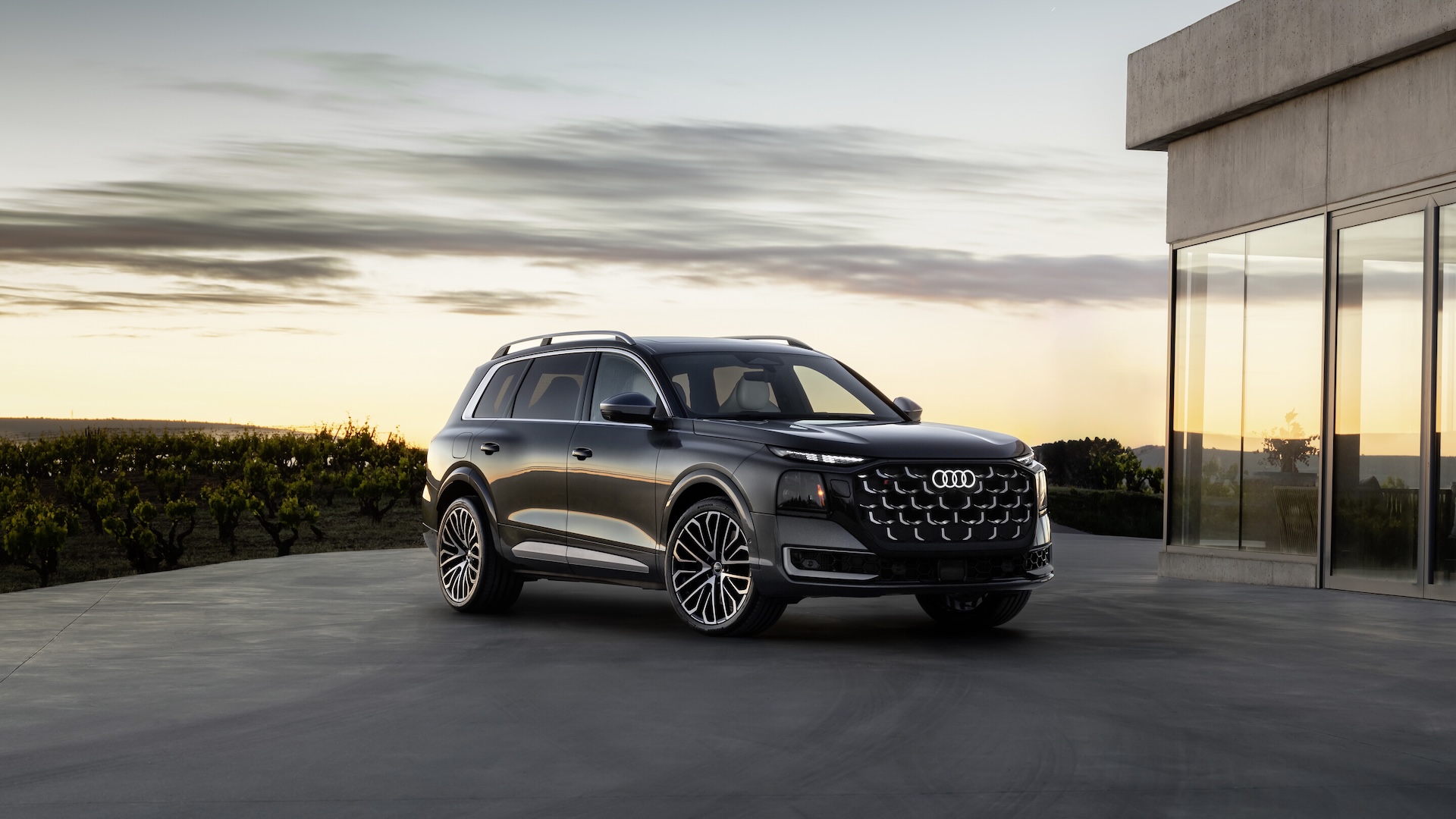
The Q9 also introduces Adaptive Driving Assistant Plus with supported hands-free driving. Depending on the market and local regulations, it can manage steering, acceleration, braking and lane positioning on compatible roads.
If the driver becomes unresponsive, the emergency assistance system can slow the vehicle, steer it towards the road shoulder when conditions permit, bring it to a stop and place an emergency call.
Audi Q9 Price And Availability
The Audi Q9 will become available to order in Germany from the end of July 2026, with the first customer deliveries scheduled for the fourth quarter. Prices begin at €108,400 for the 299hp Q9 TDI. In the United States, the petrol-powered Q9 starts at $89,095, while the V8-powered SQ9 starts at $119,395.
Audi has not yet announced UAE pricing, specifications or an official regional launch date. However, the Q9’s combination of size, luxury and powerful petrol engines makes the Middle East an obvious market for the new flagship.