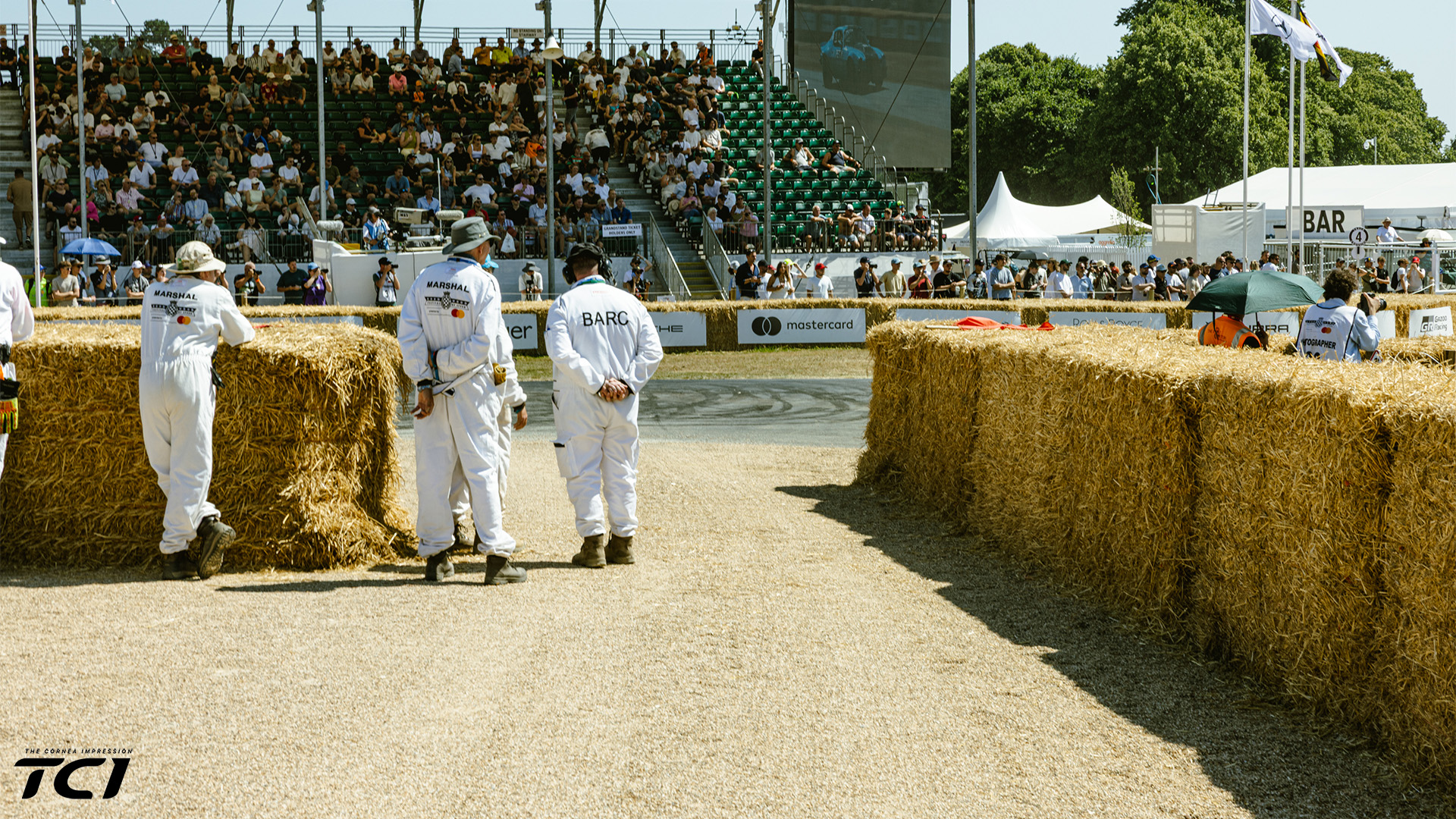

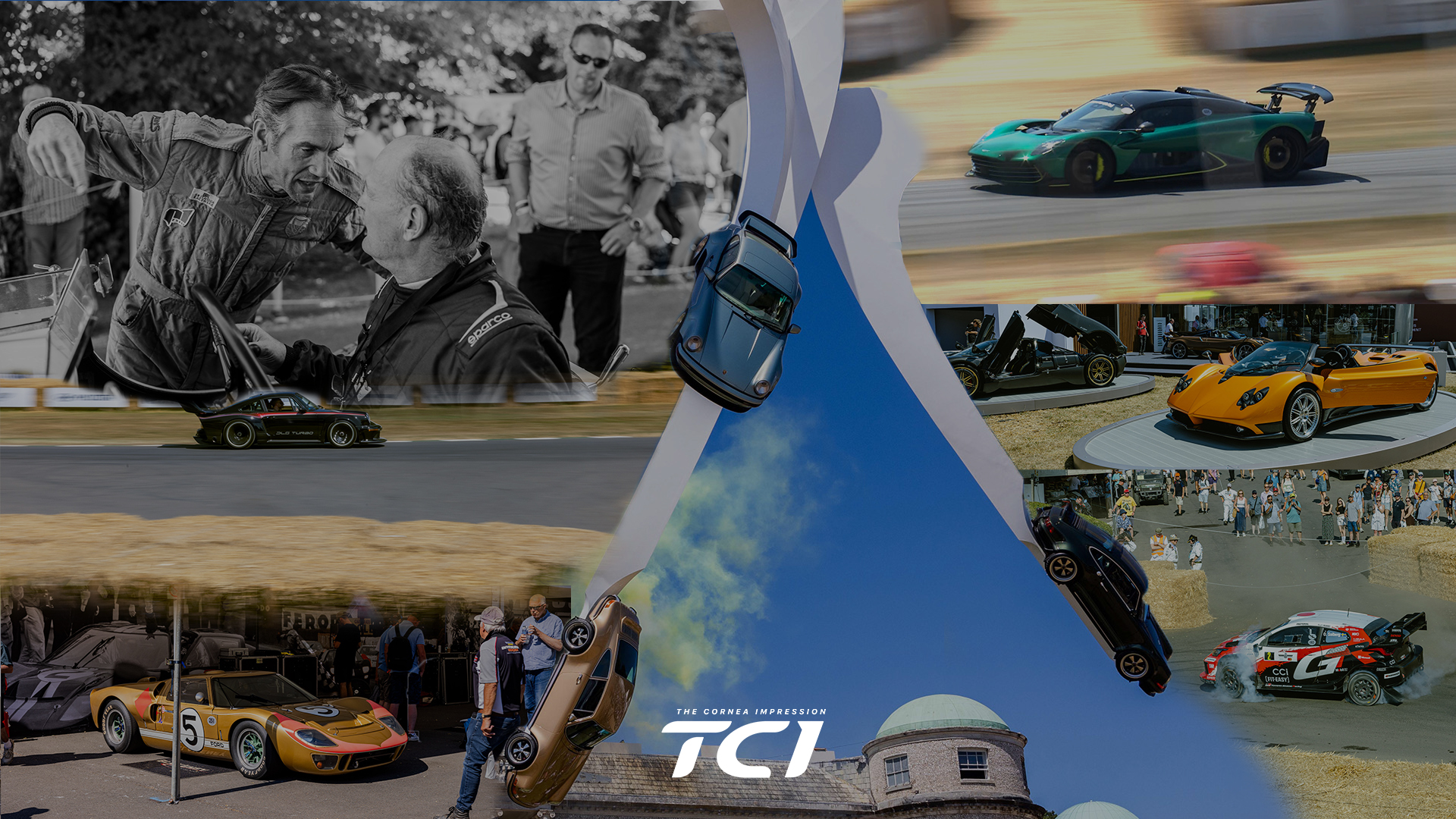
TCI attended the 2026 Goodwood Festival of Speed as a guest of McLaren and Aston Martin, and visited Rolls-Royce Motor Cars at Goodwood by invitation.
The Goodwood Festival of Speed is probably the Coachella of the car world, and the comparison has little to do with size or the number of famous faces walking the grounds. Goodwood builds its own temporary universe for four days each July, pulling together generations, cultures and tribes of enthusiasts in a way almost no other event manages.
There are headline acts, enormous installations, exclusive hospitality areas and a soundtrack carried across the West Sussex countryside. Except that here the music comes from naturally aspirated V12S, historic Formula 1 engines, Group B rally cars and modern hypercars.
The 2026 Festival ran from 9 to 12 July at Goodwood House, under the theme “The Rivals: Epic Racing Duels”. We were there for three of those four days, and even three did not feel long enough.
What makes the Goodwood Festival of Speed different?
Most great automotive events pick a lane. A motor show presents new cars, a concours celebrates design and provenance, a race weekend focuses on competition, and a technology exhibition looks forward. Goodwood does it all at once, which is why it resists being called a motor show at all. It is part race meeting, part museum, part design exhibition, part technology showcase and part garden party.
The Hillclimb
The Hillclimb sits at the centre of everything. The 1.16-mile road running past Goodwood House has been the heart of the Festival since the first event in 1993, and across a weekend it becomes a moving history of motorsport, with historic Grand Prix cars sharing the programme with modern Formula 1 machinery, endurance racers, rally cars, prototypes, hypercars and new production models. Sunday’s Timed Shoot-Out turns that into genuine competition.
Everything else
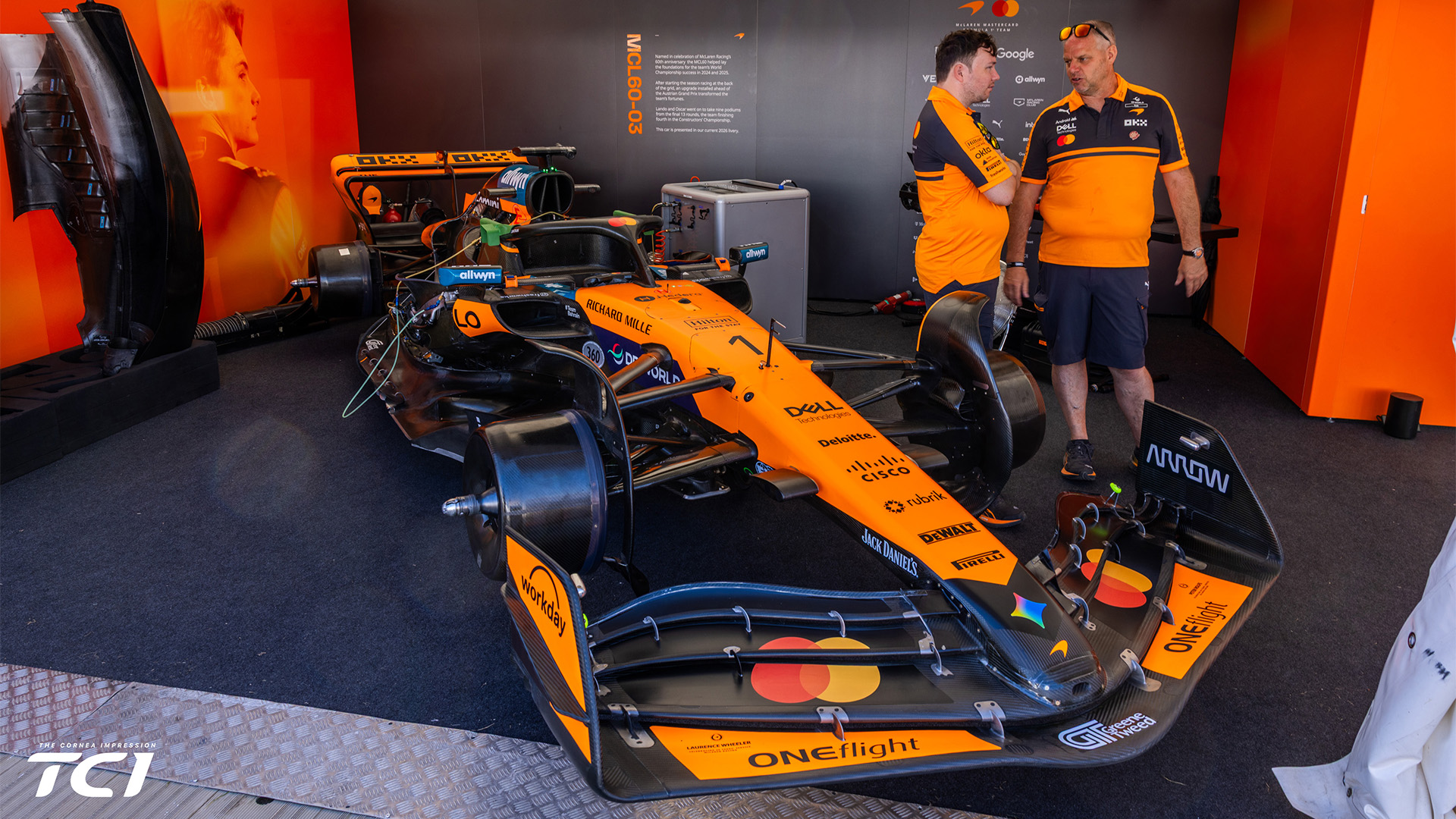
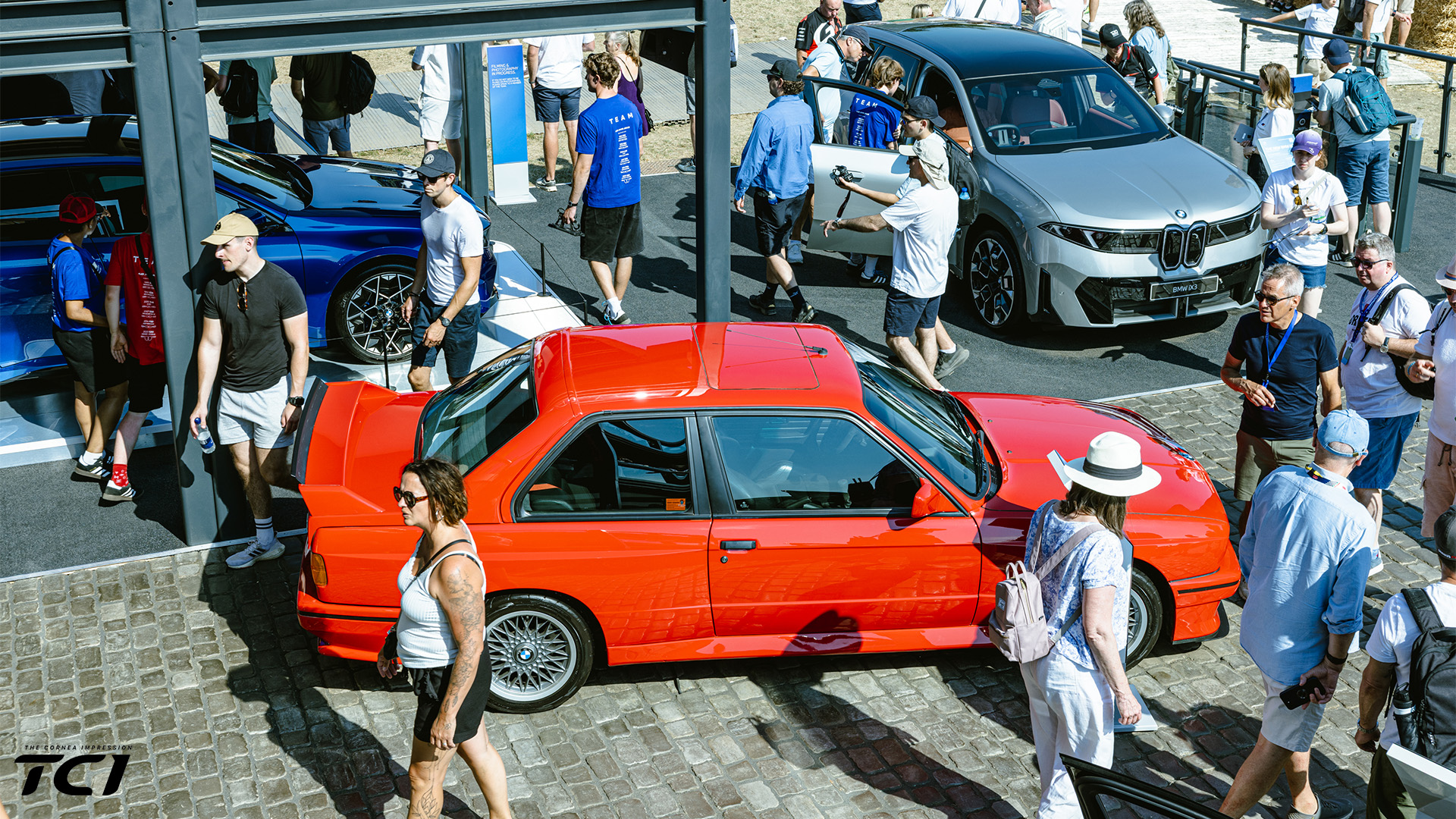
What separates Goodwood from a museum is that nothing stands still. The cars are started, warmed up, driven and pushed hard, so you hear the engines, smell the fuel and watch mechanics work. The Formula 1 Pit Lane puts you close enough to cars from McLaren, Ferrari, Mercedes, Red Bull, Williams and Aston Martin that a Grand Prix paddock feels remote by comparison.
The Forest Rally Stage hides a loose-surface course among the trees, where an Audi Quattro or a Lancia Delta Integrale finally makes sense. The Cartier Style et Luxe offers a quiet counterweight, and FOS Future Lab pushes beyond the motor industry entirely into robotics, aviation, space travel, and advanced mobility.
Also Read: McLaren M6GT Restored By MSO: Bruce McLaren’s Original Road Car Comes To Life
What happened at the 2026 Festival of Speed?
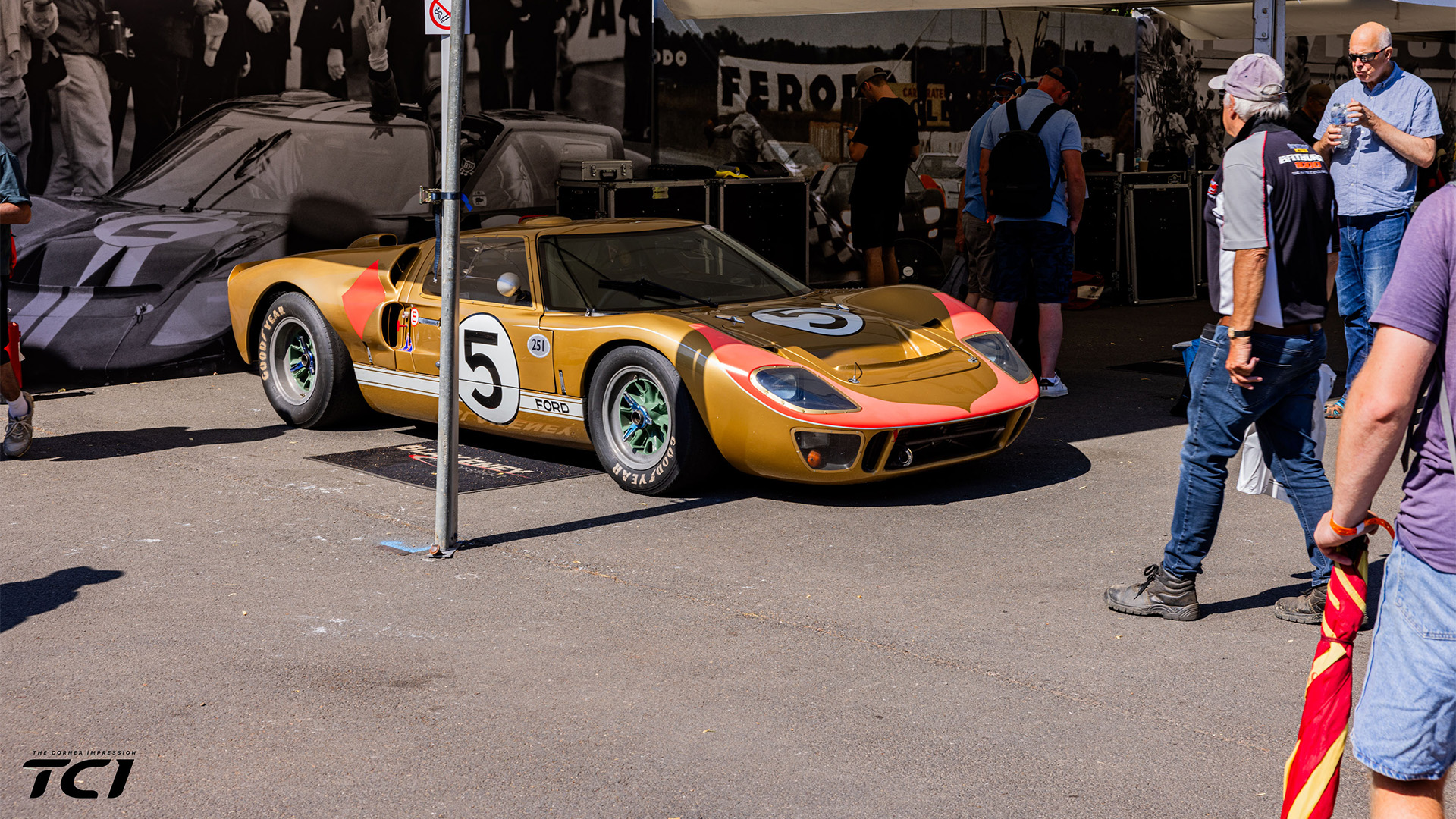
The Rivals theme gave the weekend a genuine narrative thread rather than a marketing line, and we watched its centrepiece climb the Hill in formation. The three Ford GT40 MkIIs that finished first, second, and third at Le Mans in 1966 ran together for the first time since 1969, now owned by the Miller Family Automobile Foundation. They went up more than once across the weekend, most memorably with Mario, Michael and Marco Andretti at the wheel: three generations of one racing family recreating a finish most people know only as a photograph, sixty years on. The crowd along the Hill knew exactly what it was looking at.
Singer took the Central Feature, which we come back to below. We worked through the First Glance Paddock and its run of new metal, from the Aston Martin DB12 S and Ferrari Amalfi to the Cupra Raval and Renault 5 Turbo 3E, with the GMA T.50S and Zenvo Aurora Tur among the more unusual company.
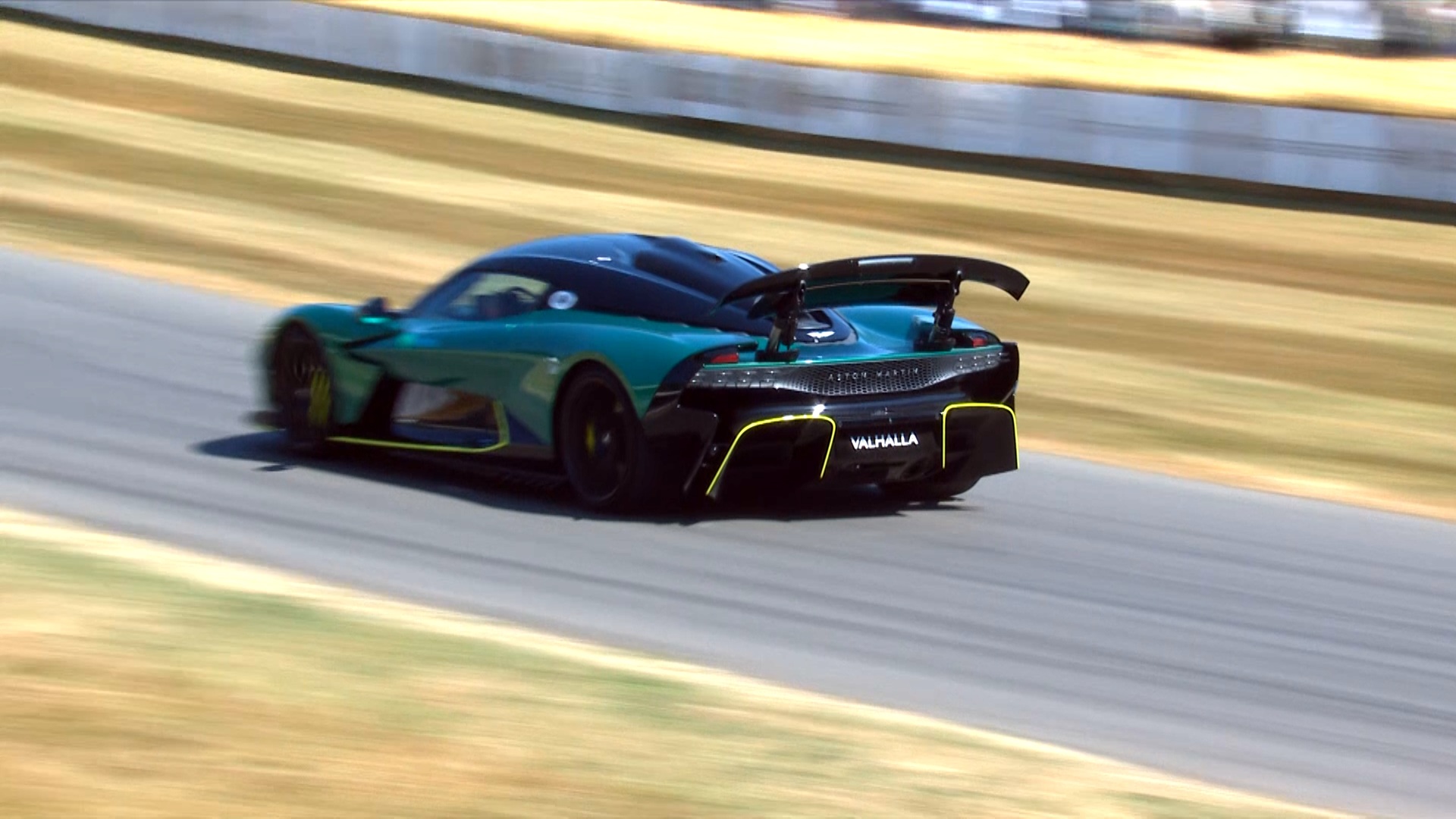
What makes the Aston Martin Valkyrie so extreme?
Aston Martin’s hospitality area offered one of the better vantage points on the estate, close enough to the Hill that you could hear cars approaching, watch them accelerate past and follow them up the course. It was also where we met the owner of the Valkyrie Coupé we would later ride in.
A Valkyrie can feel abstract from the outside. Its value, rarity and performance make it read less like a car than an engineering project that escaped a Formula 1 design studio. Meeting the owner returned it to human scale, because behind the exclusivity was someone who wanted the car seen, heard and used for exactly the occasion it was built to dominate.
The numbers
At the heart of the car sits a 6.5-litre naturally aspirated V12, built with Cosworth, which produces 1,000bhp at 10,500rpm and revs on to a maximum of 11,100rpm. The engine alone delivers 740Nm at 7,000rpm and weighs just 206kg. Aston Martin developed the Valkyrie with Red Bull Advanced Technologies, and its battery-electric system, supplied by Rimac and Integral Powertrain, adds a further 160bhp and 280Nm, taking the quoted combined output to 1,160bhp at 10,500rpm and 900Nm at 6,000rpm.
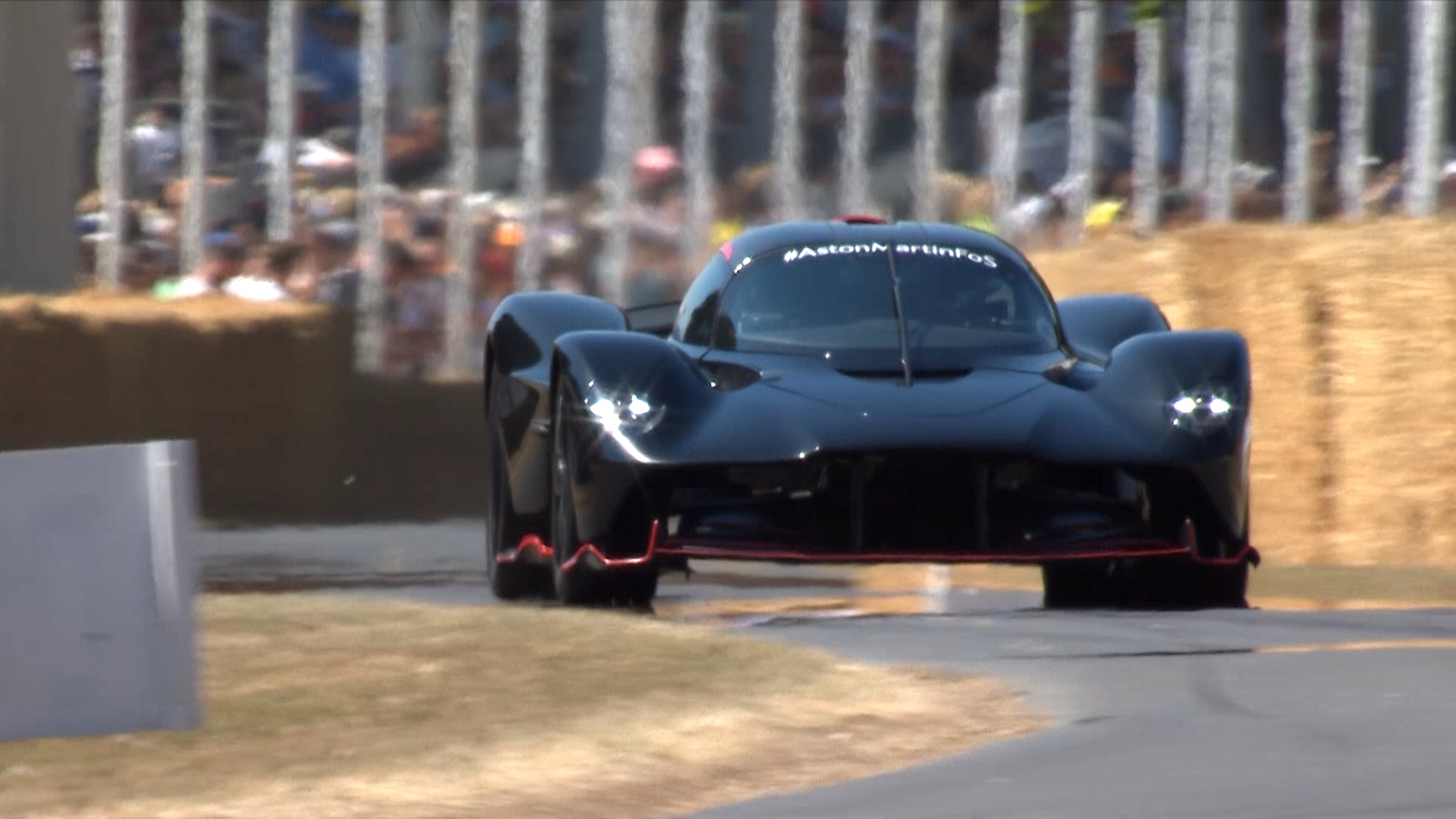
Those figures only start the explanation. The V12 and gearbox casing form structural parts of the car, and the gearbox carries the rear suspension mounting points, which removes the need for a conventional rear subframe. Air runs through enormous tunnels beneath and around the cockpit so that much of the downforce comes from the underbody, and the shape follows that logic rather than any normal idea of road-car packaging, with the passenger compartment appearing suspended between aerodynamic channels.
Getting in
Getting in feels closer to boarding a racing prototype than sitting in a supercar. The seating position is reclined, the cockpit is tight, and the car wraps itself around you. Then come the necessary earplugs and the essential helmet.
Neither removes the engine’s character. If anything, the protection filters out some of the violence while preserving sound quality, because the V12 does not simply get louder as the revs rise. It changes character, moving from a deep mechanical presence to something sharper and more urgent, belonging to a race car rather than a road one.
What is it like to ride the Goodwood Hillclimb in a Valkyrie?
Our thanks go to Darren Turner for driving us up the Hill at full pelt and, just as importantly, for keeping us safe. Darren is a three-time Le Mans class winner and was entrusted with the Valkyrie for its dynamic Goodwood debut in 2021, so there are few people better qualified to demonstrate what it can do on a course this narrow.
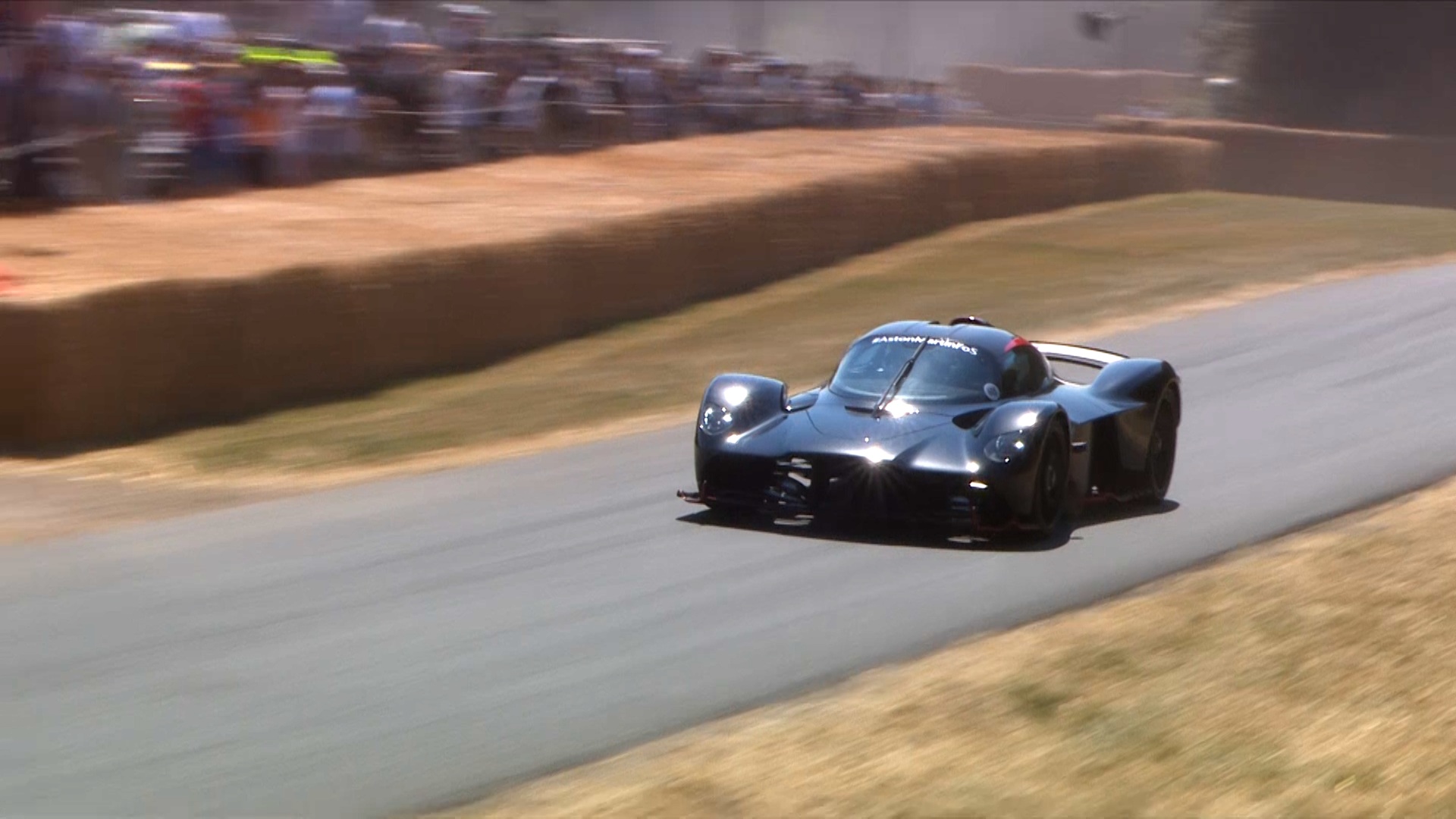
The run itself happens very quickly. The Valkyrie accelerates with an intensity that is hard to process from the passenger seat, and the scenery compresses until trees, buildings, hay bales and marshal posts arrive and disappear before you have registered them. Acceleration is only part of it, because there is also the sound, the vibration, the rapid changes in direction, and the knowledge that you are travelling on a road lined with people.
The moment that stayed with us
Once the timed run was complete, we made our way slowly back down the Hill, and that return journey was calm enough to look around properly. People were smiling, waving, pointing and raising their phones; children were visibly thrilled, and adults reacted with the same unfiltered enthusiasm. These were spectators who had spent all day watching some of the rarest cars in the world, and they still responded to the Valkyrie as though something impossible had appeared in front of them.
The fast run showed us what the Valkyrie can do. The slow journey back showed us what it means to people, and that is the memory we will keep longest.
Also Read: New Aston Martin Valkyrie Simulator: Only 24 will be made
Why did Singer take centre stage at Goodwood?
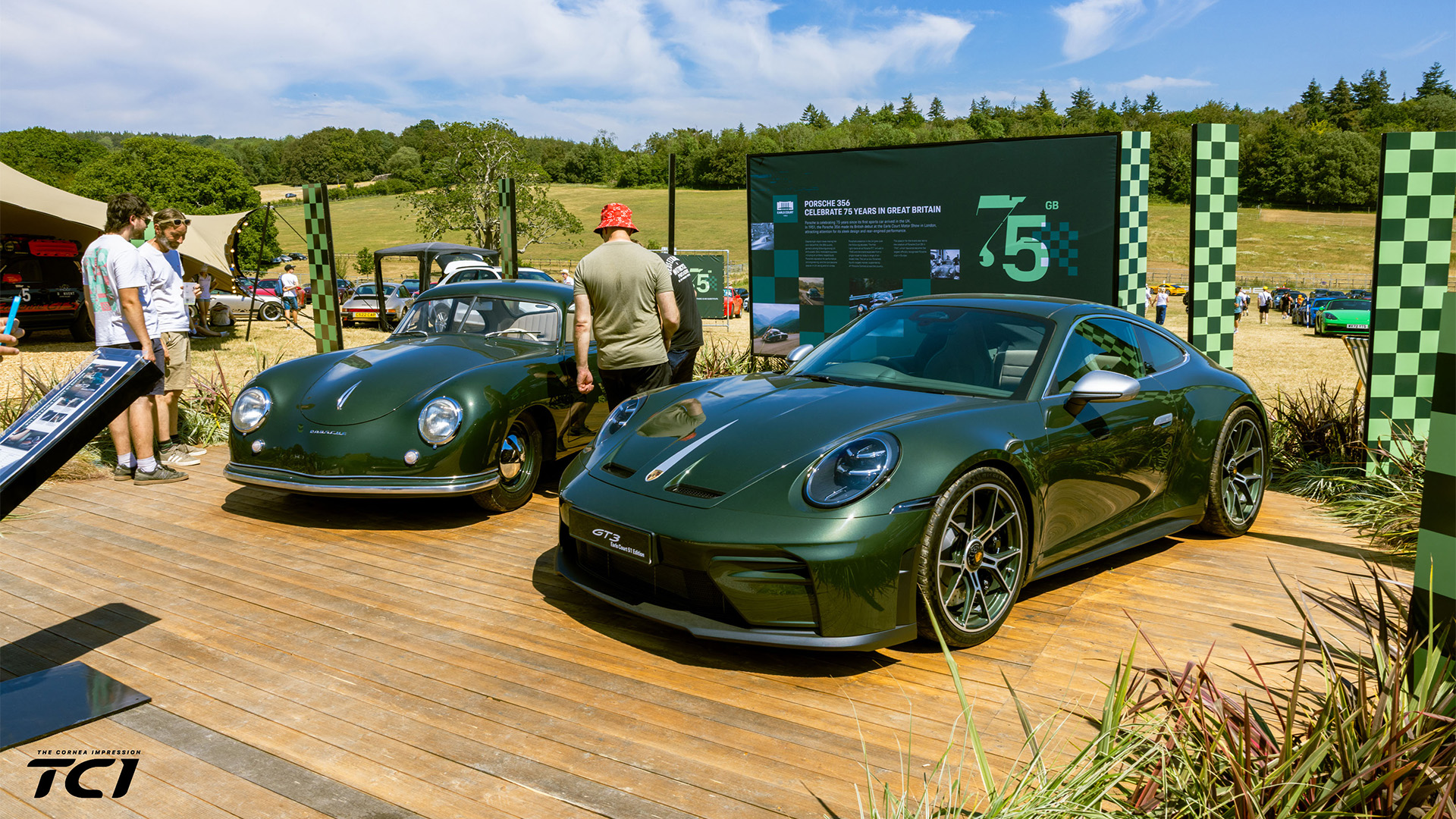
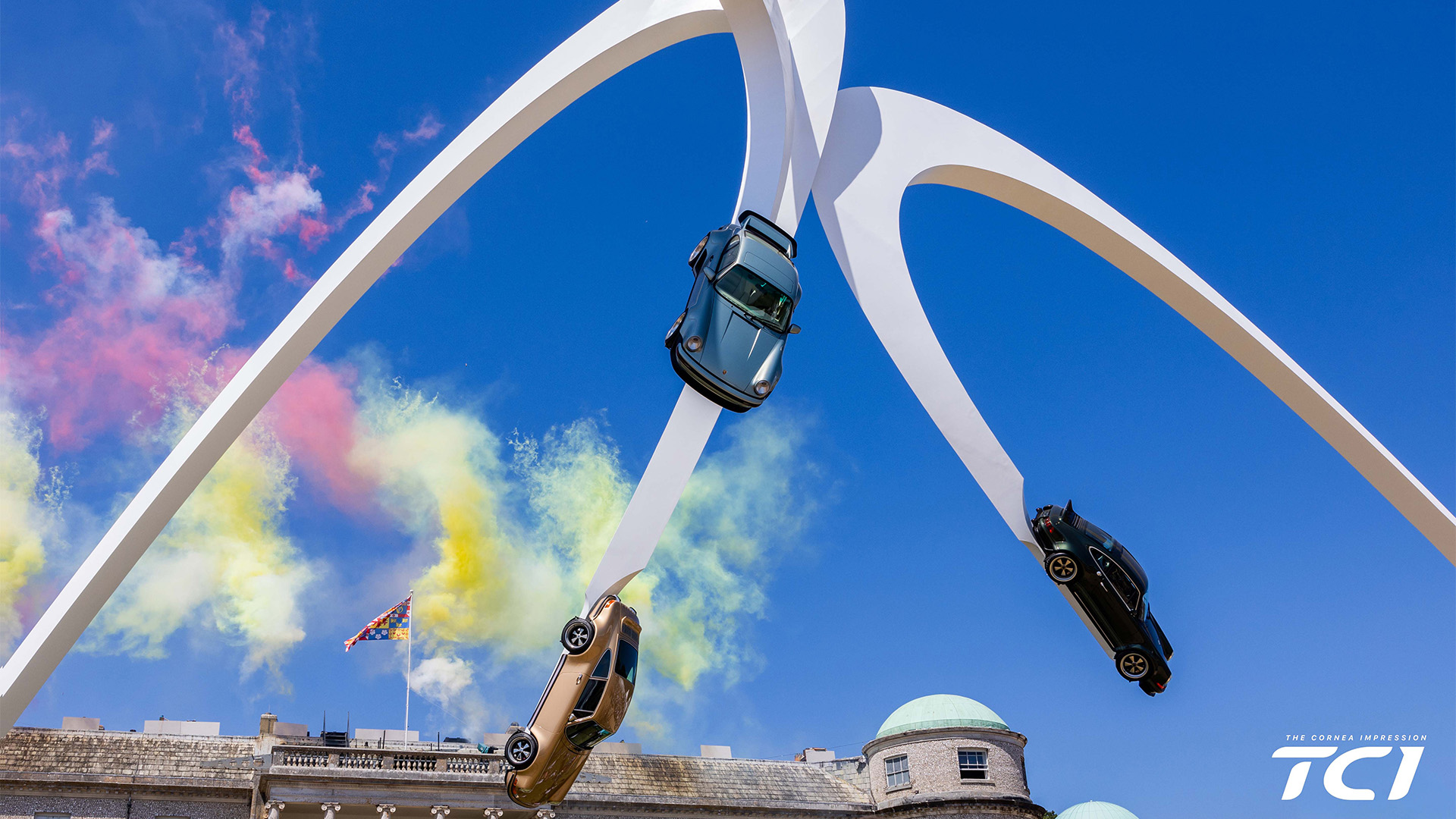
Singer Vehicle Design took the Central Feature for 2026, and the sculpture on the lawn in front of Goodwood House was extraordinary to stand under. Gerry Judah designed it as a triple arch, suspending three Porsche 911s Reimagined by Singer above the crowd, representing the company’s Classic, Classic Turbo and DLS restoration services.
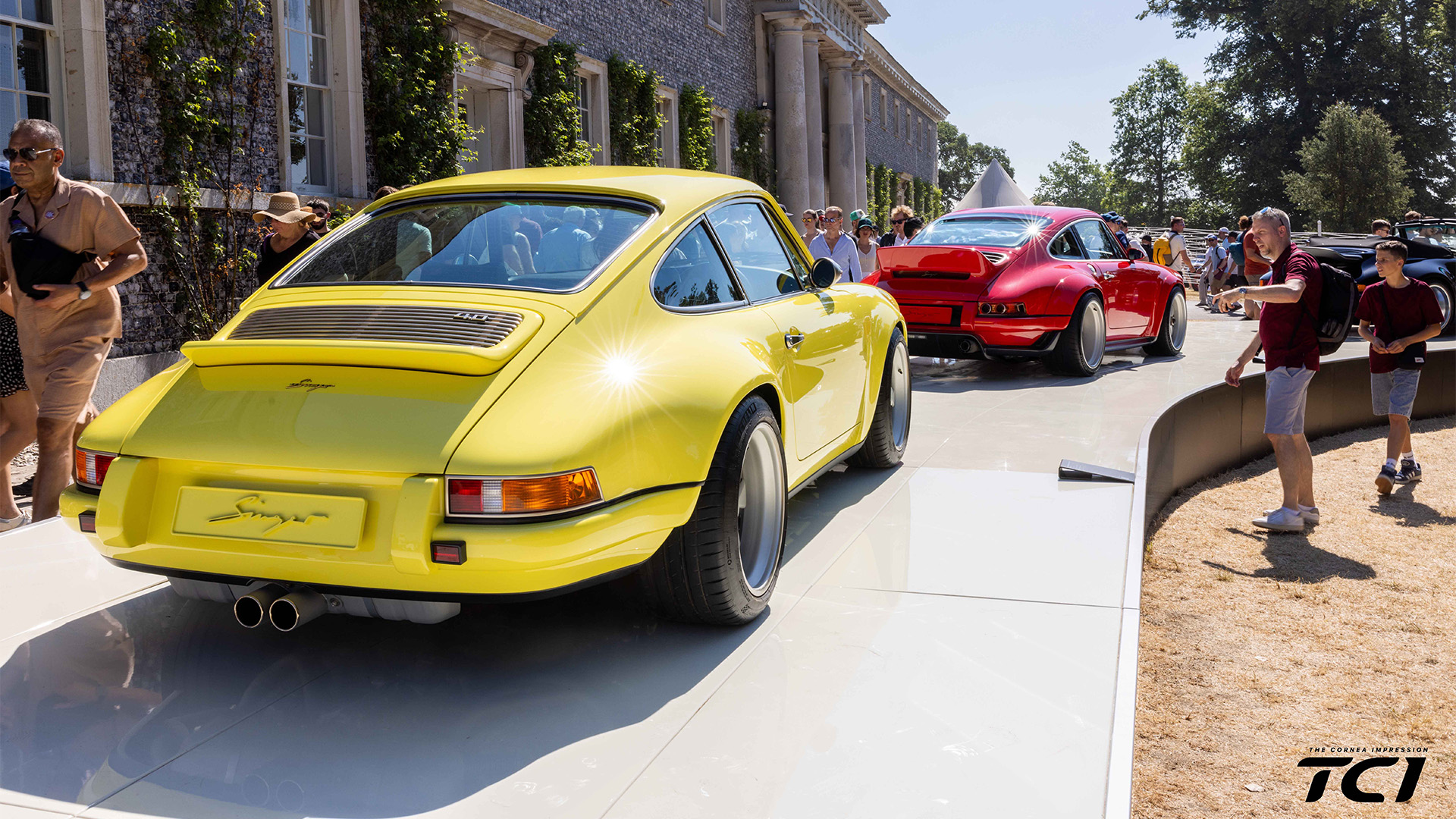
The sculpture was only the start. Eleven cars restored for their owners were spread across the Festival, and the stand in front of the Stable Yard traced the company’s evolution through Classic, DLS, Classic Turbo and DLS Turbo work. At the front of that display sat the first slantnose Porsche 911 Reimagined by Singer, making its public debut.
Three more cars ran in the Supercar Paddock, a Carrera Coupe alongside two DLS Turbo commissions, and we watched all three tackle the Hillclimb across the four days. Once a day, the cars from the stand and the paddock gathered beneath the sculpture, joined by privately owned Singers whose owners had driven them in. For a company whose work is usually seen one car at a time, standing among that many at once was the real pleasure of the weekend.
The recognition makes sense, because Singer treats restoration as a question rather than a procedure. Instead of returning a car to its original condition, its work asks what the classic Porsche 911 could have become if its original designers had had modern engineering, contemporary materials, and decades of accumulated knowledge. The proportions, silhouette, and character survive intact, while the execution is elevated by obsessive engineering and attention to detail.
Goodwood was the right place to mark that, since both organisations share a belief that automotive history should not be frozen. That important cars should be driven, heard and examined rather than left silent in collections. A specialist admired by Porsche enthusiasts had become the centrepiece of one of the world’s most important automotive events.
What makes Rolls-Royce Coachbuild different from personalisation?
Another highlight took place away from the Festival grounds, at the Rolls-Royce factory at Goodwood, where Boat Tail and La Rose Noire Droptail stood together.
Boat Tail
Both are beautiful, but seeing them side by side makes the argument clearer than either does on its own. These are not highly specified production cars. They represent the revival of coachbuilding, which means building an automobile around the character and life of an individual patron.
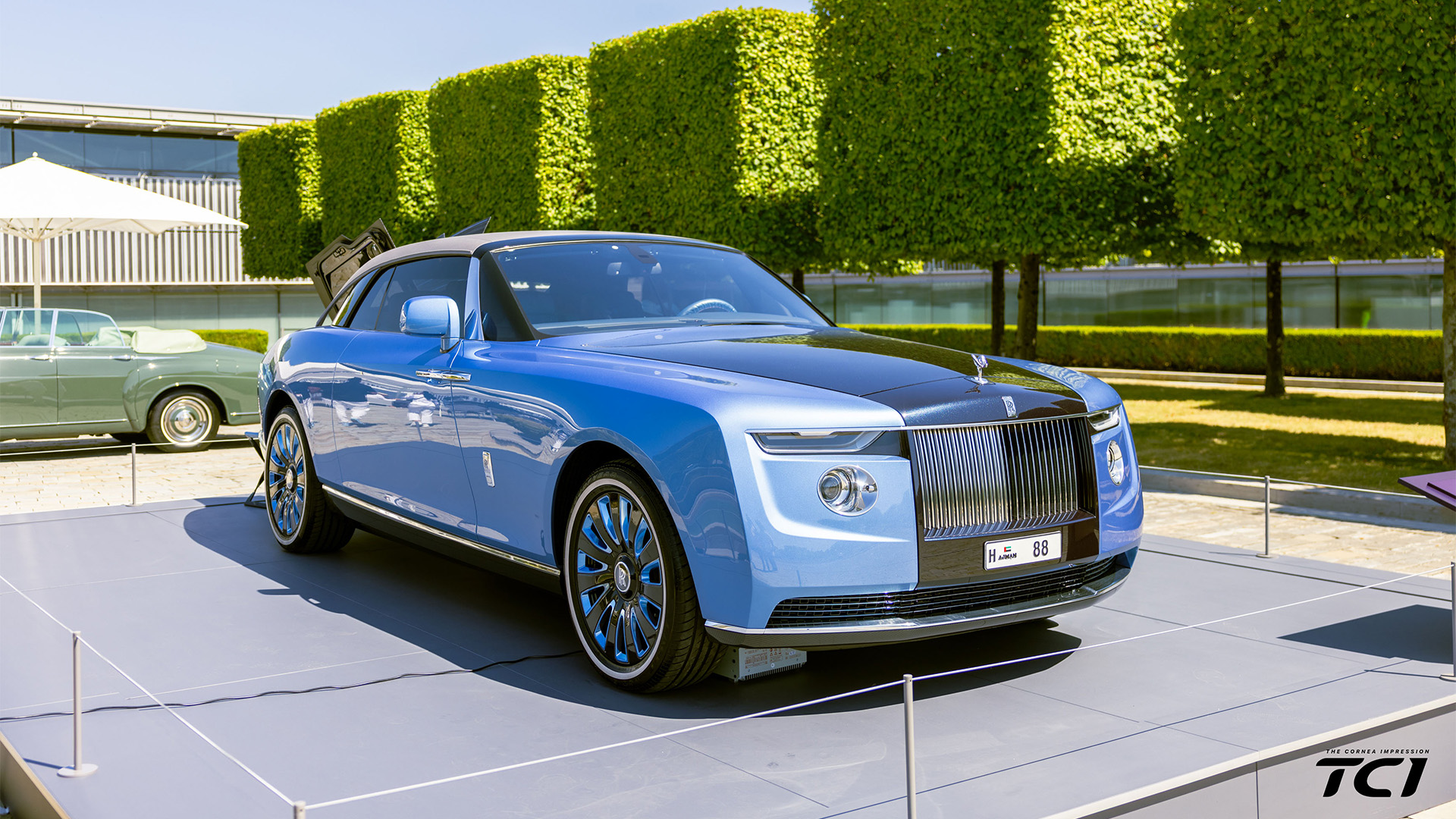
Boat Tail marked the moment Rolls-Royce confirmed Coachbuild as a permanent part of its portfolio when the car was revealed in 2021. Conceived as a social grand tourer, its nautically influenced rear section opens to reveal a hosting suite, and the whole object was shaped around how its owners wanted to use it.
La Rose Noire Droptail
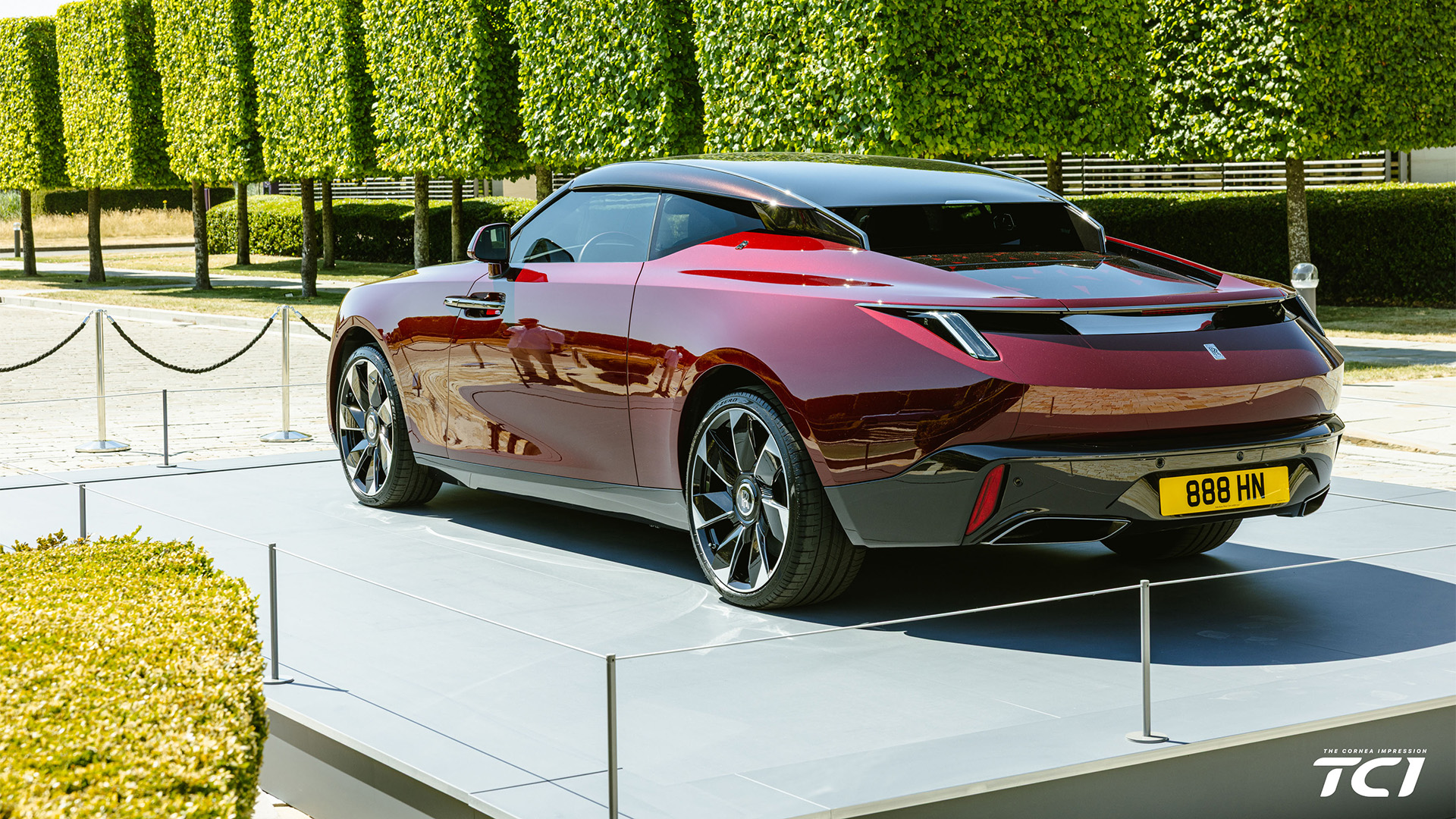
La Rose Noire is even more dramatic. The first of four Droptail commissions, crafted over four years, it takes its inspiration from the Black Baccara rose, a velvet-like flower bred in France and beloved by the commissioning family’s matriarch. The rose reads almost black in shadow before revealing a red pearlescent shimmer in direct light, and those two tones set the whole palette. It also marks the return of the roadster body type at Rolls-Royce, and its two-seat cabin is a first in the marque’s modern history.
The interior carries the most complex parquetry Rolls-Royce has produced. The pattern runs from the rear shawl panel through the doors and across the fascia, formed from 1,603 pieces of Black Sycamore veneer: 1,070 symmetrical elements making the background, and 533 red pieces positioned asymmetrically to suggest falling petals.
One craftsperson made it, working alone in a sound-insulated room in one-hour sessions, no more than five hours a day, because the required concentration allowed nothing else. That single piece of work took more than nine months.
Coachbuilding begins with a person.
Those details matter because they show the distance between Coachbuild and conventional customisation. Most luxury-car personalisation begins with an existing model, and the customer selects paint, leather, veneer, stitching and equipment. Coachbuilding begins with a person, and the car is developed afterwards as an expression of that person’s tastes, history and relationships. Rolls-Royce describes the process as the automotive equivalent of haute couture, and it is invitation-only by design.
The distinction is worth holding on to because, at this level, luxury stops being about having more options than someone else and becomes a question of authorship. Boat Tail and La Rose Noire are automobiles, but they are also functional sculptures and records of a long relationship between patron and maker.
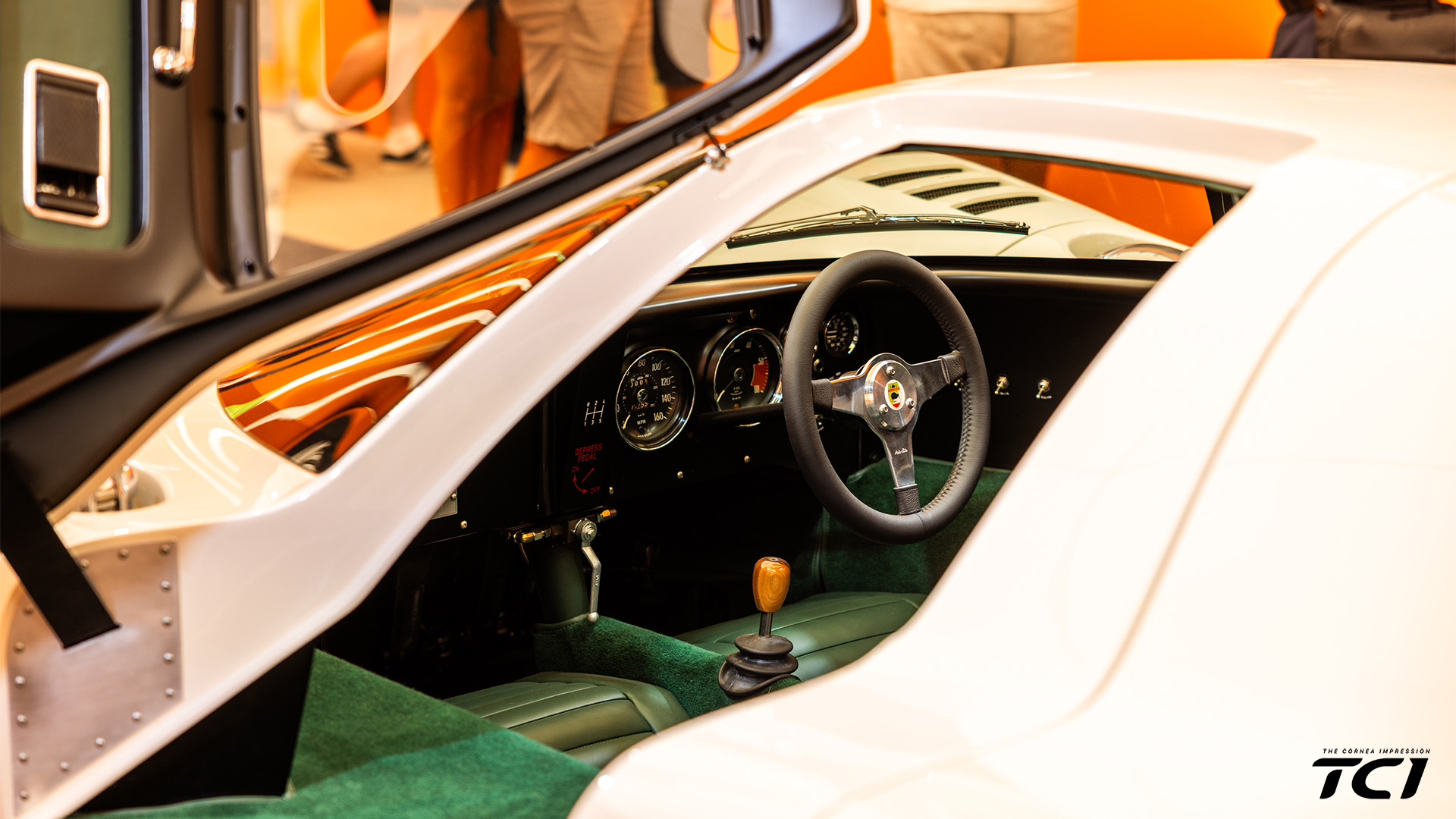
Where can you slow down at the Festival of Speed?
Goodwood becomes an assault on the senses after a while. There is constant noise, movement, heat and walking, and you are always looking towards the next car or the next run up the Hill, which is why the right hospitality space changes the experience.
McLaren occupied one of the coolest and best-shaded positions we found across the estate. The shade alone was valuable, but the atmosphere made it work. The space felt luxurious without feeling sealed off from the event outside, so you could sit, talk and absorb what you had just seen instead of rushing towards the next thing. At an event defined by speed, it gave us a way to slow down.
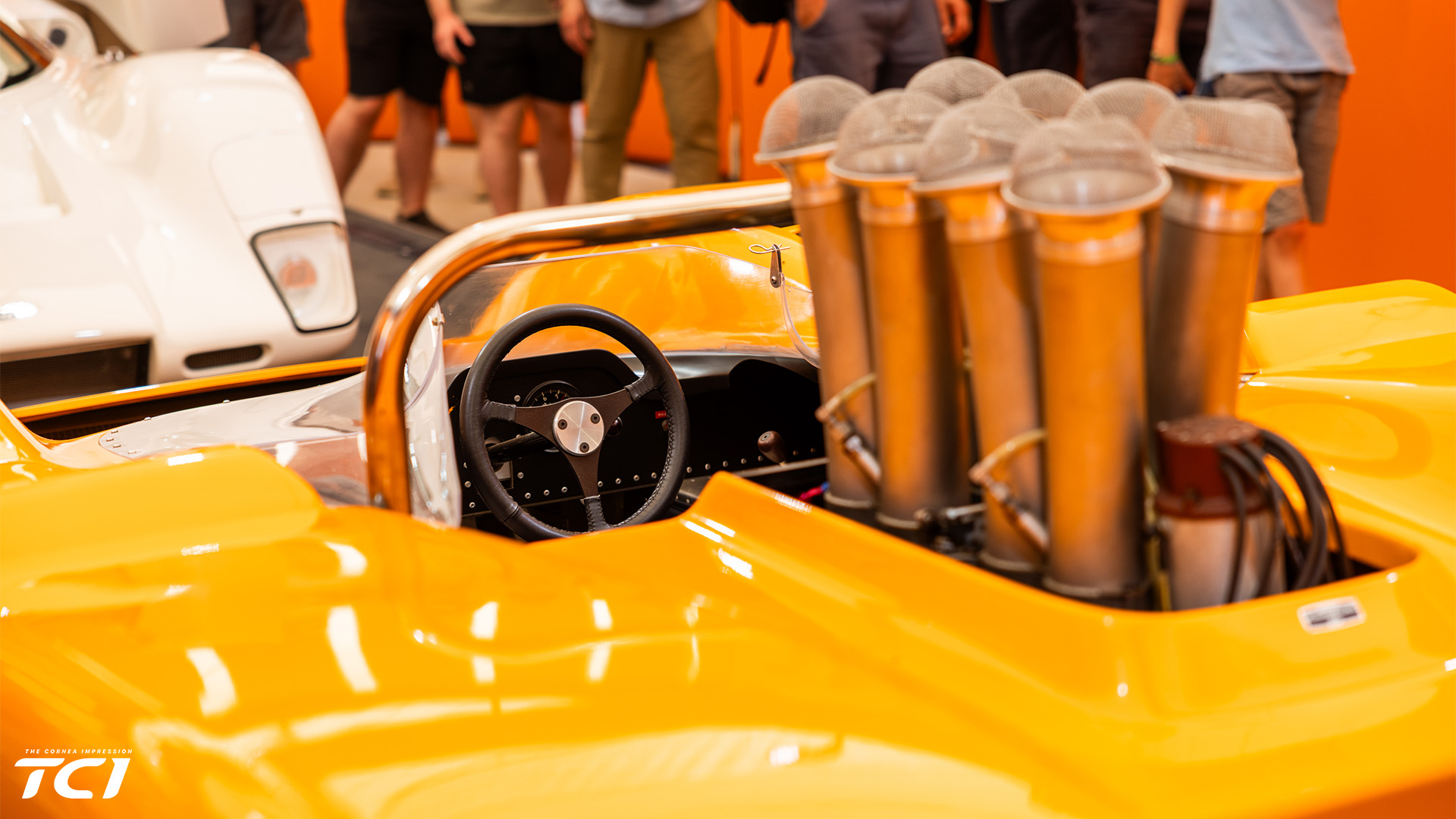
The best hospitality at Goodwood isn’t really about food or access, anyway. It becomes a social meeting point, drawing together drivers, owners, collectors, photographers and people from across the industry. That is also how we came to meet Amy Shore, a photographer whose work shaped how we started looking at cars in the first place.
Also Read: New McLaren 788HS Revealed: The Ultimate Farewell To An Iconic Supercar Family
The best automotive photography documents far more than a machine, because it captures the people around it, the landscape and the anticipation, and Amy’s work demonstrated that to us early on. Meeting someone whose photographs have influenced your eye has nothing to do with performance figures or rarity, and at Goodwood, those encounters happen naturally because the people shaping automotive culture are usually walking the same paddocks as everyone else.
Also Read: McLaren Artura 1000GP By MSO: Celebrating 1,000 Formula 1 Grands Prix In Style
How should you plan a day at the Goodwood Festival of Speed?
Goodwood is not an event to attend without a plan. The Festival occupies only part of the wider Goodwood Estate. However, the site is still enormous, and in our experience you should allow roughly 40 minutes to walk from one end of the main Festival area to the other. That is not an official figure. It is a realistic estimate that accounts for crowds, track crossings, diversions and the fact that walking anywhere at Goodwood without being distracted is nearly impossible.
The timetable is dense, and the major attractions sit some distance apart, so the Forest Rally Stage requires a deliberate journey away from the Hillclimb and the Formula 1 paddock. The Supercar Paddock, manufacturer stands, Cartier Style et Luxe, and Future Lab can each absorb a serious portion of a day. Trying to see everything turns the Festival into an exercise in rushing. Pick a handful of non-negotiable moments each day, know when the cars you care about run, and leave room to wander, because Goodwood rewards planning and spontaneity in roughly equal measure.
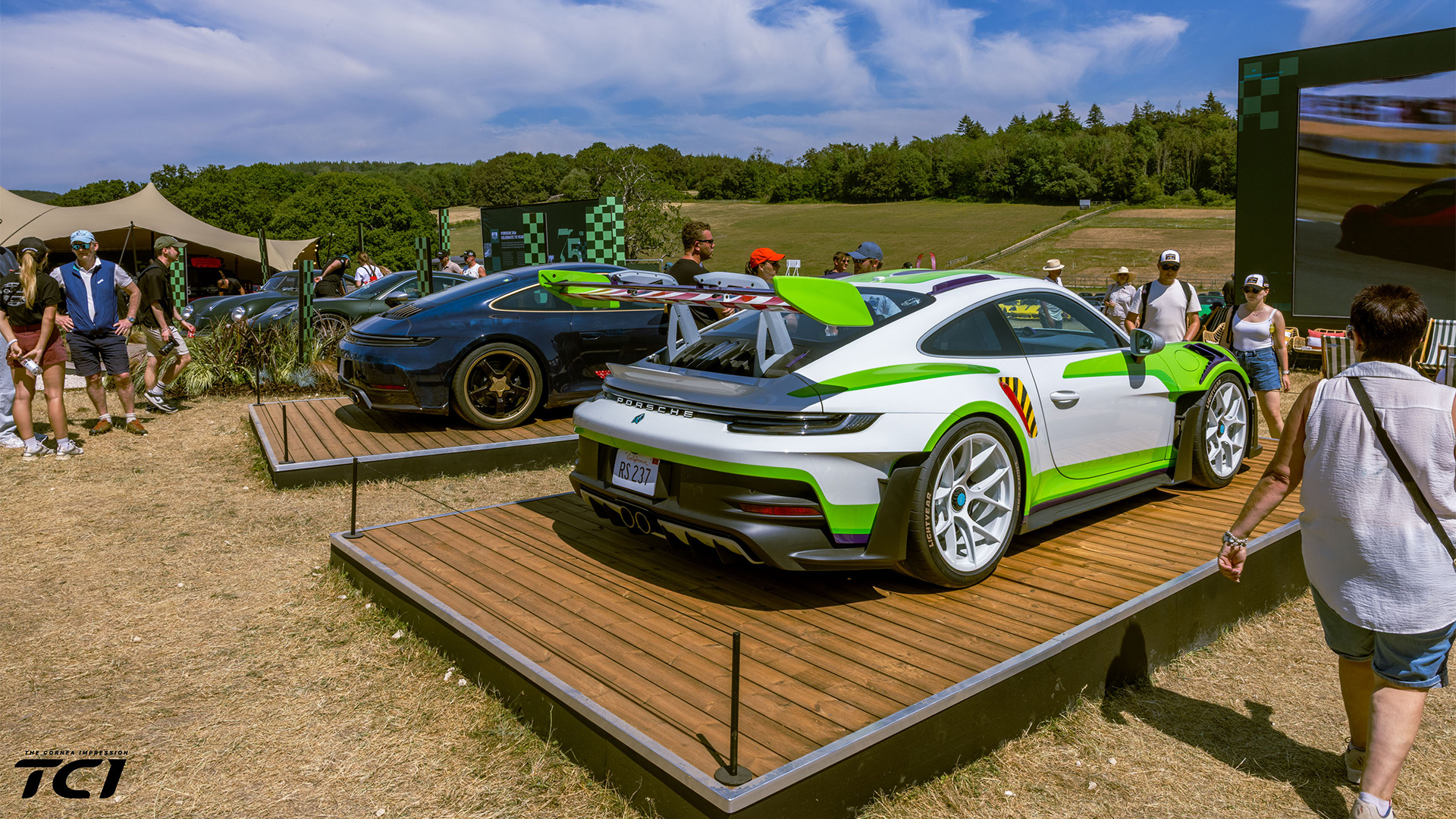
Where to stay
Accommodation deserves the same seriousness as the tickets. We book around a year ahead and aim for somewhere about 30 minutes away under normal driving conditions. That last phrase matters because journey times rise sharply during the event as thousands of people move along rural roads at the same time.
Comfortable shoes, sun protection and an early arrival do more for the experience than anything else, since the paddocks are at their best in the morning while the machinery is being prepared.
When is the Goodwood Festival of Speed 2027?
The Festival of Speed presented by Mastercard returns to Goodwood House from 15 to 18 July 2027.
Tickets went on sale first to the Goodwood Road Racing Club and to 2026 attendees, with GRRC Members able to book on the morning of Monday 13 July, Fellows later that afternoon, and 2026 ticket buyers from Tuesday 14 July. General sale follows in November, and Goodwood offers a ticket alert sign-up for anyone who wants to be notified.
Joining the GRRC Fellowship brings a ten per cent discount on two tickets and grandstand passes, access to the Pit Stop enclosures during the event, and a Fellowship badge with a GRRC car sticker. For anyone planning to camp, the 2027 campsites run from 14 to 19 July and are open from midday Wednesday until midday Monday.
We already know where we will be next July.
Also Read: Rolls-Royce Ghost Savile Row One-Off Edition Embraces Tailoring-Bespoke Approach to Car Design
Frequently asked questions
When is the Goodwood Festival of Speed 2027?
The 2027 Festival of Speed presented by Mastercard takes place from 15 to 18 July 2027 at Goodwood House in West Sussex.
How do you get tickets for the 2027 Festival of Speed?
GRRC Members booked from the morning of Monday 13 July and Fellows later the same afternoon, followed by 2026 Festival of Speed ticket buyers on Tuesday 14 July. General sale opens in November, and Goodwood runs a ticket alert sign-up to receive notifications.
Do children need a ticket for the Festival of Speed?
A ticket-holding adult must accompany everyone under 18. Children aged 12 and under require an admission ticket, which must be ordered in advance and is subject to availability. On arrival, you can collect a wristband for your child and add a phone number to it. If the event has sold out, a child wristband may still be available at the entry gates.
Can you camp at the Festival of Speed?
Yes. Goodwood operates campsites for the event, and for 2027 they run from 14 to 19 July, open from midday on Wednesday until midday on Monday.
How long is the Goodwood Hillclimb?
The Hillclimb is 1.16 miles long and has been the centre of the action since the first Festival of Speed in 1993.
Where is the Goodwood Festival of Speed held?
The event takes place at Goodwood House, Kennel Hill, Chichester, West Sussex, PO18 0PX. The Goodwood ticket office can be reached on 01243 755055.