

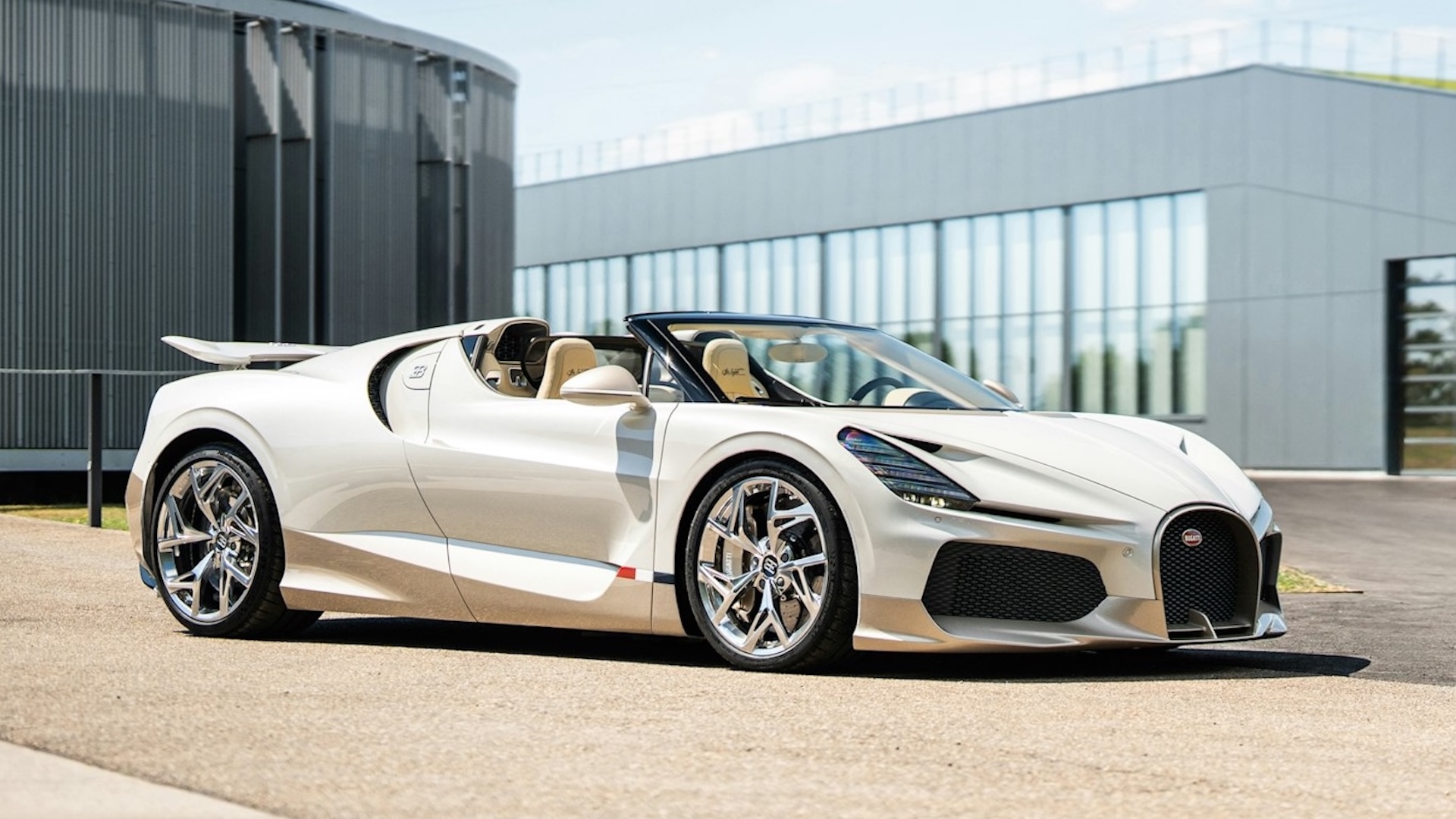
The final Bugatti W16 Mistral has rolled out of the Atelier in Molsheim, bringing production of the record-breaking roadster to an end. More significantly, it closes the road-going series-production chapter of one of the most extraordinary engines ever fitted to a car.
This is the 99th W16 Mistral, finished in a restrained two-tone combination of Pearl and Sparkle with a Magnolia leather interior. Beneath that elegant specification sits an 8.0-litre, quad-turbocharged W16 producing 1,600PS (1,578hp) and 1,600Nm: the ultimate evolution of an engine that made its production debut in the Bugatti Veyron in 2005.
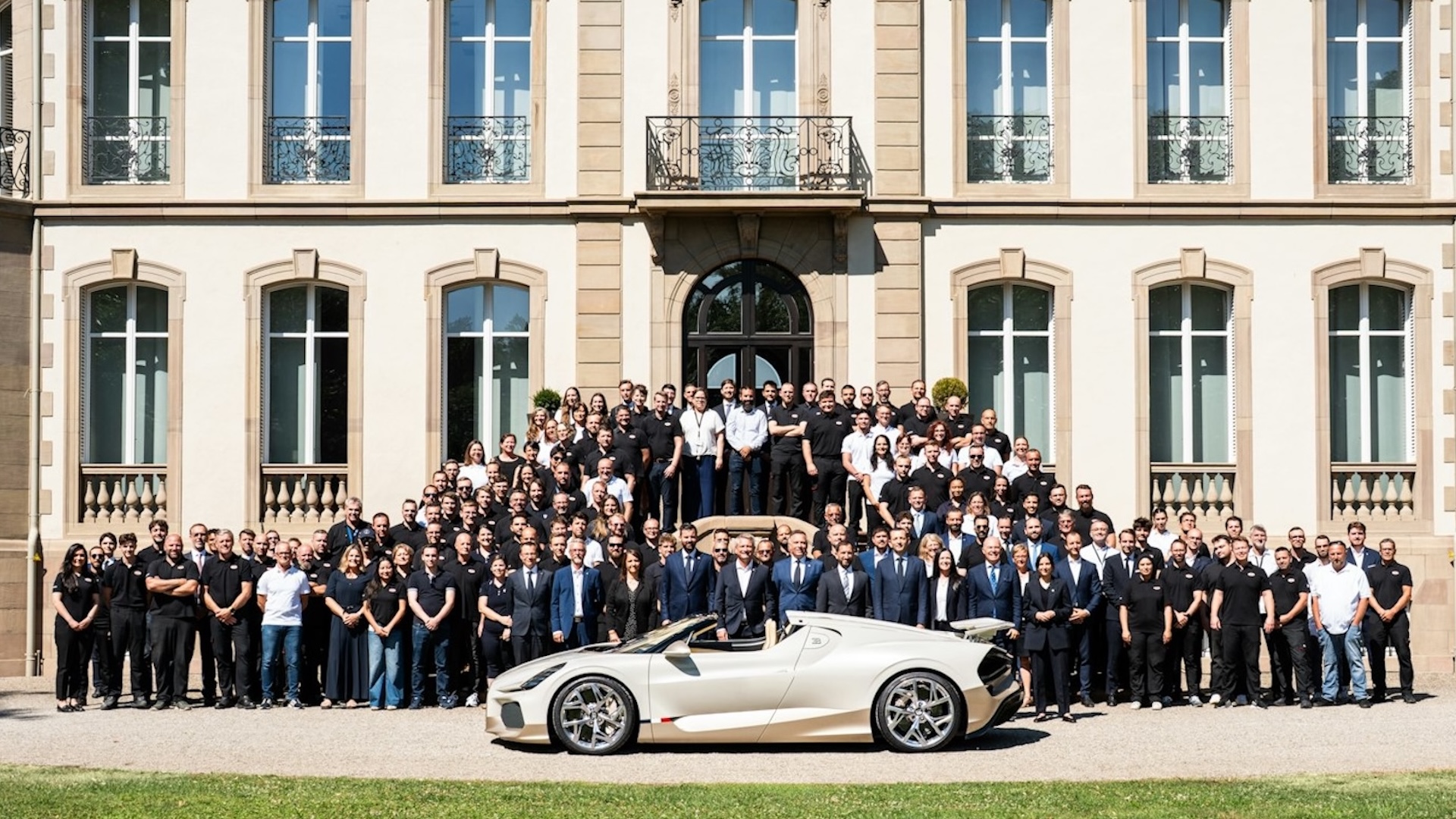
Over the last two decades, the W16 powered the Veyron, Chiron, Divo, Centodieci, La Voiture Noire, Bolide and several limited-run derivatives. It took Bugatti beyond 400km/h, then past 300mph, before signing off with the roof removed at 453.91km/h.
Few engines have shifted the limits of performance so dramatically. Fewer still have managed it while wrapped in leather, polished aluminium and enough bespoke detailing to make a private jet look a little underdressed.
The Bugatti W16 Mistral
Bugatti first unveiled the W16 Mistral at Monterey Car Week in 2022 as its first roadster since the Veyron Grand Sport Vitesse. Production was limited to 99 cars, each priced from €5 million before taxes and individualisation. Predictably, the entire allocation was sold before most people had finished reading the announcement.
Despite its close mechanical relationship with the Chiron, the Mistral was never simply a Chiron with its roof removed. Bugatti reengineered and reshaped the carbon-fibre monocoque, developed a new rounded silhouette and incorporated structural air intakes behind the occupants. These intakes are strong enough to support the weight of the car in a rollover.
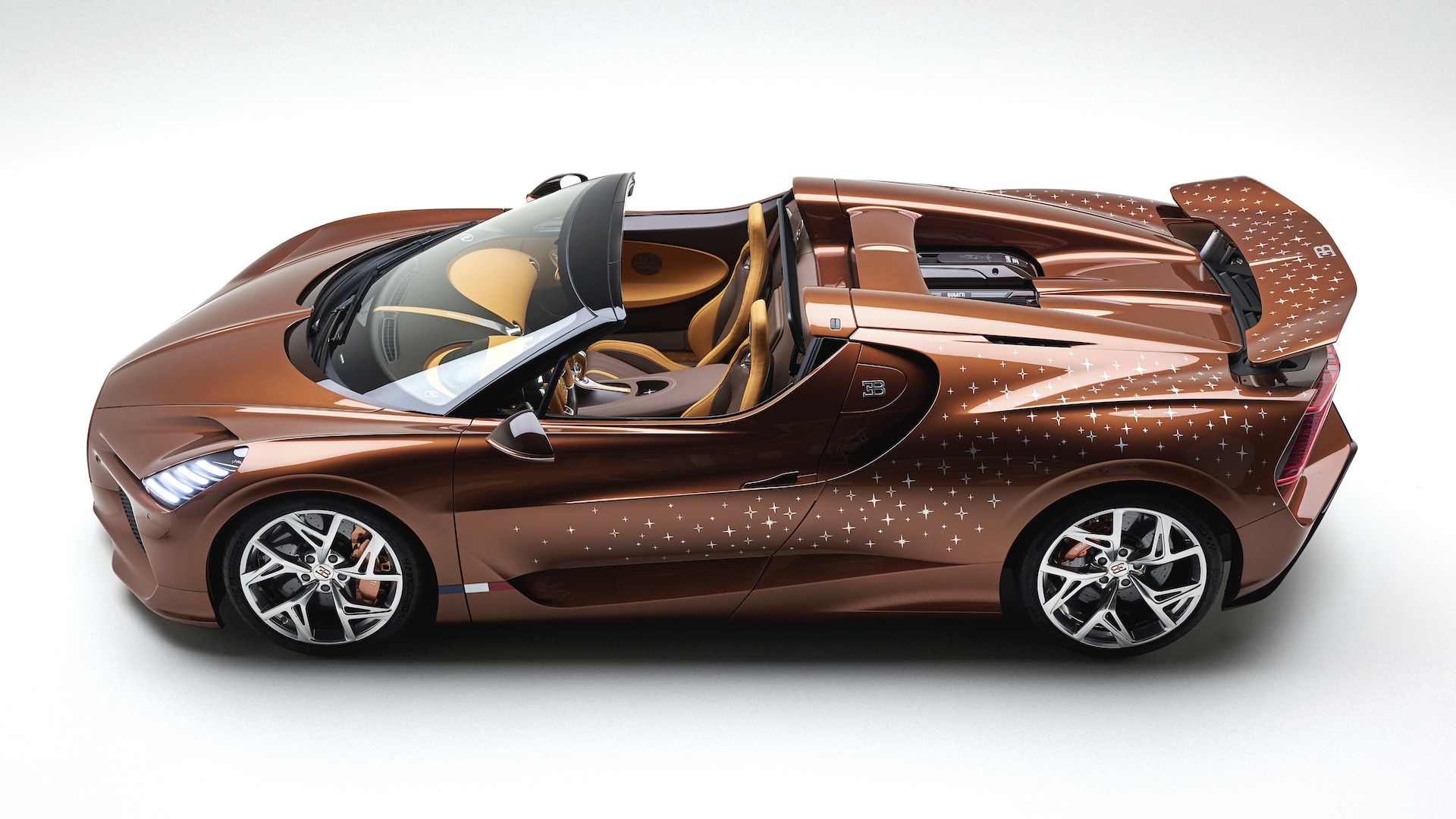
They also sit close to the occupants’ heads and feed approximately 70,000 litres of air into the engine every minute at full load. With the roof absent, the induction roar, turbocharger whistle and wastegate theatrics become a rather more persuasive audio system than anything listed on the options sheet.
Its design drew inspiration from the 1934 Bugatti Type 57 Roadster Grand Raid, particularly its V-shaped windscreen and twin aerodynamic headrests. The Mistral also introduced vertically stacked headlights, a deeper horseshoe grille and a dramatic X-shaped rear light arrangement inspired by the track-only Bugatti Bolide.
Aerodynamics and cooling dictated much of the styling. Air passes through the headlights and exits into the wheelarches, while the enlarged horseshoe grille feeds the high-temperature radiator. Separate side openings supply the intercoolers and oil-cooling circuits.
The result looks distinct from the Chiron while retaining the engineering obsession that defines modern Bugatti. Even the lighting has a mechanical theme: the four-element headlight signature references the car’s four-wheel-drive system and four turbochargers.
The Last Bugatti W16 Mistral: A Special Final Spec
The last Mistral wears Pearl across most of its bodywork, accompanied by Sparkle on the lower sections and selected details. Sparkle may sound like a colour selected from a child’s stationery cupboard, but on the Mistral it presents as a subtle champagne-gold accent.
Polished wheels, chrome badging and polished aluminium engine covers complete the exterior. The latter is a particularly uncommon specification because bare aluminium naturally acquires marks and patina over time. For a car celebrating mechanical history, allowing parts of it to age honestly feels entirely appropriate.
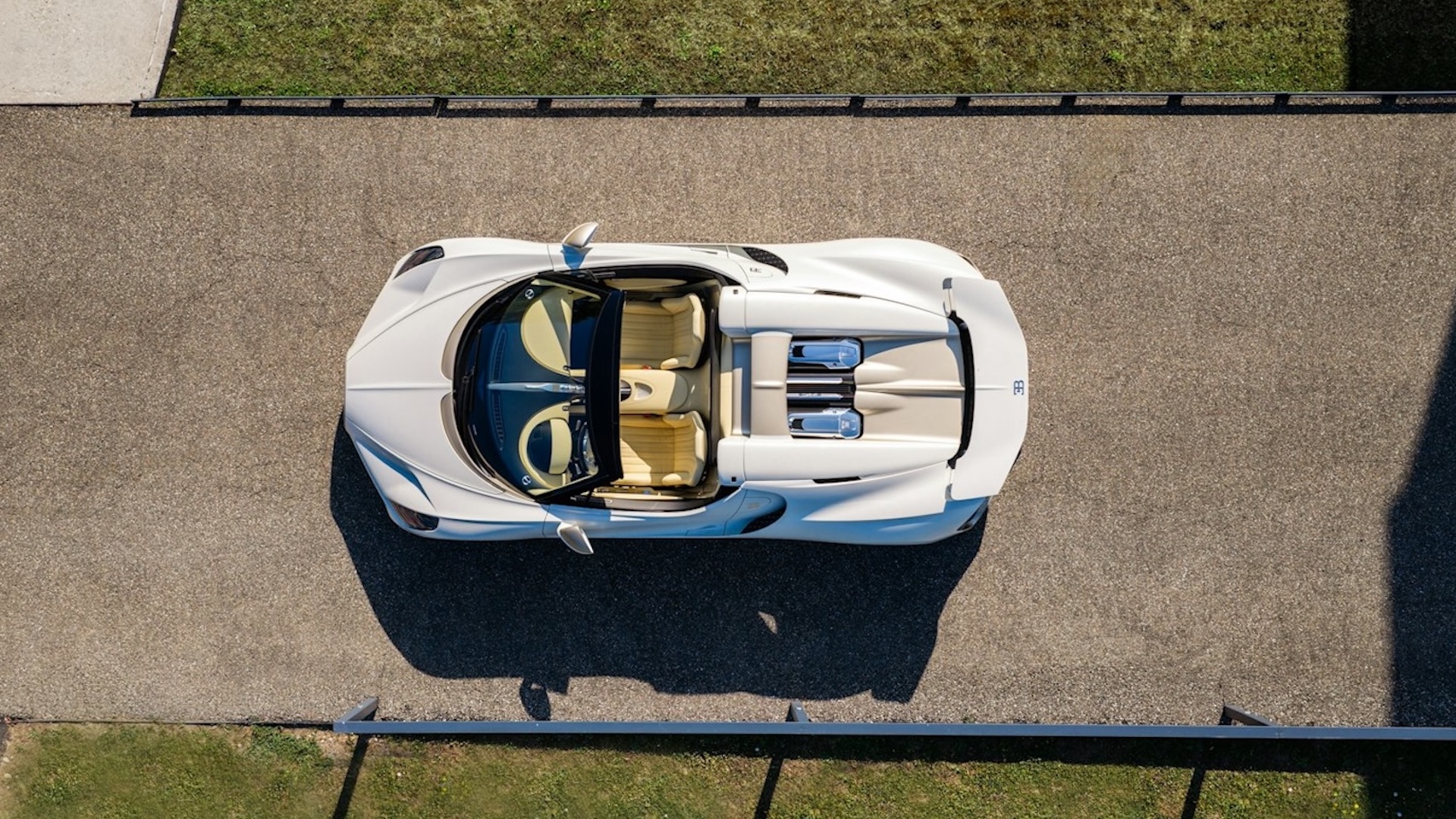
The phrase “The last of its kind” appears beneath the rear wing and on aluminium plaques inside the cabin. A silhouette of the Mistral accompanies the inscription, ensuring that nobody mistakes this for number 73 of an ongoing production run.
Also Read:
– Lamborghini Revuelto Impavido Revealed: A 1,001hp Tribute To Japan’s Samurai Spirit
– One-Off Bugatti W16 Mistral Blanc Éternel
– New McLaren 788HS Revealed: The Ultimate Farewell
What’s The Interior Of The Final Bugatti W16 Mistral Like?
Inside, Magnolia leather is paired with Grey Carbon Matt trim. Ettore Bugatti’s signature is embroidered into the headrests, rendered in aluminium on the door sills and used in place of the conventional Bugatti script on the inner engine-cover trim.
The armrest contains a Lalique plaque cast from frozen crystal glass and titled “Spirit of the Wind.” It recalls the friendship and working relationship between Ettore Bugatti and French glassmaker René Lalique, while also referencing the powerful southern French wind from which the Mistral takes its name.
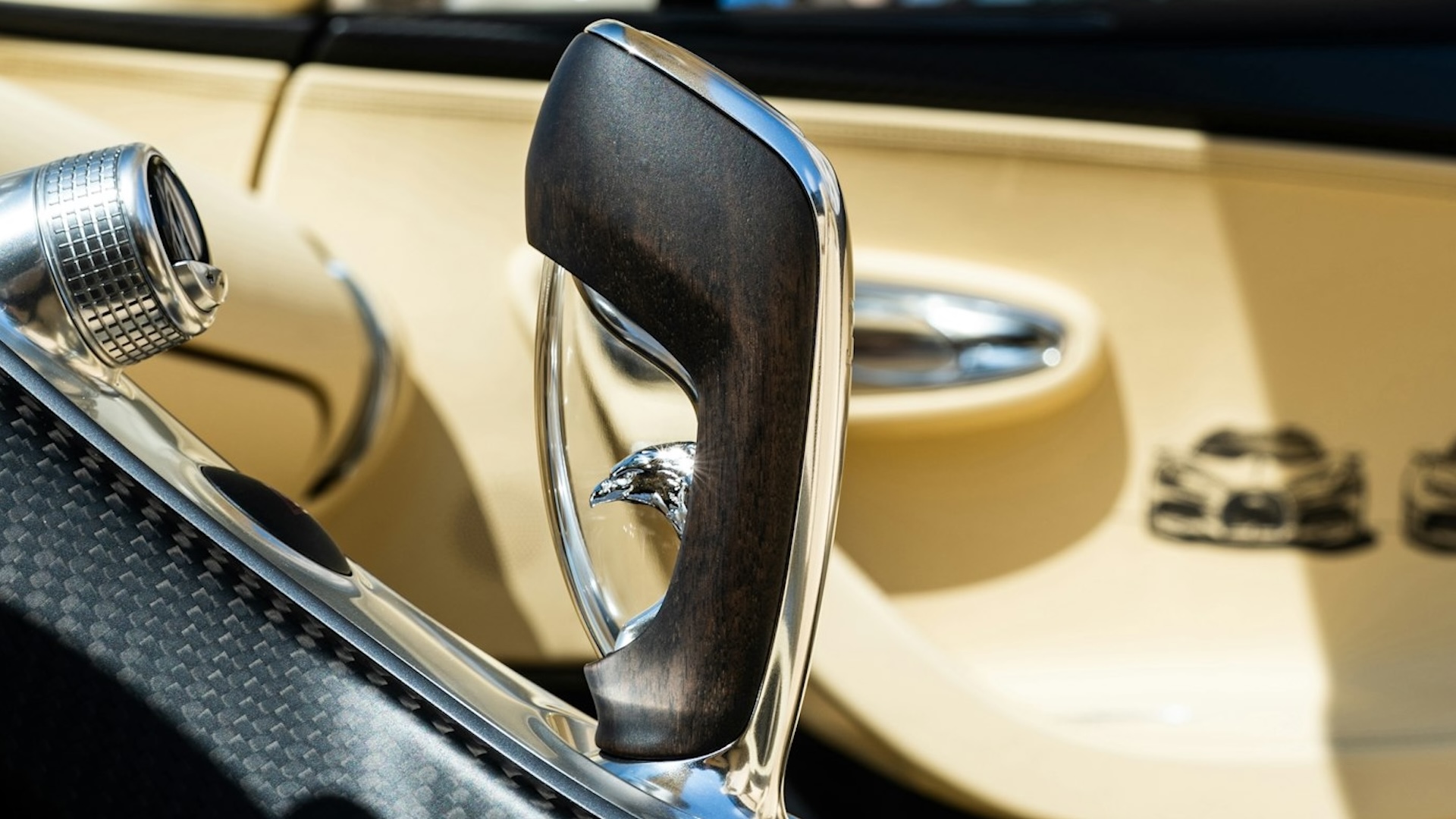
Then there is the gear lever. Instead of the dancing elephant sculpture associated with other Mistrals, the final car contains a falcon head. Created in collaboration with Bugatti Riyadh, it reflects the bird’s cultural importance in the customer’s home region. A matching falcon sketch is embroidered in Anthracite across the door panels.
This was never meant to be an understated car, and it sure isn’t.
From Veyron To Mistral: The Bugatti W16 Story
The Bugatti Veyron
The modern Bugatti story was shaped by former Volkswagen Group chairman Ferdinand Piëch. His ambition was to create a car with 1,000PS+, a top speed exceeding 400km/h and sufficient refinement to drive to the opera on the same day.
At the time, achieving any one of those objectives would have been ambitious. Attempting all three in a single road car bordered on unreasonable, which, in hindsight, made it ideal territory for Bugatti.
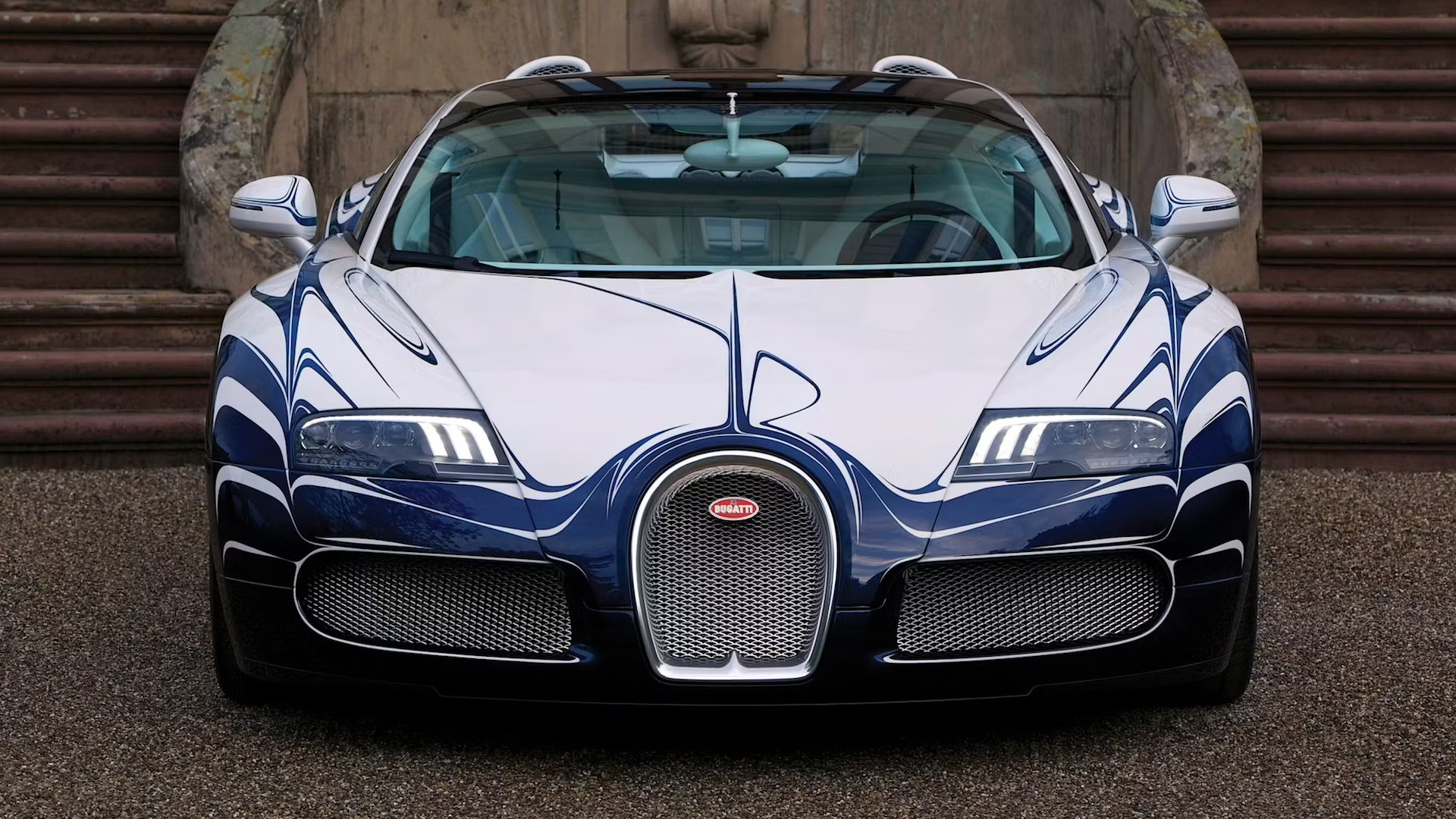
The production Veyron arrived in 2005 with an 8.0-litre W16, four turbochargers, all-wheel drive and a seven-speed dual-clutch transmission. It produced 1,001PS and 1,250Nm, accelerated from 0–100km/h in 2.5 seconds and reached 407km/h.
Its engine was arranged in a compact W configuration, effectively combining two narrow-angle eight-cylinder banks around a common crankshaft. The layout allowed Bugatti to package 16 cylinders in an engine considerably shorter than a conventional V16.
In 2010, the Veyron Super Sport raised output to 1,200PS and 1,500Nm. It reached 431.07km/h during its record attempt, while customer cars were electronically limited to 415km/h. The Veyron Grand Sport Vitesse later took that 1,200PS engine into an open-top body and reached 408.84km/h in 2013, becoming the world’s fastest production roadster at the time.
The Bugatti Chiron Era
Bugatti then comprehensively reworked the engine for the Chiron, introduced in 2016. Although displacement remained at 8.0 litres, the Chiron received 69% larger turbochargers and sequential turbocharging. Two turbochargers operated at lower engine speeds before the remaining pair joined as revs increased, helping deliver enormous performance without an abrupt step in power.
Output rose to 1,500PS and 1,600Nm, giving the original Chiron a 0–100km/h time of 2.4 seconds, 0–200km/h in 6.1 seconds and 0–300km/h in 13.1 seconds. Top speed was electronically limited to 420km/h.
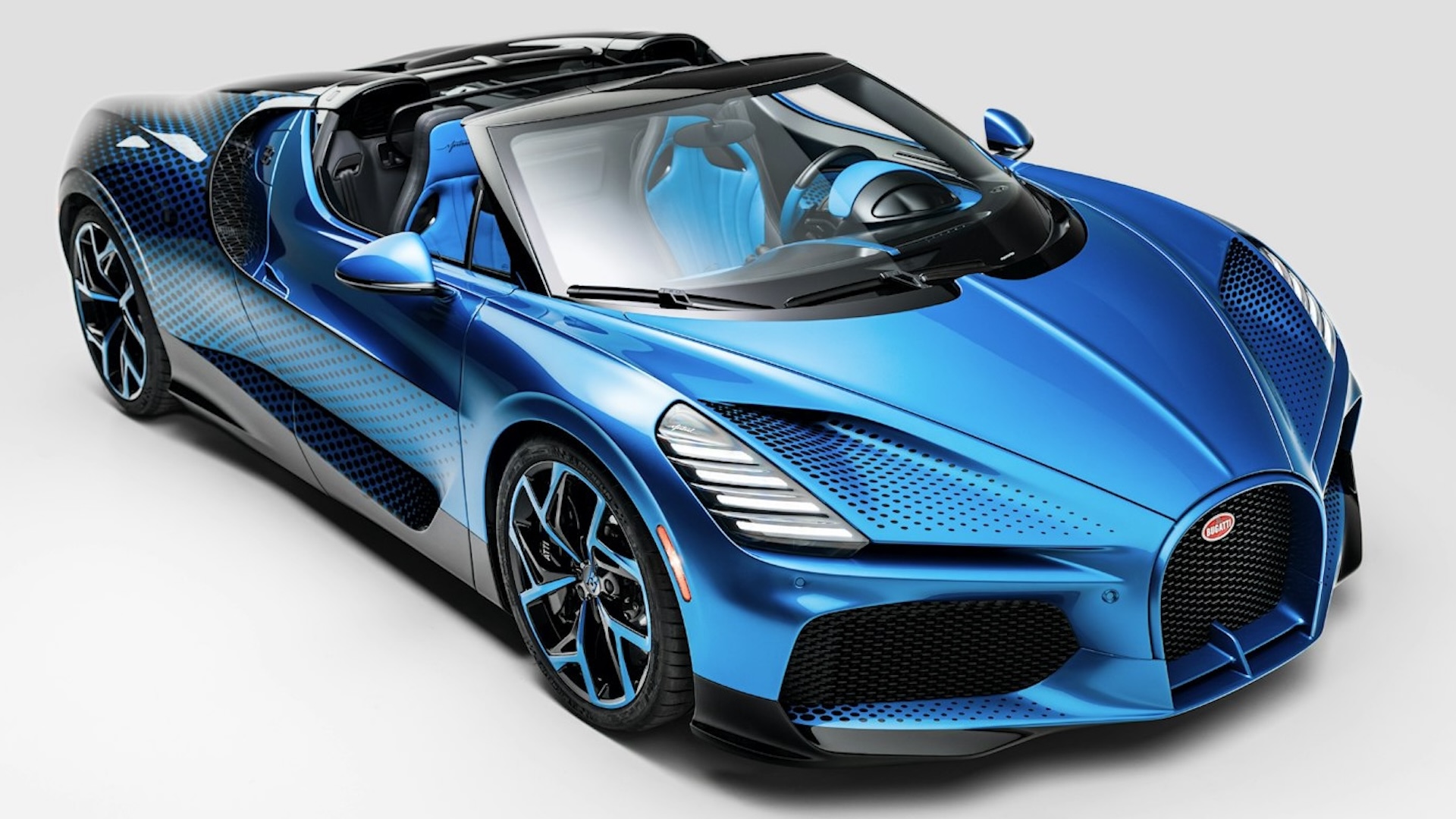
Later versions pushed the W16 to 1,600PS. The Chiron Super Sport 300+ used that output to become the first production-based car to exceed 300mph, recording 490.484km/h in 2019.
Across 14 years, Bugatti had increased the engine’s output from 1,001PS to 1,600PS: a gain of nearly 60% without increasing its displacement.
The W16’s Greatest Speed Records
- Veyron: First Series-Production Car To Exceed 400km/h (2005)
- Veyron Super Sport: Production Car Speed Record at 431.07km/h (2010
- Veyron Grand Sport Vitesse: Fastest Open-Top Production Car at 408.85km/h (2013)
- Chiron Super Sport 300+: First Production-Based Car Beyond 300mph, recorded at 490.484km/h (2019)
- W16 Mistral: Fastest Open-Top Production Car at 453.91km/h (2024)
Six Days And 3,712 Parts Per Engine
The W16’s significance extends beyond its output figures. Every Chiron-generation engine contains 3,712 individual components and required two specialists approximately six days to assemble by hand.
Manufacturing took place in a dedicated area of Volkswagen’s engine plant in Salzgitter, Germany. Completed engines were then transported to Molsheim, where Bugatti paired them with their transmissions and installed them into the cars.
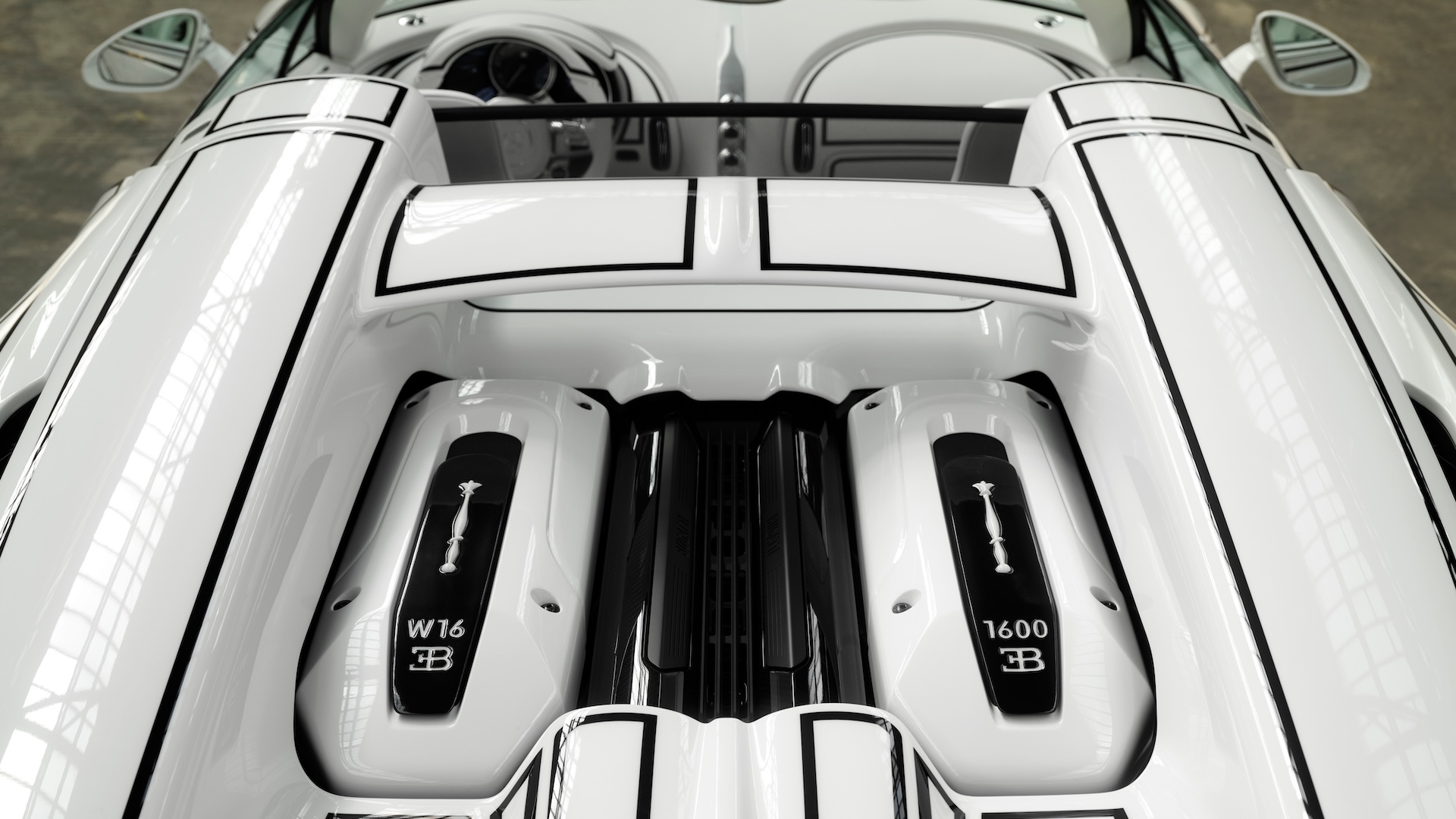
During development, the Chiron’s W16 completed more than 16,000 hours of testing and over 500,000 kilometres in vehicles. Its turbocharger control valves had to remain operational at temperatures approaching 980°C, while each of the four turbochargers supplied enough airflow to support approximately 380PS.
These numbers explain why the W16 will be difficult to replicate. It was developed during an era when the Volkswagen Group was willing to pursue a deeply complex engineering objective regardless of whether the resulting car made conventional financial sense.
The Veyron was frequently described as a technological showcase, and rightly so. It demonstrated what could be achieved when a major carmaker treated the limits of road-car engineering as a starting point rather than a warning.
Is This The Final Bugatti W16 Engine?
The completion of Mistral production ends the W16’s series-production road-car career, but it may not be the last physical W16 engine Bugatti installs in a vehicle. Bugatti still has specialised one-off projects in development, and some may use the outgoing powertrain. The track-only Bolide also sits outside the conventional road-car lineage.
Consequently, the final Mistral is best understood as the last regular-production, road-going Bugatti built around the W16, and not necessarily the final W16-powered object ever to emerge from Molsheim.
What Comes After The W16?
The final Mistral was completed only days after Bugatti inaugurated La Manufacture, its new production facility in Molsheim. The building will become the home of the Bugatti Tourbillon, which replaces the Chiron and begins the marque’s next era.
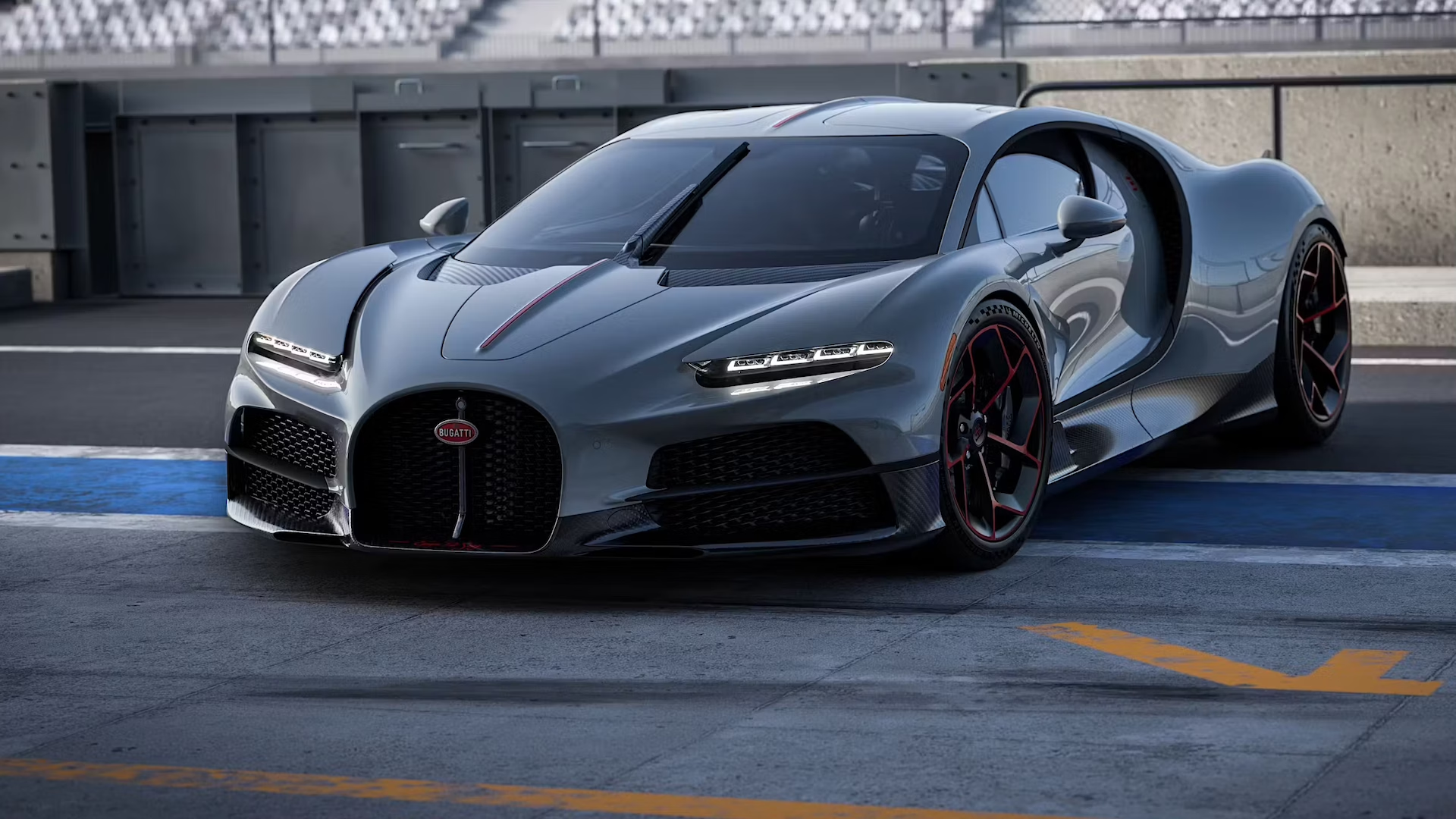
Rather than further evolving the W16, Bugatti developed an 8.3-litre naturally aspirated V16 with Cosworth. The engine revs to 9,000rpm and produces 1,000PS and 900Nm without turbocharging.
Three electric motors raise the Tourbillon’s combined output to 1,800PS. Bugatti claims it can accelerate from 0–100km/h in 2.0 seconds, reach 300km/h in under 10 seconds and achieve 445km/h with the appropriate speed key. Bugatti will build 250 Tourbillons, with prices starting from €3.8 million before taxes and individualisation.
The End Of An Unrepeatable Automotive Era
The W16 arrived when the McLaren F1’s 386.4km/h production-car record still appeared almost untouchable. It leaves after powering cars beyond 400km/h, 300mph and, finally, 450km/h with the roof removed.
Its influence cannot be judged solely by the number of cars produced. The Veyron forced the industry to reconsider what a road car could achieve, helping establish the modern hypercar category above conventional supercars. The Chiron refined that formula, combining even greater speed with the usability, craftsmanship and composure expected of a Bugatti.
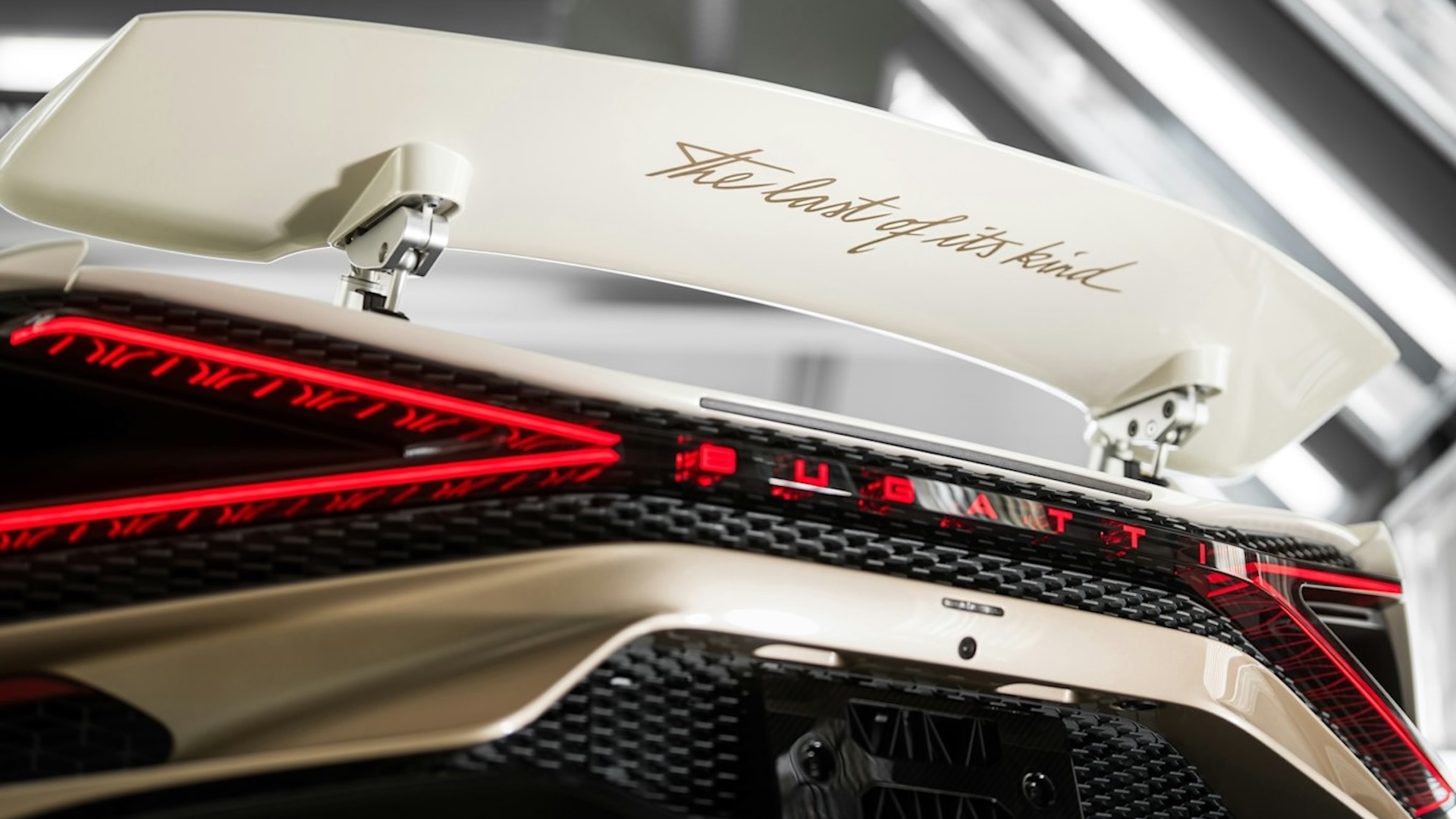
The final Mistral captures both sides of that identity. It can travel at speeds once associated with experimental aircraft, yet its owner commissioned embroidered signatures, Lalique crystal and a falcon inside the gear selector.