

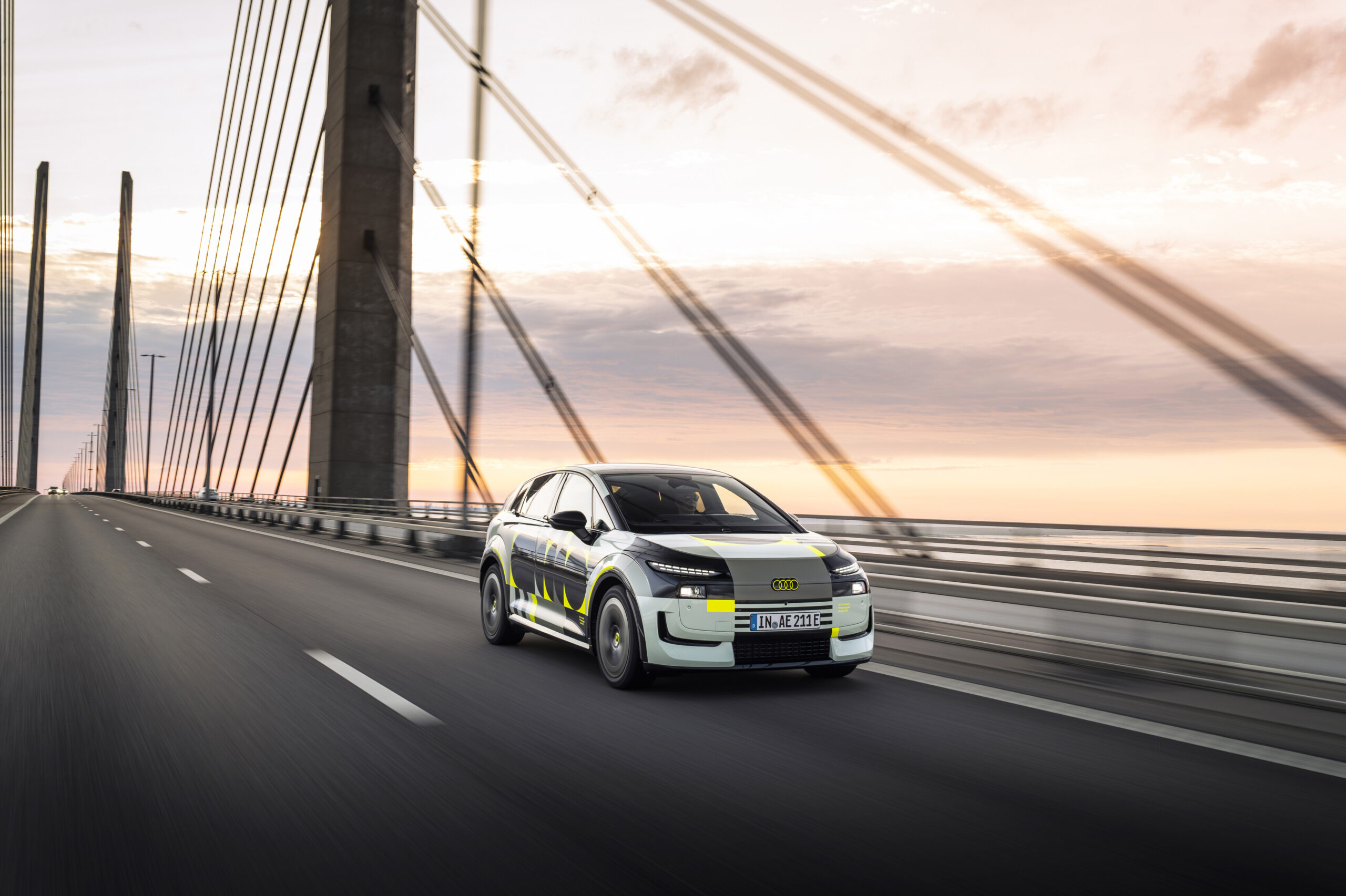
The German carmaker Audi revealed some information related to the upcoming A2 e-tron electric hatchback. The car is considered to be the most energy-efficient production model made by Audi thanks to the preliminary WLTP figures. The electric version of the small hatchback, with the optional Efficiency Package, has a preliminary WLTP energy consumption of 12.8 kWh per 100 km in the 140 kW (about 188 bhp) variant. This efficiency level was reached through optimisations to the car’s aerodynamics, drivetrain, and LFP battery for daily driving.
What is the efficiency of the A2 e-tron by Audi?
Thanks to the preliminary WLTP tests of the A2 e-tron by Audi, the efficiency of the electric car with the optional Efficiency Package was revealed. It is equal to 12.8 kWh of electricity per 100 km.
It incorporates a drag coefficient of 0.24, the lowest among all of Audi’s compact vehicles. According to Audi, the aerodynamic improvements can help an individual save up to 0.9 kWh per 100 kilometres under the same WLTP conditions as an otherwise identical but unmodified car.
What kind of aerodynamic changes are responsible for lowering energy consumption?
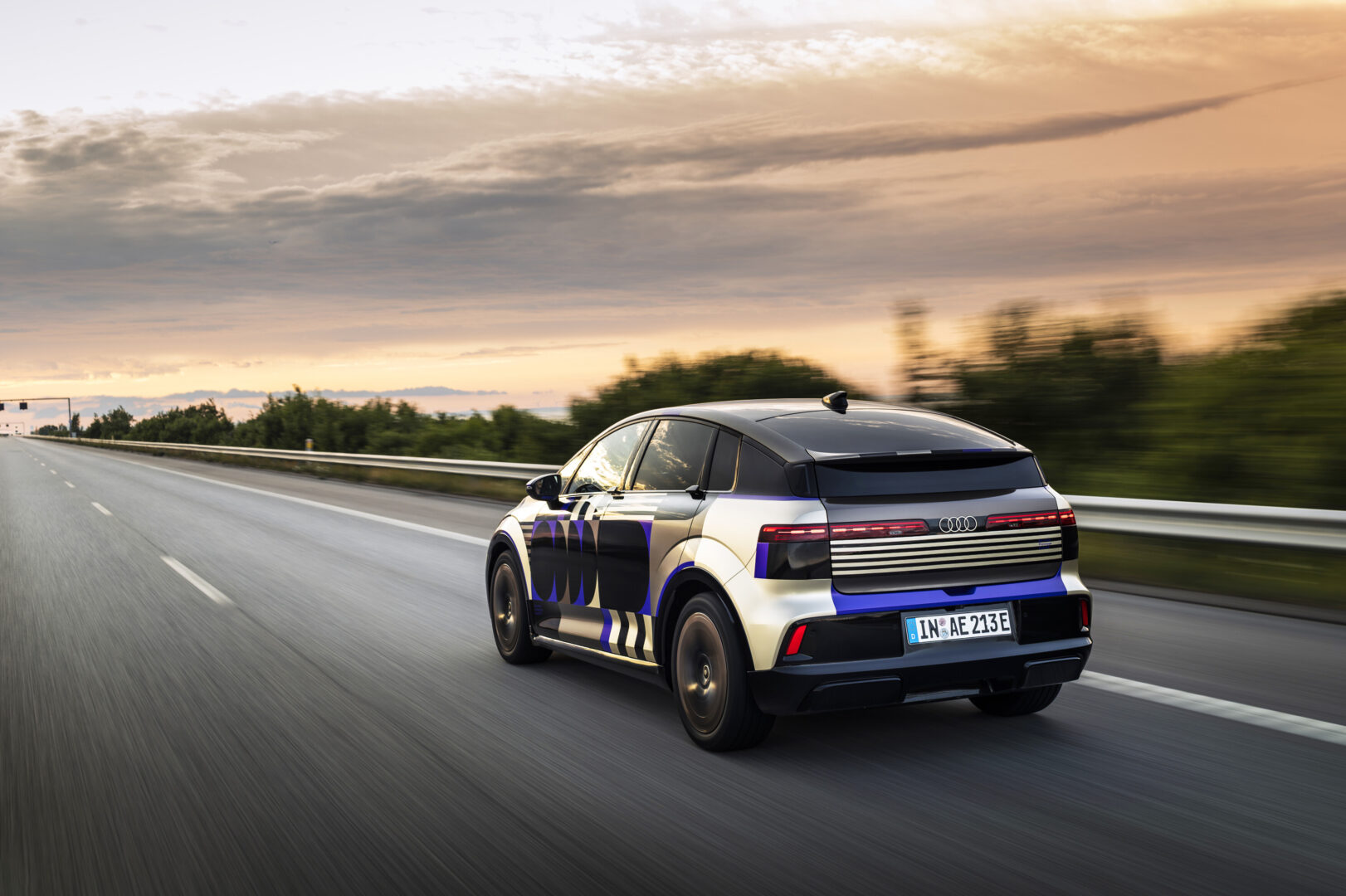
Firstly, the vehicle uses a body design that minimises aerodynamic drag. Its major aerodynamic characteristics include a curved front, roof design, and sharply outlined back part.
Other characteristics include air curtains, which help direct airflow around the front wheels; gap reducers; wheel-arch airflow control devices; and an active cooling air intake, which stays closed when unnecessary to reduce aerodynamic drag. It automatically opens itself when more cooling is needed during fast charging, hard acceleration, and hot weather.
These are some of the ways, according to Audi, the car is more efficient on highways, where the most significant part of energy consumption occurs because of aerodynamic drag.
What are the modifications in the electric drivetrain?
The A2 e-tron is equipped with a synchronous electric motor that has a permanent magnet, and its output is 188 bhp. Audi has improved some drivetrain parts to increase operational efficiency.
The new power electronics use silicon carbide semiconductors, which replace traditional silicon parts and reduce losses during operation. The electric motor has reduced lamination thickness to minimise magnetic losses, and the stator winding has also been reconfigured to improve efficiency at common operating speeds.
In addition, the transmission has been provided with a low-friction lubricant, and there is also a gear ratio of 10.2:1 that allows minimising motor speed at higher speeds.
Which battery does the Audi A2 e-tron use?
The car is fitted with a 61 kWh battery of lithium iron phosphate (LFP) type based on cell-to-pack architecture, which implies integrating battery cells into the body of the battery for more efficient packaging.
According to Audi, LFP chemistry provides a number of practical advantages, such as better longevity, no rare-earth elements, and the ability to regularly recharge the battery to 100% without the same concerns as with other batteries.
Moreover, the battery keeps voltage constant over a broad range of state-of-charge, providing stable performance in real-life conditions.
How is the process of charging and energy management carried out?
According to Audi, wallbox charging efficiency is 89.6%, achieved through improved battery cooling and new charging management software.
The A2 e-tron also has the option of bidirectional charging. Vehicle-to-Load mode enables power supply from the car to external devices that support this feature, provided the battery charge level is not below 20%.
The Vehicle-to-Home capability allows compatible home energy systems to exchange electrical power with the car when the battery charge level is between 20% and 80%. Charging or discharging is limited when the vehicle operates outside this scope to control the battery function. Audi emphasises that the proper charging station is necessary for these features.
Launch, availability, and cost information
These technical parameters have been released prior to the official release of the A2 e-tron. The efficiency values were calculated during the preliminary WLTP testing performed in Germany. They may change before the start of production.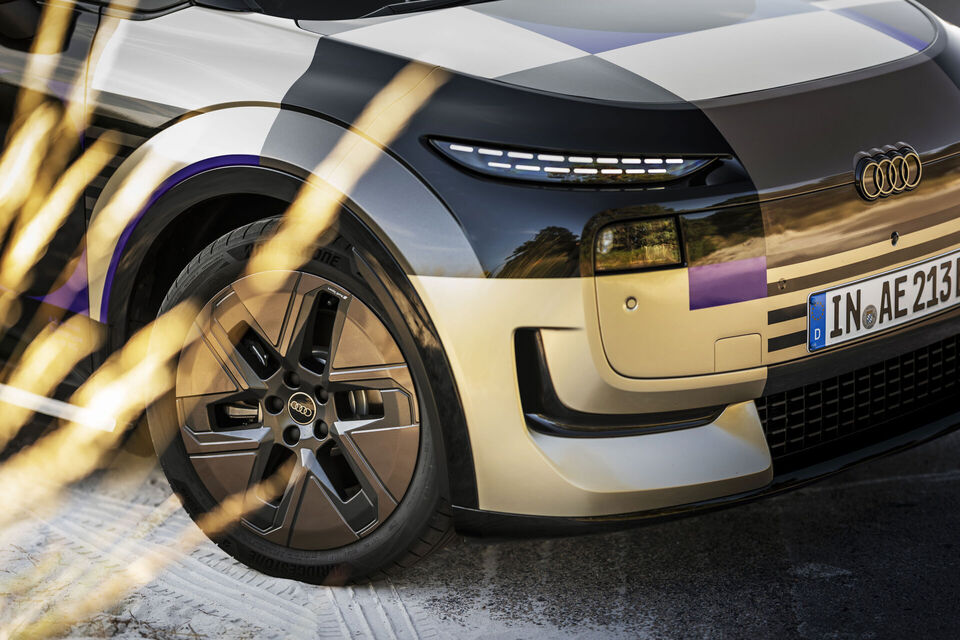
Currently, the official launch dates, regional availability beyond Germany, or the cost of the A2 e-tron have not been revealed. Thus, at this time, there is no officially specified price.