

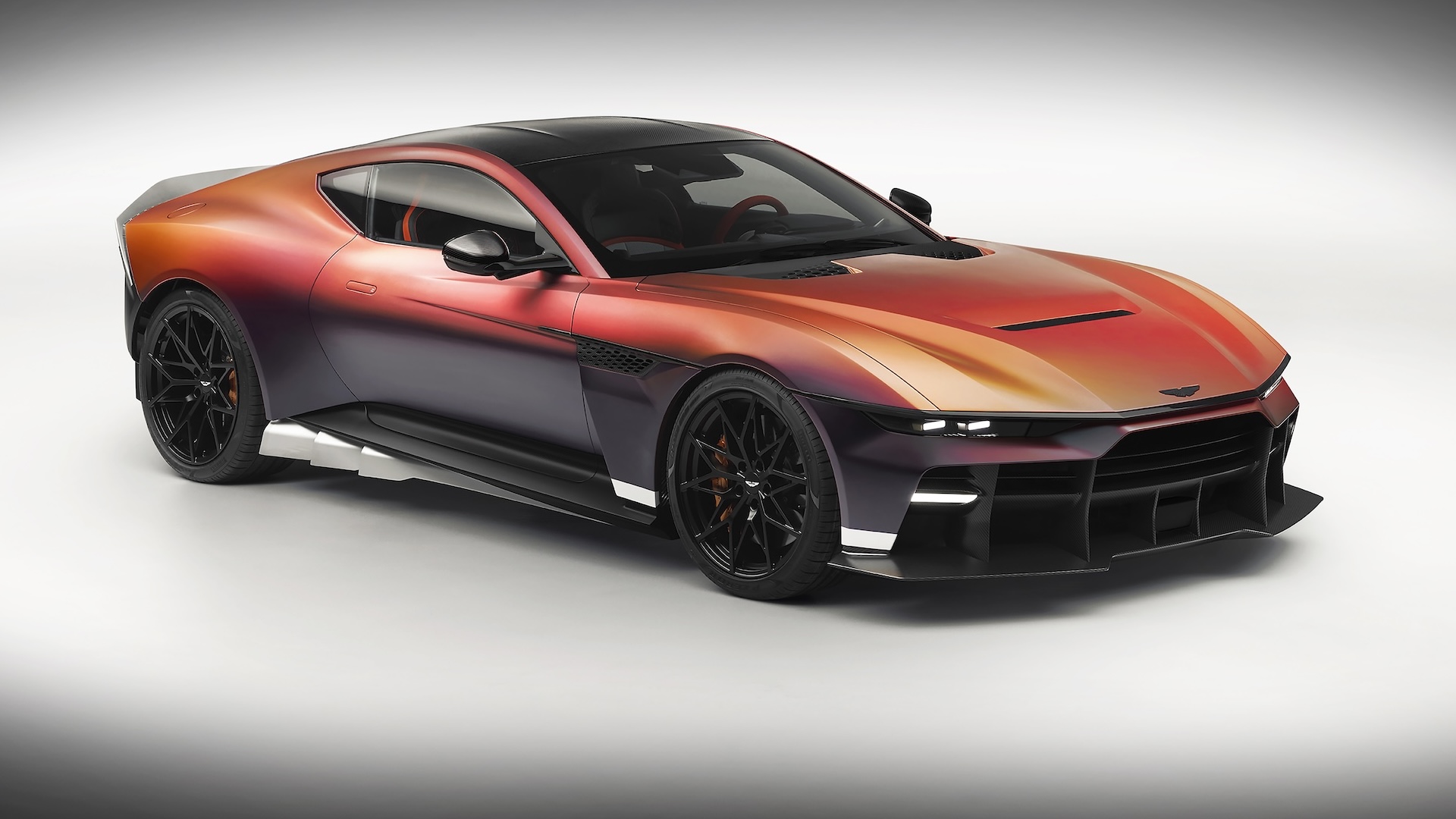
There has always been something deeply romantic about a front-engined flagship Aston Martin. A long bonnet, a V12 buried beneath it, rear-wheel drive and enough elegance to make immense speed look almost respectable. It is the formula that gave us the DB5, the original V12 Vanquish, the DBS and, more recently, the 824hp Vanquish.
The new Aston Martin Valen takes that familiar silhouette and turns it up to 12. Developed via Q by Aston Martin with the company’s newly established Special Vehicle Operations department, the Valen is the world’s most powerful front-engined production car from a major manufacturer. Its 5.2-litre twin-turbocharged V12 produces 838hp and 1,000Nm.
In an age when four-figure outputs can be summoned from electric motors with relative ease, the Valen’s achievement feels wonderfully mechanical. All 838hp travels through an eight-speed transaxle to the rear wheels, accompanied by a titanium exhaust apparently engineered to shatter nearby windows.
How Does The Aston Martin Valen Perform?
The most powerful front-engined Aston Martin ever, is 14hp more powerful than the Vanquish, with its full 1,000Nm arriving from just 2,500rpm. It accelerates from 0-60mph in 3.0 seconds, reaches 100km/h in approximately 3.1 seconds and continues to an electronically limited 214mph or 344km/h.
Its eight-speed ZF transaxle receives quicker, more aggressive shift strategies derived from the Vantage GT4 racing programme. Sport and Sport+ modes use a shorter throttle map, delivering more power earlier in the pedal’s travel. Track mode introduces a longer, more progressive response, giving the driver finer control when exploiting 1,000Nm near the limit.
The absence of a manual gearbox may disappoint anyone hoping for a more powerful successor to the Valour and Valiant. However, the Valen has a different objective. This is the fastest, sharpest and most technically ambitious interpretation of Aston Martin’s traditional front-engined V12 layout.
Also Read:
- Koenigsegg CCGT1 Debuts With 1,600hp: A Tribute To An Unfinished Racing Legacy
- DB12 S Special Editions And Vanquish 25 To Be Featured At Aston Martin Monterey Car Week 2026
- Ferrari 12Cilindri Manuale Revealed: Manual V12 Is Exactly The Kind Of Madness We Needed
Less Weight, More Aston
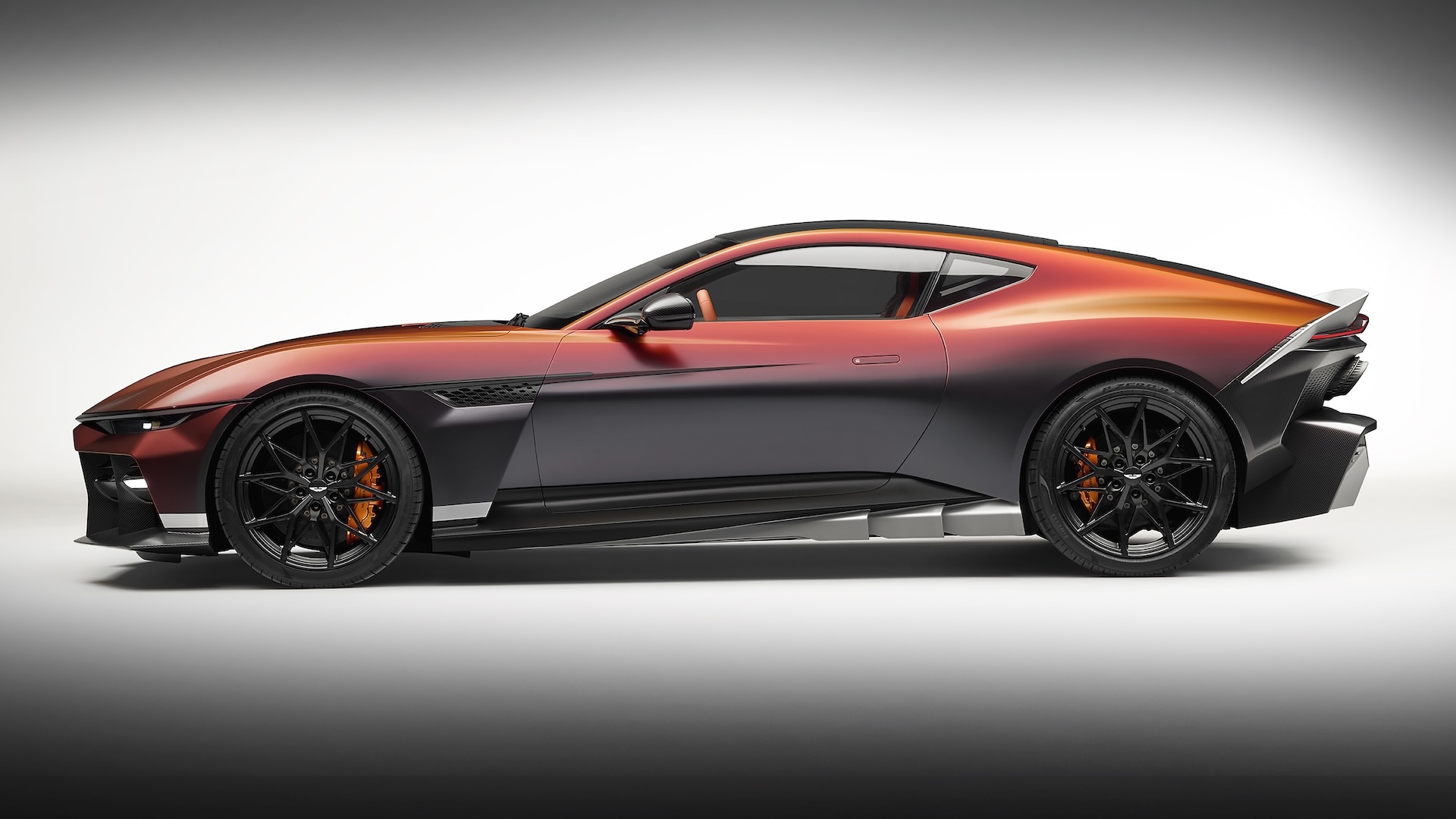
Simply adding power would have been the easy part. Aston Martin has also removed up to 110kg compared with the Vanquish, through extensive use of carbon fibre, aluminium, magnesium and titanium.
Every exterior body panel is made from carbon fibre. Lightweight 21-inch magnesium wheels are standard, reducing unsprung mass and improving steering response. An optional Lightweight Pack saves a further 16.9kg through machined-from-solid aluminium suspension arms and knuckles, along with titanium chassis bolts.
The wheels wear bespoke Pirelli P Zero R tyres measuring 275/35 ZR21 at the front and a thicc 325/30 ZR21 at the rear. Pirelli Cyber Tyre technology sends live tyre data to the car, allowing the ABS, traction control and stability systems to adjust their thresholds in real time.
A solid-mounted rear subframe, model-specific springs and Bilstein DTX semi-active dampers give the Valen a more immediate connection between driver and chassis. Aston Martin has also recalibrated the steering, stability control and braking systems while increasing lateral stiffness and reducing roll and pitch.
Stopping power comes from 410mm front and 360mm rear carbon-ceramic brakes, backed by a firmer pedal calibration intended to improve modulation at both road and track speeds.
A V12 Designed To Be Heard
Having produced some of the best-sounding cars of all time, Aston Martin understands that a great V12 must be aurally appealing as well. The Valen therefore receives a bespoke titanium exhaust that’s about 50 percent louder externally than the Vanquish across the rev range.
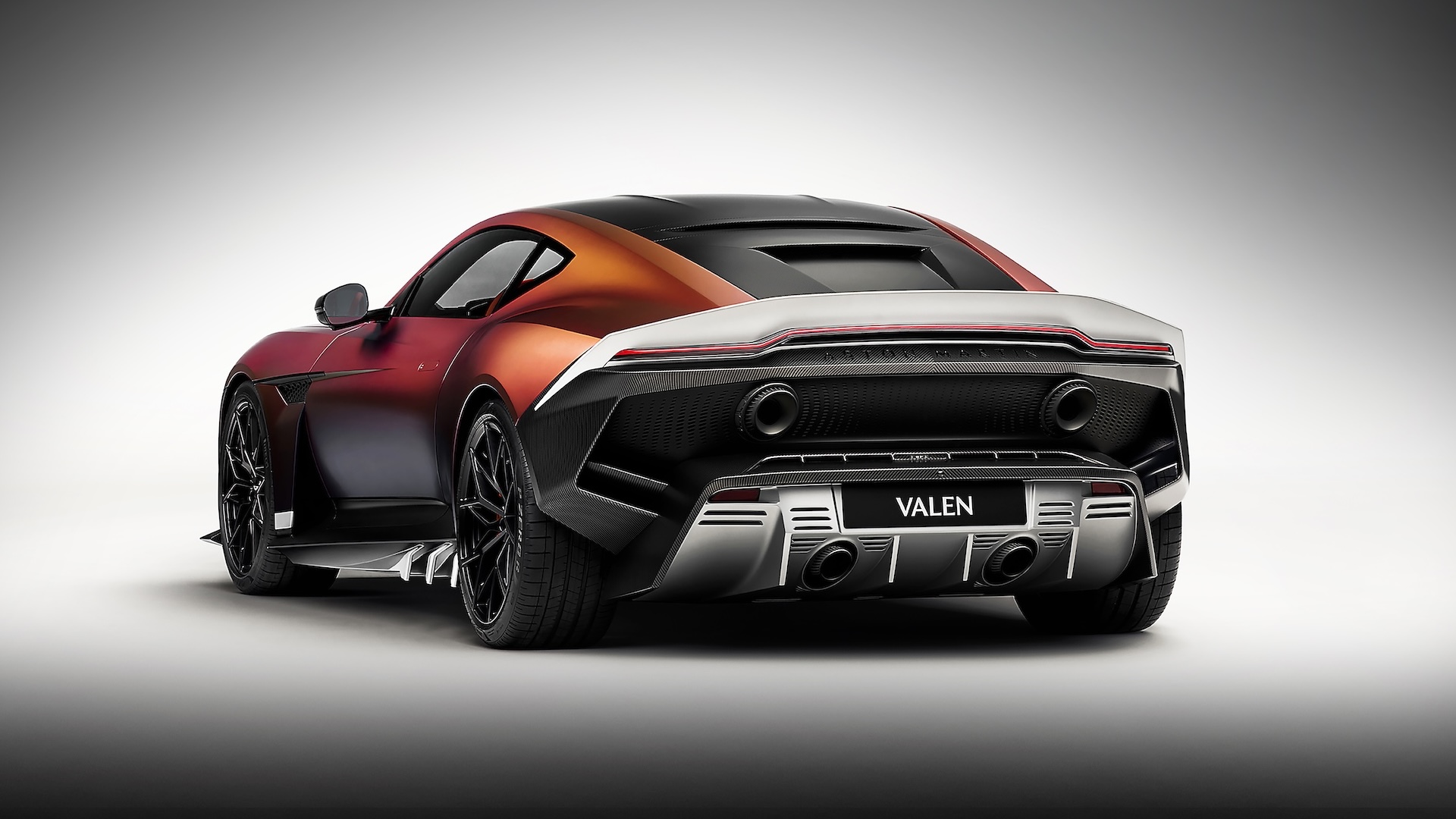
Four 3D-printed titanium outlets are arranged across two levels. The upper pipes remain permanently open, while the lower pair opens according to the selected driving mode.
Engineers reduced some of the deeper frequencies and amplified the sharper tones depending on the engine speed. The upper outlets have even been tuned like organ pipes to create additional resonance. It is a gloriously elaborate solution to a problem nobody was asking Aston Martin to solve.
Carbon Fibre With Some Menace
The Valen retains Aston Martin’s classic front-mid-engined proportions, but the usual grace has acquired sharper elbows.
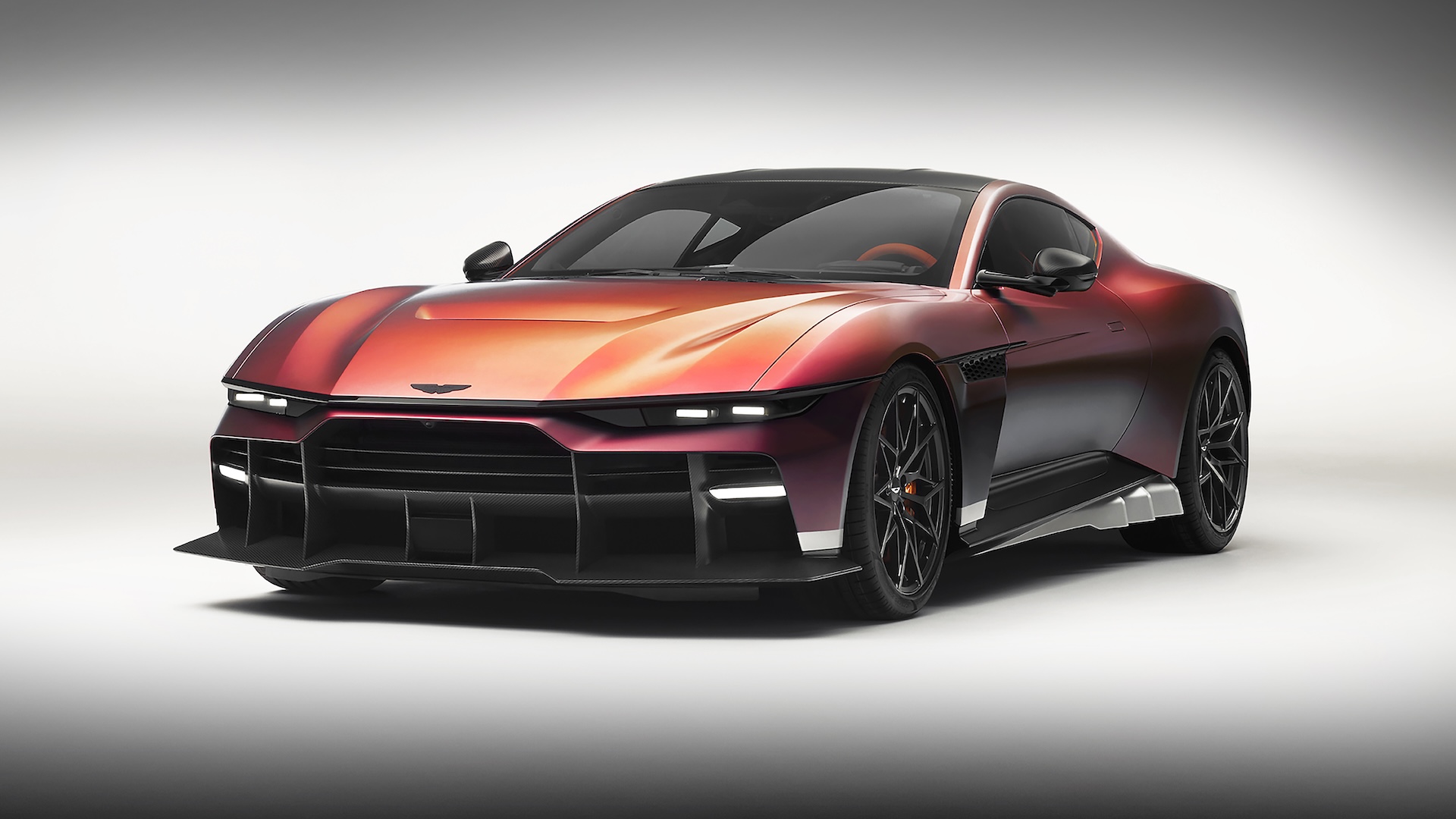
Slim recessed headlights sit beneath the bonnet’s leading edge, while an angular grille, prominent splitter and large functional vents give the nose a far more aggressive expression. Saw-tooth vortex generators along the stepped side sills extract high-speed airflow from beneath the car, reducing lift and generating downforce.
There is no conventional rear windscreen. Instead, the Valen uses a solid carbon fibre tailgate containing an integrated aerodynamic wing, with a camera-fed digital mirror providing the view behind.
Beneath it sits a full-width light bar, perforated heat-extraction panel, enormous diffuser and those vertically arranged exhaust outlets. Despite the dramatic bodywork, Aston has retained a 170-litre luggage compartment and offers a bespoke luggage set through an optional Touring Pack.
The reveal car is finished in Satin Andromeda Red, a colour that shifts between red, copper, gold and blue depending on the light. Customers can alternatively specify fully exposed carbon fibre, complete with a herringbone weave running precisely along the centreline.
A New Kind Of Aston Martin Cockpit
Inside, the Valen introduces a slimmer, driver-oriented centre console incorporating switches derived from the mid-engined Valhalla. The central touchscreen is reclined into the dashboard, while 3D-printed components reduce visual weight and echo the exterior’s cooling apertures.
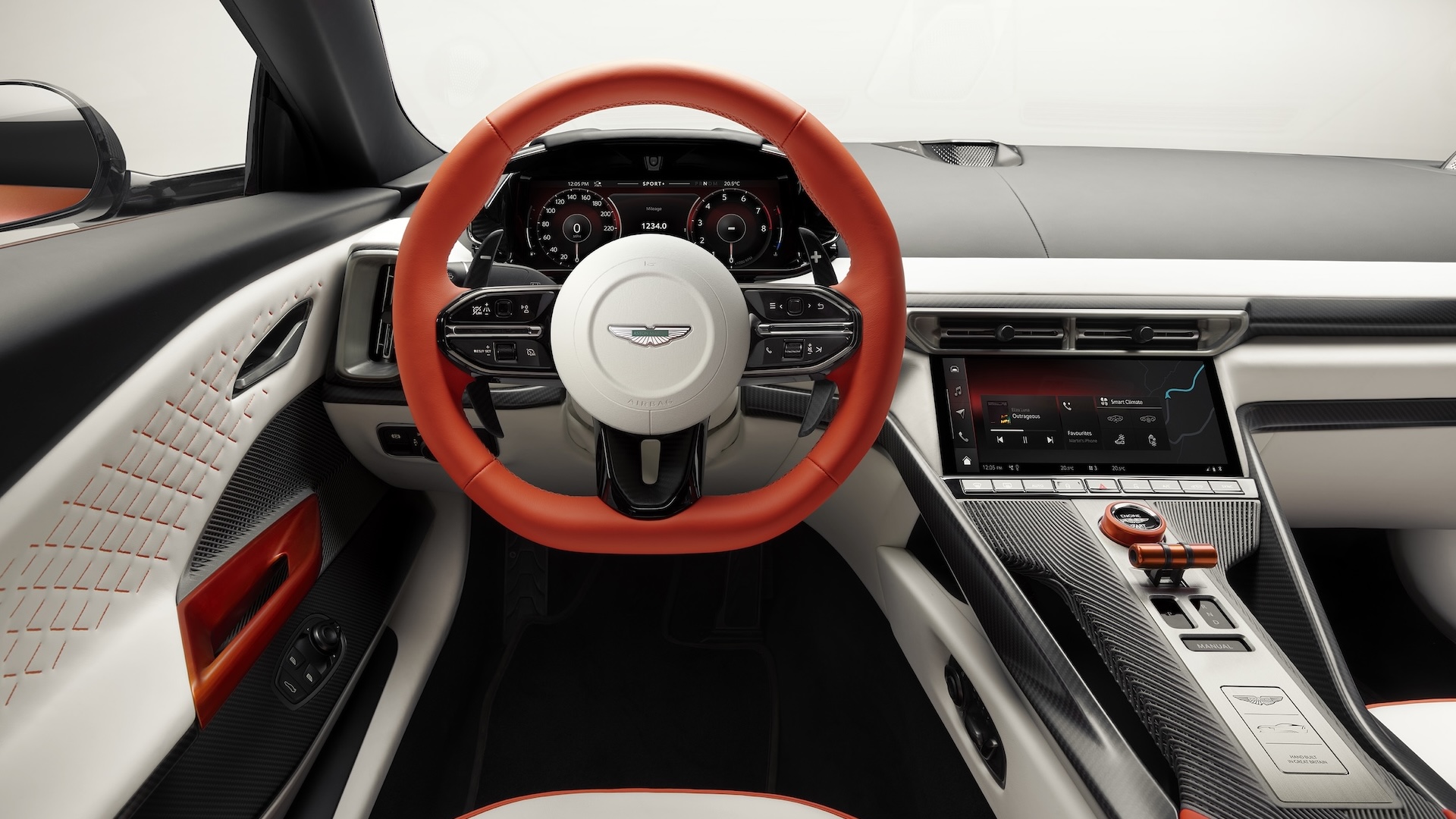
Owners can choose between Sports Plus seats designed for long-distance comfort and lightweight carbon fibre performance seats. Q by Aston Martin then opens the door to an extensive selection of leather, Alcantara, quilting patterns, anodised finishes and bespoke colour combinations.
Only 150 examples will be built, with deliveries beginning in the second quarter of 2027. Pricing has not officially been announced, although reports suggest a starting figure of approximately $2 million before Q personalisation.
For Aston Martin, this is more than another limited-edition special. It is a reminder that the front-engined V12 supercar still has records left to break, emotions left to stir and, evidently, plenty of volume left in its lungs.