

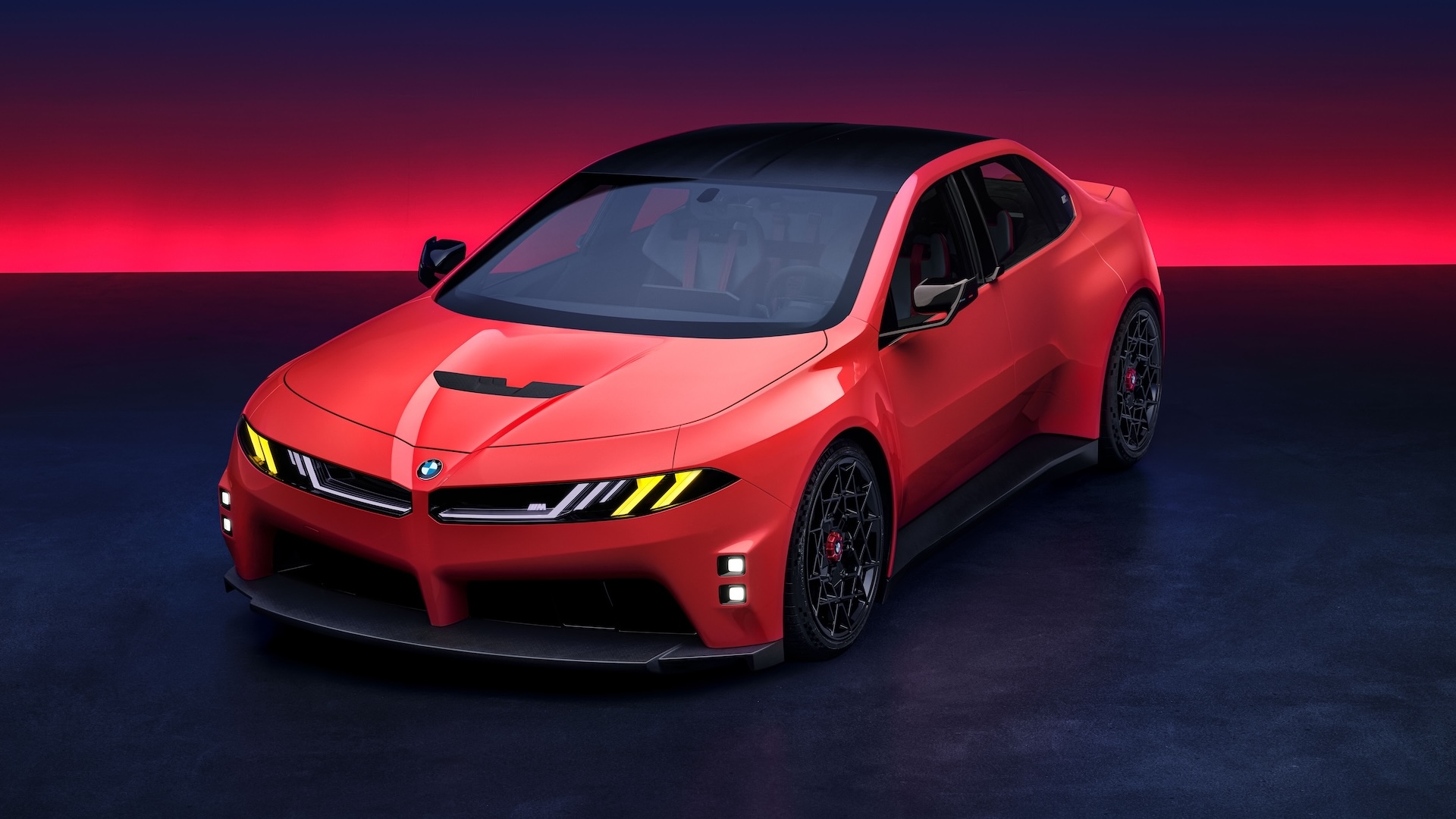
BMW has never been afraid to challenge tradition. It turbocharged the M3 when purists wanted naturally aspirated engines. It gave us xDrive M cars when enthusiasts said rear-wheel drive was sacred. And now, it is preparing for perhaps the biggest shift in the M division’s history: an all-electric BMW M3.
Recently revealed at the 24 Hours of Le Mans, the BMW M Concept Neue Klasse is our clearest look yet at that future. BMW stops short of calling it the next M3, but let’s be honest, this is the electric M3 in everything but name.
More importantly, it answers a question enthusiasts have been asking for years: can an electric BMW M still feel like a proper M car? BMW certainly thinks so.
What Is The BMW M Concept Neue Klasse?
The BMW M Concept Neue Klasse is a high-performance electric concept developed by BMW M. It previews the design language, technology, and engineering philosophy that will underpin future M cars built on BMW’s Neue Klasse EV architecture.
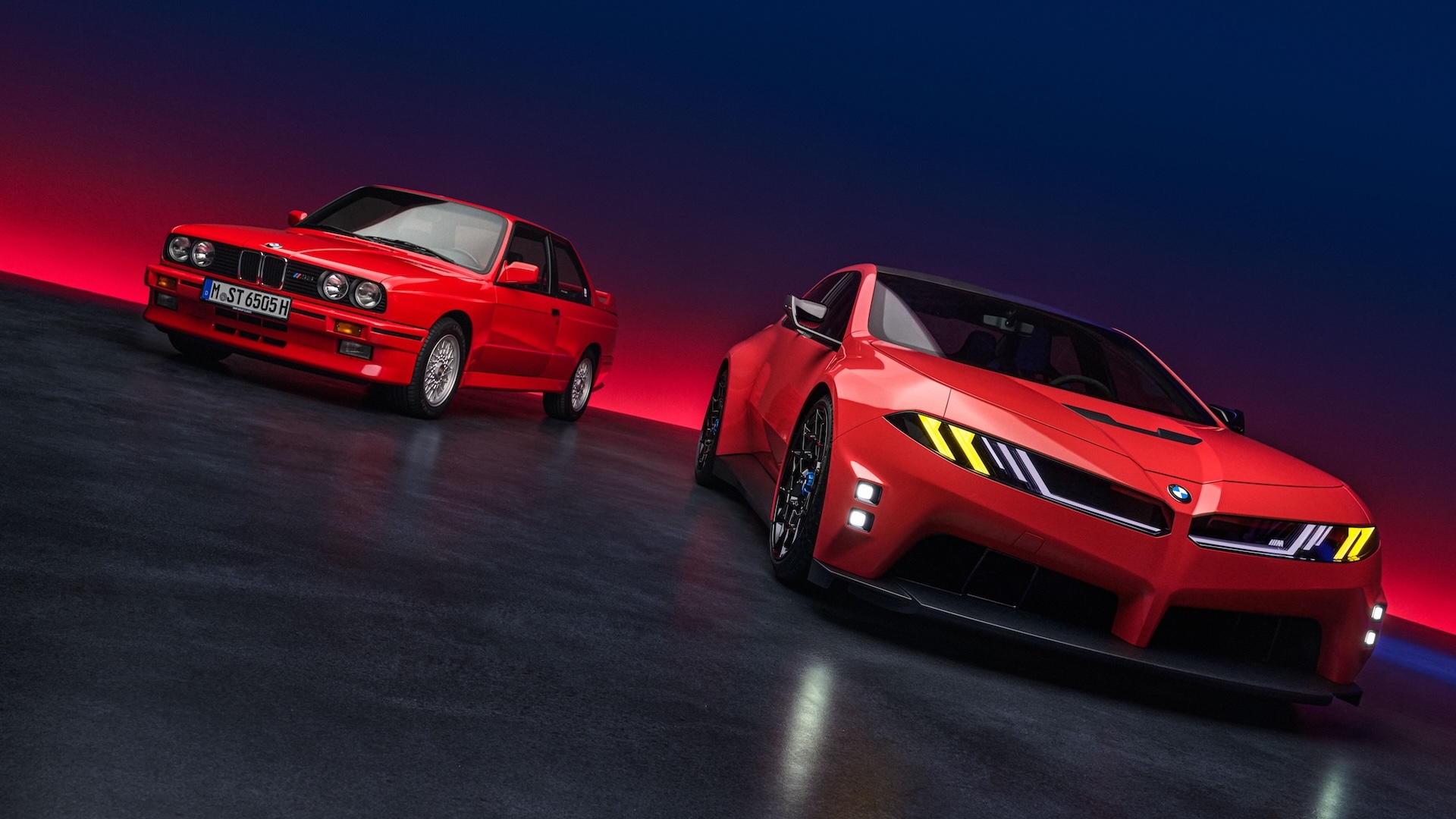
Unlike the standard Neue Klasse concepts we’ve seen before, this one comes directly from BMW M. That means every visual detail, aerodynamic element, and technical feature has been developed with performance as the priority.
BMW describes it as the next chapter in the brand’s traditional blend of agility and driving engagement, just delivered through electric motors instead of combustion engines.
And while BMW isn’t officially confirming an electric M3, the concept’s proportions, four-door sedan body style, and performance-focused hardware make it difficult to interpret it as anything else. BMW even went to the trouble of placing the first-gen BMW M3 alongside the EV in one of the media images.
The Design Looks Familiar, Yet Futuristic
One of the biggest challenges facing BMW was creating an electric M car that still looks unmistakably like a BMW M. Judging by the M Concept Neue Klasse, they’ve taken inspiration from both the future and the past.
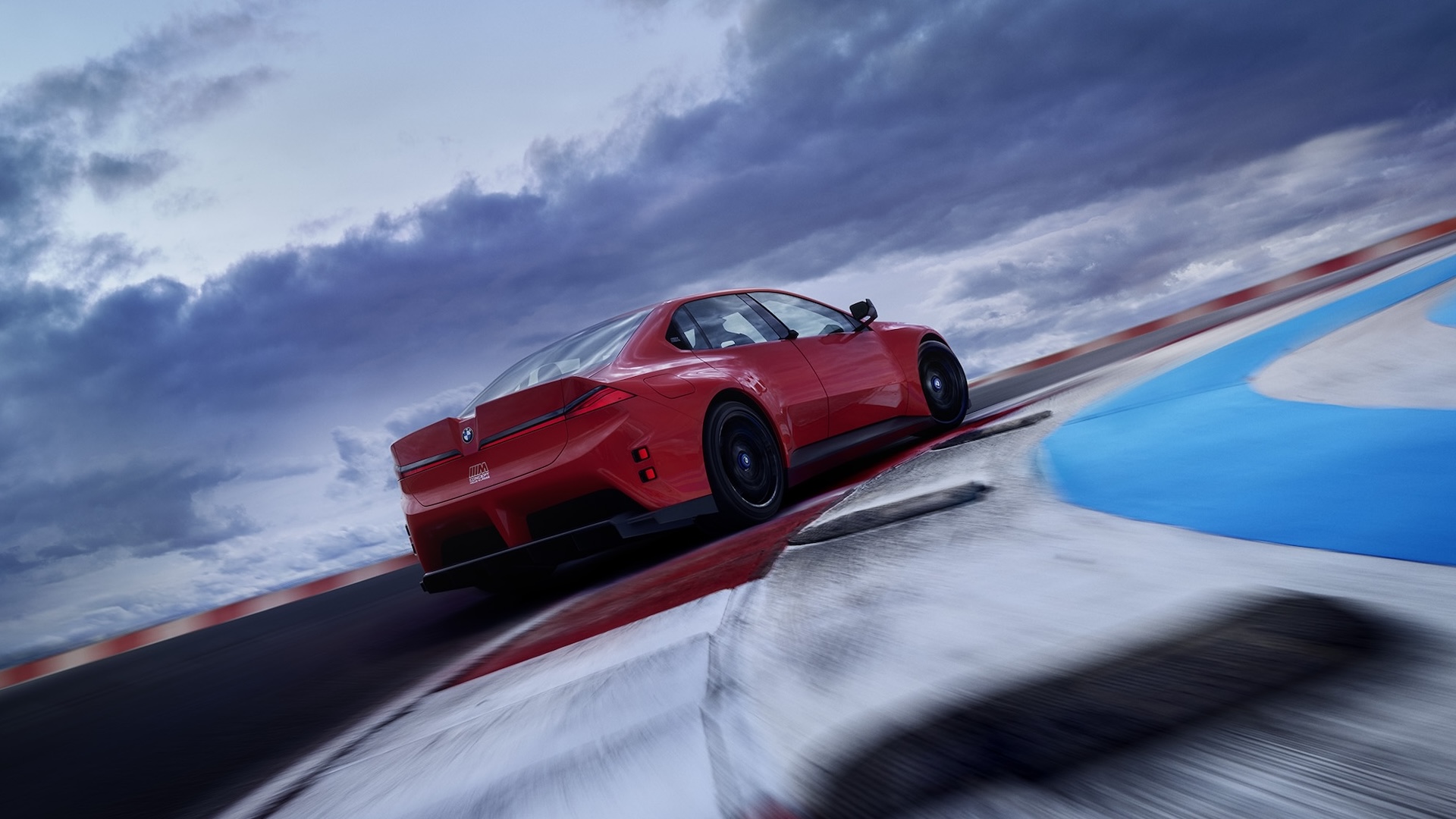
The car sits low and wide, with muscular rear haunches, pronounced wheel arches, and classic sports sedan proportions. Despite its futuristic surfacing, there are clear hints of iconic M cars throughout the design.
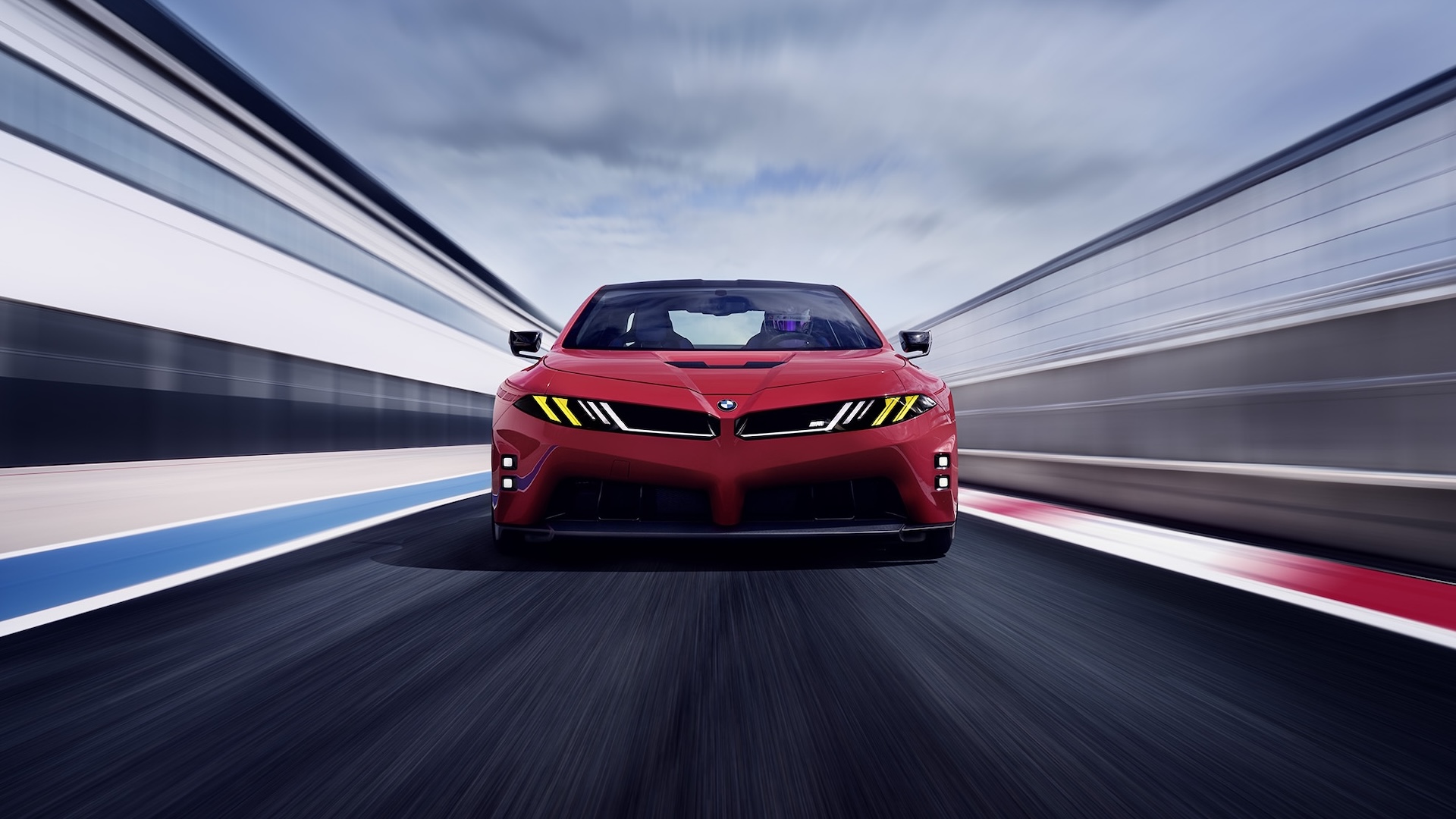
Key Exterior Highlights:
- Wide-body performance sedan stance
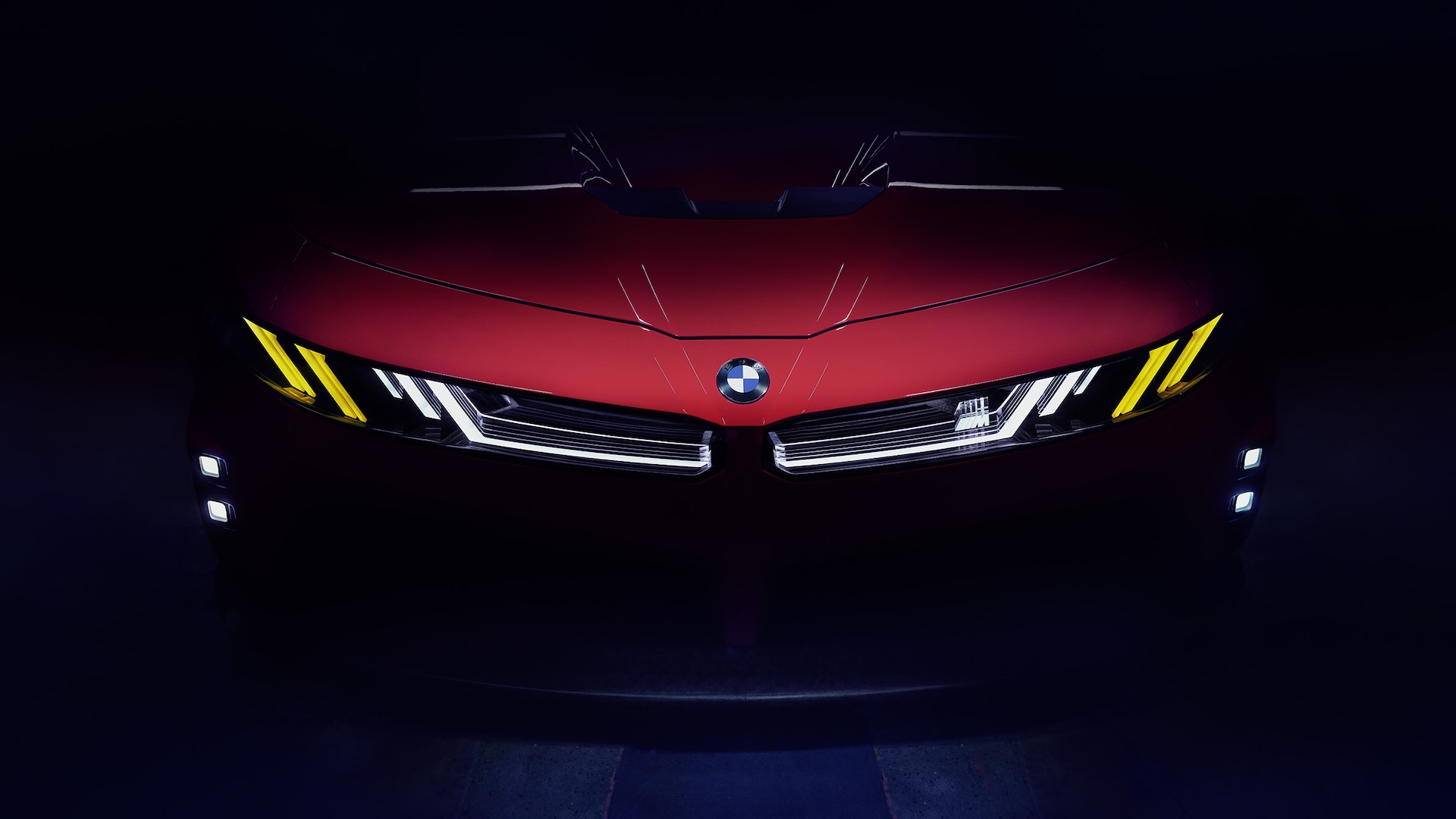
- Forward-leaning shark-nose front end
- Integrated kidney grille and headlight design
- New M Yellow Lights inspired by BMW’s GT race cars
- M-specific aerodynamic mirrors
- V-shaped bonnet air outlet
- Trimaran-inspired front and rear bumpers
- Three-dimensional Track Lights
- Large rear diffuser
- Ducktail rear spoiler
- Centre-lock wheels
- Monza Red metallic paint finish
The front end is perhaps the most controversial element. BMW’s new shark nose treatment combines the kidney grille and headlights into a single visual unit, creating a face that looks dramatically different from today’s M3.
The yellow lighting signature is another standout feature. Inspired by cars from BMW’s endurance racing programme and the BMW M Hybrid V8, these yellow daytime running lights are expected to become a signature element of future M models. At the rear, the ducktail spoiler and floating diffuser are more than styling exercises. Both contribute to aerodynamic efficiency and increased rear-axle downforce.
Why Is BMW Replacing Carbon Fibre With Natural Fibre Composites?
One of the more interesting developments isn’t electric power. It’s the materials. For years, carbon fibre has been the performance material of choice for BMW M cars and the auto industry in general. The M Concept Neue Klasse signals a possible shift away from that philosophy.
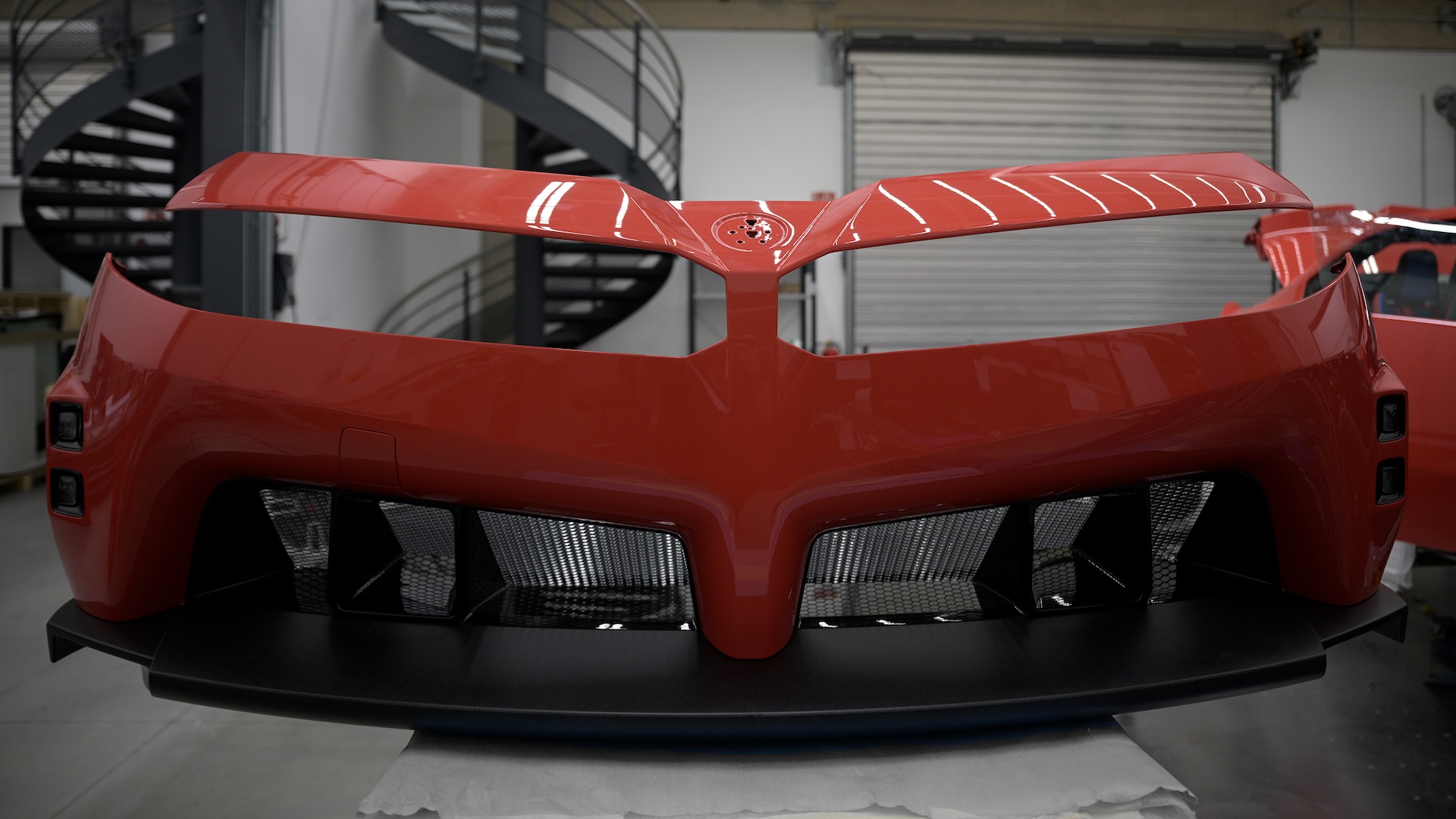
BMW has incorporated natural-fibre composite materials into several key areas, including:
- Front splitter
- Bonnet air outlet
- Rear diffuser
- Roof panel
- Seat structures
These materials aim to deliver similar weight-saving benefits while reducing environmental impact. The roof panel even incorporates BMW M branding directly into the composite finish, creating a motorsport-inspired appearance without relying on traditional carbon-fibre weave patterns.
Also Read:
– 2026 Audi A6 allroad Launches With Plug-In Hybrid System
– 2027 Chevrolet Silverado 1500 Arrives With New V8 Engine Options
– A Tiny Electric Bentley With A Big Story
Inside: A Race Car Disguised As A Sedan
If the exterior suggests an electric M3, the interior practically confirms it. BMW has stripped away unnecessary distractions and focused entirely on the driving experience. The cabin features four individual bucket seats. Each seat uses natural-fibre structural components and is trimmed in a striking combination of Bathurst Blue and Berry Red Merino leather. The red five-point harnesses immediately reveal the car’s motorsport intentions.
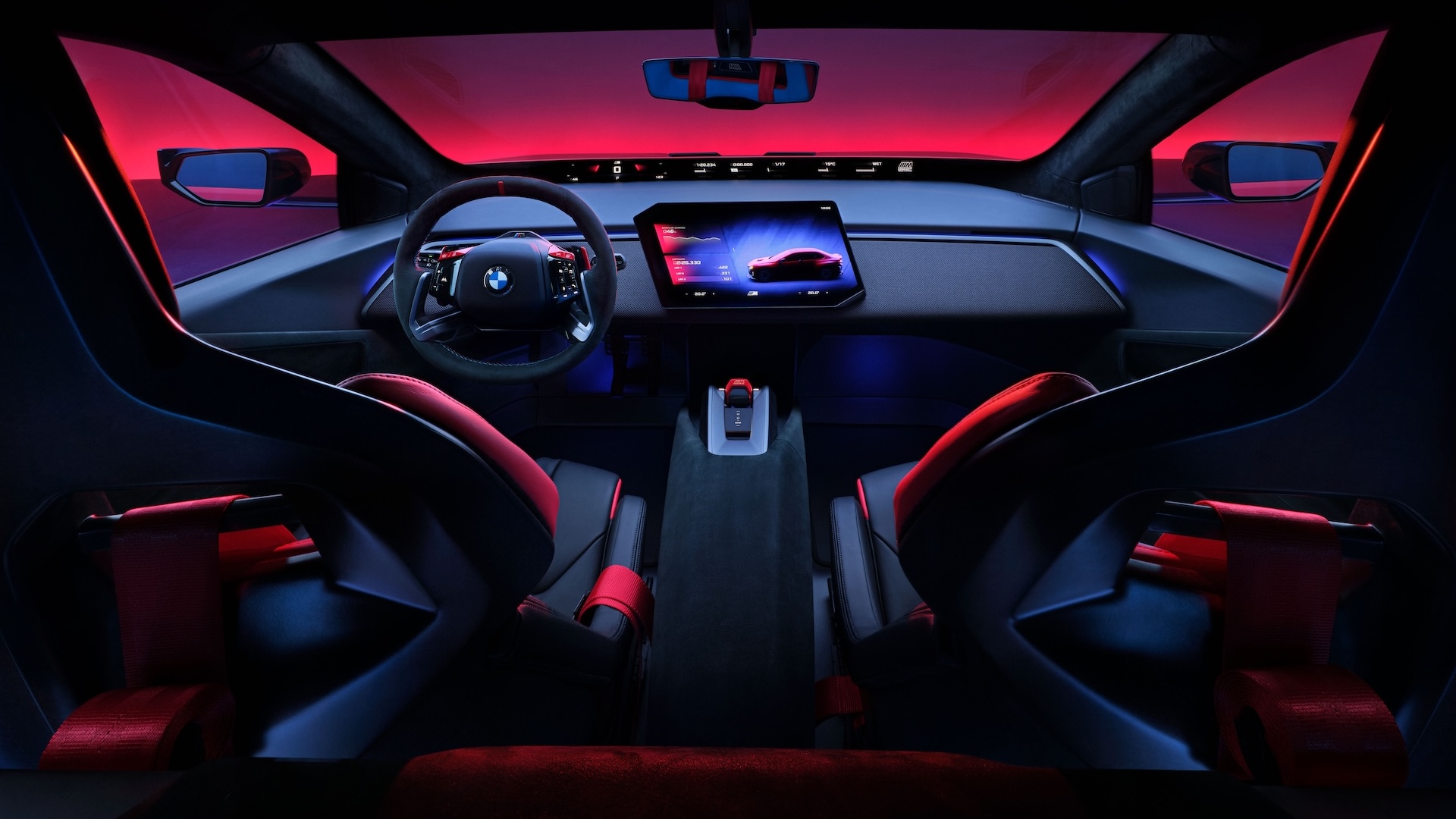
Interior Highlights
- Four individual bucket seats
- Bathurst Blue and Berry Red Merino leather
- Red five-point racing harnesses
- Black nubuck leather trim
- Roll bar behind the rear seats
- Floating dashboard design
- M-specific hexagonal ambient lighting
- M steering wheel with red controls
- Performance-focused digital displays
BMW is also introducing nubuck leather to an M car for the first time. The material appears on the steering wheel, door panels, and roll bar, providing a more tactile and premium feel than conventional leather. The dashboard itself remains minimalist but gains M-specific graphics, lighting effects, and performance-focused displays.
Battery & Motors: The Biggest Story Is Underneath
Despite the dramatic design, the real headline lies beneath the bodywork. The M Concept Neue Klasse uses BMW’s next-generation M eDrive architecture, developed specifically for future high-performance electric M models.
Confirmed Powertrain Technology
- Four electric motors
- BMW M eDrive architecture
- BMW M Dynamic Performance Control
- Heart of Joy central computing system
- 800-volt electrical architecture
- More than 100kWh battery capacity
- Sixth-generation cylindrical battery cells
- Structural battery integration
- Wheel-specific torque and braking control
BMW has not revealed power output figures, torque numbers, acceleration times, or top speed. However, based on the hardware alone, expectations are understandably high.
What Is BMW’s ‘Heart Of Joy’?
Debuting with the Neue Klasse, the unusually named “Heart of Joy” is arguably the most important component in the entire vehicle. Think of it as the brain of the car. The system controls the drivetrain, brakes, stability systems, and torque delivery simultaneously. Instead of separate computers managing different systems, BMW integrates everything through a single high-performance processing unit.
Combined with BMW M Dynamic Performance Control, it allows torque and braking force to be adjusted individually at each wheel. The result should be sharper turn-in, greater stability, more precise power delivery, and significantly improved traction when exiting corners. In theory, it could allow the electric M3 to achieve levels of precision that remain impossible for traditional mechanical drivetrains.
Can An Electric M3 Still Feel Like An M Car?
This is the question every enthusiast is asking. BMW’s answer appears to be that M cars have never been defined by their engines alone. The company believes the essence of an M car comes from precision, agility, balance, response, and driver engagement.
The quad-motor setup is central to that philosophy. Rather than simply producing massive power figures, BMW is using electrification to achieve greater control over how that power is deployed. If executed correctly, the electric M3 could offer handling capabilities that surpass anything BMW has built before.
Whether it can replicate the emotional appeal of an inline-6 or a V8 engine, remains a separate debate entirely.
When Will The Electric BMW M3 Arrive?
BMW has not confirmed a production timeline for the M Concept Neue Klasse. However, multiple reports and industry sources point towards a production version arriving in 2027, likely alongside the wider rollout of Neue Klasse-based BMW models.
The final production car will inevitably lose some concept-car features, but the core ingredients appear largely production-ready. Interestingly, BMW is expected to continue building petrol-powered M3 models alongside the electric version, meaning enthusiasts may soon have a choice between an inline-six M3 and an all-electric M3.
The Future Of BMW M Starts Here
BMW has revealed plenty of electric performance cars over the past few years, but the M Concept Neue Klasse feels different. This isn’t simply an EV with an M badge attached. It represents BMW M’s attempt to redefine what a performance sedan can be in the electric era.
The concept combines motorsport-inspired aerodynamics, four-motor torque vectoring, an 800-volt architecture, and an entirely new design language into a package that looks ready to challenge everything we thought we knew about M cars.
Whether enthusiasts embrace it or not, one thing is becoming increasingly clear: the future BMW M3 will not be powered solely by petrol. And after seeing the M Concept Neue Klasse, that future suddenly looks a lot more interesting.