

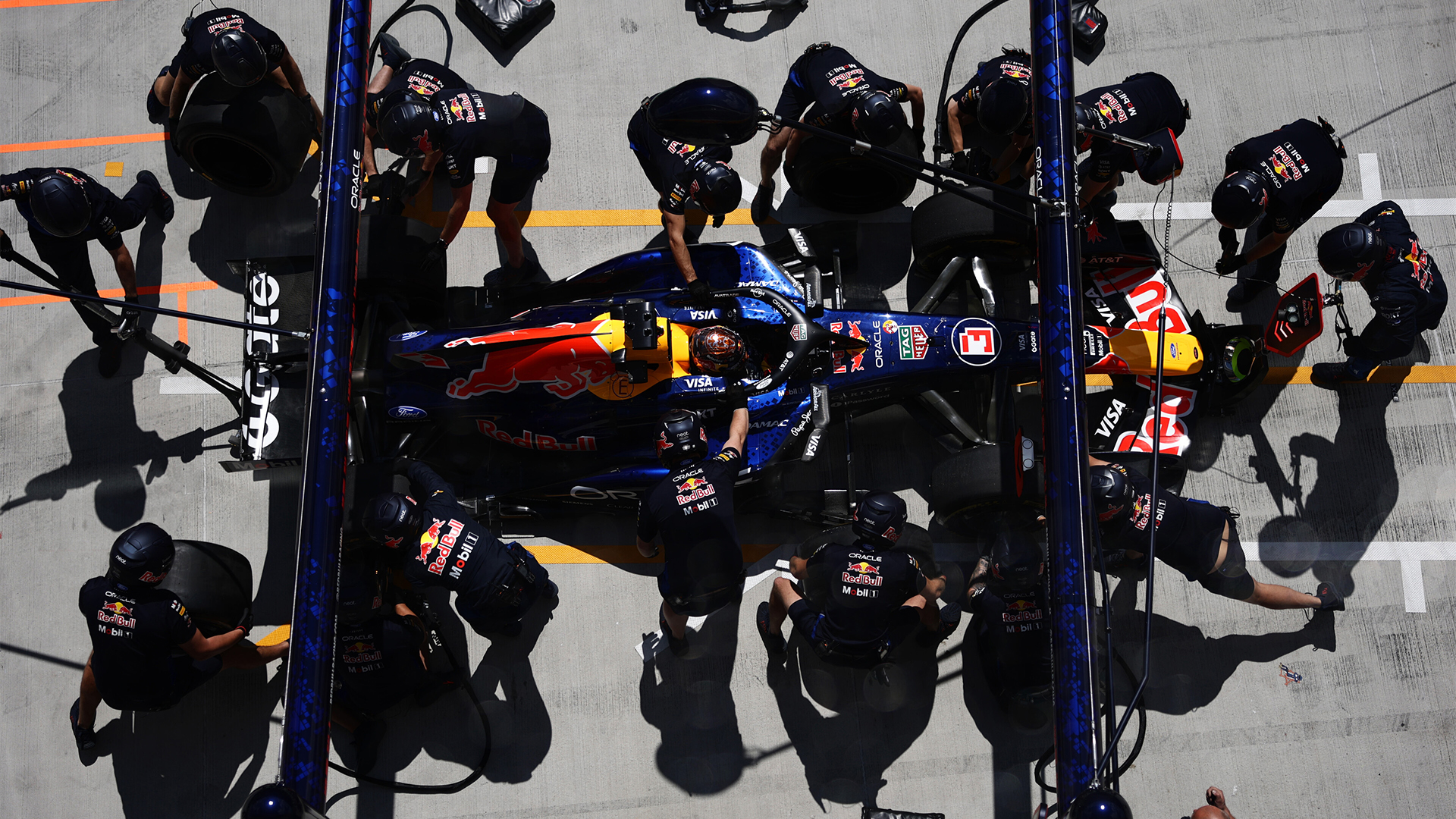
The Hungarian Grand Prix has never needed long straights to expose a Formula 1 car.
The Hungaroring does it through repetition.
Fourteen corners packed into 4.381 kilometres leave almost no time for the tyres to recover, while long-radius turns, rapid direction changes and repeated traction zones place a premium on balance rather than outright top speed. The circuit has long carried the nickname “Monaco without the walls”, but the 2026 regulations could change one of its oldest characteristics.
Hungary has traditionally been difficult for overtaking. This year, energy deployment could provide another weapon.
The new generation of Formula 1 cars places greater emphasis on electrical energy management, and the relatively short straights around the Hungaroring should reduce some of the battery limitations seen at faster circuits. Drivers able to preserve deployment through the technical sections may arrive at the circuit’s few passing opportunities with more available energy.
Could that turn 2026 into one of the more active Hungarian Grands Prix? There is a realistic chance.
Soft Tyres, Hot Asphalt and Very Little Recovery Time
Pirelli has selected the C3, C4 and C5 compounds for Hungary, the softest trio available in the 2026 range. That choice fits the circuit.
Traction and braking stability are critical around the Hungaroring, while the older sections of asphalt remain relatively rough and grip levels evolve considerably throughout the weekend. Pirelli expects thermal degradation to be particularly important on the rear axle because of the number of acceleration zones around the lap.
There is also very little opportunity for the tyres to cool.
Drivers accelerate out of Turn 1 into another sequence almost immediately. The middle sector then becomes a continuous chain of direction changes before the final two long corners load the rear tyres again on the way back to the start-finish straight.
High track temperatures only intensify that problem.
Pirelli believes both one-stop and two-stop strategies could remain viable on total race time, although higher temperatures are likely to push teams towards the harder compounds and make two stops increasingly attractive.
Wind is another variable worth watching. On a circuit built around aerodynamic consistency through consecutive corners, changes in direction or strength can quickly alter the balance of a car.
Hungary rarely rewards a machine that is difficult to trust.
Why Ferrari Arrived as the Team to Beat
On paper, few circuits on the calendar fit Ferrari’s current strengths better.
The Hungaroring removes much of the emphasis from top-speed efficiency and replaces it with sustained cornering performance, mechanical traction and stability through long sections of loaded steering.
Ferrari has increasingly excelled in those conditions.
That was already clear before the weekend, and Friday running reinforced the argument. Charles Leclerc led FP1 before Lewis Hamilton headed a Ferrari one-two in FP2, with the Scuderia showing particularly strong pace through the circuit’s technical sections.
Hamilton’s 1:18.729 in FP2 put him 0.148 seconds clear of Leclerc and almost half a second ahead of Lando Norris in third.
Ferrari’s strongest territory should come towards the latter half of the lap.
Turn 12 leads into two prolonged corners where maintaining rear stability and minimum speed matters more than straight-line performance. If Ferrari can control rear tyre temperatures across a stint, the final sector offers an opportunity to build lap time without relying on power.
There are reasons for caution.
Ferrari arrived at Monaco earlier this season with similarly high expectations and did not convert them. Both Leclerc and team management have therefore been careful about presenting Hungary as a guaranteed opportunity.
The difference here is tyre behaviour.
Budapest’s warmer conditions and repeated loading should make tyre preparation less problematic than it was around Monte Carlo. The bigger concern may instead be overheating the rear axle across longer runs.
Ferrari has the pace. Managing it for 70 laps is the more complicated part.
Mercedes Has More Than Victory at Stake
Hungary arrives at an important moment for Mercedes.
The team still leads both championships, while Kimi Antonelli entered the weekend 45 points clear of Lewis Hamilton after winning the Belgian Grand Prix.
For George Russell, the pressure is different.
Antonelli has become the reference point within Mercedes, and Russell needs more than isolated flashes of qualifying speed to change that narrative. Hungary demands precision, especially across a lap where a small balance problem can cost time through several consecutive corners.
The circuit should offer Mercedes opportunities in the opening sector and through sections where acceleration efficiency becomes more important.
Its larger challenge is likely to come through the long corner sequences where Ferrari has looked increasingly comfortable.
Friday supported that picture. Russell finished fifth in both sessions and admitted Ferrari looked particularly strong, while Mercedes struggled to match the Scuderia’s single-lap performance.
Hungary is therefore as much about limiting damage as beating Ferrari outright.
A clean weekend before the summer break would matter for Mercedes. For Russell, finishing decisively ahead of Antonelli would matter even more.
McLaren Brings Its Next Major Step
McLaren arrives with one of the weekend’s most important technical packages.
Its 2026 car has shown strong performance in several corner types but has paid a price in aerodynamic drag, something that becomes particularly costly at high-speed venues.
Hungary removes part of that weakness.
The first sector still contains enough full-throttle running to expose straight-line efficiency, but once the lap enters the tighter middle section, McLaren has more opportunity to lean on its cornering performance.
The team also brought a substantial upgrade package to Budapest as it attempts to close the gap to the front after several months of development work. McLaren reported that the new parts were behaving as expected during the opening day.
Lando Norris then topped FP3 ahead of Hamilton and Antonelli, with all three covered by little more than a tenth.
McLaren may not possess Ferrari’s outright advantage through every sector, but Hungary offers enough medium-speed and stop-start content to put it firmly into the fight.
The margins could be small enough for six cars to sit within a few tenths over one lap.
Red Bull Faces a Circuit That Hides Its Biggest Strength
Red Bull enters Hungary with a less natural fit.
Its strongest weapon during much of 2026 has been straight-line performance. The Hungaroring gives it relatively little space to use it.
There is only one meaningful long run from the final corner to Turn 1, followed by a much shorter acceleration zone towards Turn 2. Beyond that, the lap is dominated by corners.
That removes one of Red Bull’s easiest ways to recover lap time.
Max Verstappen remains capable of producing a qualifying lap beyond the apparent potential of the car, but Sunday may be more difficult. Unlike previous Hungarian Grands Prix, greater electrical deployment could make attacking and defending less dependent on traditional track position.
A car placed artificially high on Saturday may therefore find it harder to stay there.
Red Bull was already chasing Ferrari after Friday running, with Verstappen fourth in FP2 and Isack Hadjar sixth. Hadjar acknowledged that Ferrari appeared to have the stronger package around the circuit.
A podium remains realistic.
Controlling the weekend looks much less likely.
Aston Martin Effectively Starts Its Second Season Here
For Aston Martin, Hungary represents something larger than another Grand Prix.
The AMR26 arrived with the team’s first major development package of the season, containing 16 declared updates across the chassis and aerodynamics. Among the changes are a revised nose, new floor, altered sidepod inlets and modifications towards the rear of the car.
Adrian Newey has described the package as the first stage of a wider recovery plan rather than a finished solution. That distinction matters.
Aston Martin has spent much of the opening half of 2026 effectively standing still while rivals added performance. Hungary is where its development season really begins.
Honda’s power-unit disadvantage should also be less exposed here than at Spa or other high-speed venues, simply because outright straight-line performance carries less weight.
That does not suddenly make Aston Martin a front-running car.
But the Hungaroring provides a much cleaner environment in which to judge whether the new chassis direction works.
Racing Bulls Could Again Lead the Midfield
Behind the leading teams, Racing Bulls is well positioned for another strong weekend.
Hot track temperatures and a circuit dominated by mechanical grip and medium-speed balance fit several of the car’s stronger characteristics.
More importantly, much of the midfield arrives with bigger problems.
Williams is unlikely to enjoy the reduced importance of straight-line speed. Haas has struggled to find consistent performance, while Alpine remains limited by a car that has received relatively little development during the opening part of the campaign.
That creates an opportunity for Racing Bulls and Audi to become the reference points in the midfield.
Aston Martin’s upgraded car remains the major unknown.
Hungary Could Tell Us More Than the Championship Table
The Hungaroring usually tells a clear story about a Formula 1 car.
There is nowhere to hide poor balance through the middle sector, nowhere to cool an overheating rear tyre and very little straight-line performance available to compensate for a weak chassis. That is why this weekend matters.
Ferrari arrives with perhaps its most naturally suited circuit of the season. Mercedes needs to protect its championship position. McLaren has brought the development package designed to pull it back towards the front, while Red Bull faces a track that takes away one of its biggest strengths.
Then there is Hungary itself.
Soft compounds, high temperatures and the energy dynamics of the 2026 cars could make track position less secure than it has traditionally been here.
The Hungaroring may still look like Monaco without the walls. The racing might not.