

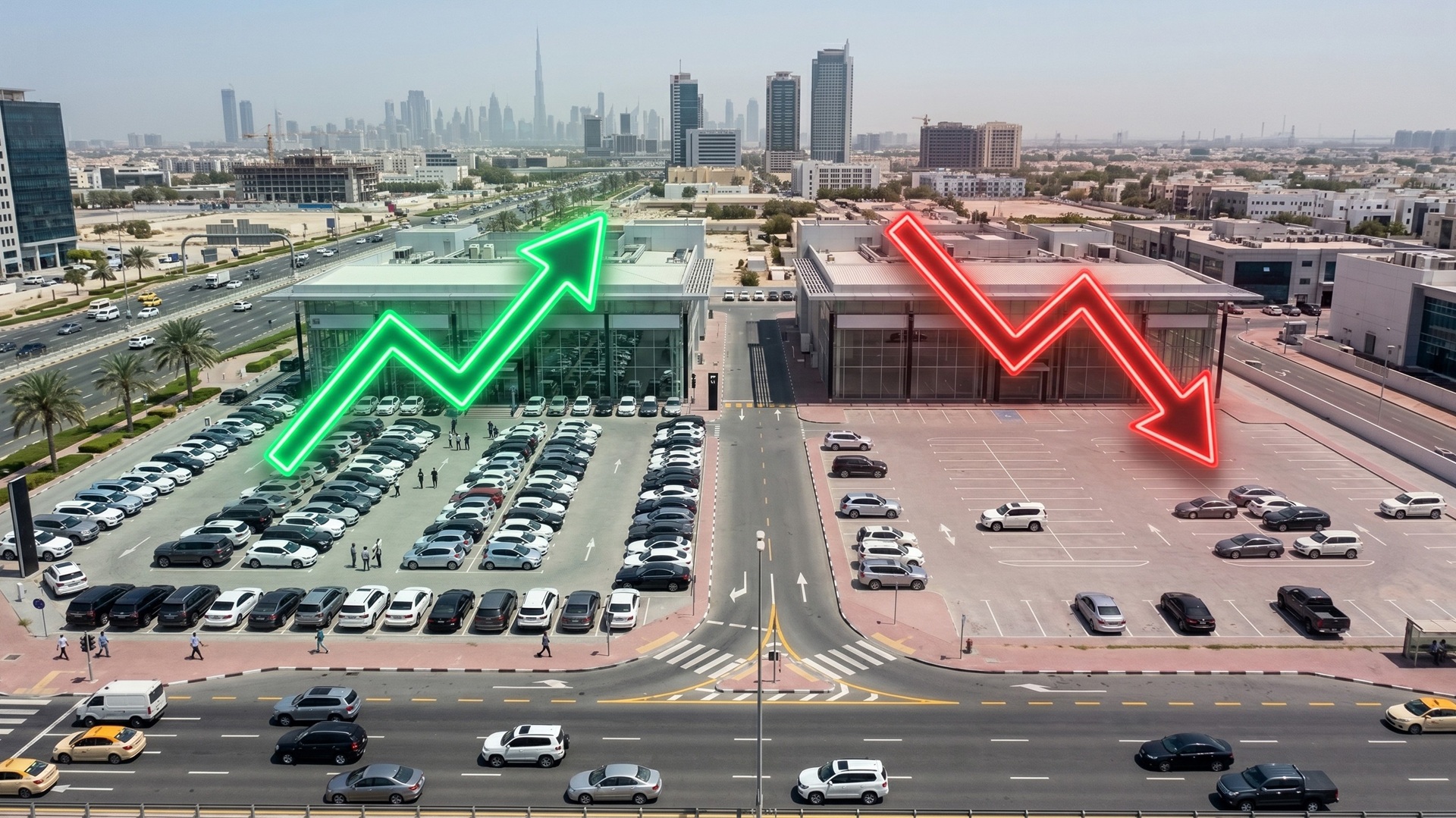
Nobody predicted this. Not quite like this.
Since early 2026, the escalating geopolitical tensions across the wider region have settled into daily life here in a way that is difficult to articulate but impossible to ignore. Governments across the GCC have held the line on stability. Life has continued. But something underneath it has shifted, and anyone paying attention can feel it.
People are quieter about money. More deliberate. The instinct that once drove a Saturday afternoon showroom visit has been replaced by something slower and more considered. That change in feeling has become a change in behaviour. And behaviour, ultimately, is what the UAE automotive industry runs on.
The real story is not about fewer cars being sold
The surface reading of this moment is straightforward: uncertainty hits, spending slows, sales dip. That is true. But it is also incomplete.
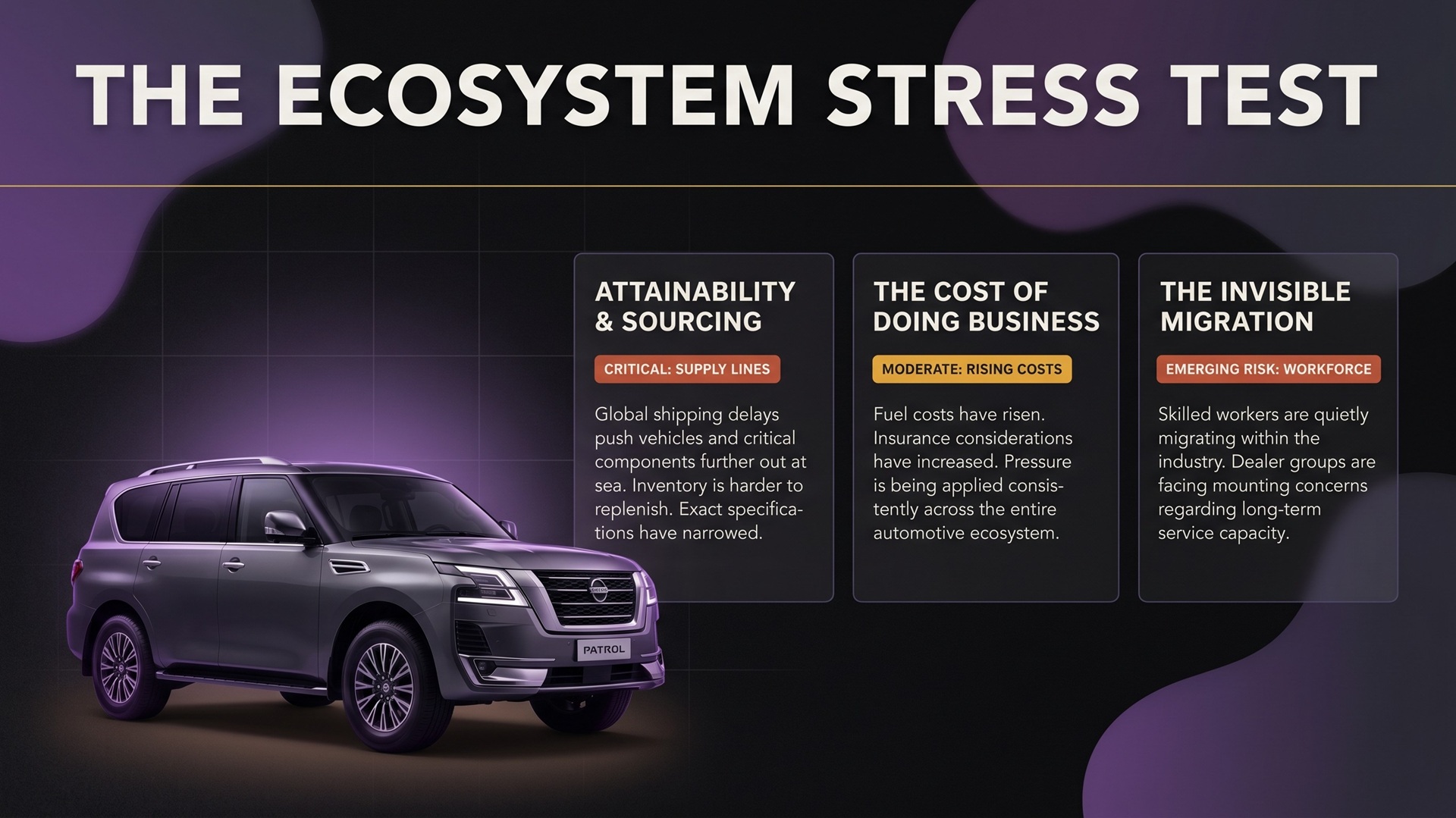
The automotive industry is not a single lever; it is an ecosystem. Vehicles, spare parts, tyres, logistics, skilled labour, financing, insurance, and consumer confidence all move together. Pull on one thread, and the rest follows. What is happening right now is not a dip; it is a systemic stress test.
Global shipping delays have pushed vehicles and critical components further out at sea before they reach UAE ports. Inventory is harder to replenish. Spare parts timelines have stretched. Certain tyre categories have been affected. In showrooms, wait times for servicing have grown. Exact specifications are harder to source. Customisation options have narrowed. Fuel costs have risen. Insurance considerations have increased.
And beneath it all, skilled workers are quietly migrating within the industry in ways that are beginning to concern dealer groups as they consider long-term capacity. This is not panic. But it is pressure. And pressure, applied consistently across an entire ecosystem, eventually reveals character.
The customer has not left; they have evolved
This is the part I find most interesting, and most misread by those watching from the outside. The assumption is that uncertainty kills demand. In my observation, it does not. It reshapes it.
The customer walking into a showroom today is no less interested in a vehicle than before. They are differently interested. More informed. More deliberate. Carrying a longer mental checklist than they did eighteen months ago.
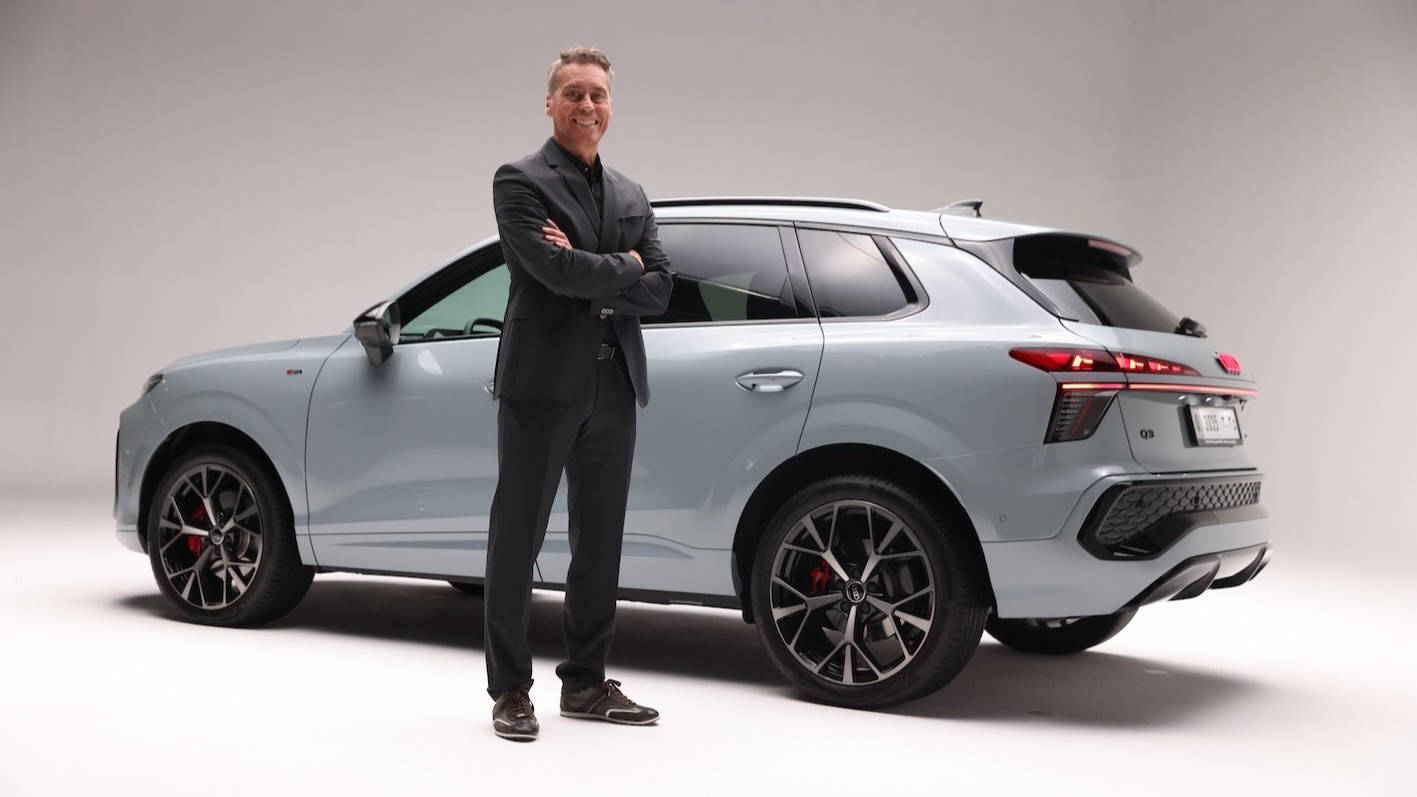
Rene Koneberg, Managing Director of Audi Middle East, confirms what I suspected: digital research before showroom visits has increased substantially. Customers are arriving having already done the work. They want transparency, not theatre. Reassurance, not a pitch. The confidence they feel in the brand and in the experience around the purchase now carries as much weight as the vehicle itself. That is a profound shift for an industry that has historically led with product.
Also Read: Audi Q4 e-tron Update: Increased Range, Rapid Charging, and Interior Modifications Revealed
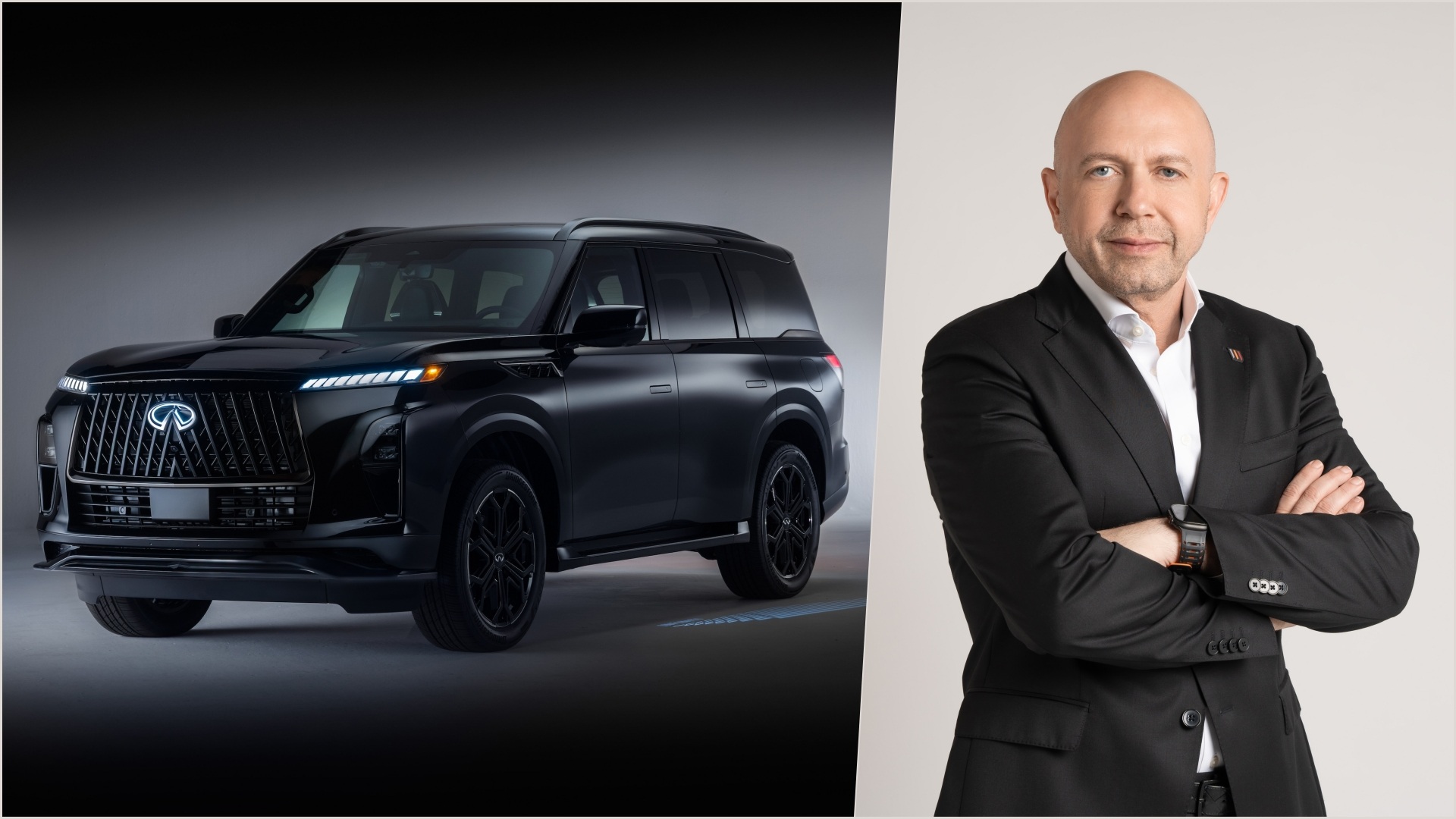
Hussam Baghdadi, Chief Operating Officer of AWR Automotive, puts a sharper point on it. He does not use the word crisis. He uses recalibration. Customers are more focused on the total cost of ownership, service quality, and long-term value. The conversation in showrooms has moved decisively toward affordability structures, monthly commitments, and running costs. Price alone, he notes, is no longer what closes a deal.
I believe him. Because that shift reflects something broader happening in this city. People are not spending less thoughtfully; they are spending more thoughtfully. And the brands equipped to meet that version of the customer will be fine.
Pre-owned is no longer the compromise choice
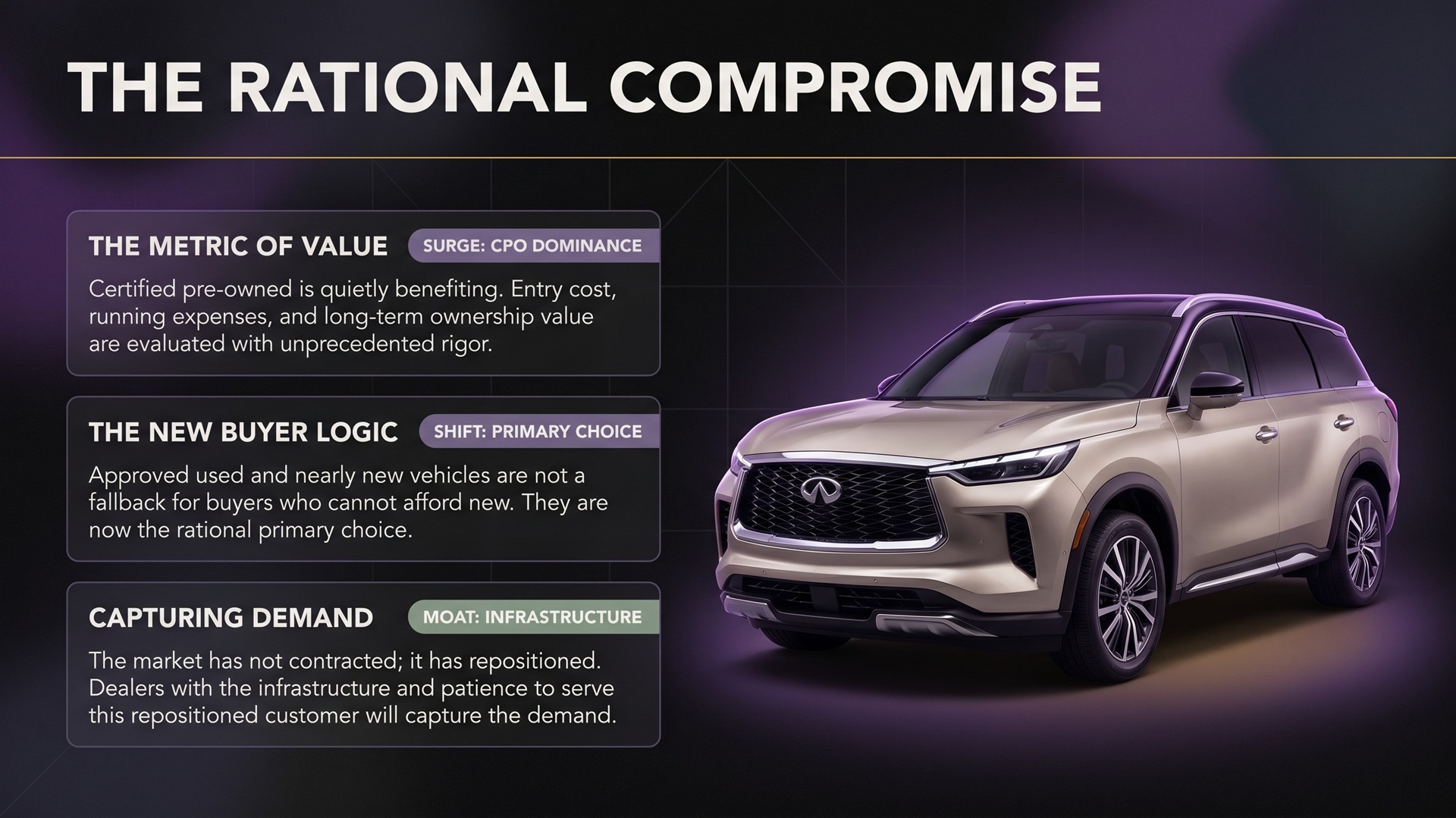
If one segment has quietly benefited from this moment, it is certified pre-owned (CPO).
AWR Automotive is seeing it clearly. Entry cost, running expenses, and long-term ownership value are now being evaluated with a rigour that did not exist before. Approved used and nearly new vehicles are not a fallback for buyers who cannot afford new. For a growing number of people, they are the rational choice. Baghdadi is blunt about it: with full after-sales support in place, the decision becomes straightforward.
That tells me something important. The market has not contracted. It has repositioned. And the dealers with the infrastructure and patience to serve that repositioned customer will capture demand that others are lamenting.
After-sales: Where reputations are made or lost
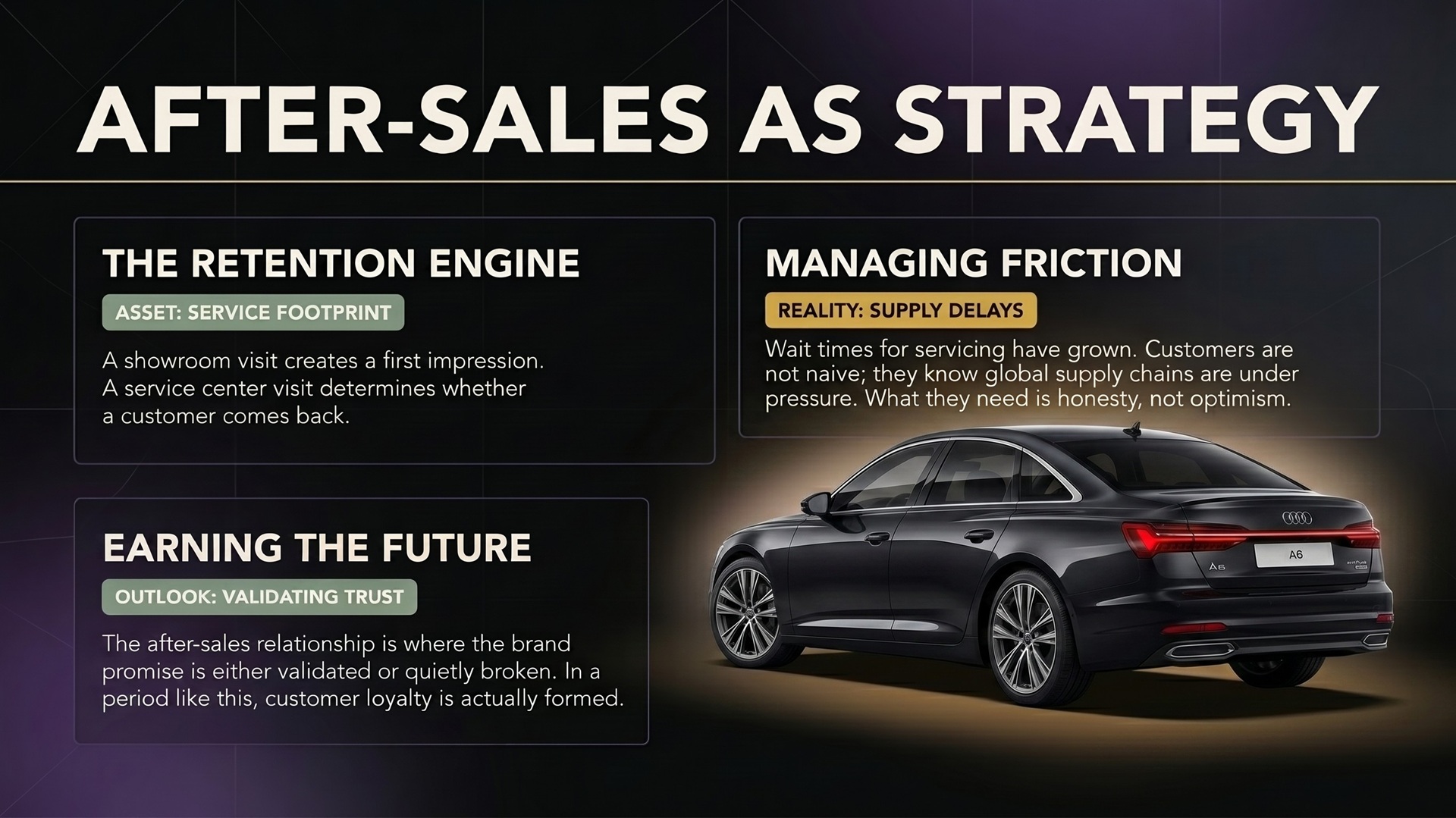
I have long believed that after-sales is the most underrated part of the automotive business. This period is proving it.
A showroom visit creates a first impression. A service centre visit determines whether a customer comes back. Both Audi Middle East and AWR Automotive are treating after-sales not as a support function, but as a strategic priority.
AWR Automotive operates 15 service centres across its Nissan, INFINITI, and Renault network in the UAE. Baghdadi views that footprint as central to sustaining trust right now. The after-sales relationship, he argues, is where the brand promise is either validated or quietly broken. I would go further: in a period like this, customer loyalty is actually formed.
Operationally, the demands on dealer groups have also intensified. Logistics, inventory rotation, financing structures, and delivery timelines are all being managed with a flexibility that would have felt excessive two years ago. Baghdadi’s instinct here is sound: clarity and consistency matter more than promises. Customers are not naive; they know global supply chains are under pressure. What they need is honesty, not optimism.
Also Read: An Easier Parking Experience In Dubai: Parkin & Secure Parking Announce Partnership
The second half of 2026: Sorting the leaders from the laggards
Here is what I think happens next. The brands that held their nerve, that stayed visible, kept communicating, maintained service standards, and resisted the temptation to go quiet, will emerge from this period with something more valuable than sales figures. They will have trust.
Koneberg has been direct about Audi Middle East’s position: plans paused earlier in 2026 have not been cancelled. The second half of the year is one the brand is preparing for with intent. That is not a holding statement; it is a signal worth taking seriously.
Also Read: Audi Q9 Interior: First Look at Audi’s Largest and Most Luxurious SUV
Across the industry, inventory planning is moving from historical assumptions to real-time signals. Dealers are monitoring a growing preference for practical, fuel-efficient vehicles. The ecosystem is not contracting; it is reconfiguring.
The question the next six months will answer is not which brands sell the most cars. It is which brands earn the most trust? Those two things have never been more different from each other than they are right now.