

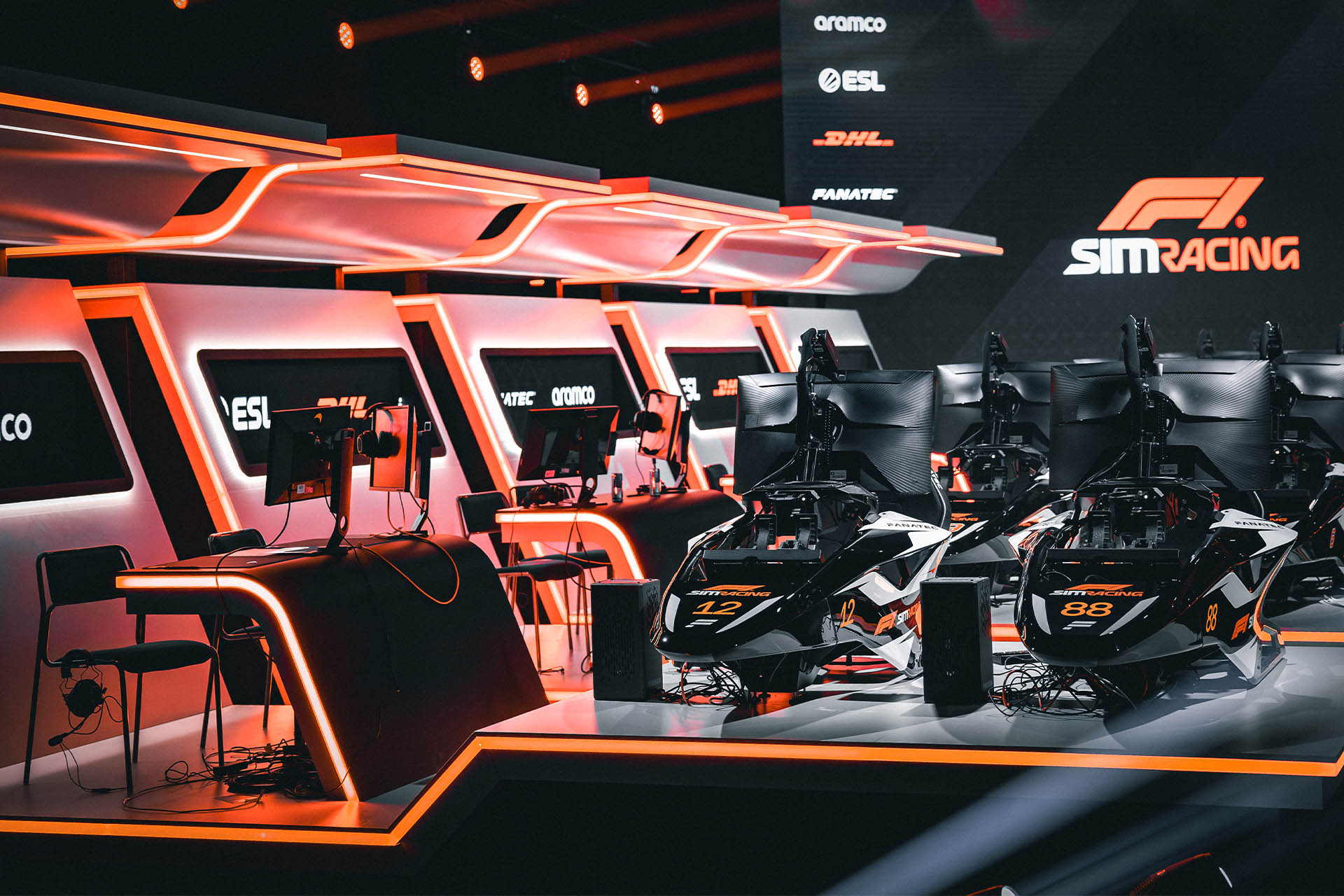
The same audience that fills Formula 1 grandstands, buys performance cars and follows every race weekend is spending thousands of hours behind virtual steering wheels. More importantly, brands have noticed.
As Formula 1 sponsorship values continue to climb, companies are increasingly looking towards sim racing as a way to reach the same audience, at a fraction of the cost. The conversation is no longer about esports. It’s about business.
Formula 1 Sponsorship Has Never Been More Valuable
Formula 1’s commercial boom shows no signs of slowing down.
Global sponsorship spending in the championship continues to reach record levels as manufacturers, technology companies, financial institutions and luxury brands compete for visibility on the world’s fastest-growing sports property.
That growth has also created a new challenge.
For many companies, Formula 1 has become increasingly difficult to enter. Premium sponsorship packages now require budgets that only the largest global brands can justify.
For everyone else, the question has changed. Where can you reach the same audience more efficiently? Increasingly, the answer is sim racing.
The Audience Looks Surprisingly Familiar
One of sim racing’s biggest strengths isn’t the racing itself. It’s the people watching.
The majority of the audience falls into the same demographic many Formula 1 partners actively pursue: digitally native, high-income consumers between 18 and 34 years old who are deeply engaged with technology, gaming and automotive culture.
These are also the customers driving growth across industries such as fintech, software, consumer electronics, luxury goods and mobility. For marketers, that overlap is difficult to ignore.
The Pandemic Accelerated Everything
The turning point came in 2020. With real-world racing temporarily paused, Formula 1 launched the Virtual Grand Prix Series, introducing millions of fans to competitive sim racing almost overnight.
At the same time, sim racing content exploded across Twitch and YouTube as professional drivers, esports competitors and content creators shared the same virtual circuits.
What began as a temporary solution quickly became a permanent part of motorsport culture.
Sim Racing Offers More Than Traditional Sponsorship
Perhaps the biggest commercial difference lies in what brands are actually buying.
Traditional motorsport sponsorship has often centred around physical visibility, which means logos on cars, race suits or hospitality spaces.
Sim racing expands that inventory dramatically.
Brands can integrate into livestreams, creator content, coaching platforms, virtual circuits, esports broadcasts, hardware partnerships and social-first campaigns where every interaction is measurable.
Instead of simply appearing during a race weekend, sponsors become part of an always-online ecosystem.
That changes the return on investment.
Formula 1 Teams Have Already Made Their Decision
The industry’s biggest names are no longer treating sim racing as an experiment.
Red Bull Racing, Mercedes, Ferrari, McLaren and Williams all operate dedicated esports programmes, while leading simulator manufacturers such as Fanatec, Simucube, Asetek and Moza have established long-term partnerships across Formula 1.
When manufacturers and championship-winning teams continue investing in the same space year after year, the message is difficult to misinterpret.
Sim racing has become part of modern motorsport infrastructure.
The Business Case Keeps Getting Stronger
The market itself continues to mature.
Hardware sales are growing steadily, esports prize funds continue to increase and commercial simulator venues are expanding across Europe, North America and the Middle East as operators look to capitalise on rising consumer demand.
Unlike many emerging industries, sim racing is no longer being evaluated purely on potential.
It is beginning to demonstrate sustainable commercial returns.
For investors, sponsors and venue operators alike, the market is becoming significantly easier to quantify.
Sim Racing Is Following Formula 1’s Commercial Playbook
A decade ago, Formula 1’s commercial growth was still accelerating.
Many brands entered the championship before sponsorship values exploded and benefited from substantial increases in exposure as Formula 1 reached new audiences around the world.
Sim racing appears to be approaching a similar point in its own evolution.
The audience already exists. The infrastructure is already being built. The manufacturers have already committed.
The question is no longer whether sim racing will become a major commercial platform.
It’s which brands will recognise the opportunity before everyone else does.