

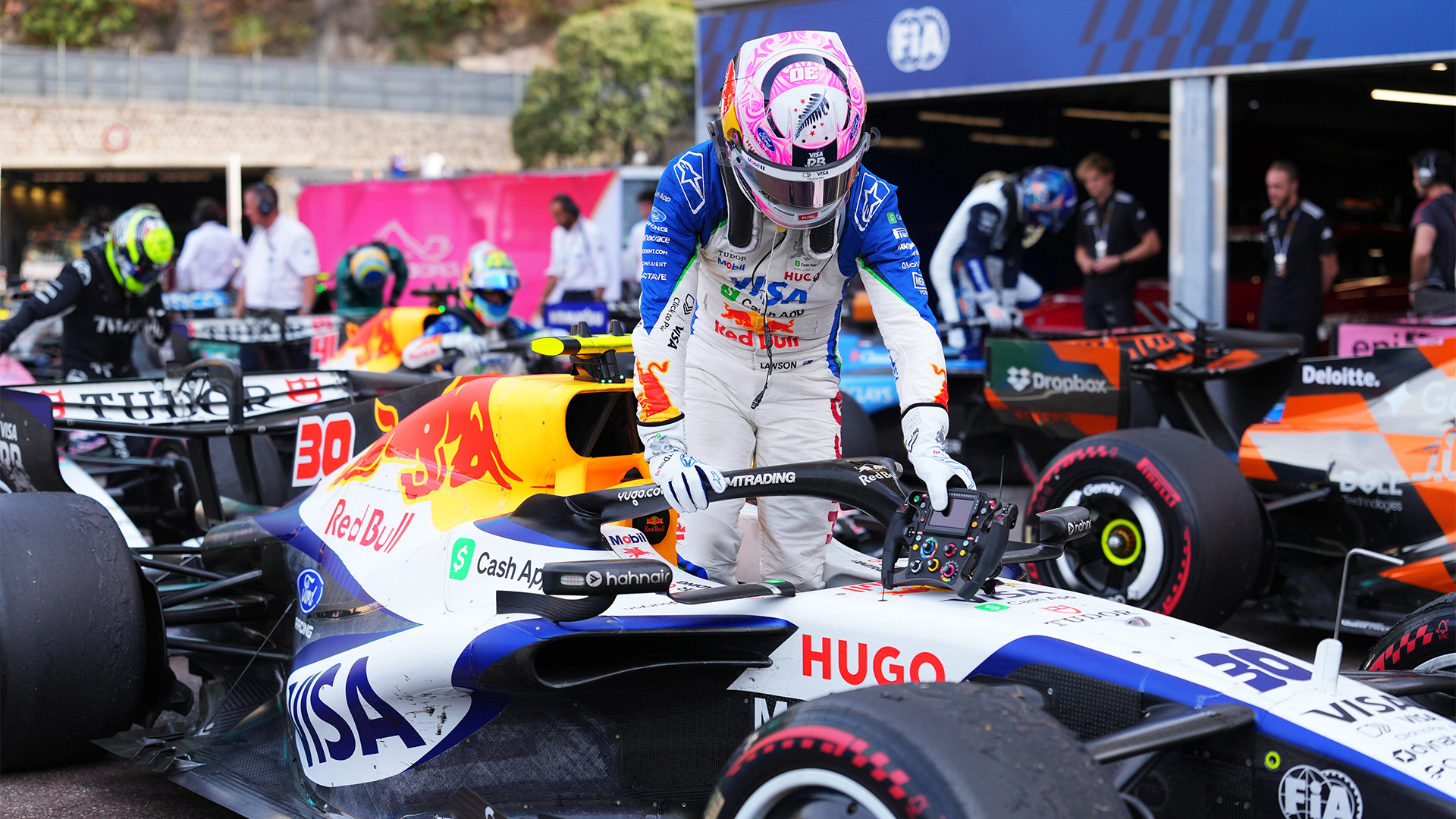
Formula 1’s parc fermé regulations restrict teams from making major setup changes once qualifying begins, forcing them to balance one-lap performance against race pace while operating under close FIA supervision.
Parc fermé is one of Formula 1’s most consequential technical restrictions, yet its influence is often most visible when something goes wrong. A car that looks perfectly balanced on Friday can become compromised by Saturday, and once the relevant parc fermé conditions take effect, teams have limited scope to engineer their way out of the problem without risking a pit-lane start.
The term itself is French for “closed park”, but in modern Formula 1 it describes far more than a physical location where cars are held. Parc fermé is effectively a regulatory state: a controlled period during which the specification and setup of a car are tightly restricted.
Its purpose is straightforward. Teams should not be able to build one configuration purely for qualifying and then transform the same car into a substantially different machine for the Grand Prix.
That restriction turns Friday practice into something more significant than preparation for qualifying.
Engineers must find a compromise that can survive changing fuel loads, tyre behaviour, track temperatures and potentially very different weather conditions across the remainder of the weekend.
Why does Formula 1 have parc fermé?
Without parc fermé restrictions, teams could optimise aggressively for the demands of individual sessions.
A low-drag or low-downforce configuration might be used to extract maximum performance over a qualifying lap before the car is reconfigured overnight for tyre management, fuel-heavy balance and race pace.
That would increase costs and place another premium on the engineering resources available to the wealthiest teams. Parc fermé instead forces teams to commit to the core specification of their cars and live with the consequences.
It also makes setup work a strategic exercise.
Ride height provides a good example. Running the car low can improve aerodynamic performance by keeping the floor in its intended operating window, but going too aggressive can create bouncing, bottoming or excessive plank wear. Raising the car offers more margin but may sacrifice load and lap time.
Once the setup is effectively locked, correcting a fundamental miscalculation becomes considerably more difficult.
What can F1 teams change under parc fermé?
Parc fermé does not mean mechanics are forbidden from touching the car.
Teams can perform specific maintenance and repair procedures permitted by the regulations, with the FIA controlling what work takes place. Certain components can be replaced when necessary, but replacement parts generally need to conform to the relevant specification requirements rather than providing an opportunity to introduce a performance upgrade.
Front-wing adjustments are among the limited setup changes that can be made, allowing teams some scope to alter aerodynamic balance without fundamentally changing the car.
Repairs are also possible. A driver who damages a component during qualifying is not automatically condemned to race with it, provided the replacement and work comply with the regulations and receive the necessary approval.
The distinction is important: parc fermé is designed to prevent performance-driven reconfiguration, not to force an unsafe or damaged car onto the grid.
FIA technical officials supervise the process, with cars and components subject to checks designed to establish that the specification presented for competition has not been improperly altered.
Why breaking parc fermé can mean a pit-lane start
The consequences become much more visible when a team decides it needs to make changes outside those permitted.
A substantial setup alteration after qualifying can require the affected driver to start from the pit lane rather than their earned grid position. It is a heavy sporting price because the driver must wait for the field to pass the pit exit before joining the race.
Yet teams occasionally accept that penalty deliberately.
If qualifying exposes a serious setup weakness, or a car requires work that cannot be completed within parc fermé restrictions, sacrificing grid position can be preferable to starting the Grand Prix with a fundamentally compromised package.
The calculation depends heavily on the circuit. At a venue where overtaking is possible and race pace is strong, giving up a poor grid position to correct the car can be strategically defensible. At tracks where passing is notoriously difficult, the same decision carries a much greater cost.
Mechanical problems create another scenario. Gearbox, suspension or power-unit-related work may leave a team choosing between preserving a starting position and ensuring the car is capable of completing the race.
Parc fermé is different on F1 Sprint weekends
The Sprint format has made parc fermé particularly important because teams have far less practice data before committing to their setup.
Formula 1 revised the Sprint weekend format for 2024, creating separate parc fermé periods rather than effectively trapping teams in one configuration across almost the entire competitive weekend.
Under the revised structure, cars enter parc fermé for Sprint qualifying before teams regain an opportunity to work on them following the Sprint. Parc fermé conditions then return for Grand Prix qualifying and continue into Sunday.
The change addressed one of the major weaknesses of the earlier Sprint format. With only a single practice session available, an incorrect setup choice could previously compromise both the Sprint and the Grand Prix before teams had gathered enough representative running to understand the problem.
That extra adjustment window gives engineers a valuable opportunity to respond to what they learned during the Sprint before committing to their Grand Prix specification.
How the FIA polices cars overnight
Parc fermé does not simply rely on teams following the rules unsupervised.
The FIA uses technical checks and monitoring procedures to control what happens to the cars while restricted conditions are in force. Components can be sealed where required, and work carried out by mechanics must comply with the permitted procedures.
That oversight matters because modern Formula 1 cars contain thousands of adjustable or replaceable elements. A seemingly minor change in ride height, suspension configuration, aerodynamic specification or cooling arrangement can alter performance significantly.
The principle is that the car which competes in qualifying should retain the same fundamental specification for the race.
Why parc fermé has become even more important in modern F1
The current generation of ground-effect Formula 1 cars has made setup compromises particularly sensitive.
Ride height, floor performance and suspension behaviour are closely linked. A car optimised aggressively for one set of conditions may become difficult to manage if wind direction changes, temperatures fall or rain arrives.
That creates one of the weekend’s most important engineering decisions before the lights even go out.
Teams are effectively trying to predict Sunday while preparing a car that must also perform on Saturday.
They need enough qualifying performance to secure track position without creating a configuration that overheats its tyres, bottoms excessively or lacks the balance required over a full fuel stint.
Parc fermé therefore shapes much more of a Formula 1 weekend than its name suggests. It limits development between qualifying and the race, raises the cost of setup mistakes and forces engineers to commit before they possess perfect information.
The fastest theoretical setup is not necessarily the right one. Under parc fermé, the valuable setup is the one that still works when the conditions, fuel load and competitive demands change.