

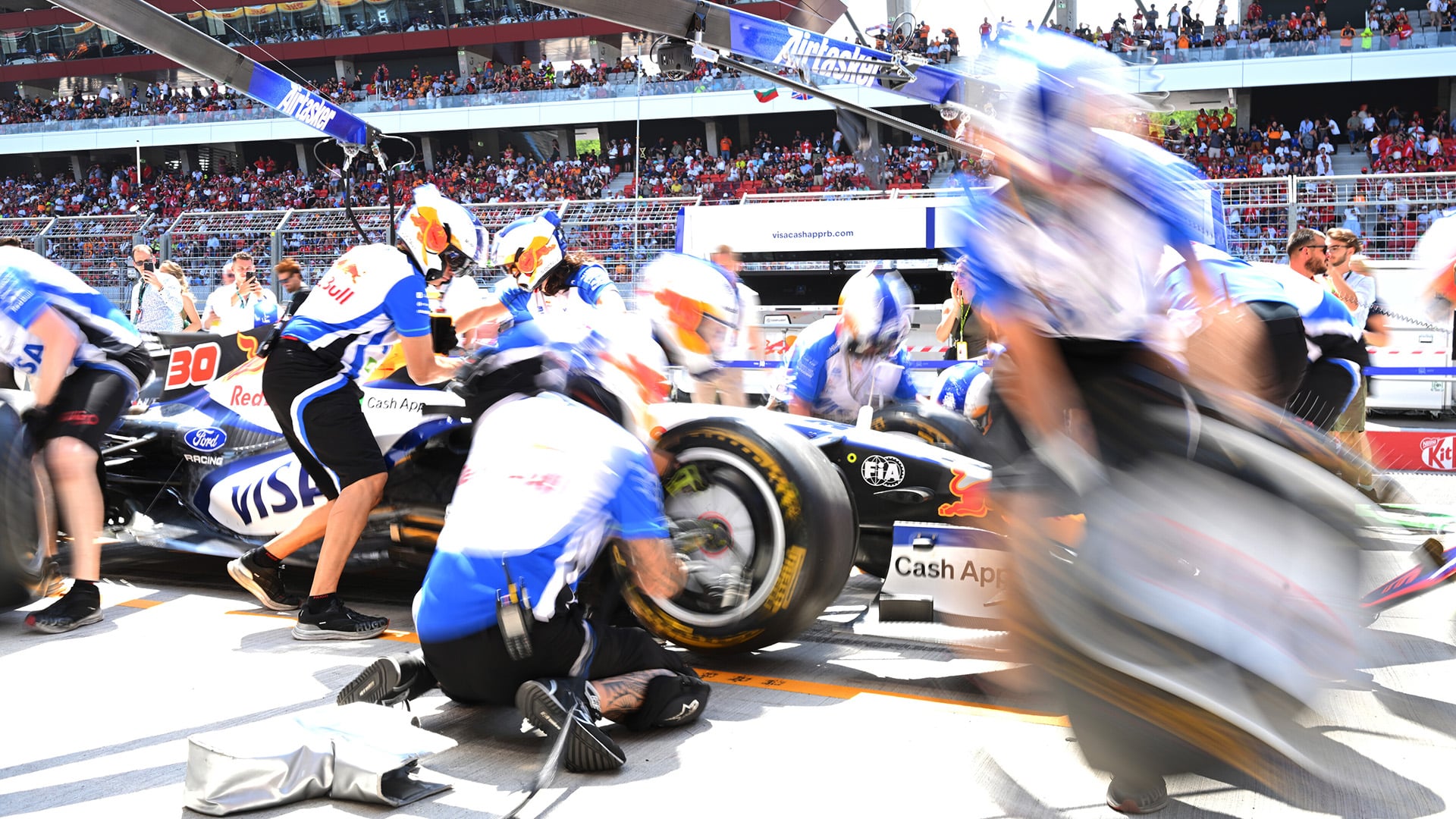
Formula 1 teams have evolved from racing operations into global commercial businesses, drawing income from sponsorship, prize money, media distributions, manufacturer backing, merchandise, technology and premium hospitality.
Formula 1’s financial transformation has been almost as dramatic as its technical one. What was once a championship in which even established teams could operate on precarious budgets has developed into a multi-billion-dollar sporting ecosystem, with leading teams now valued at several billion dollars.
The commercial expansion of F1 under Liberty Media, the introduction of the cost cap and a rapidly growing international audience have fundamentally altered the economics of competing at the front of the grid. Teams no longer rely on a single major sponsor or the financial commitment of an owner to survive. Instead, modern Formula 1 organisations combine multiple revenue streams, some directly linked to racing and others extending far beyond the circuit.
So where does the money actually come from?
1. Sponsorship remains the commercial backbone
Sponsorship is still one of the most important sources of direct income for Formula 1 teams.
The value proposition is straightforward: F1 offers brands exposure across a global championship, with cars, drivers, team clothing, digital platforms and hospitality programmes providing valuable advertising inventory.
Yet modern F1 sponsorship has become considerably more sophisticated than simply placing a logo on a rear wing.
Teams increasingly structure partnerships around technology, business-to-business relationships, content, data, sustainability and customer experiences. The largest agreements can include naming rights or prominent integration into a team’s identity, while smaller partners purchase specific areas of the car or access to commercial programmes.
Success matters. A team consistently fighting for victories and championships commands greater exposure, while globally recognised drivers can strengthen the commercial value of an organisation independently of its Constructors’ Championship position.
McLaren’s extensive partnership portfolio illustrates how aggressively teams can monetise that visibility, while title-level agreements such as Oracle’s relationship with Red Bull Racing demonstrate the scale available at the top end of the market.
2. F1 prize money is worth hundreds of millions
Teams also receive a share of Formula 1’s commercial revenues through distributions governed by the Concorde Agreement, the commercial framework connecting the championship, its teams and governing structures.
The amount received is influenced heavily by Constructors’ Championship performance, making finishing position financially important as well as sportingly significant.
The strongest teams can receive well into nine figures across Formula 1’s various distributions.
McLaren’s 2024 Constructors’ Championship success, for example, was estimated to have been worth around $140 million in prize-related payments.
The structure is more complicated than simply dividing a pot according to the final championship table.
Formula 1’s commercial agreements have historically included additional payments and specific arrangements, including Ferrari’s long-standing recognition as the championship’s only team to have contested every season since 1950.
For midfield operations separated by relatively small performance margins, gaining or losing a Constructors’ Championship position can therefore have consequences extending well beyond sporting prestige.
3. Broadcasting rights feed Formula 1’s revenue pool
Television and media rights are another central component of Formula 1’s business model.
Broadcasters and streaming platforms pay substantial sums for the right to show grands prix in individual territories. With Formula 1 distributed across more than 180 markets, those agreements collectively generate one of the championship’s largest revenue streams.
Teams do not negotiate those primary broadcasting contracts themselves. The commercial rights holder collects the revenue before part of Formula 1’s income is redistributed to competitors under the Concorde framework.
That means the increasing value of F1’s media rights matters directly to the teams.
The relationship is cyclical: larger audiences make broadcasting rights more valuable, stronger media deals increase championship revenue and a portion of that increased commercial income eventually reaches the grid.
The continued migration towards streaming and direct-to-consumer viewing also gives Formula 1 another route through which to monetise an increasingly international audience.
4. Manufacturers invest heavily in works programmes
For works teams, the parent manufacturer represents another major source of financial and technical support.
Ferrari and Mercedes have long used Formula 1 as both a competitive programme and an extension of their automotive businesses, while Audi and Cadillac’s arrival under the 2026 regulations demonstrates the continuing attraction of F1 to major manufacturers.
The return is not measured exclusively in race victories.
Formula 1 offers manufacturers an international marketing platform, a development environment for engineers and a means of associating road-car technology with performance, efficiency and innovation.
Power-unit supply creates another layer of commercial activity. Customer teams purchase or contract engine and associated component packages from manufacturers, creating relationships between otherwise competing organisations.
The FIA’s financial regulations and power-unit cost framework increasingly govern how much can be charged and spent, making the manufacturer-team relationship more controlled than in previous eras.
5. Grand Prix hosting fees help finance the championship
There is also substantial money flowing into Formula 1 before a car even leaves the garage.
Promoters typically pay Formula 1 for the right to stage a grand prix. The precise terms vary considerably between events, with established European races operating under different commercial conditions from newer events backed by governments or major investment groups.
Hosting agreements can run into tens of millions of dollars annually, particularly for races in strategically important markets.
Those payments go to Formula 1 rather than directly to individual teams, but they contribute to the championship’s wider commercial revenue. Part of that income can subsequently return to competitors through the distribution mechanisms agreed with the teams.
The expanding calendar therefore has a financial dimension alongside its sporting one: each additional commercially successful event increases the championship’s potential revenue base.
6. Merchandise turns supporters into customers
Formula 1’s rapidly expanding fanbase has created another valuable market: merchandise.
Replica teamwear, caps, jackets, model cars and other branded products allow teams to monetise their identities independently of race results.
Ferrari possesses a particular advantage. Its motorsport operation sits within one of the world’s most recognisable automotive brands, giving its merchandise an audience extending far beyond dedicated F1 followers.
McLaren, Red Bull and Mercedes have similarly developed extensive lifestyle and clothing ranges around their racing programmes.
The growth of younger audiences and F1’s increased visibility on social media have made this business more valuable. A supporter does not need to attend a grand prix — or even live in a country hosting one — to become a customer.
7. Formula 1 technology can make money away from racing
Perhaps the least visible revenue opportunity is the intellectual property created inside F1 factories.
Teams employ highly specialised engineers working in aerodynamics, composites, simulation, electronics, data analysis, energy recovery and advanced manufacturing. Technologies developed for racing can have commercial applications well beyond Formula 1.
McLaren Applied is one prominent example of motorsport-derived expertise being deployed in electronics, data and engineering applications.
Mercedes has also transferred technology and engineering knowledge from its high-performance operations into projects outside conventional Formula 1 competition.
Consultancy and licensing allow organisations to monetise expertise they have already spent considerable resources developing for racing. In a cost-capped era, that intellectual capital has become an increasingly significant part of what makes an F1 organisation valuable.
8. F1 teams themselves have become investment assets
The financial value of a Formula 1 entry has changed dramatically.
Historically, teams regularly changed ownership for relatively modest amounts, while others disappeared completely when funding collapsed. Today’s environment looks very different.
The cost cap has provided greater spending predictability, Formula 1’s commercial revenues have grown and the limited number of available entries has created scarcity.
That combination has pushed team valuations into the billions.
Alpine provided a clear indication of that shift when Renault sold a minority stake in the team to an investor group led by Otro Capital in 2023 in a deal valuing the operation at approximately $900 million.
Aston Martin has also attracted major institutional investment, while McLaren Racing’s ownership structure has evolved as investors sought exposure to the championship’s commercial growth.
Owning an F1 team is consequently no longer viewed solely as an expensive route into motorsport. The franchise itself can represent a valuable appreciating asset.
9. Hospitality monetises Formula 1’s exclusivity
At the highest end of the customer market sits hospitality.
Formula 1’s Paddock Club and team-specific hospitality programmes sell something that conventional grandstand tickets cannot: proximity.
Corporate guests and wealthy customers can pay thousands for premium catering, paddock access, privileged viewing positions and opportunities to interact with teams and drivers.
For teams, hospitality is particularly useful because its value extends beyond ticket revenue. It provides an environment in which sponsors can entertain clients, manufacturers can host customers and commercial departments can develop relationships with prospective partners.
At flagship races such as Monaco, Silverstone and Monza, demand for premium access can become particularly intense.
That exclusivity is itself part of the product.
Formula 1’s financial model now depends on all of these elements working together. Sponsorship gives teams direct commercial income; championship distributions reward sporting performance; media rights and hosting fees strengthen Formula 1’s central revenue pool; manufacturers supply capital and technology; merchandise and hospitality monetise the fanbase; and engineering expertise creates value beyond racing.
The result is a grid populated by organisations that increasingly resemble technology and entertainment companies as much as traditional racing teams. The cars remain the centre of the operation, but in modern Formula 1, what happens on Sunday afternoon is only one part of the business