

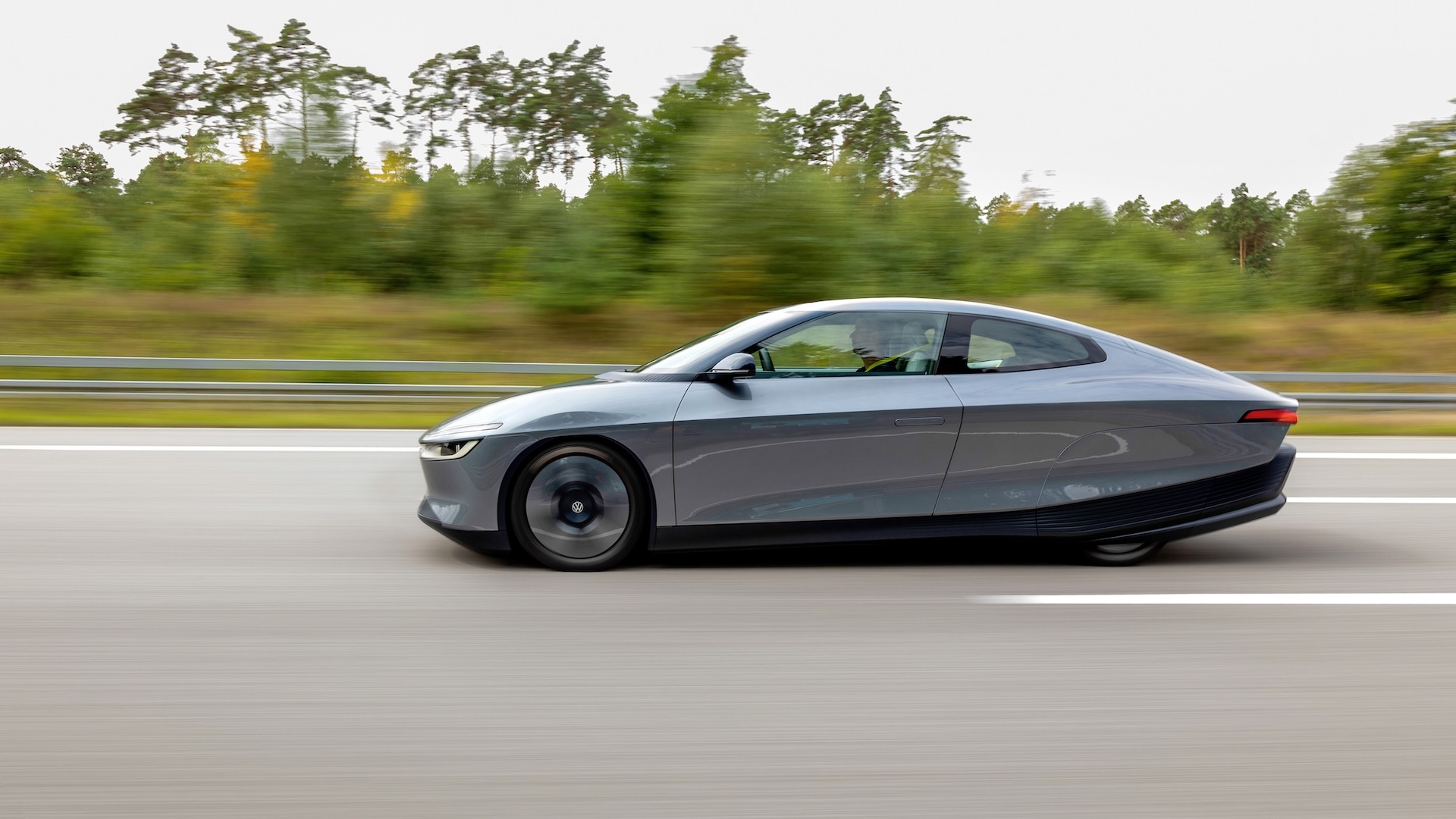
Despite all their instant torque and increasingly absurd horsepower figures, electric cars remain slaves to the same invisible opponent faced by every vehicle: air. Volkswagen’s Mission Efficiency does not attempt to overpower it. Instead, this slippery four-seat prototype politely parts the atmosphere before slipping through with a drag coefficient of just 0.158.
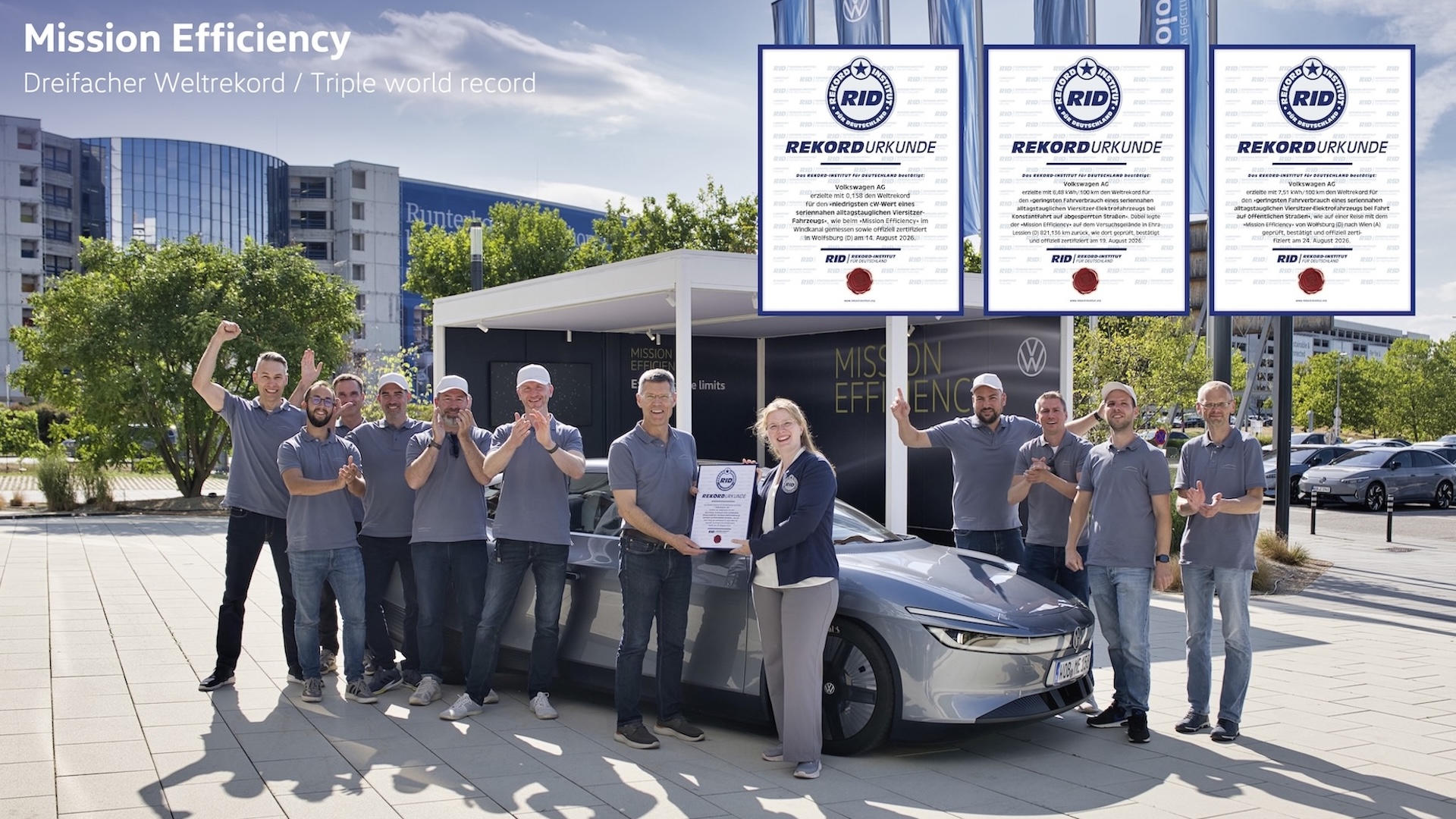
The result is what Volkswagen describes as the world’s most efficient near-production electric car, backed by three certified records and a 1,278.36km European road trip completed using remarkably little electricity.
More importantly, Mission Efficiency is not powered by unobtainium and laboratory witchcraft. Its 99kW electric motor and battery are closely related to production components developed for the Volkswagen ID. Polo and ID. Cross.
Three Records, One Very Slippery Volkswagen
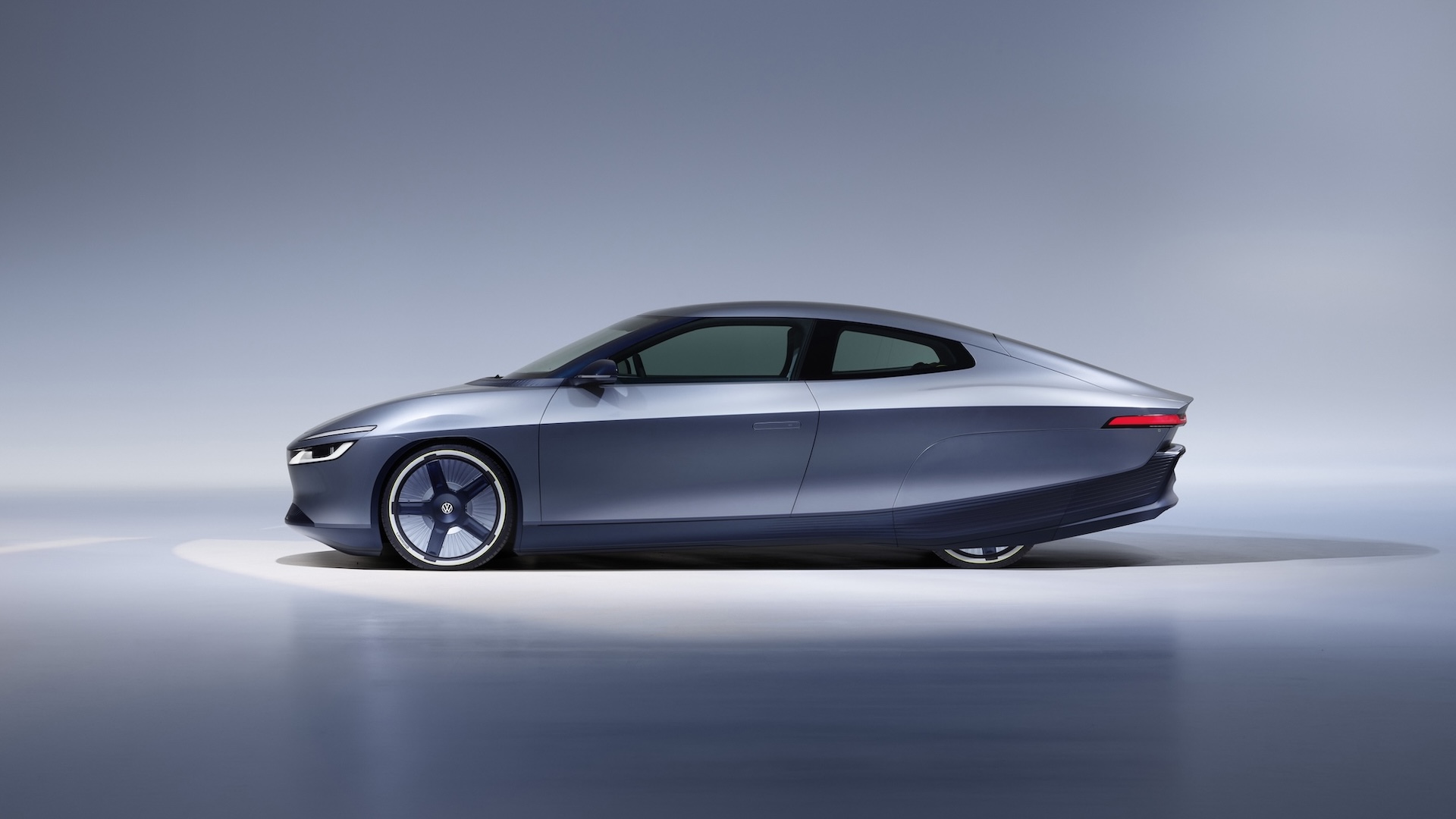
The Mission Efficiency’s first record is its 0.158 drag coefficient, the lowest claimed for any road-approved car. For comparison, the production-car benchmark set by the Lucid Air stands at approximately 0.197.
Its second record came during an “ideal trip”, where it consumed only 6.48kWh/100km while travelling at a constant 68km/h. That’s 15.43km/kWh! The route contained no climbs, while energy-consuming systems such as the air conditioning were switched off. It was efficiency testing with the difficulty slider turned firmly down, but the number remains extraordinary.
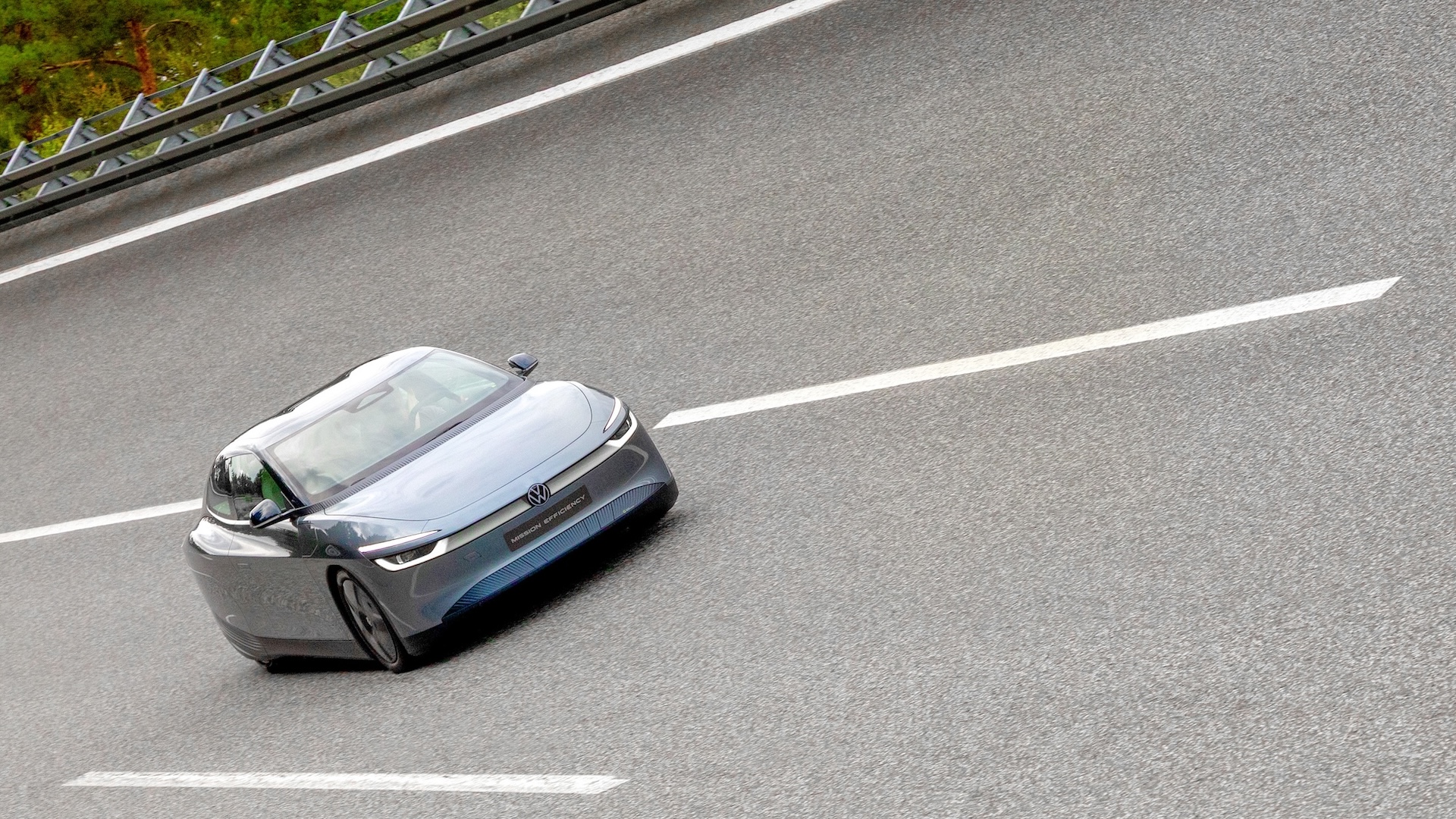
The third record is more representative. Mission Efficiency travelled from Wolfsburg to Vienna via Poznań and Olomouc, averaging 67.72km/h and reaching 138km/h. Consumption stood at 6.89kWh/100km, or 7.51kWh/100km when charging losses were included.
Its 54.9kWh usable battery required only one charge during the 1,278.36km journey. The car arrived in Vienna with another 164km of indicated range remaining.
These records apply to the Record Institute for Germany’s category for near-production, everyday-usable four-seat EVs. Mission Efficiency remains a concept and is not currently destined for sale.
Also Read
- Volkswagen’s ID. CROSS Concept Premieres: Small in Size, Big in Character
- The Knepper 1303 RS-E: A Classic Beetle With 600 Electric Horses
- Rimac Technology Reveals New Solid-State Batteries & Ultra-Compact E-Axles
Aerodynamics Before Bigger Batteries
Mission Efficiency measures 4,775mm long but stands only 1,392mm tall. Its teardrop body combines a tiny 2.08m² frontal area with active cooling flaps, covered rear wheels, flush door handles and a completely enclosed underbody.
Above 80km/h, Volkswagen says it consumes over 30% less energy than a standard ID. Polo. At 140km/h, it requires roughly the same energy as the ID. Polo does at 100km/h.
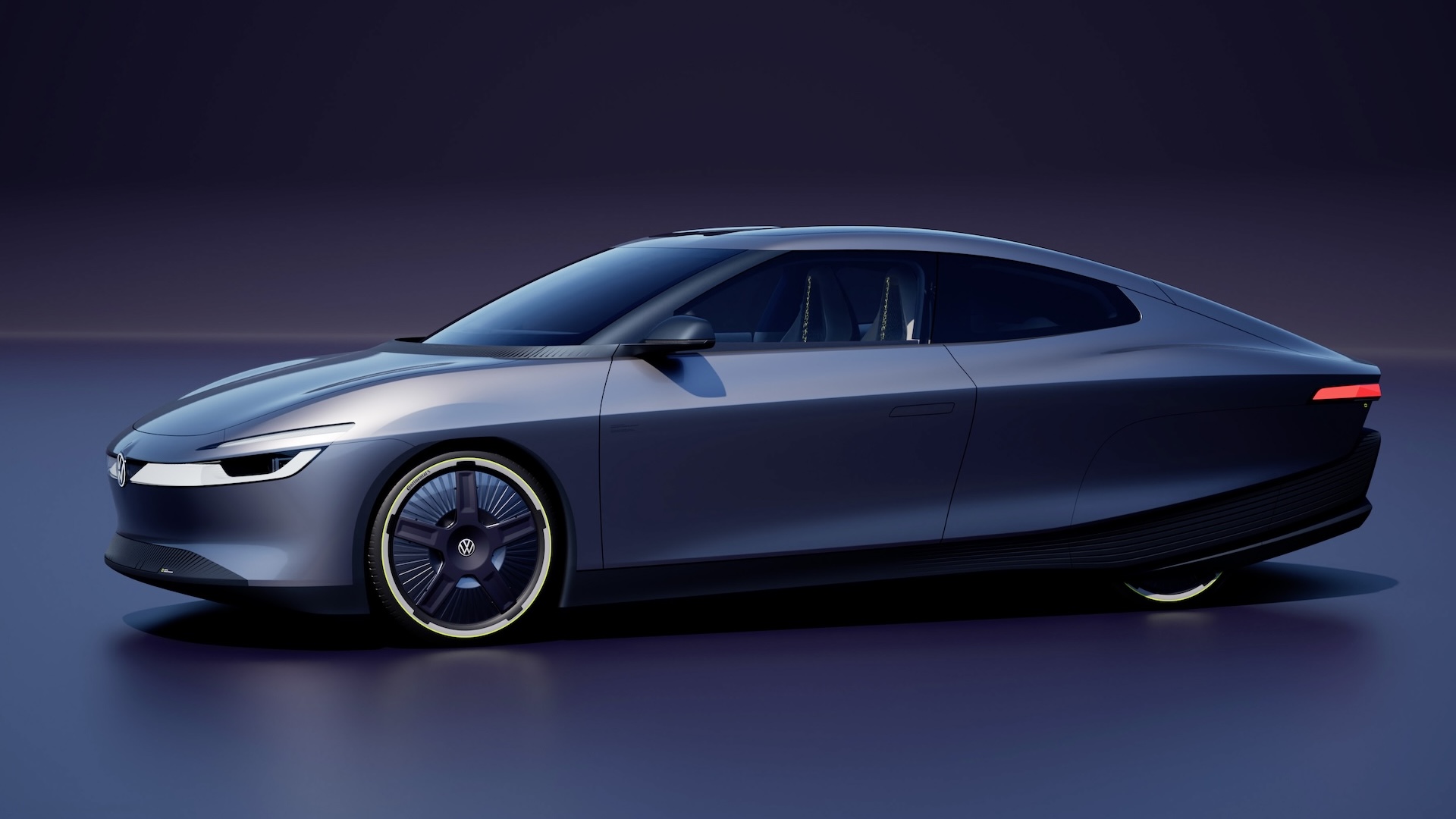
Even the wheels received obsessive attention. Volkswagen says wheels can generate between 25% and 30% of a car’s aerodynamic resistance, so it developed patented internal rim deflectors and flat outer covers. Continental concept tyres deliver rolling resistance of 4.9kg per tonne, around 25% below the threshold for Europe’s best Class A tyre rating.
The styling deliberately echoes Volkswagen’s XL1, the carbon-bodied diesel plug-in hybrid launched in 2013. That car traced its origins to Ferdinand Piëch’s extraordinary 1-Litre Car project, conceived to travel 100km using approximately one litre of fuel. Mission Efficiency is that same engineering stubbornness reborn for the battery age.
Production Hardware With Prototype Thinking
Power comes from a front-mounted motor producing 133hp, and a floor-mounted 54.9kWh battery, both adapted from the ID. Polo.
An electromechanical rear brake reduces friction, removes hydraulic lines and brake fluid from the rear axle, improves regenerative braking and allows variable brake-force distribution. It sounds less dramatic than a four-motor torque-vectoring system, but saved energy does more for range than impressive brochure vocabulary.
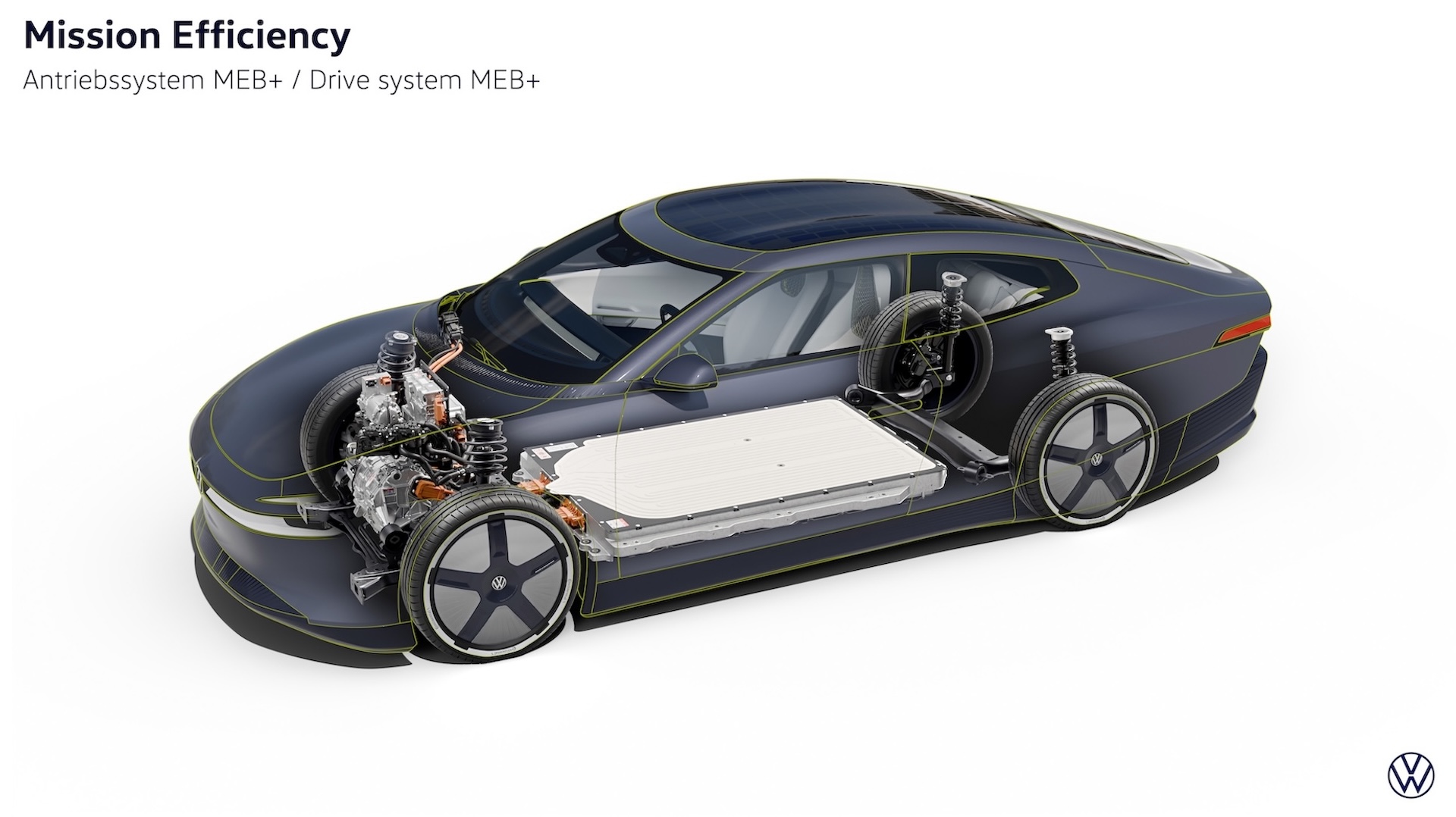
A 370W photovoltaic system integrated into the glass roof and boot lid powers the 12V electrical system and can contribute up to 30km of additional daily range, depending on sunlight and location.
Inside, a smartphone or tablet replaces the conventional infotainment display, while a portable Bluetooth speaker substitutes for a built-in audio system. Rear seating is limited to passengers around 1.60 metres tall, but there is a useful 481-litre boot.
Why Mission Efficiency Matters
Environmental responsibility in the car industry is often reduced to fitting increasingly enormous battery packs. Yet those batteries require more raw materials, cost more, and add weight that must then be dragged everywhere.
Mission Efficiency demonstrates a more elegant answer: waste less energy in the first place.
Volkswagen may never sell this exact machine, but its ideas can influence ordinary EVs. Faster charging attracts headlines and four-figure horsepower thrills the enthusiast in us, yet genuine efficiency could make electric cars cheaper, lighter, and more sustainable. That might be the most important record of all.