

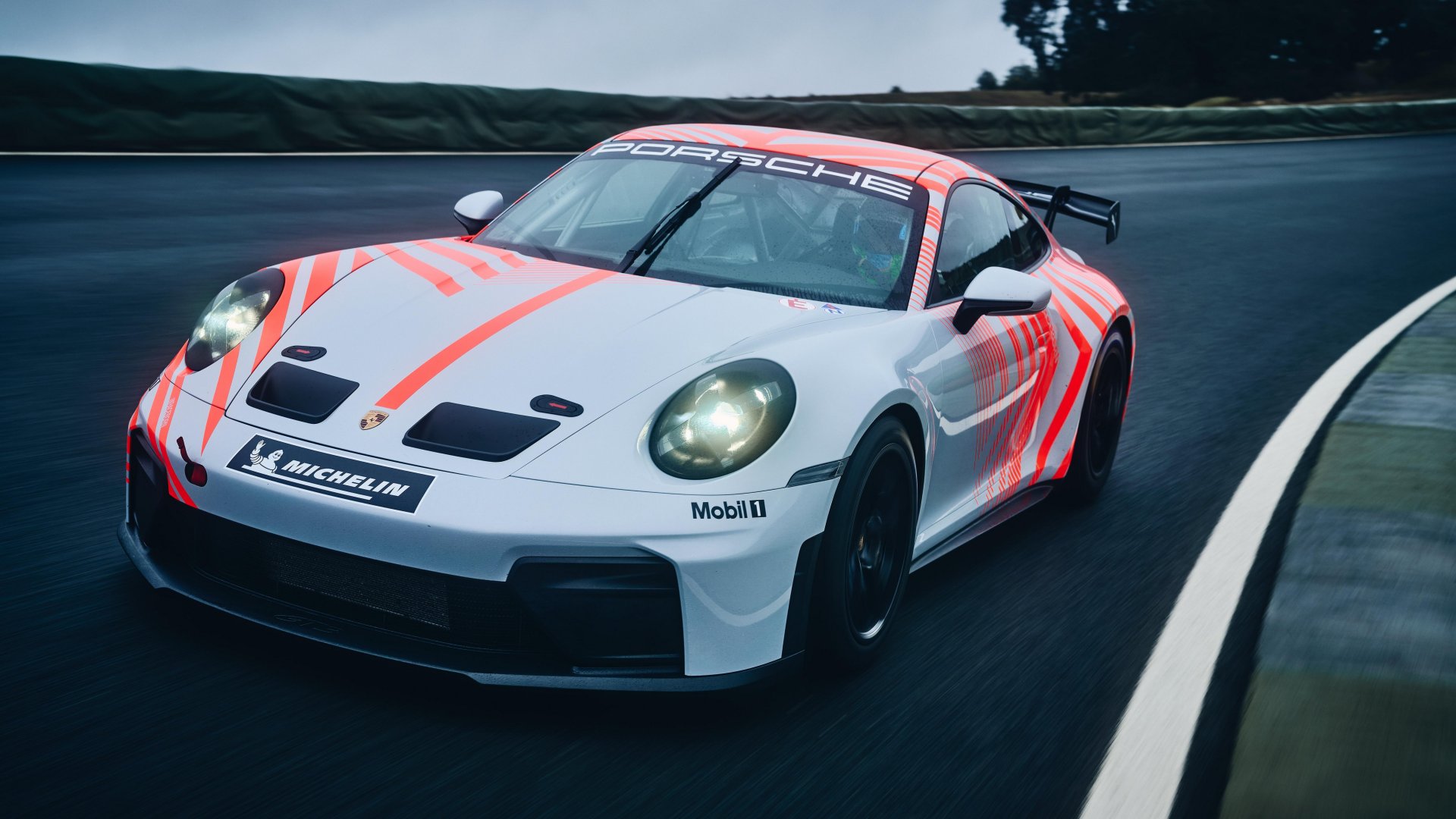
Motorsport has always been the Porsche 911’s natural habitat. The road cars may commute, tour continents, and pose outside fashionable cafés, but every 911 carries the faint suggestion that it would rather be clipping an apex.
The new Porsche 911 Challenge gives that instinct somewhere serious to go. Developed as Porsche Motorsport’s new entry-level competition car, it combines much of the current 911 GT3’s familiar mechanical character with the safety equipment, chassis hardware and support structure required for proper racing.
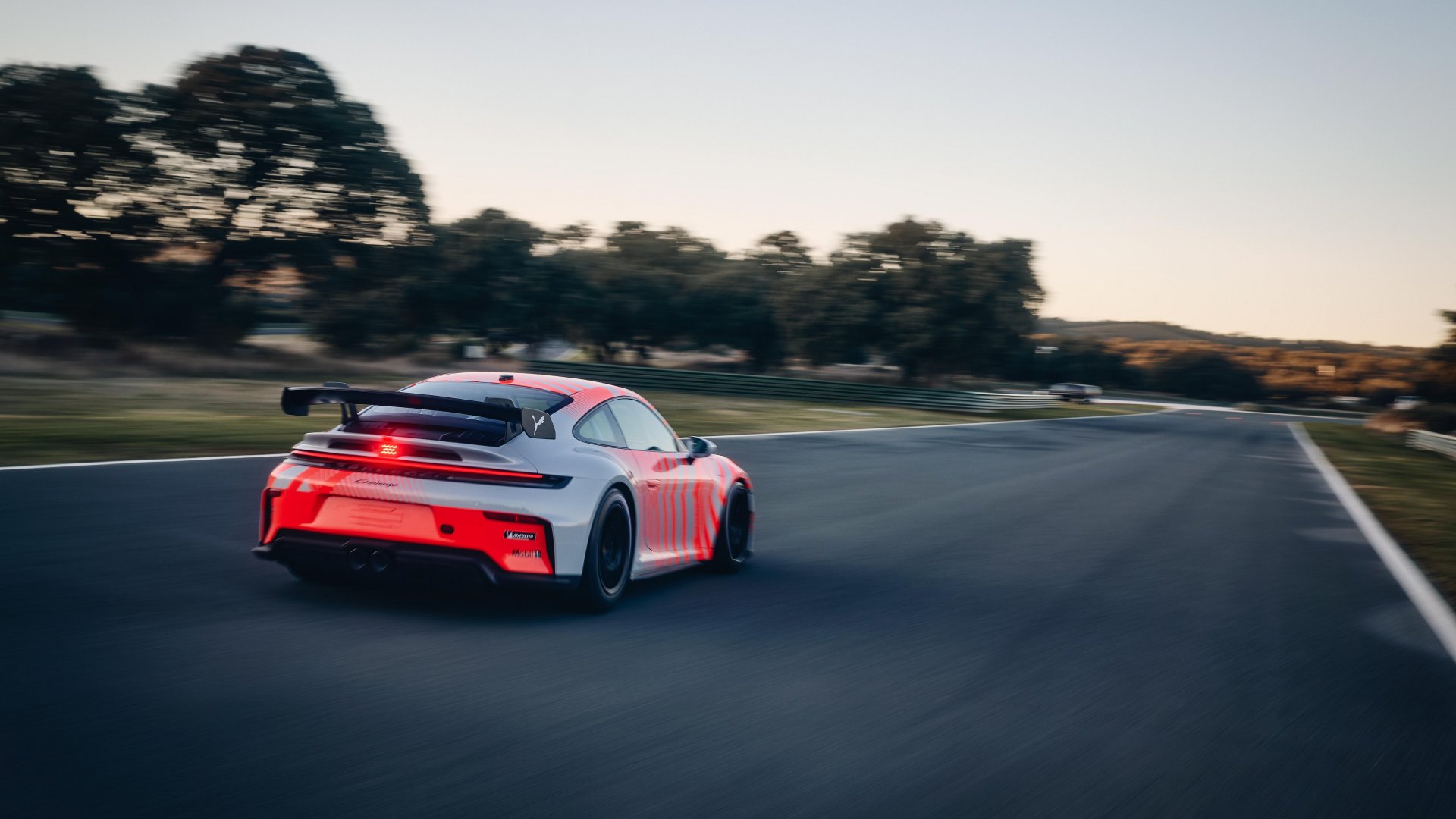
From the 2027 season, it will compete in Porsche one-make championships worldwide, succeeding the 718 Cayman GT4 RS Clubsport. Prices start at €208,800 before country-specific taxes, while the US-market figure is $275,000 including import and delivery.
As it turns out, it’s not entirely “Entry-level” after all!
A New First Step Into Porsche Motorsport
Porsche has spent decades perfecting the art of customer racing. Porsche Motorsports’ customers do not merely purchase cars. With every purchase, they enter championships, consume tyres and brake pads, employ mechanics and occasionally discover how expensive a small misjudgement can become.
The 911 Challenge has been designed to make that first step into competitive racing less intimidating. Its technology remains closely connected to the road-going GT3, while adjustable ABS, traction control and Electronic Stability Control allow drivers to gradually reduce electronic intervention as their confidence grows.
Multi-stage Porsche Torque Vectoring Plus is also included, while the seven-speed PDK can operate automatically or be controlled manually through steering-wheel paddles. The GT3 RS-derived steering wheel gains dedicated racing functions, and Porsche has retained the air conditioning, which is quite the luxury when the driver is wearing several layers of clothing.
Porsche will also provide data acquisition, technical documentation and spare-parts support, following a customer-racing philosophy established during the 1960s.
Also Read:
- Porsche Unveils The 911 Cup, Its New One-Make Racing Car
- Porsche 911 GT3 100 Jahre Nürburgring Celebrates A Century Of The Green Hell
- Lamborghini Temerario Tricolore Unveiled with Italian Flair and Custom Touches
A 9,000rpm Flat-Six With GT3 Roots
Powering the 911 Challenge is a naturally aspirated 4.0-litre flat-six derived largely from the production 911 GT3. It produces 508hp at 8,500rpm and continues spinning to 9,000rpm.
That represents a modest increase over the road car, helped by a modified exhaust. The racing exhaust retains a catalytic converter but gets rid of the particulate filter. Power reaches the rear wheels through the production GT3’s seven-speed PDK transmission.
The engine figures may appear restrained beside today’s 1,000hp hypercars, but racing has never been won by horsepower figures viewed in isolation. Response, consistency, braking performance and the ability to repeat quick laps consistently matter far more. A naturally aspirated flat-six howling towards 9,000rpm also possesses motivational qualities that are difficult to express on a data sheet.
Cup-Car Hardware Beneath A Familiar Body
Although the body dimensions and most panels match the GT3, the Challenge receives serious competition hardware underneath.
Its chassis incorporates components from the 911 Cup, including dampers with motorsport-specific tuning. The anti-roll bar offers three adjustment positions, while the rear wing can be mechanically set to four different angles.
Slick tyres wrap around 18-inch wheels secured using conventional five-bolt mountings rather than centre locks. Braking comes from the recently introduced 911 GT4 R, with 380mm steel discs fitted at both axles.
An integrated three-point air-jack system is standard, allowing mechanics to raise the car rapidly during pit stops.
Inside The 911 Challenge
The cabin, unsurprisingly, is the biggest differentiator from the road-going GT3. Carpets, decorative trim and sound insulation have been removed, leaving a workplace concerned entirely with clocking fast lap times and nothing else.
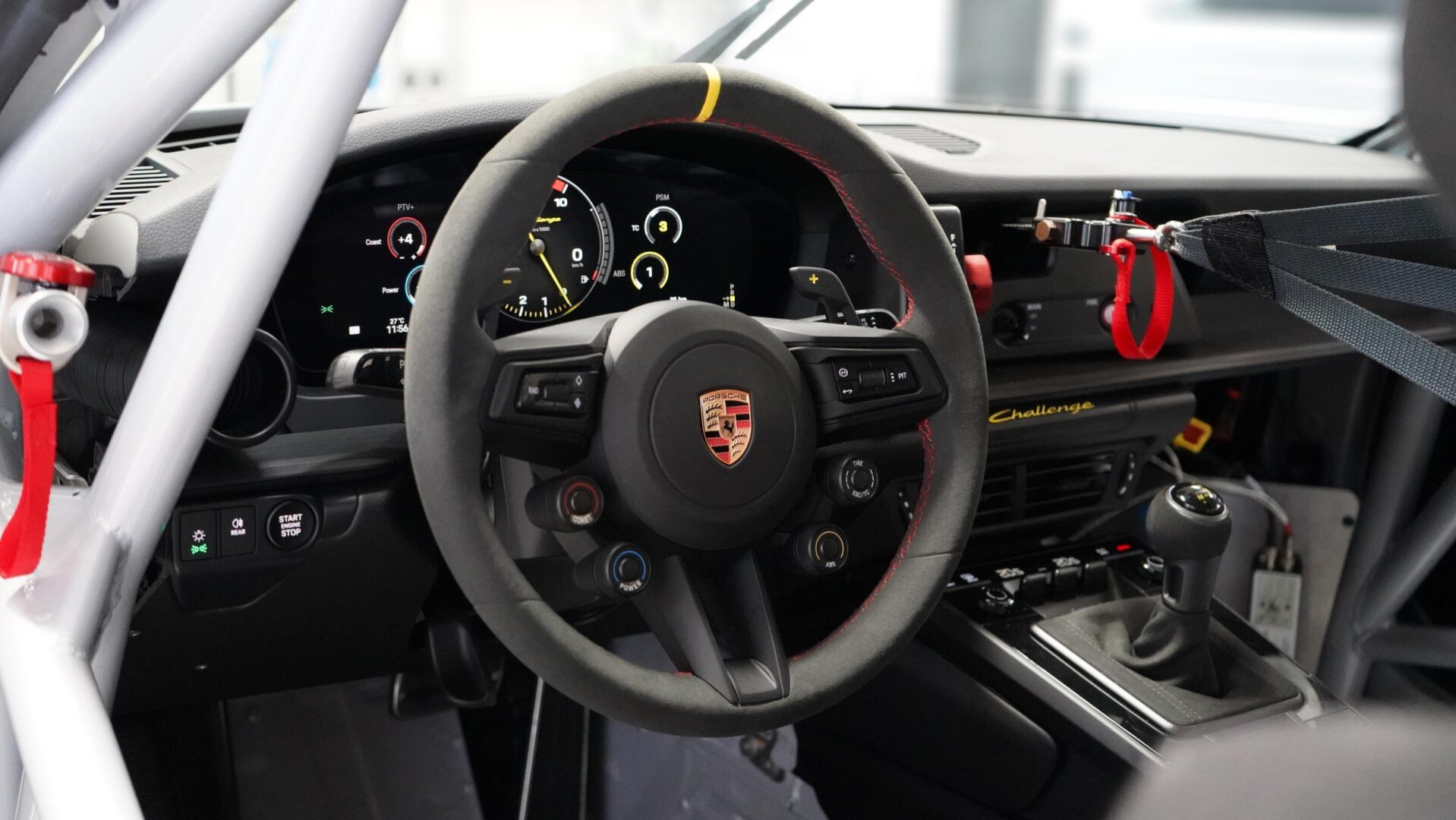
A welded roll cage reinforces the structure, while the adjustable racing bucket seat uses a six-point harness. Porsche has also installed a fire-extinguishing system, an FIA-certified rain light and a 110-litre FT3 fuel cell. Quick-release bonnet fasteners complete the conversion from road car to competition machine.
The result has no road approval and makes no attempt to earn one. This is a 911 intended to travel between circuits on a trailer and return home wearing rubber streaks, brake dust and, ideally, the evidence of a trophy celebration.
Porsche’s New All-911 Racing Ladder
With the arrival of the Challenge, every current Porsche GT customer race car is now based on the 911.
The Challenge occupies the opening rung, followed by the internationally homologated 911 GT4 R. Above it sits the 911 Cup used in Carrera Cup and Porsche Supercup competition, while the 911 GT3 R fights for overall and class victories in the world’s leading GT championships and endurance races.
That hierarchy makes the Challenge more significant than a stripped-out GT3. It establishes the 911 as the beginning, middle and summit of Porsche’s customer-racing journey.
For aspiring competitors, the message is simple: the road into Porsche motorsport now starts behind the wheel of its most famous car.