

Every off-road tribe has a car it whispers about in admiration. For Land Rover people it is the Series One, for Toyota loyalists it is the FJ40, and for Jeep people of a certain age it is the CJ-8 Scrambler, the stretched, open-top CJ with a small pickup bed that looked like nothing else in the showroom. It sold in modest numbers between 1981 and 1986 and has been worshipped ever since.
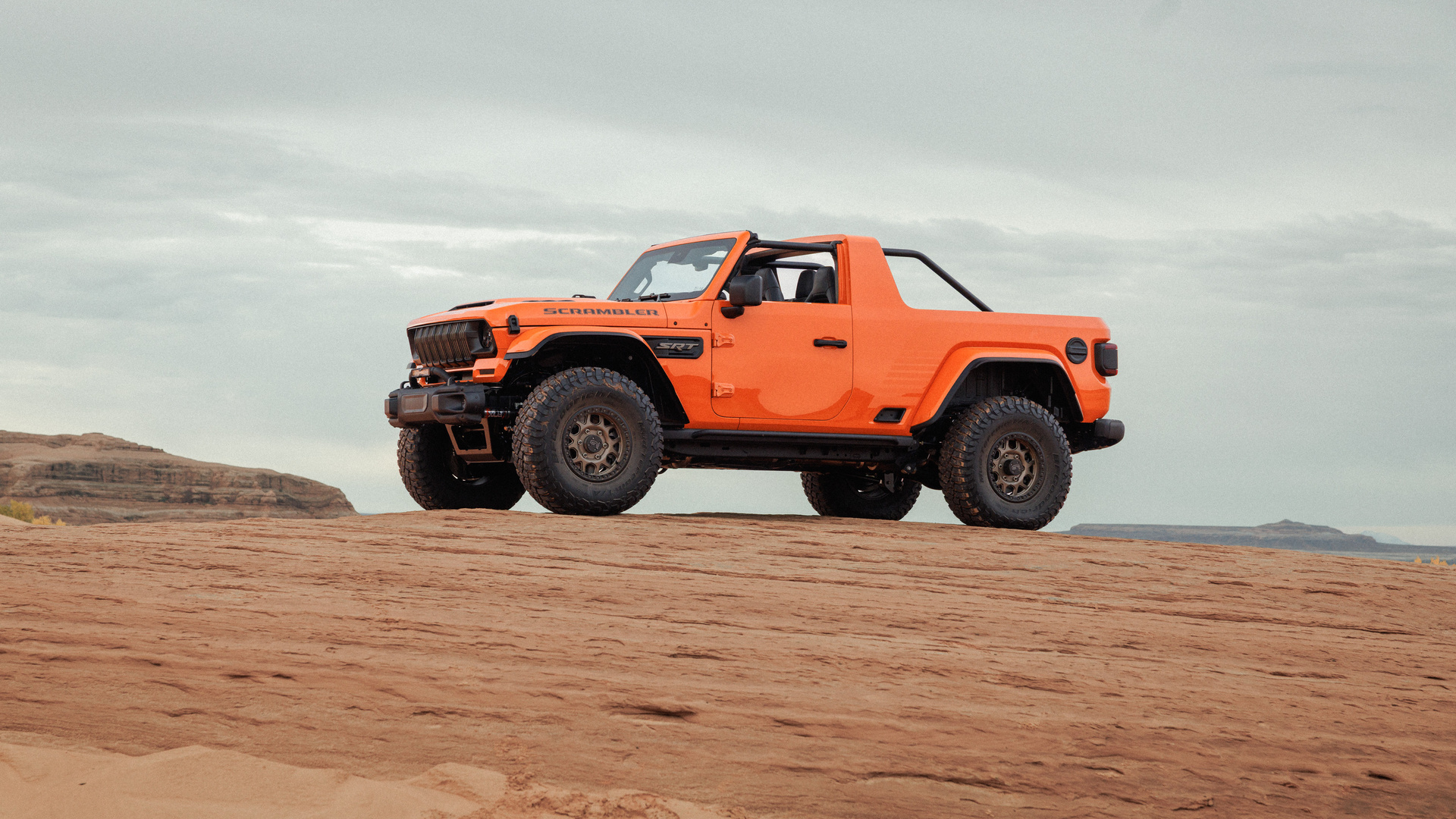
Earlier this month in Las Vegas, alongside SEMA, Jeep and its revived SRT performance division brought the name back as the Wrangler Scrambler SRT Concept. It is the first Jeep concept to wear an SRT badge built for flat-out desert running, and it comes with a HEMI V8, a Wrangler first in independent front suspension, and the kind of orange paint you can see from low Earth orbit.
What Is A Jeep Scrambler?
The original CJ-8 rode on a 103.5-inch wheelbase, about 2,629mm, and the extra length over the CJ-7 went into a half-cab body with a short pickup bed, giving buyers an open-air Jeep that could also carry a dirt bike or a weekend’s worth of camping gear. Power came from 2.5-litre four-cylinder and 4.2-litre straight-six engines, so it was never a fast car.
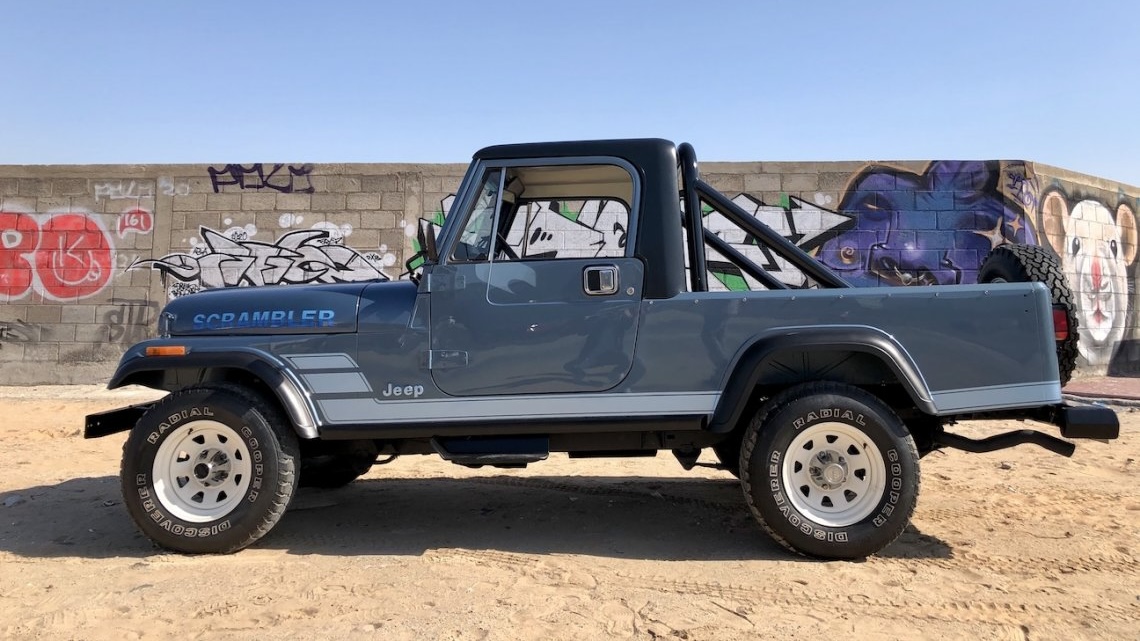
It was never a big seller either. Production reportedly peaked at 8,355 units in 1981 and fell every year after, to just 128 in the final 1986 model year. That rarity is exactly what turned the Scrambler into a cult object.
Jeep has flirted with the idea before. The 2023 Scrambler 392 concept at Easter Jeep Safari put a carbon-fibre two-door Scrambler body on a Rubicon 392, with 40-inch tyres on 20-inch wheels and a solid front axle built for crawling over Moab’s rocks. The new SRT car points in a different direction entirely: toward the horizon, at speed, on sand.
The HEMI Under The Sharknose
Jeep confirms it’s a HEMI V8 with 470hp and 637Nm, the same figures as the 392 engine in the current Wrangler Rubicon 392. The 6.4-litre displacement has been widely reported, though Jeep’s own description simply says HEMI V8. Despite the internet’s hopes, there is no supercharged Hellcat engine here. SRT boss Tim Kuniskis says the car was engineered around the idea that “the desert can be every bit as demanding as a racetrack”.
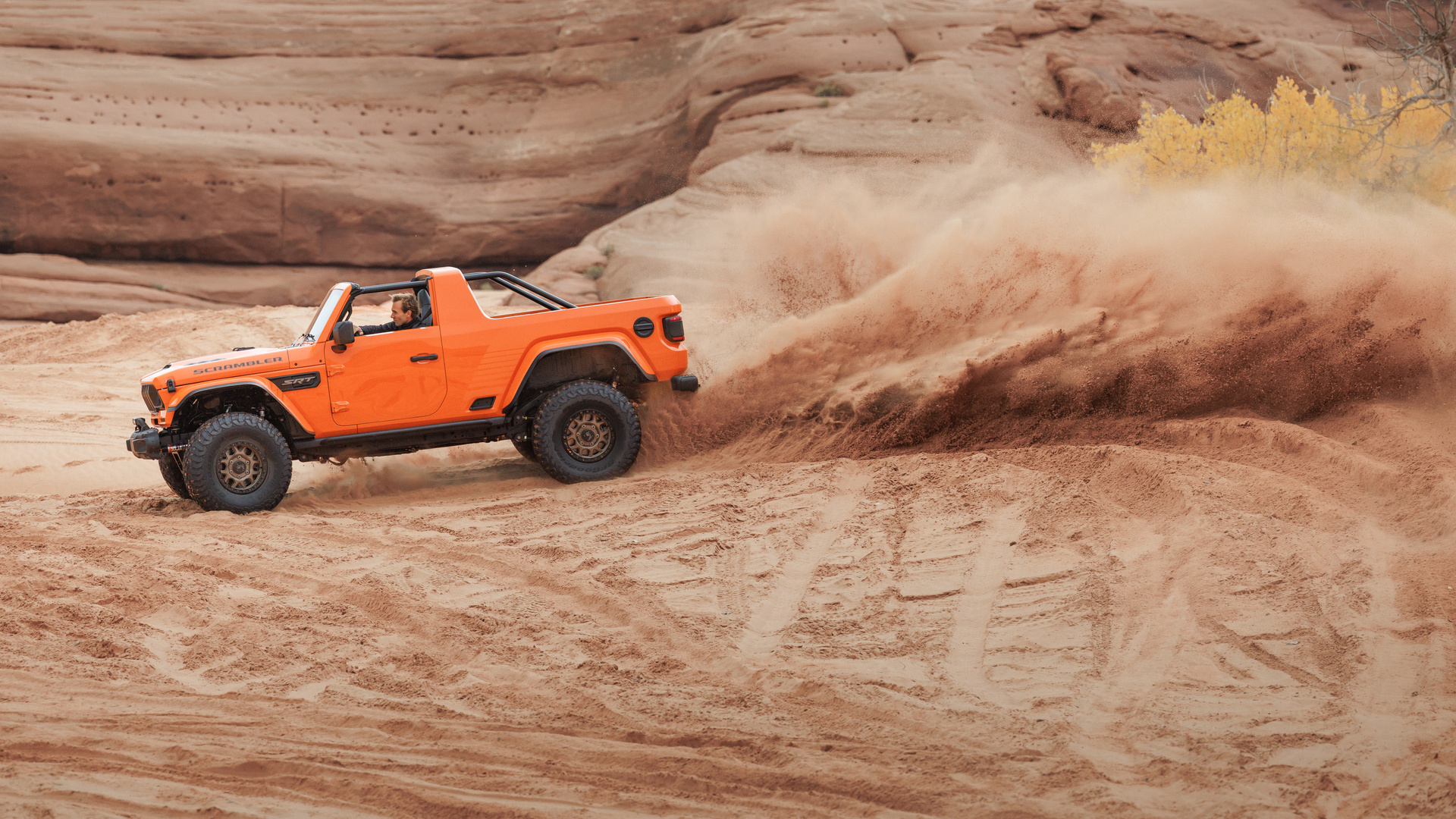
Details such as four-wheel-drive hardware, weight, 0-100km/h time, and top speed have not been disclosed yet.
Also Read:
- Launch Of The New Grand Wagoneer And Grand Cherokee In GCC Markets
- Jeep Wrangler Moab 392 Launched In The UAE: The HEMI V8 Has Unfinished Business
- Jeep Plans Six Models In Europe By 2030, Renegade Confirmed
Does The Jeep Wrangler Have Independent Front Suspension?
No production Wrangler has ever had it. Every Wrangler since the original YJ has used a solid front axle, which is great for articulation over rocks and not so great at 130km/h. Jeep did test an independent front end in the early 1990s on a prototype nicknamed “Li’l Blue”, but it never made it to the showroom. That makes this concept the first Wrangler to wear one.
The high-travel setup was developed with off-road racer Casey Currie and builds on hardware Jeep first showed on its Striker concept. Currie proved the idea in competition this year, taking first place in the Prerun Trucks class at the NORRA 500 in a Jeep Gladiator. At the back sits a trophy-truck-inspired rear axle.
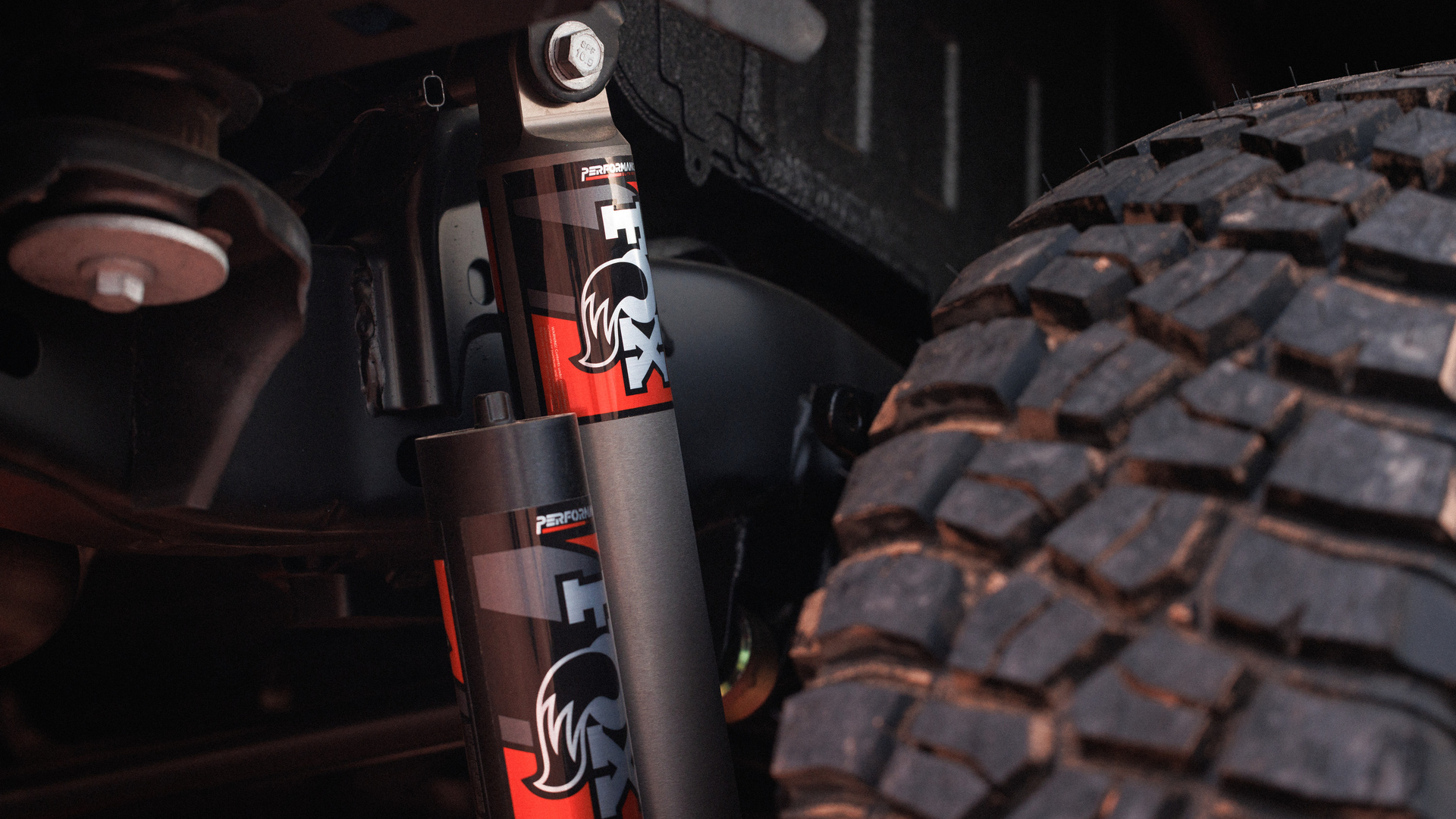
Jeep has not published suspension figures, but the concept reportedly offers about 356mm of travel at the front and 381mm at the rear, with 2.5-inch Fox dampers at each corner. It rolls on 37-inch BFGoodrich KM3 tyres around 17-inch bronze beadlock wheels, and stands about 2,184mm wide. For context, the Ford Bronco Raptor, the obvious rival, makes 418hp and 597Nm and offers 330mm of travel up front and 356mm at the rear on the same size of tyre.
Sharknose, Punk’n Orange And A Proper Bed
Everything from the A-pillar back has been reshaped. The doors are longer, the rear bodywork is new, a pickup bed with a spray-on liner and a redesigned tailgate is built into the body, and a structural roll cage frames the cabin. The rear frame has reportedly been stretched by about 254mm to make room for the bed and longer doors.
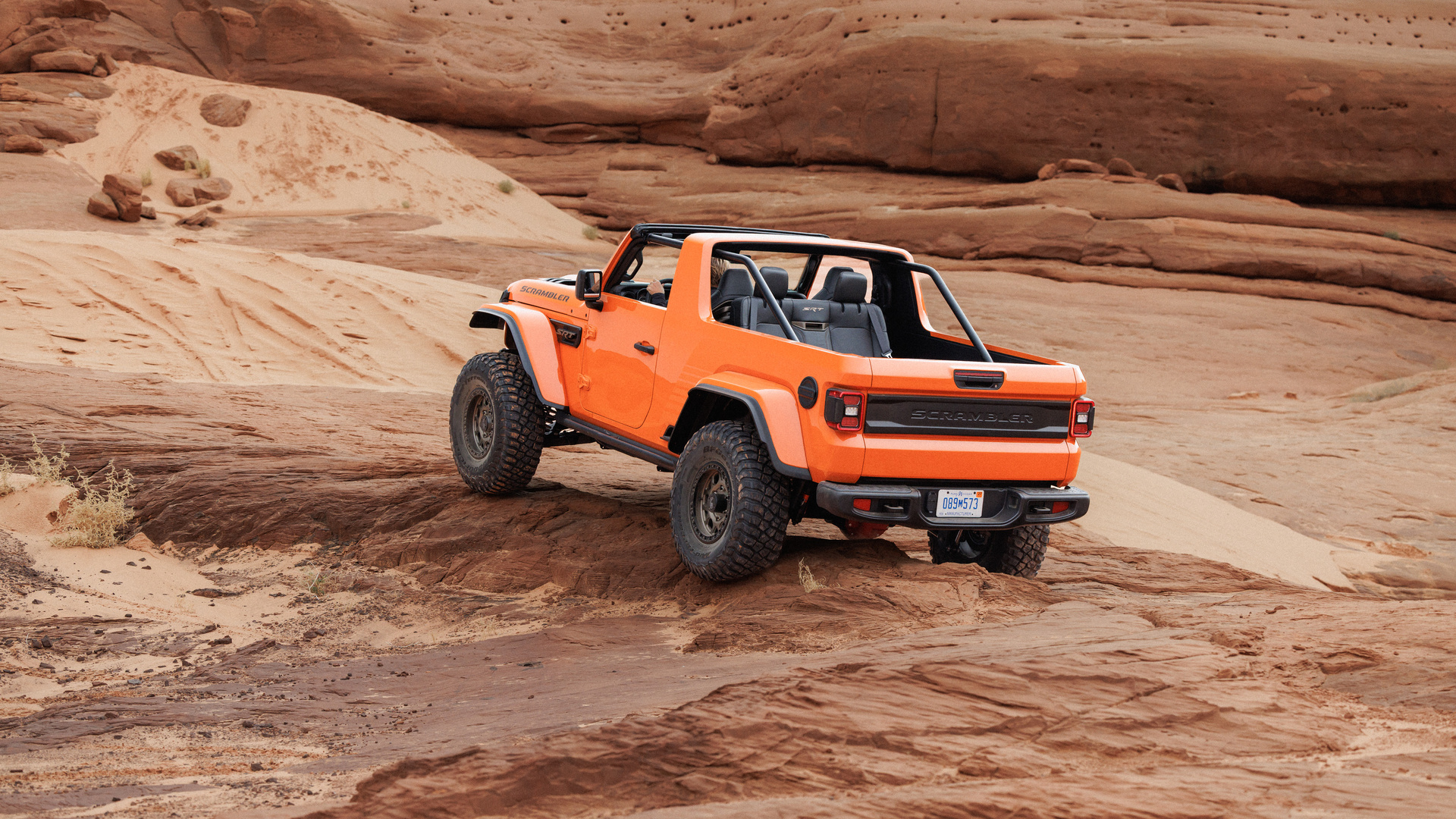
Up front is Jeep’s modern take on the sharknose, a forward-leaning grille that first appeared on a concept at Easter Jeep Safari 2026 and nods to Gladiator and classic Jeep trucks. Punk’n orange paint, which Wrangler owners will recognise from the JL era, is paired with bronze-painted beadlocks, wide flares and SRT detailing.
Seats That Face The Other Way
The party trick is in the back. The rear seats clip into hooks on the floor, so they can be lifted out entirely or turned 180 degrees to face rearward, tailgate-party style. Take them out, and the bed grows from about 1,016mm long to roughly 1,803mm, enough for a dirt bike or a full camping load. Kuniskis has also hinted that a removable rear cap in the spirit of the old Chevrolet K5 Blazer is possible.
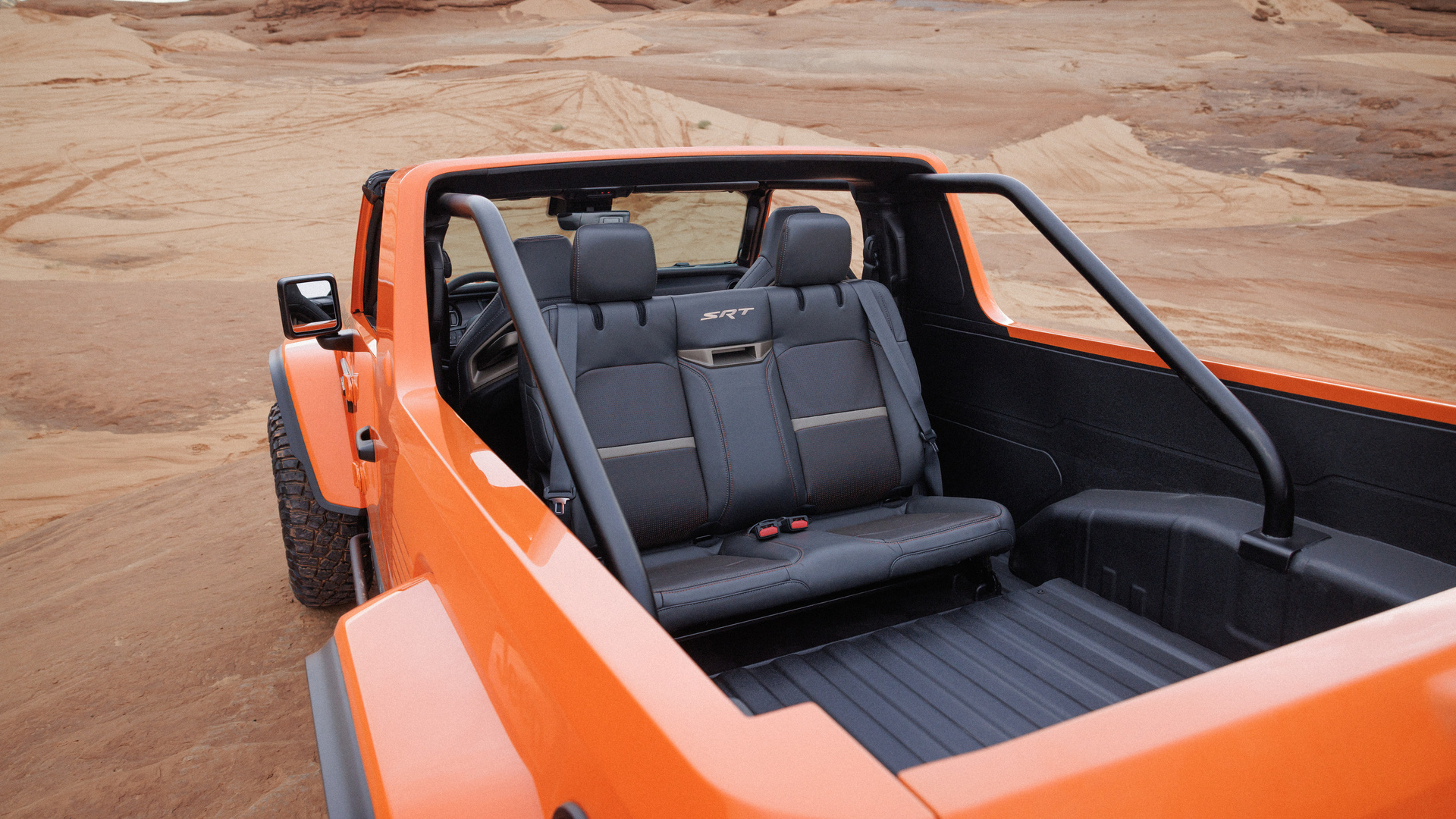
The cabin uses Dark Graphite leather with orange inserts, contrast stitching, bronze accents, and SRT embroidery. There are supportive performance seats for high-speed off-road work, unique grab handles, and a Jeep Multi-panel System for the rear-seat area.
Is The Jeep Scrambler Coming Back?
Not in this form, at least not yet. Jeep says the concept is not available for purchase, and there is no price. Reports suggest a production Scrambler could appear in the product plan sometime between 2028 and 2030, but nothing has been confirmed.
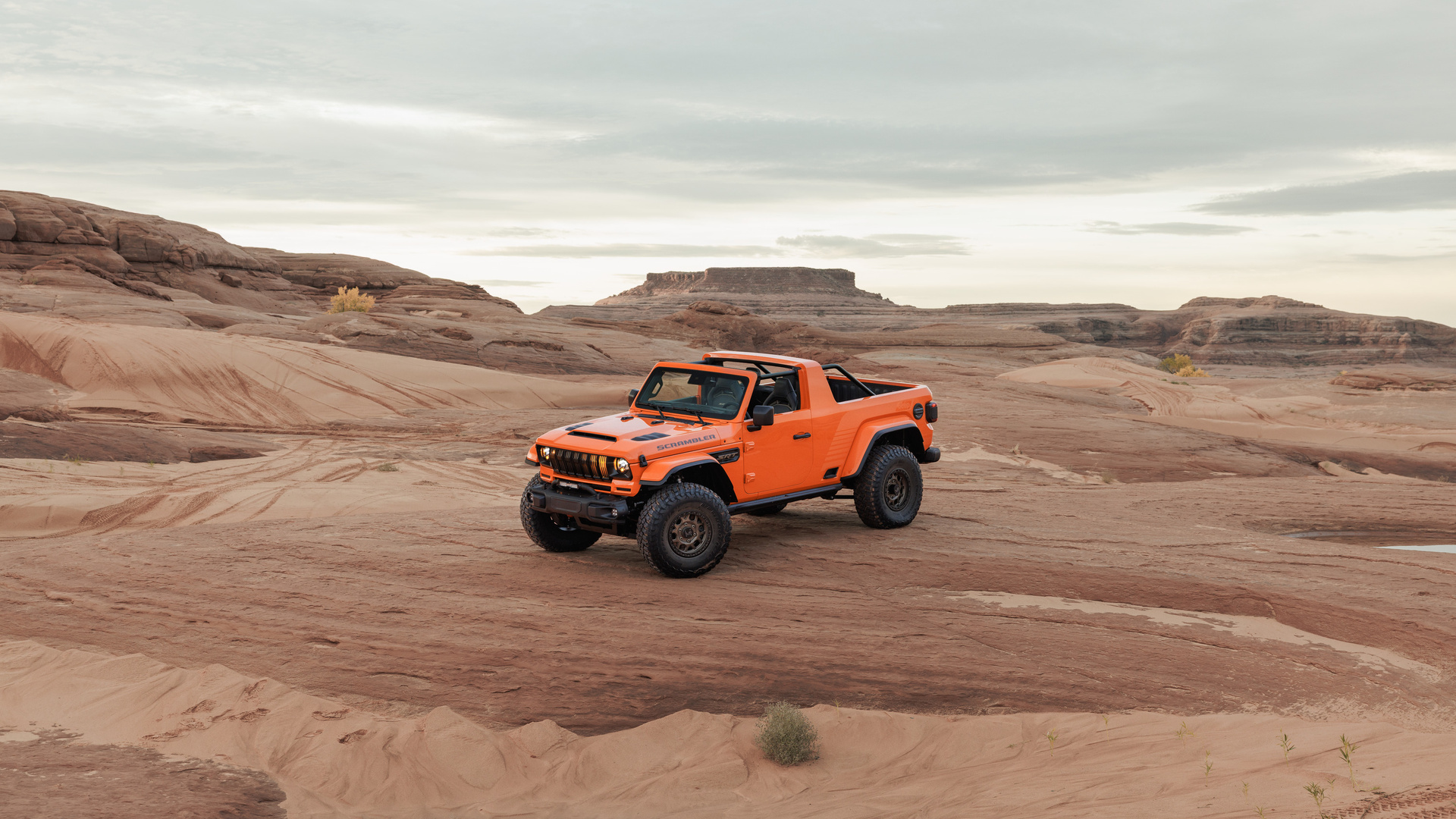
What is clear is the direction under Kuniskis, who reportedly came out of retirement to bring SRT and Direct Connection back in 2025. A HEMI-powered Wrangler with independent front suspension and a pickup bed would land squarely in Bronco Raptor territory, a fight Jeep fans have been asking for since Ford fired the first shot. For now, the Scrambler name has its swagger back. It’s a cool take on the Wrangler, and we’d love to see the Scrambler make it to the production line.