

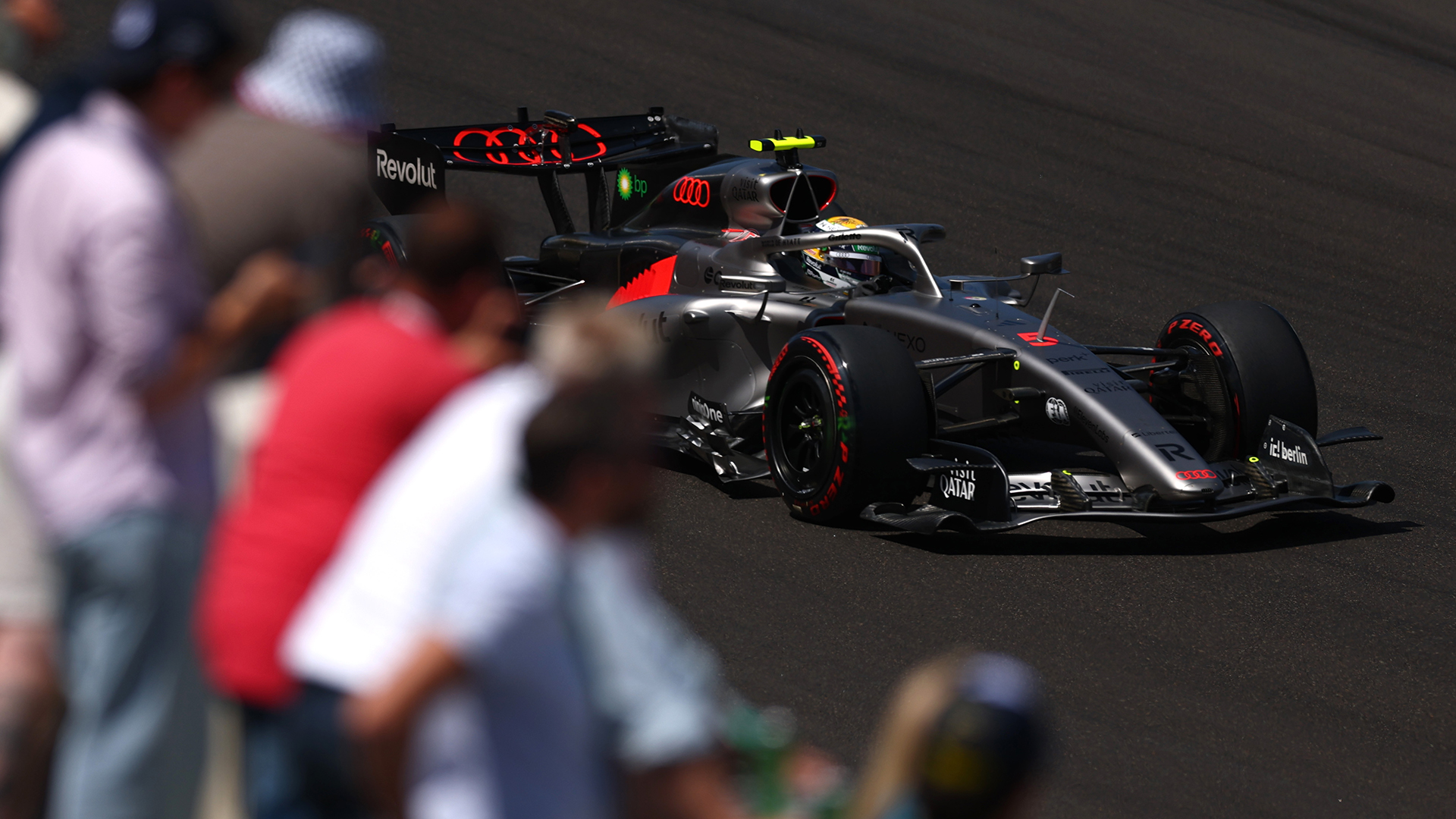
Formula 1 circuits come and go. Contracts expire, new markets arrive and tracks that once seemed untouchable disappear from the calendar.
The Hungaroring has done the opposite.
Since joining Formula 1 in 1986, the circuit outside Budapest has hosted the Hungarian Grand Prix every single season. The cars have changed beyond recognition, regulations have been rewritten and entire eras have passed, yet Hungary has remained.
And 2026 makes it 40 years.
So, what makes a relatively short, tight circuit in Mogyoród such an enduring part of Formula 1? Here are five details worth knowing about the Hungaroring.
1. 40 Years on the Formula 1 Calendar Without a Break
The first Hungarian Grand Prix at the Hungaroring took place in 1986.
Formula 1 has returned every year since.
That uninterrupted run is increasingly rare in a championship where circuits face enormous commercial pressure to retain their place on the calendar.
The Hungaroring has survived changing ownership structures, regulation cycles, economic shifts and Formula 1’s rapid global expansion. In 2026, the circuit celebrates four decades as a continuous fixture of the World Championship.
It may not have the age of Silverstone or Monza, but few modern Formula 1 venues can match its consistency.
2. Lewis Hamilton’s Lap Record Has Outlived an Entire Generation of F1 Cars
The benchmark around the Hungaroring still belongs to Lewis Hamilton.
During the 2020 Hungarian Grand Prix, Hamilton recorded a 1:16.627 fastest race lap in the Mercedes W11, one of the most dominant Formula 1 cars ever built.
Six years later, the number remains untouched.
What makes the record particularly interesting is everything that has changed since.
The W11 belonged to a completely different technical era. Formula 1 subsequently moved into the ground-effect generation before another major regulatory reset arrived for 2026, bringing different dimensions, aerodynamics and power-unit architecture.
Yet the quickest official race lap around the Hungaroring still comes from 2020.
Six seasons of development have passed. The W11’s record remains.
3. Every Multiple Hungarian GP Winner Became a World Champion
Hungary has produced one of Formula 1’s more unusual statistical patterns.
Every driver to win the Hungarian Grand Prix more than once has also become a Formula 1 World Champion.
The list includes names such as Ayrton Senna, Michael Schumacher, Mika Häkkinen and Lewis Hamilton.
There is no multiple Hungarian Grand Prix winner without a World Championship on their record.
That gives repeat success at the Hungaroring an unusual significance. Winning here once can come down to a brilliant weekend. Doing it repeatedly has historically belonged to drivers capable of reaching the very top of Formula 1.
With Kimi Antonelli arriving in Hungary in 2026 at the head of the championship battle, that history adds another layer to this year’s weekend.
4. There Is a Reason It Is Called ‘Monaco Without the Walls’
At 4.381 kilometres, the Hungaroring is not particularly long. It doesn’t need to be.
Its 14 corners arrive relentlessly, leaving drivers little time to reset between one sequence and the next. Medium and low-speed corners dominate the lap, while the narrow layout makes following another car and completing an overtake notoriously difficult.
That is where the famous nickname comes from: Monaco without the walls.
The clearest overtaking opportunity comes at Turn 1, where drivers arrive at more than 300 km/h before hitting the brakes at the end of the main straight. Beyond that, gaining track position becomes significantly harder.
Teams consequently run high-downforce configurations, while qualifying carries enormous weight. Lose a few tenths on Saturday and Sunday can quickly turn into an afternoon spent staring at someone else’s rear wing.
At the Hungaroring, outright power alone rarely solves the problem. Precision, tyre management and strategy matter just as much.
5. It Took Formula 1 Behind the Iron Curtain
The Hungaroring’s importance stretches far beyond lap times.
When Formula 1 arrived in 1986, Hungary was still part of the Eastern Bloc. The race became the first Formula 1 World Championship Grand Prix held behind the Iron Curtain.
The original idea had been to revive racing around Budapest’s historic Népliget park circuit. Instead, authorities chose to build an entirely new permanent facility outside the capital.
Construction began in 1985, and Formula 1 arrived the following year.
Around 200,000 spectators attended that inaugural Grand Prix, giving the championship a scale of reception that immediately justified its move into Eastern Europe.
Today, travelling to Budapest for Formula 1 feels entirely normal. In 1986, it was anything but.
Four Decades Later, the Hungaroring Still Has Its Own Formula
Forty years of uninterrupted Formula 1 have transformed the Hungaroring from a bold move behind the Iron Curtain into one of the calendar’s established fixtures.
Its character has survived with it.
The circuit still rewards a clean qualifying lap, punishes small mistakes and asks drivers to find time through precision rather than simply relying on horsepower. Even after four decades of faster cars and changing regulations, Hungary continues to present essentially the same challenge.
In a Formula 1 calendar that rarely stands still, perhaps that is exactly why the Hungaroring has lasted.