

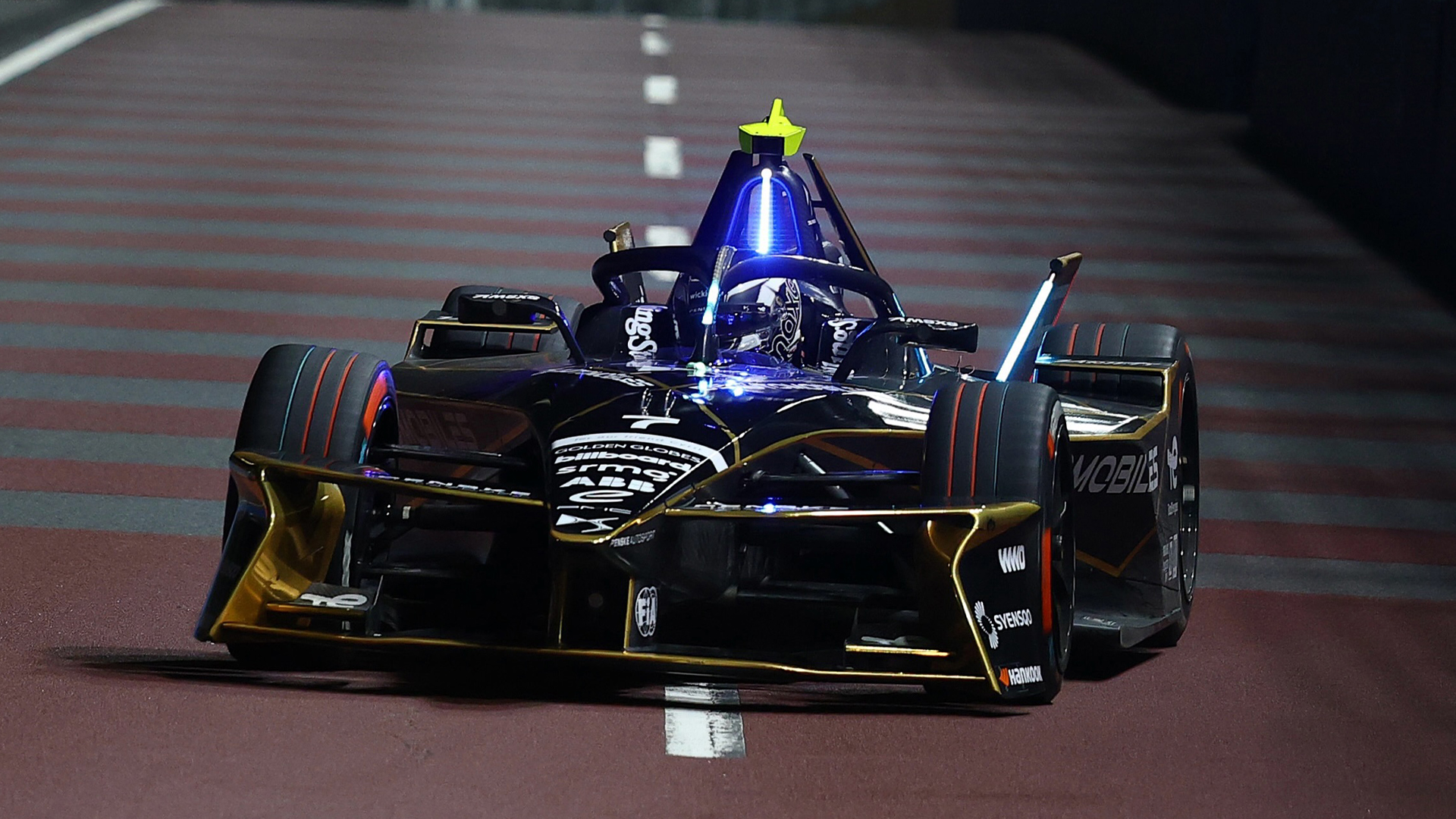
The ABB FIA Formula E World Championship returns to Tokyo this weekend for one of the most anticipated events of the 2026 season.
Rounds 14 and 15 mark Formula E’s second visit to the Japanese capital, but this year’s event brings something entirely new. For the first time, the Tokyo E-Prix will be held under floodlights, adding another milestone to Formula E’s growing presence in one of the world’s largest cities.
The double-header also represents a pivotal point in the championship. With just four races remaining after Tokyo, every point carries significantly more weight as the title fight enters its final phase.
Wehrlein Takes Control of the Drivers’ Championship
Momentum has shifted dramatically over the past two race weekends.
After arriving in Shanghai trailing the championship, Pascal Wehrlein now leads the standings with 141 points, having capitalised on a difficult run for long-time leader Mitch Evans.
The Jaguar driver collected just four points across the last three races, dropping to second on 132 points, nine behind Wehrlein.
The title fight remains far from settled.
Oliver Rowland sits third with 114 points, while teammate António Félix da Costa remains firmly in contention on 111 points. With two races taking place in Tokyo, the standings could look very different by the time Formula E leaves Japan.
Jaguar and Porsche Continue Their Three-Way Fight
The battle extends beyond the drivers.
Jaguar TCS Racing arrives in Tokyo leading the Teams’ Championship with 243 points, although TAG Heuer Porsche trails by just six points on 237.
Andretti occupies third place with 174 points and will race this weekend with a special anniversary livery.
Porsche holds a more comfortable position in the Manufacturers’ Championship, leading with 384 points ahead of Jaguar’s 334, while Stellantis remains third on 192.
Shanghai Changed the Shape of the Season
The championship picture looked very different before Formula E visited China.
Across the Shanghai double-header, three different drivers reached the top step of the podium. Jake Dennis, Pascal Wehrlein and Lucas di Grassi all claimed victories, underlining just how competitive the field has become.
Di Grassi’s victory also secured a place in the championship’s record books, making him the oldest race winner in Formula E history.
Those results transformed the title fight heading into Tokyo, replacing what had looked like a comfortable championship lead with one of the closest battles of the season.
Tokyo Continues to Build Its Formula E Story
Tokyo made its Formula E debut in 2024, becoming the championship’s first race in Japan.
That inaugural E-Prix was decided by energy management rather than outright pace. Maximilian Günther claimed victory after overtaking Oliver Rowland late in the race, having preserved more usable energy during the closing laps.
The following season expanded the event into a double-header.
Race one was disrupted by heavy rain, a delayed start and a red flag, but Stoffel Vandoorne emerged victorious after completing his mandatory Pit Boost before the stoppage—a strategy that proved decisive once the race resumed.
The second race took place in dry conditions and belonged to Oliver Rowland, who strengthened his championship campaign ahead of Pascal Wehrlein and Dan Ticktum, the latter securing his maiden Formula E podium.
A Tight Street Circuit Leaves Little Room for Error
The Tokyo Street Circuit measures 2.575 kilometres and winds around the Tokyo Big Sight exhibition centre.
For 2026, the layout has been slightly revised. The circuit is now ten metres shorter after changes around Turn 16, reducing the number of corners to eighteen.
Despite the minor modification, its character remains unchanged.
Narrow walls, technical sequences and limited overtaking opportunities continue to place a premium on precision rather than outright speed.
The opening sector features several low-speed corners, including the long Turn 4 where drivers activate Attack Mode. The middle section combines short straights with rapid direction changes before the final complex returns the field to the main straight.
Under floodlights, those margins are expected to become even smaller.
Pit Boost Returns for Saturday
Strategy will once again play a decisive role.
The opening race of the weekend features the return of Pit Boost, requiring every driver to make a mandatory stop of at least 34 seconds to recharge 10% of the battery while the car’s state of charge sits between 40% and 60%.
The additional strategic variable proved race-defining in Tokyo last season and is expected to have a similar influence once again.
With the championship entering its closing stages, every strategic decision has the potential to reshape the title fight.
A Weekend Beyond the Racing
The Tokyo E-Prix also takes place following the passing of Cyril Blais, who served as Team Principal of Citroën Racing in Formula E this season.
Blais spent much of his career in international single-seater racing, contributing across Formula 3, Formula 2 and Formula E before taking on his latest role. The paddock is expected to pay tribute to one of its respected figures throughout the weekend.
As Formula E prepares for its first-ever night races in Tokyo, the championship arrives with title battles tightening across every category, new strategic challenges and a circuit that rarely forgives mistakes. With only four races remaining after Japan, the outcome of this weekend could prove decisive in the fight for all three world championships.