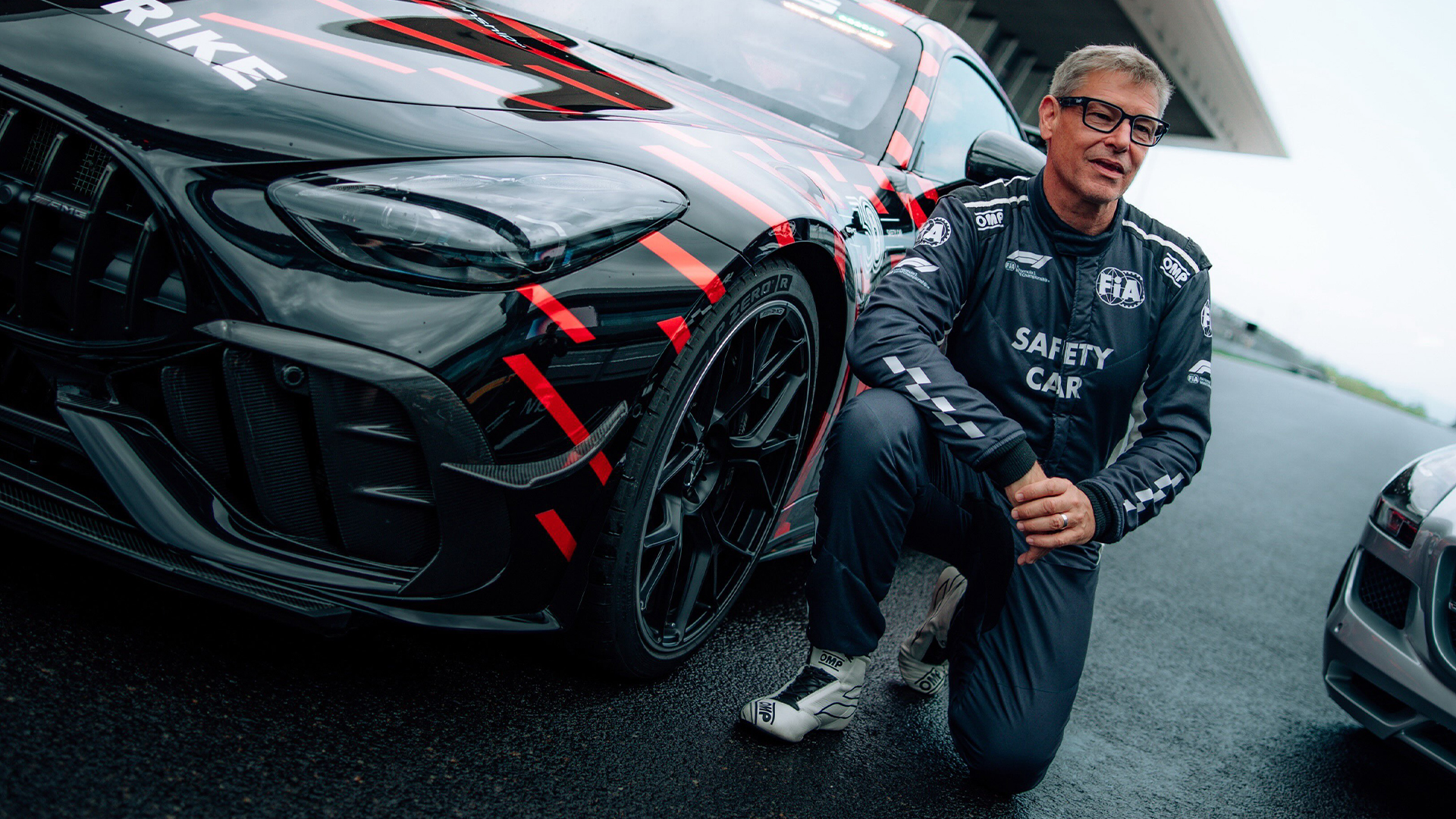

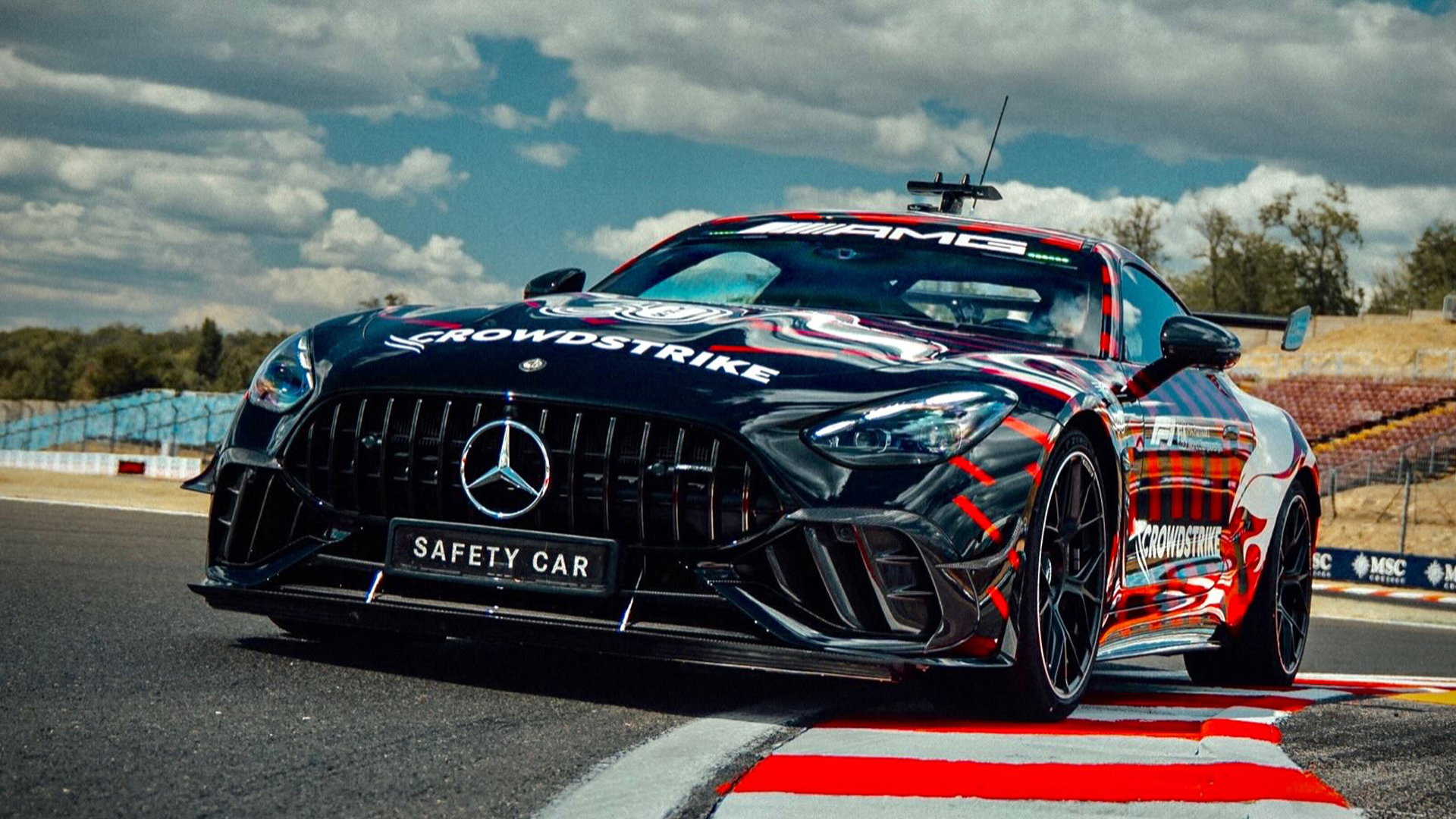
When Formula 1 unveiled its new Mercedes-AMG GT 63 Pro 4Matic+ Safety Car ahead of the Hungarian Grand Prix, the first question many fans asked was simple: what’s actually changed?
At first glance, it looks familiar. The long bonnet, aggressive proportions and unmistakable AMG silhouette remain. Look closer, however, and it becomes clear that Mercedes hasn’t simply replaced one safety car with another. The latest model introduces a redesigned aerodynamic package, an entirely new lighting system and an important milestone in Formula 1’s push towards more sustainable technology.
The new Safety Car also arrives at a symbolic moment. It celebrates almost three decades of collaboration between Mercedes-AMG and Formula 1, a partnership that has made the German manufacturer responsible not only for some of the fastest racing cars on the grid, but also the vehicles tasked with controlling it.
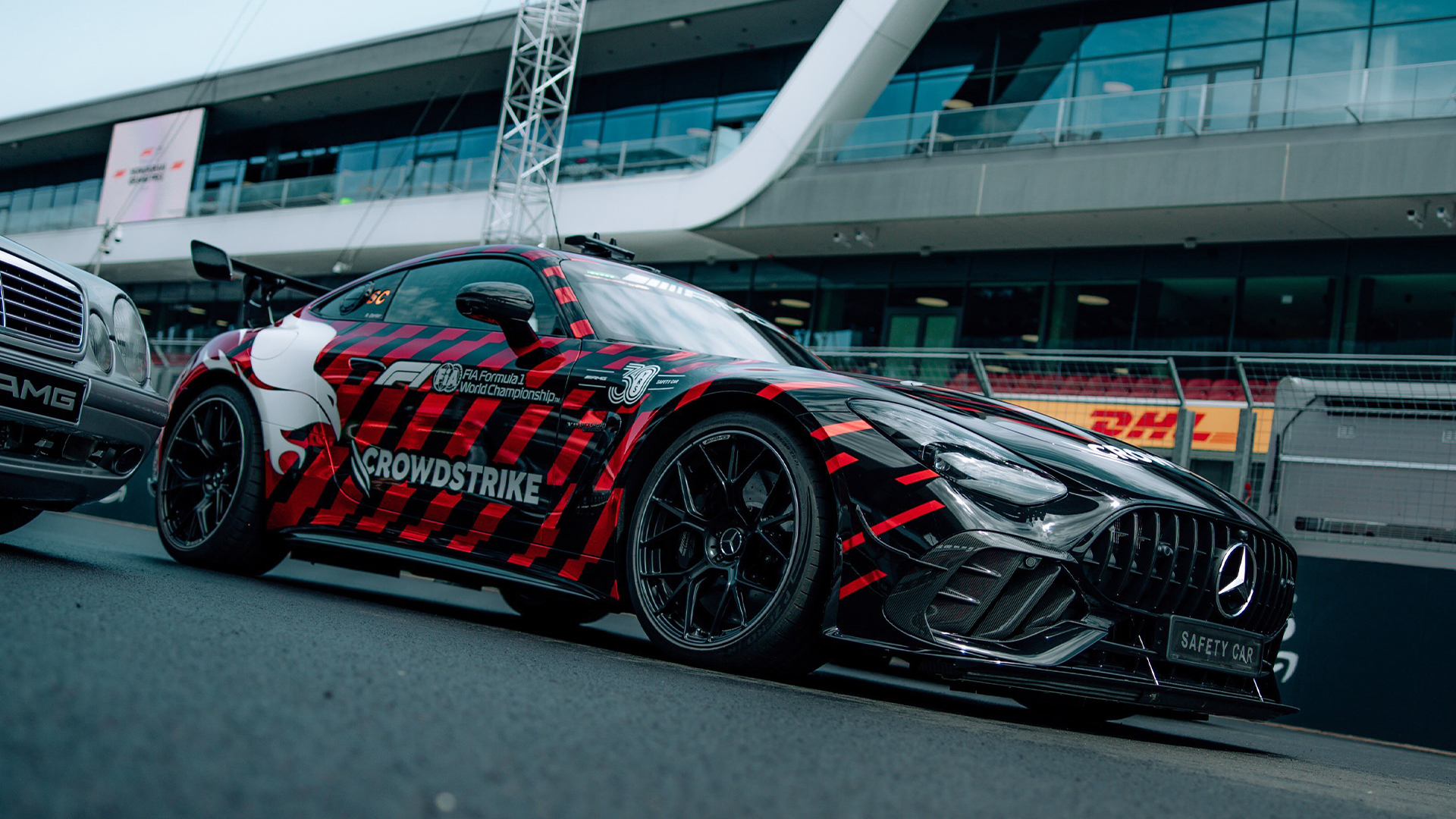
The Familiar V8 Remains
The biggest surprise may be that there isn’t one.
Unlike many model updates, the new Safety Car receives no additional power under the bonnet.
Mercedes has retained its 4.0-litre twin-turbocharged V8, producing 612 PS and 850 Nm of torque. Power is delivered through the AMG SPEEDSHIFT MCT nine-speed transmission, while the 4MATIC+ all-wheel-drive system ensures maximum traction in all weather conditions.
Although the headline figures remain unchanged, there’s one important statistic that sets this car apart from every Mercedes Safety Car that came before it.
It is the first all-wheel-drive Safety Car used during Formula 1’s almost 30-year partnership with Mercedes.
For a vehicle expected to lead the world’s fastest single-seaters through rain, debris and changing track conditions, the move to AWD is a logical evolution rather than a dramatic departure.
The Biggest Changes Are Easy to Miss
Mechanically, the car is familiar. Visually, it’s a different story.
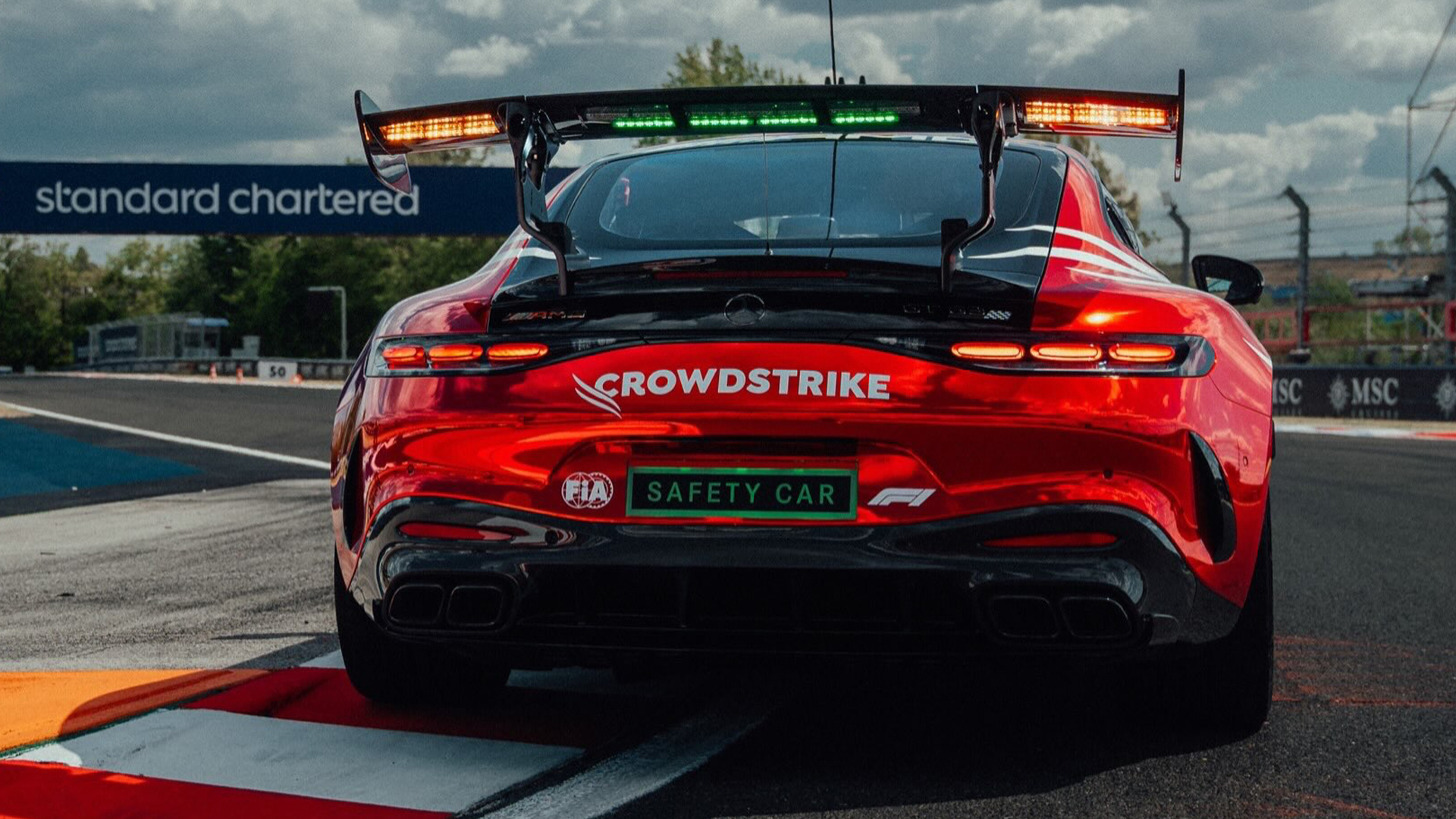
Rather than mounting the traditional light bar on the roof, Mercedes has completely redesigned the warning system.
The flashing LEDs are now integrated into a bespoke active rear wing, sitting alongside onboard cameras. Additional LED warning lights have also been incorporated into the front bumper, headlights and rear light clusters, creating a cleaner design while improving visibility for drivers following behind.
The aerodynamic package has also been revised compared with the standard Mercedes-AMG GT 63 Pro 4Matic+ road car.
A larger front splitter, new aerodynamic canards, the redesigned active rear wing and revised underbody panels all contribute to improved airflow and greater stability at high speed—an important consideration when the Safety Car itself is capable of operating at race pace.
Built for Formula 1’s Sustainable Future
The new Safety Car isn’t only about performance. It also reflects Formula 1’s wider sustainability strategy.
Instead of conventional petrol, the car runs on PETRONAS Primax Pro-Race M2 100-octane fuel, developed with 40% sustainable components.
The blend consists of 10% ethanol and 30% eFuel, or synthetic fuel, reducing its environmental impact while maintaining the performance required for Formula 1 operations.
Although the sport won’t introduce fully sustainable fuel regulations until 2026, the Safety Car provides another example of Formula 1 using its support fleet to develop and showcase technologies that are expected to become increasingly important in the years ahead.
A New Era Begins in Hungary
The Hungarian Grand Prix will mark the first competitive appearance of the new Mercedes-AMG GT 63 Pro 4Matic+ Safety Car.
Its arrival may not represent a technical revolution in outright performance, but it demonstrates how even one of Formula 1’s most familiar vehicles continues to evolve.
The new Mercedes-AMG GT 63 Pro 4Matic+ may only take centre stage when a race is interrupted, but its significance goes well beyond the flashing lights. As the first all-wheel-drive Mercedes Safety Car, complete with an integrated lighting system and more sustainable fuel technology, it captures Formula 1’s current direction: faster, smarter and increasingly focused on the future.