

Pirelli has begun developing a revised Formula 1 tyre construction for 2027, with the aim of increasing thermal degradation and creating a wider range of viable race strategies.
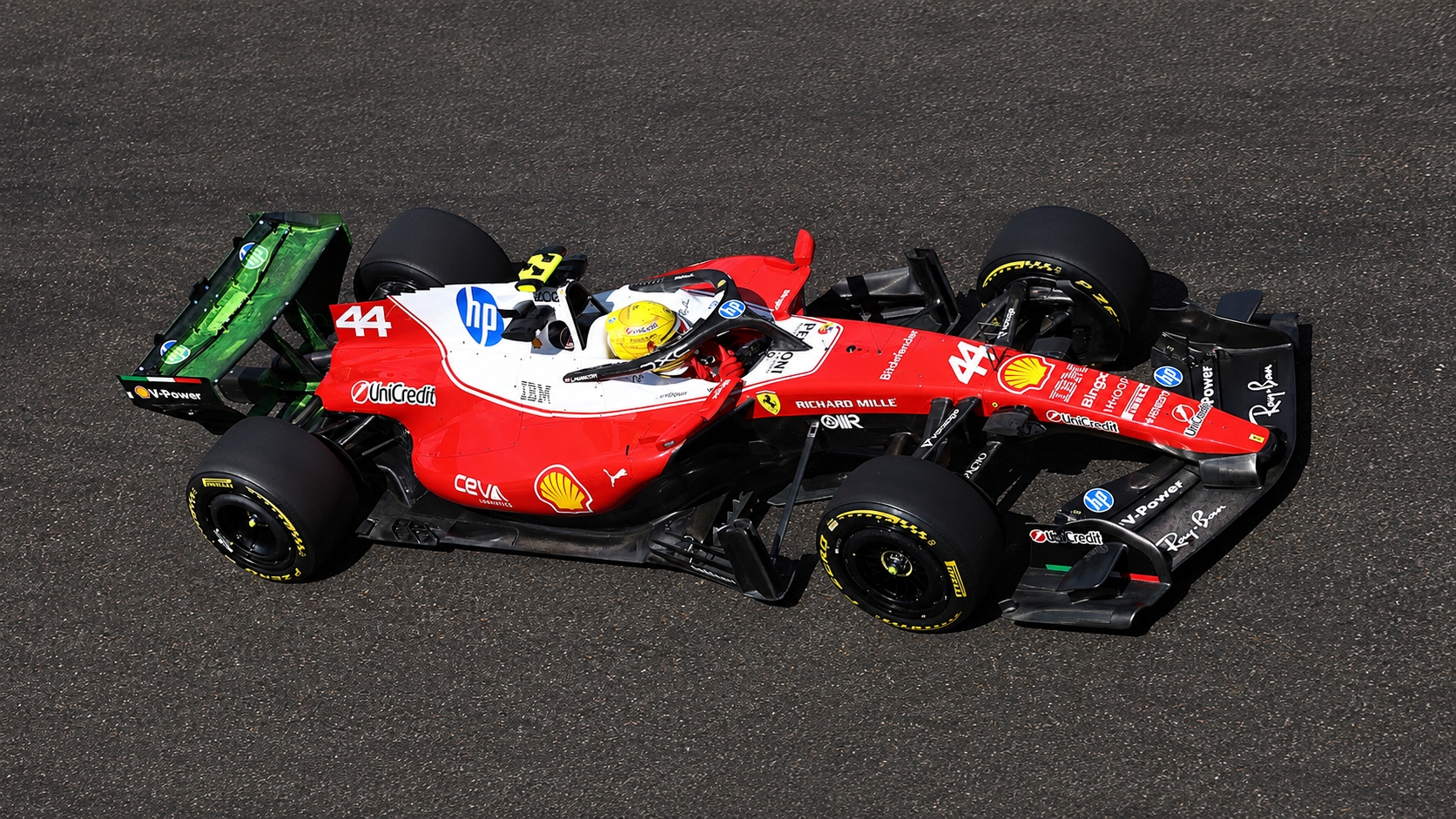
Ferrari and Racing Bulls have already completed prototype running at Imola as part of the development programme, covering a combined 400 laps and 1,963 kilometres across two days.
The objective is not simply to make the tyres softer or shorten their usable life. Pirelli is instead targeting the way heat builds through a stint, looking for a more pronounced but manageable performance drop as mileage increases.
After a 2026 season in which one-stop strategies have frequently emerged as the most efficient option, the intention is to make the decision between staying out and stopping for fresh tyres far less straightforward.
Why Pirelli Wants More Degradation in 2027
The key issue for Pirelli is the relationship between tyre age and lap time.
When degradation remains low, drivers can extend a stint without surrendering enough performance to offset the time required for an additional pit stop. Once that calculation becomes clear, teams tend to converge on the same strategic approach.
Pirelli wants to alter that equation.
Its 2027 prototypes are being developed to generate greater thermal stress through both the front and rear tyres, creating a stronger performance decline over a long run.
If the drop-off develops at the intended rate, a driver on fresh rubber could gain enough lap time to make an additional stop worthwhile.
That would give teams more reason to split strategies around stint length, tyre compound and pit timing rather than simply extending the same one-stop window.
The difficulty lies in controlling the degradation.
Too little, and the strategic picture changes very little. Too much, and drivers could spend large parts of a Grand Prix managing temperatures rather than attacking.
Pirelli therefore needs a tyre that rewards pace while still attaching a meaningful cost to how aggressively that performance is used.
Ferrari and Racing Bulls Begin Prototype Running
The latest phase of development took place at Imola, where Ferrari and Racing Bulls ran a range of prototype specifications.
Ferrari used Lewis Hamilton, Charles Leclerc and Antonio Giovinazzi across the test.
Hamilton completed 64 laps and Leclerc 63, with both sampling development versions of the C3, C4 and C5 compounds. Giovinazzi covered a further 135 laps, concentrating primarily on the C3 specification.
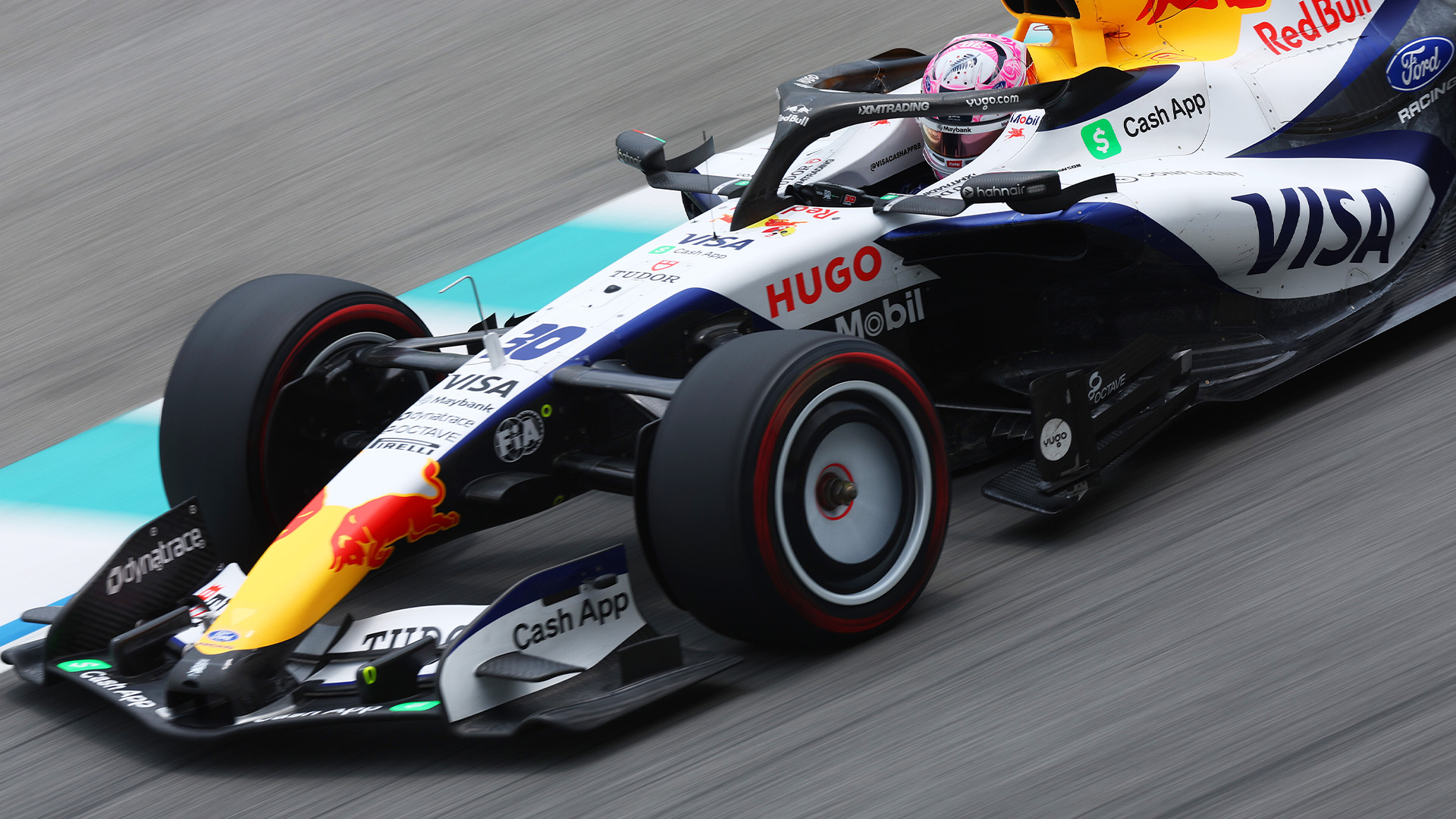
Racing Bulls ran Liam Lawson and Arvid Lindblad.
Lawson completed 65 laps while working with the C3 and C4 tyres, while Lindblad added 73 laps across C3 and C5 constructions.
The programme was designed around tyre development rather than outright performance.
Different fuel loads, run plans and prototype specifications make the lap times largely irrelevant as a comparison between Ferrari and Racing Bulls. The more useful information comes from how each construction behaved over repeated heat cycles, qualifying-style runs and longer stints.
That data will help Pirelli understand not only how quickly performance falls away, but also how predictable that degradation remains once temperatures begin to rise.
2026 Cars Give Pirelli a More Accurate Baseline
One of the most important differences in the 2027 development cycle is the machinery being used to test the tyres.
Pirelli can now work with the current generation of Formula 1 cars rather than relying so heavily on simulations and modified mule cars.
During the development of the 2026 tyres, the incoming regulations created a much larger degree of uncertainty. The final aerodynamic loads, mechanical characteristics and power-unit behaviour of the new cars were not yet available in representative form.
That forced Pirelli to build around projected values.
The 2027 programme begins from a much firmer baseline.
Running the prototypes on actual 2026 cars allows engineers to measure the loads and energy being put through the tyres under representative conditions, giving a clearer picture of where degradation needs to increase and where it must remain controlled.
It also allows Pirelli to examine front- and rear-axle behaviour more precisely.
The distinction matters.
Front-tyre degradation generally manifests itself through increasing understeer and reduced minimum corner speed. Rear degradation has a different effect, compromising traction and forcing drivers to become more careful with throttle application.
A successful 2027 construction will need to create strategic variation without allowing either axle to become so limiting that drivers are forced into excessive tyre conservation.
The Target Is Better Strategy, Not Simply More Pit Stops
More pit stops would be the most visible consequence of higher degradation, but that is not the real measure of whether the project succeeds.
The greater aim is to make different strategies competitive.
If fresh tyres offer enough performance to recover the time lost during a second pit stop, teams can begin approaching the same race in fundamentally different ways.
One driver might extend the opening stint to protect track position. Another could stop earlier and use the pace advantage of newer tyres to attack. A third could commit to an additional stop and rely on outright speed to recover through the field.
That creates differences in tyre age, pace and track position that can remain relevant deep into a Grand Prix.
The challenge for Pirelli is avoiding the opposite problem.
Formula 1 has experienced eras in which thermal degradation became so sensitive that drivers were encouraged to run below the car’s potential simply to keep the tyres alive.
The 2027 project cannot become a return to that style of racing.
Instead, Pirelli is trying to introduce a more deliberate performance curve: enough degradation to change strategic calculations, but not enough to make tyre preservation the dominant objective.
Pirelli’s 2027 Direction Is Already Taking Shape
The final construction and compound range remain under development, and further testing will be required before the 2027 specifications are fixed.
Yet the direction of the programme is already clear.
Pirelli wants tyre behaviour to matter more over the course of a race.
The Imola test represents an early stage in that process, but using current Formula 1 machinery should allow the supplier to work with significantly more representative data than was available ahead of the 2026 rules change.
If the development delivers the intended result, the strategic question in 2027 may become much harder to answer.
Staying out longer will carry a greater performance cost. Stopping again will carry its own time penalty. And the fastest route to the finish may depend far more heavily on when a team decides its tyres have crossed the point at which preserving them is no longer worth it.