

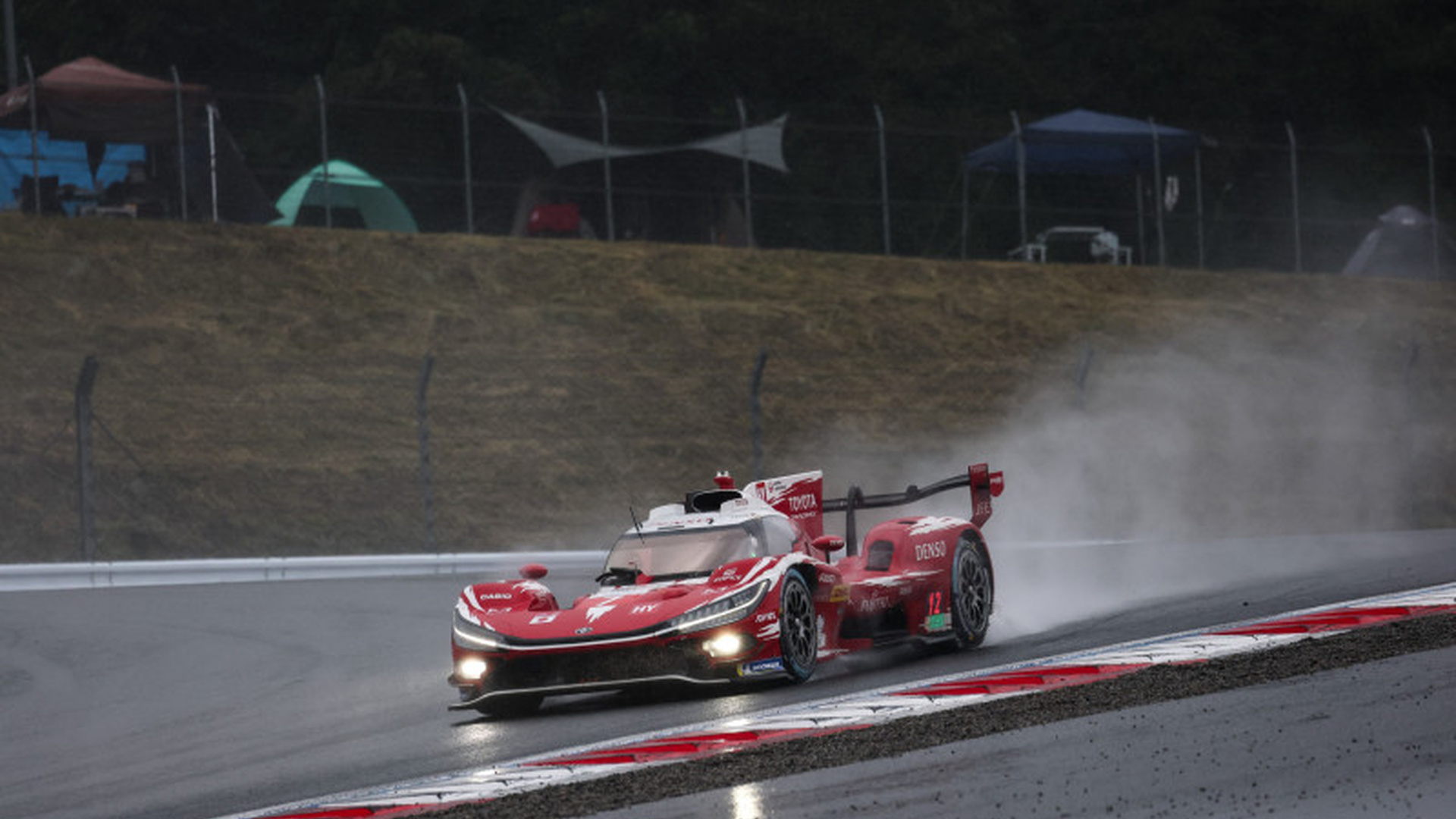
Toyota turned a race Alpine had largely controlled into a dramatic home victory at Fuji, with Ryō Hirakawa holding off Victor Martins by just 0.591 seconds after a decisive late strategy call.
Toyota’s home victory at the 6 Hours of Fuji came from a race that, for much of the afternoon, appeared to belong to Alpine.
The two A424s had locked out the front row and spent much of the six-hour contest at the head of the Hypercar field. Toyota, by contrast, remained in contention without looking like the obvious favourite.
Then the final hour changed everything.
A late Safety Car brought the leading cars into the pits and created one final strategic opening. Toyota took it, shortening the stop for the #8 TR010 Hybrid and sending Ryō Hirakawa back onto the circuit with the track position Alpine had controlled for most of the race.
Alpine Controls the Early Race
Jules Gounon led from pole in the #36 Alpine, while Ferdinand Habsburg kept the sister #35 car near the front as the French manufacturer established an early one-two.
The race behind them was far less settled.
A major LMGT3 accident triggered the first Safety Car, while the #7 Toyota of Nyck de Vries was forced into an unscheduled stop with a puncture. De Vries later challenged Habsburg for the lead at the final corner, only for contact to send the Toyota spinning.
The #007 Aston Martin Valkyrie also emerged as a threat through the middle of the race. Tom Gamble reached the front through an undercut, but a drive-through penalty for crossing the white line at pit entry ended Aston Martin’s challenge for victory.
Alpine was back in control.
The Final Safety Car Changes Fuji
The decisive moment arrived at the beginning of the final hour when the #58 Garage 59 McLaren crashed heavily following contact with another LMGT3 car.
With the field neutralised, the leaders headed for the pits.
Toyota and BMW chose the aggressive option. Both the #8 Toyota and #15 BMW received shorter tyre changes, reducing the time spent stationary and transforming the running order.
Hirakawa jumped from seventh to the lead, while Alpine suddenly found itself recovering positions it had held for most of the race.
The #36 A424 dropped behind the BMW and #009 Aston Martin after its stop, leaving Victor Martins with work to do once racing resumed.
Martins Charges, Hirakawa Holds Firm
Martins immediately showed the pace Alpine still had.
He cleared the #009 Aston Martin, passed the sister #35 Alpine and then overtook Dries Vanthoor’s #15 BMW with around 10 minutes remaining.
Only Hirakawa remained.
The gap fell to less than a second as Martins closed rapidly in the final laps, but Hirakawa never gave him the opening he needed.
The Japanese driver crossed the line just 0.591 seconds ahead, delivering Toyota its third victory of the season and its first WEC win on home soil since 2023.
Brendon Hartley and Sébastien Buemi shared the winning #8 Toyota with Hirakawa, while Vanthoor, Kevin Magnussen and Raffaele Marciello completed the Hypercar podium for BMW.
The #35 Alpine finished fourth, ahead of the #38 Cadillac.
BMW Strikes Late in LMGT3
The LMGT3 race produced its own late turnaround.
Following the final Safety Car, the two TF Sport Corvettes initially occupied the leading positions. Augusto Farfus, however, charged through the field in the #32 Team WRT BMW M4 GT3.
Farfus passed Charlie Eastwood’s #34 Corvette in the closing minutes to take victory alongside Darren Leung and Sean Gelael.
The #27 Heart of Racing Aston Martin recovered to finish second, while the #34 Corvette completed the podium.
Fuji was a reminder that endurance racing is rarely decided by pace alone. Alpine spent most of the afternoon in control, but the final neutralisation gave Toyota one opportunity to rewrite the race, and it took it.
Hirakawa then completed the job under pressure, keeping Martins behind by just 0.591 seconds. After six hours of changing strategies and repeated interruptions, Toyota’s home victory came down to one perfectly timed decision.