

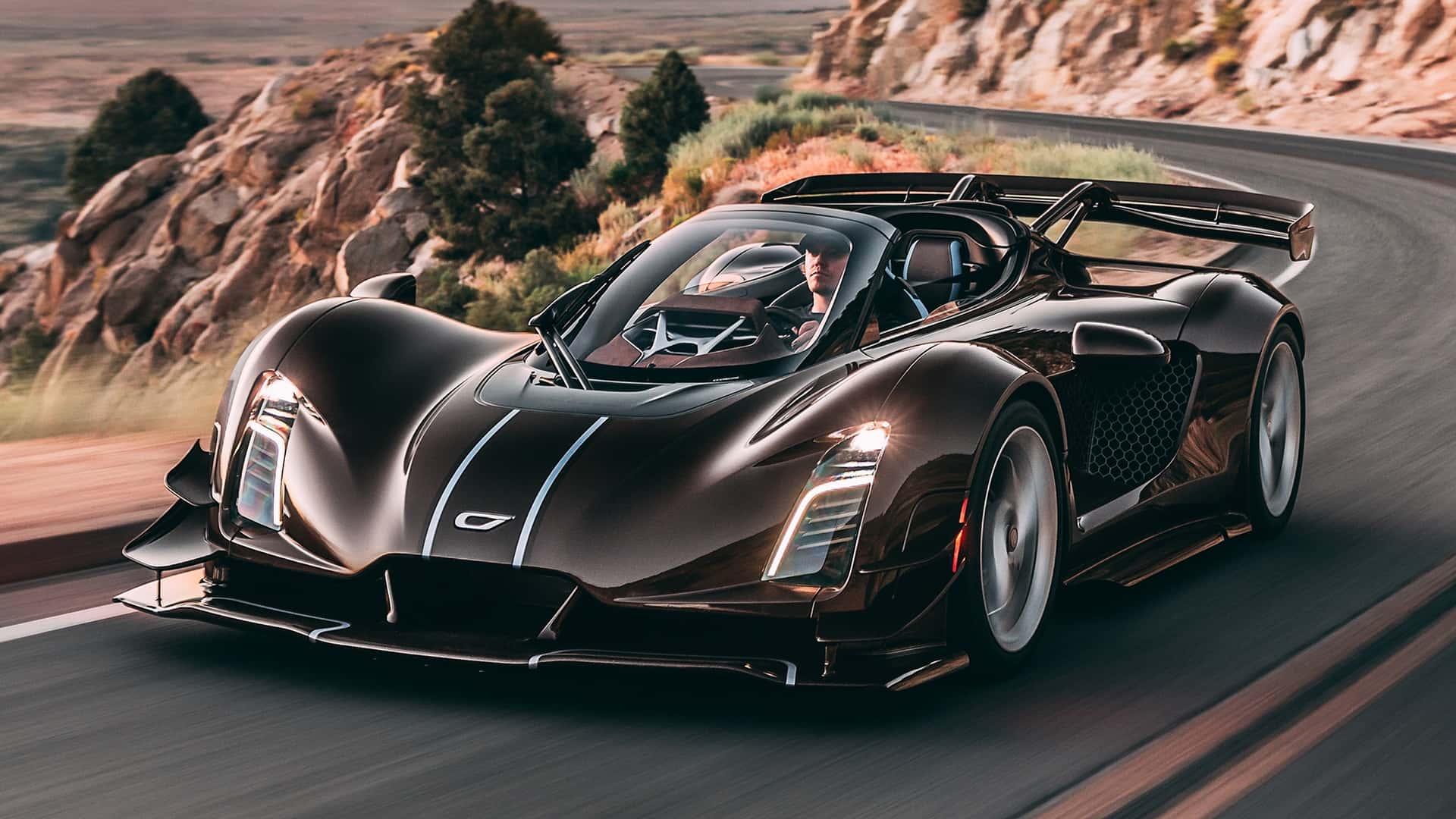
What is Czinger 21C Spyder?
Czinger 21C Spyder is the open-top version of the Czinger 21C hypercar. The model has a twin-turbocharged 2.88-litre V8 engine, three electric motors, and an 800-volt battery system. Czinger uses a central inline seating layout and a carbon-fibre monocoque, in addition to additive-manufactured structures and mechanical systems.
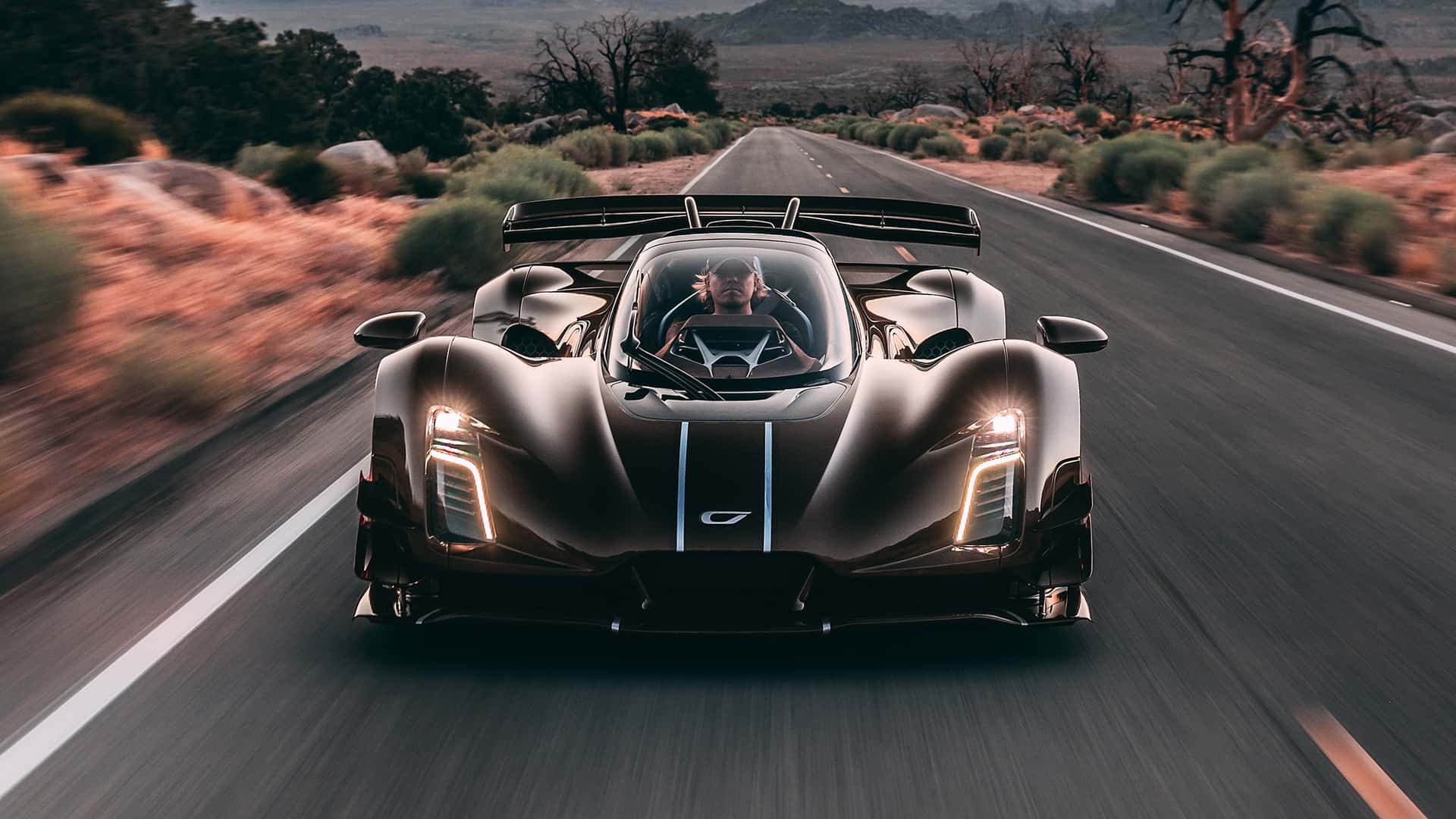
The Czinger 21C Spyder has a dry weight of 1,620 kg, which includes additional carbon fibre reinforcements to the A-pillars due to the removable roof.
What is new in the braking system?
The 21C Spyder features BrakeNode – an integrated braking assembly that includes the suspension upright, brake calliper, and hydraulic passages. Czinger claims that this design reduces the vehicle’s unsprung weight by 2.7 kg and increases the stiffness of the brake structure by up to 30 percent.
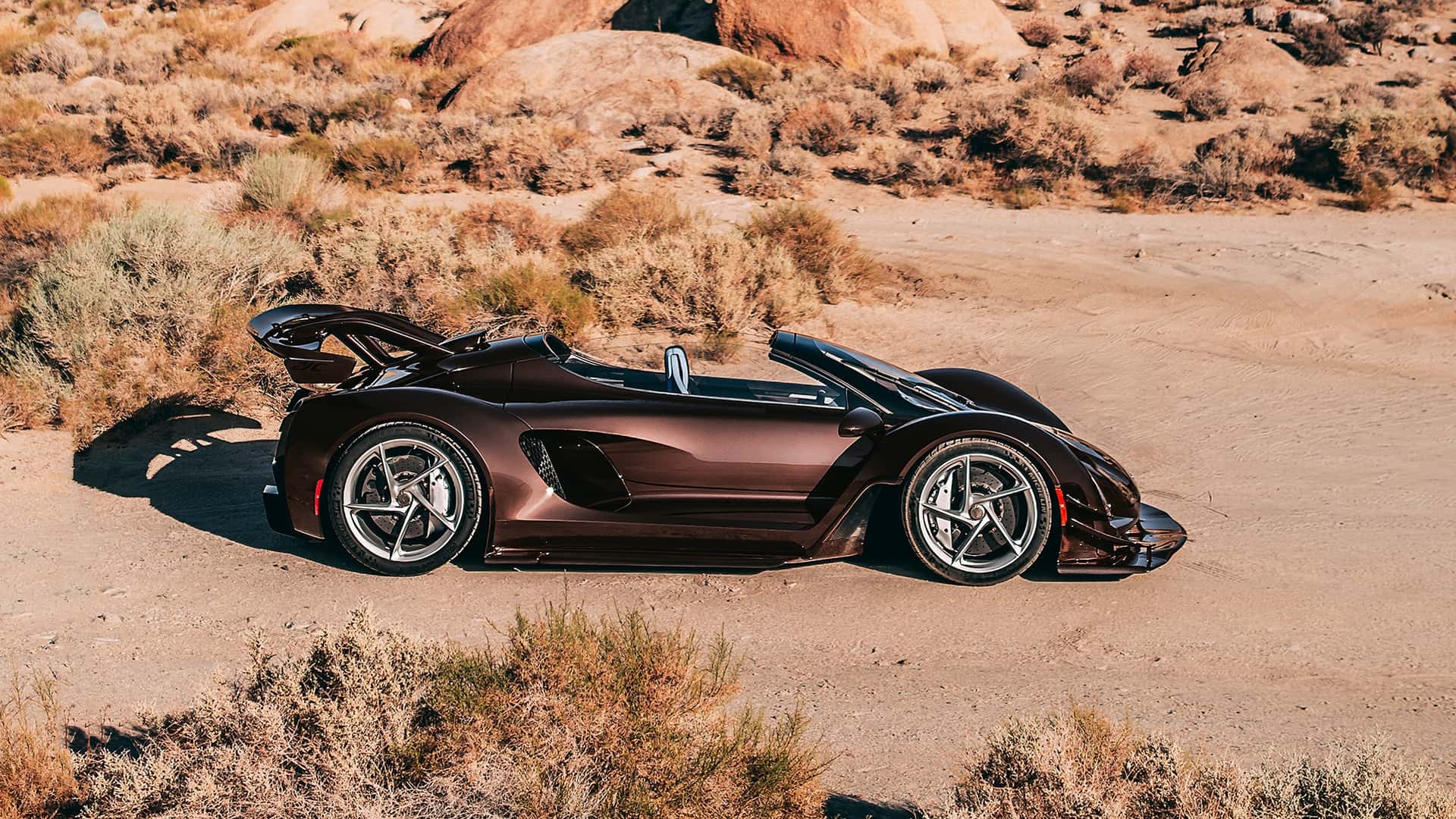
The carbon-ceramic brakes have a disc diameter of 410 mm up front and 390 mm at the rear. The front callipers feature titanium pistons, and the rear callipers use aluminium pistons.
What engine do you get on the 21C Spyder?
The twin-turbocharged 2.88-litre V8 engine produces 750 BHP at 11,000 rpm. The engine is mated to two electric motors located at the front axle and another electric motor that drives the crankshaft. The total combined output of the hybrid powertrain is 1,250 BHP, and the peak torque is 937 Nm.
Combustion engine power is sent to the rear wheels through a seven-speed single-clutch transmission, while the front electric motors give all-wheel drive traction. The 4.2 kWh battery system operates at 800 volts.
Czinger claims that the 21C Spyder achieves a 0-100 kmph time of 2.1 seconds, a 0-400 yards time of 8.7 seconds, and a top speed of 330 kmph.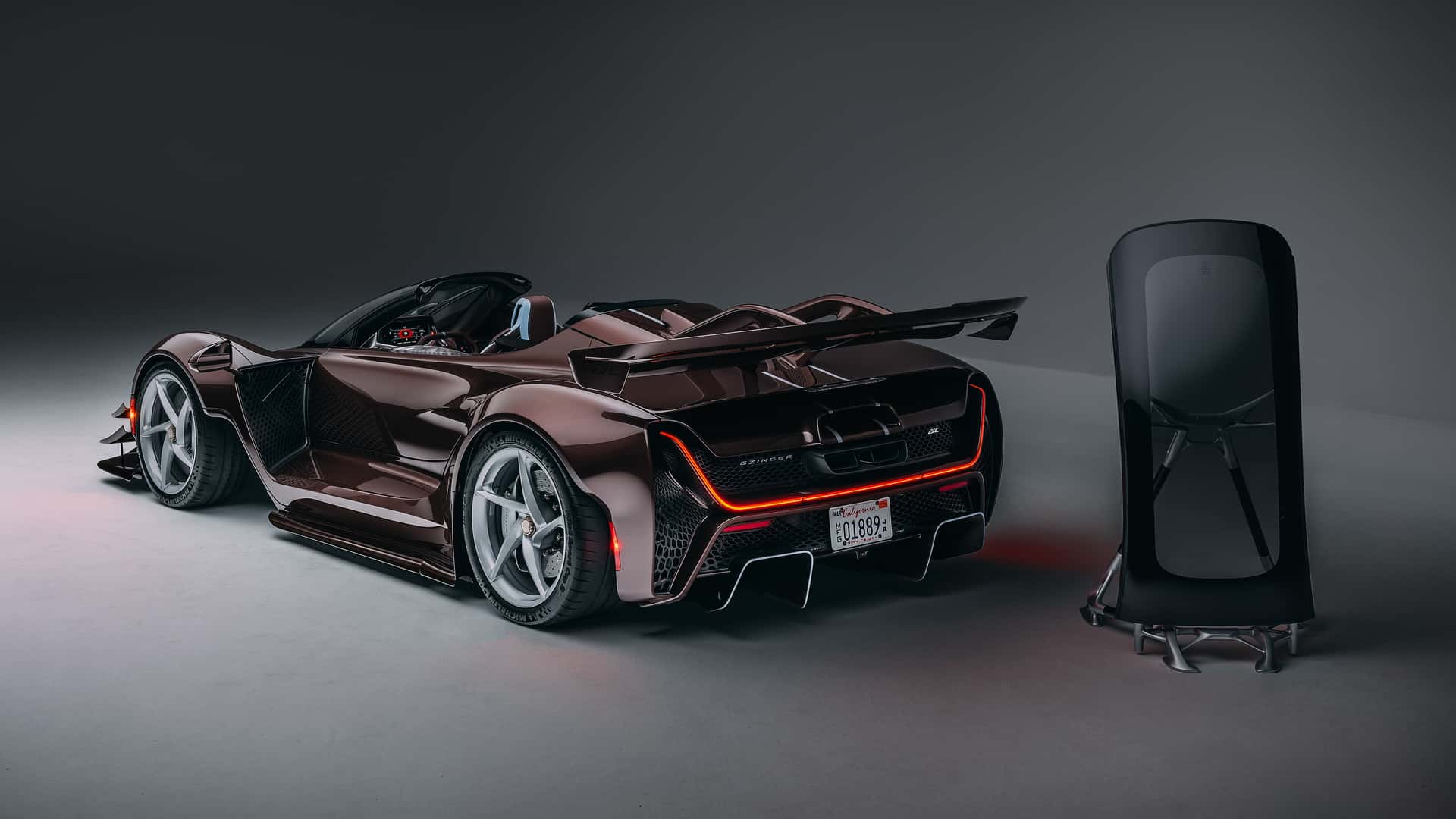
How is downforce achieved on the Spyder?
With the top open, the 241 kmph speed is said to create 1,482 kilogrammes of downforce. The figure rises to 1,500 kilogrammes if the roof is fitted to the vehicle. The adjustable rear wing is set up according to circuit needs.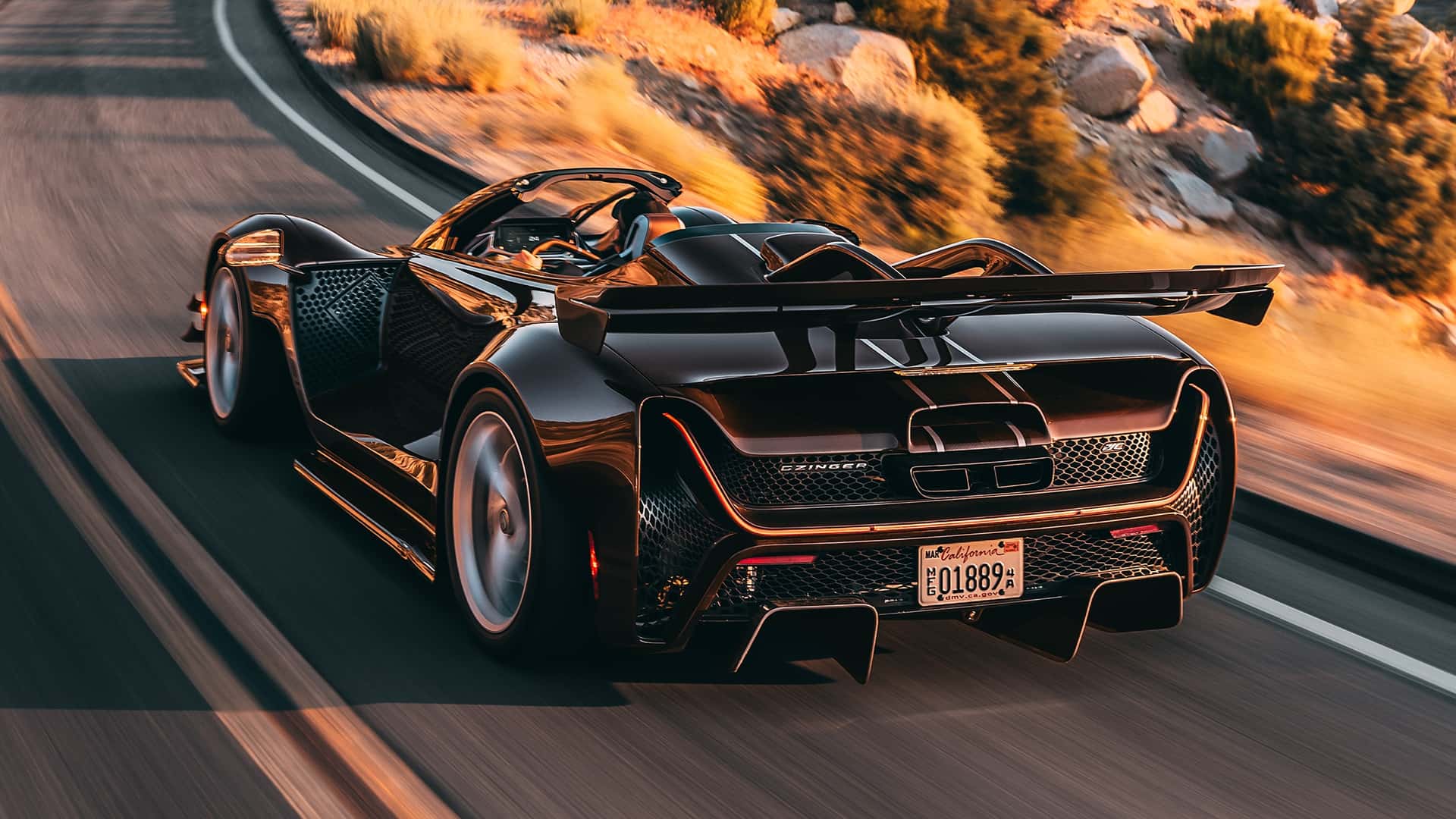
What is it like inside the cabin?
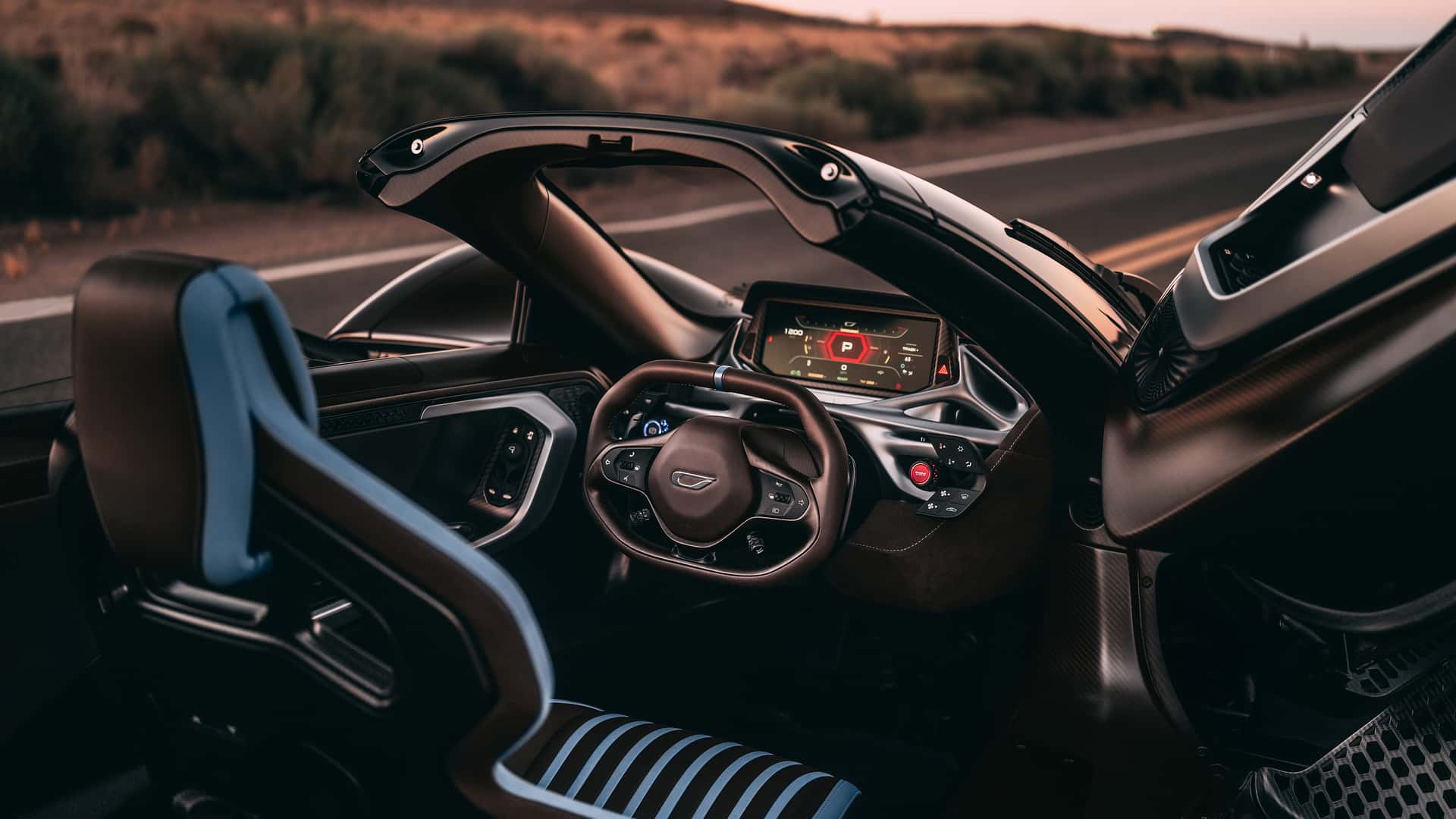
The driver occupies the central position with the passenger sitting behind him. According to Czinger, such positioning minimises the car’s frontal area, centralises its weight, and offers the driver a clear view of the road.
The Spyder is equipped with a 10-kilogramme carbon-fibre hardtop and a soft top. The car has the NeuralNode cockpit, which integrates an instrument cluster, HVAC outlets, and various vehicle controls into a single assembly.
How is the 21C Spyder made?
Czinger employs additive manufacturing to produce most of the 21C Spyder’s components – 23% of the total. Suspension components, structural nodes, and chassis components have been created with the additive process.
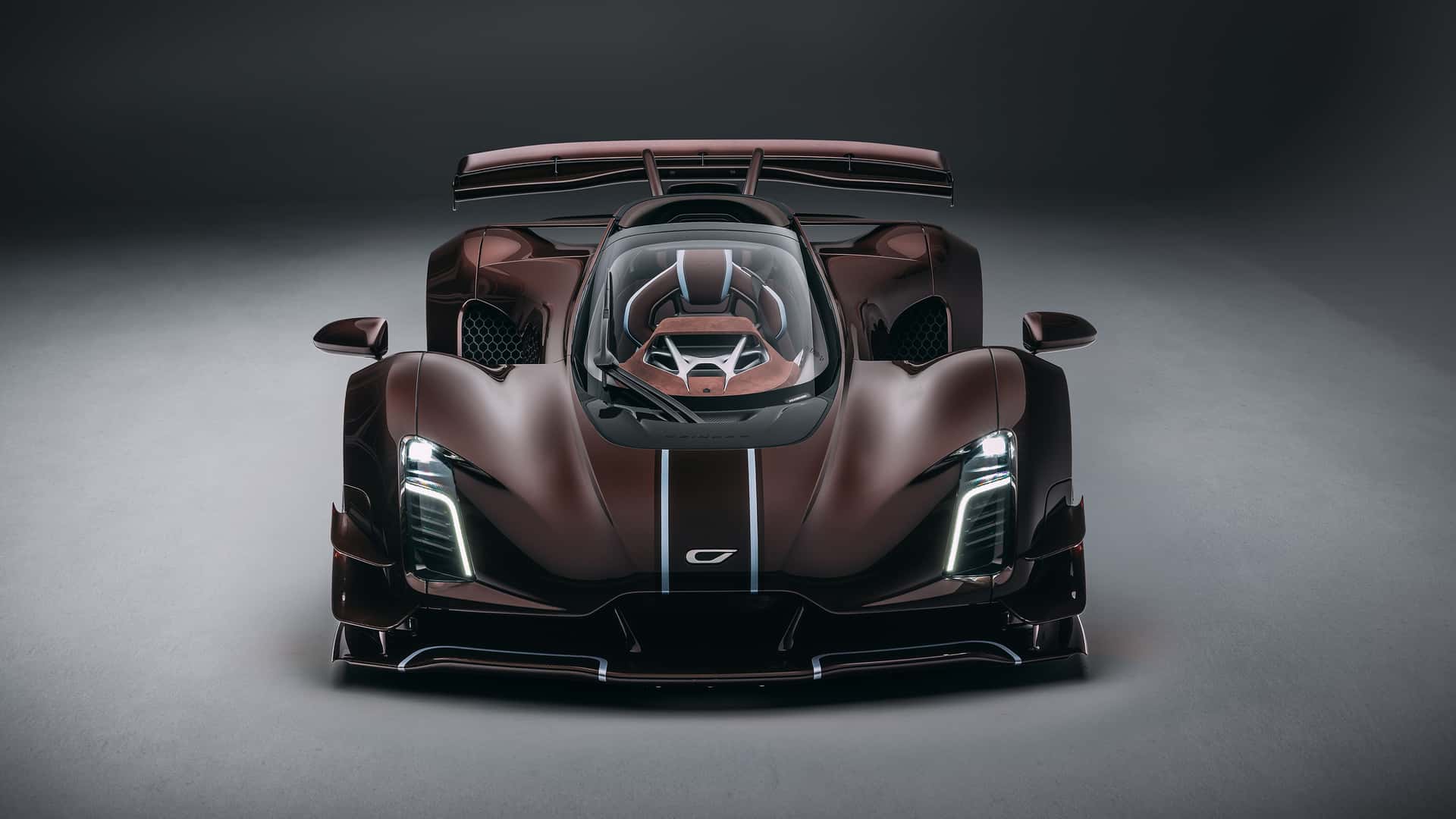
The weight of the car’s carbon fibre monocoque is 125 kilogrammes. The car is assembled by hand at Czinger’s Area 21 facility in Los Angeles.
What quantities were made, and what is the price?
Only 30 Czinger 21C Spyder units will be made available for purchase, priced at a minimum of $2.75 million. The buyer has the option to customise the car, from exterior colours to carbon fibre options and even the colours