

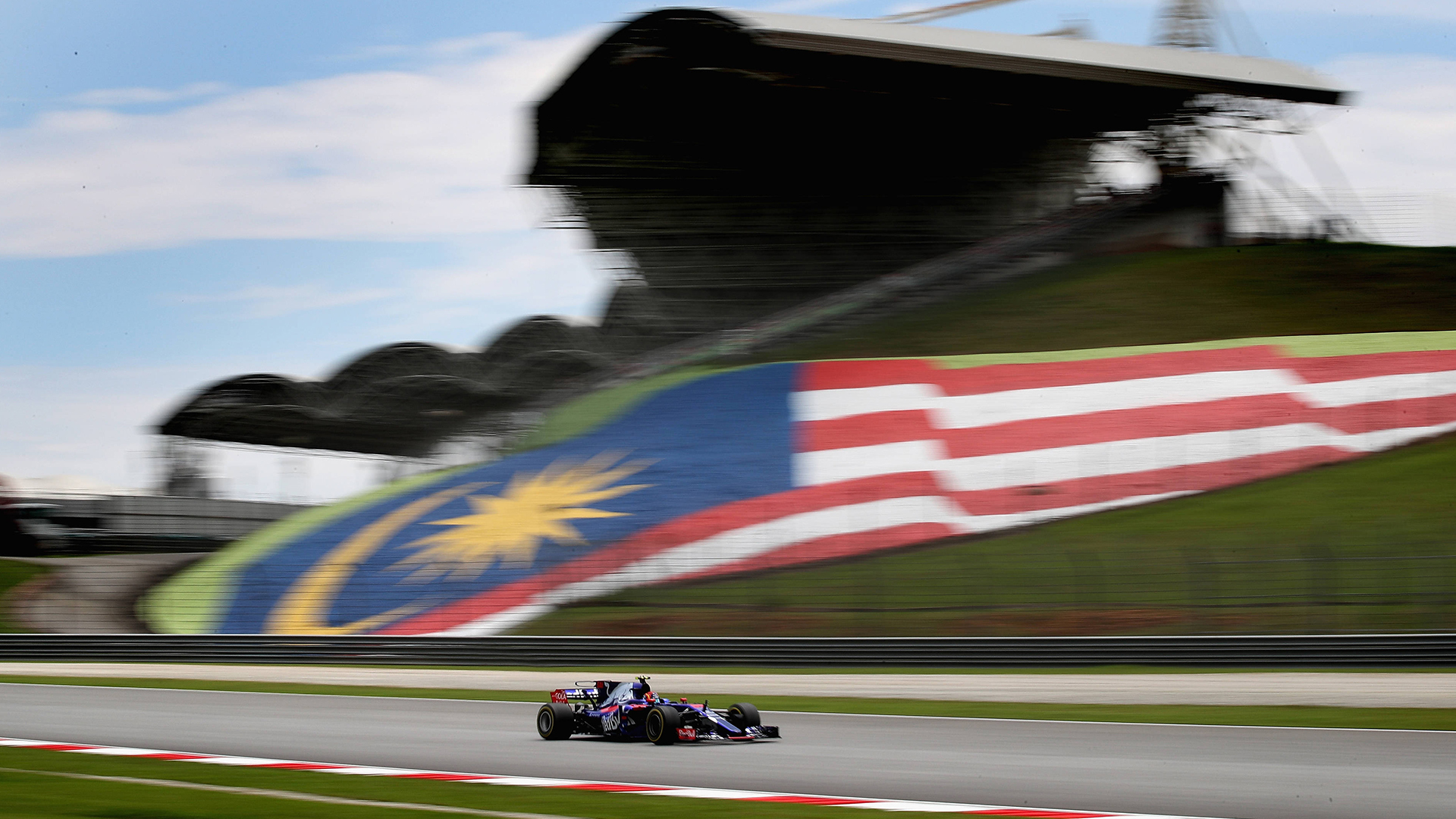
Sepang has not hosted Formula 1 since the 2017 Malaysian Grand Prix. Nine years later, one of the championship’s most recognisable circuits is now preparing for a comeback under highly unusual circumstances: Malaysia would provide the venue, while Bahrain would remain attached to the event.
The proposed race is expected to take place on 4 October, filling the slot between the Azerbaijan and Singapore Grands Prix.
Bahrain GP Moves Again
The 2026 Formula 1 Gulf Air Bahrain Grand Prix was originally scheduled for April, but escalating tensions forced the event to be postponed alongside the Saudi Arabian Grand Prix.
Formula 1 subsequently identified 4 October as a potential new date. On paper, it worked neatly. The race could sit between Baku and Singapore, creating a logical geographical transition before the championship continued through Asia.
That plan has now been disrupted by renewed instability in the region, making a Grand Prix at Bahrain International Circuit increasingly difficult to deliver.
Rather than losing the event completely, attention has turned more than 5,000 kilometres east to Sepang.
Bahrain Could Keep the Grand Prix — Just Not in Bahrain
The proposed arrangement would be one of the more unusual solutions Formula 1 has used to protect its calendar.
Bahrain is reportedly prepared to continue financing the Grand Prix, while Sepang International Circuit would provide the venue. The race would therefore retain a connection to Bahrain despite physically taking place in Malaysia, although its final official title has yet to be confirmed.
Discussions surrounding financing, branding and the structure of the event have reportedly been ongoing, with an announcement from Malaysian Prime Minister Anwar Ibrahim expected.
It would be unusual, but not unprecedented.
Nürburgring hosted the Luxembourg Grand Prix in 1998 and 1999, despite the circuit being located in Germany. Baku’s first Formula 1 race in 2016 was meanwhile held under the European Grand Prix name before becoming the Azerbaijan Grand Prix the following season.
Formula 1 has reshaped the identity of races before. In 2026, it could do so again to keep a 24-round calendar intact.
F1’s 24-Race Calendar Is Under Pressure
The Bahrain situation is part of a much larger scheduling challenge.
Four of the planned 24 rounds on the 2026 Formula 1 calendar are located in the Middle East, leaving the championship particularly exposed to continued regional instability.
There is also a commercial consideration. Under the agreements governing Formula 1’s teams and broadcasters, the championship cannot simply allow the calendar to shrink indefinitely. A minimum of 22 events creates additional pressure to find replacement venues if multiple races become impossible to stage.
With Sepang positioned to absorb Bahrain’s slot, attention is already turning towards the circuits that could cover another potential vacancy.
Two familiar names are emerging: Imola and Portimão.
Imola Could Be F1’s Next Backup Plan
Between the two European circuits, Imola appears to offer the cleaner solution.
Portimão is already expected to return as the home of the Portuguese Grand Prix in 2027, with significant upgrades to the venue planned around that comeback. An October race could potentially fit into those preparations, but a late-November or December event would create a far tighter turnaround ahead of the following season.
Imola does not face the same scheduling complication.
There would also be a compelling sporting storyline behind a return to the Italian circuit. F1 CEO Stefano Domenicali was born in Imola, while championship leader Kimi Antonelli could potentially arrive at the closing stages of 2026 chasing something Italian Formula 1 has waited more than seven decades to see.
Alberto Ascari remains the last Italian Formula 1 World Champion, having secured his second title in 1953. If Antonelli remains in contention, an additional race on home soil would immediately become one of the biggest events of the season.
Qatar and Abu Dhabi Remain Major Questions
The uncertainty does not necessarily end with Bahrain.
Qatar and Abu Dhabi are scheduled to host the final two rounds of the 2026 season, making the Middle East central to how this year’s championship is supposed to conclude.
Race weekends require far more than simply transporting 22 cars to a circuit. Thousands of team personnel, broadcasters, suppliers, hospitality staff, freight operations and travelling fans are involved, meaning decisions need to be made well before a Grand Prix weekend begins.
Sepang’s Unexpected Formula 1 Comeback
For Malaysian Formula 1 fans, the circumstances behind the return may be unusual, but the result could still bring one of the championship’s most missed circuits back onto the grid.
Sepang hosted Formula 1 between 1999 and 2017 and became known for its wide layout, long straights, demanding high-speed corners and unpredictable tropical weather. Its combination of overtaking opportunities, heavy braking zones and extreme heat made the Malaysian Grand Prix a distinctive fixture of the championship for almost two decades.
Few would have predicted its return to come as part of an emergency calendar reshuffle nine years after its final Grand Prix.
Yet that is increasingly what the 2026 Formula 1 season demands: flexibility.
Bahrain may keep its Grand Prix without racing at Bahrain International Circuit. Malaysia may regain Formula 1 without initially planning to host a race at all. Imola could still be waiting in reserve, while the final shape of the championship remains dependent on what happens over the coming months.
For now, one thing looks increasingly likely: Formula 1 is heading back to Sepang.