

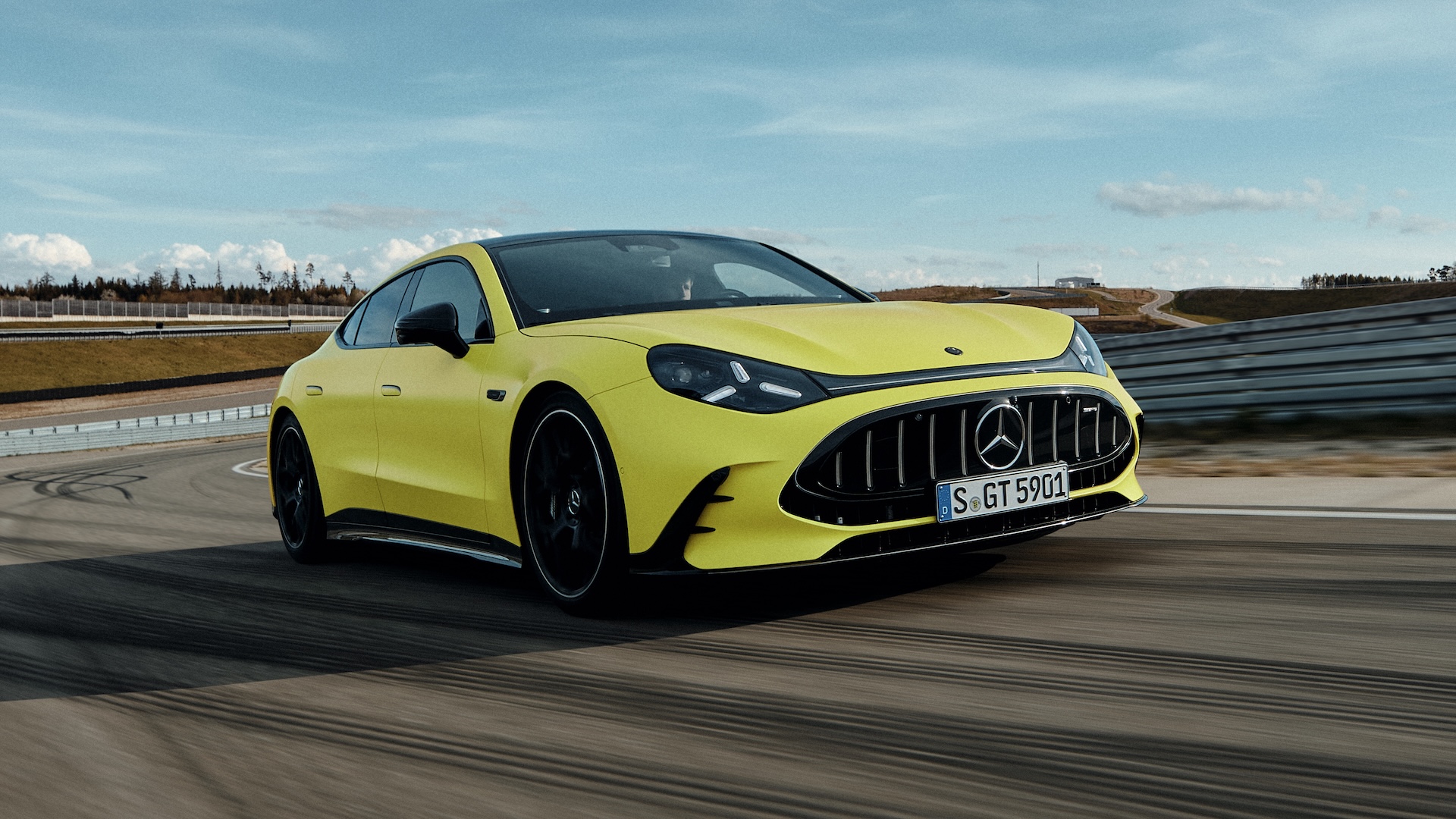
For years, AMG fans feared the inevitable question: what happens when Affalterbach goes fully electric? More importantly, what happens when the V8 disappears? Well, Mercedes-AMG has answered that question with the new GT 4-Door Coupé. And instead of arriving quietly like a sensible EV, it has turned up like an Autobot throwing a punch to the face of a Decepticon.
This is AMG’s first series-production model built on the all-new AMG.EA architecture. It debuts revolutionary axial-flux motors, Formula 1-inspired battery tech, active aerodynamics, and enough computing power to make a server feel insecure. Yes, it still pretends to be a V8. We’ll get to it later in this piece.
What Powers The New Mercedes-AMG GT 4-Door Coupé?
The range opens with two variants:
Mercedes-AMG GT 55 4MATIC+
- 805hp (600kW)
- 0–100km/h: under 3.0 seconds
- WLTP range: up to 700km
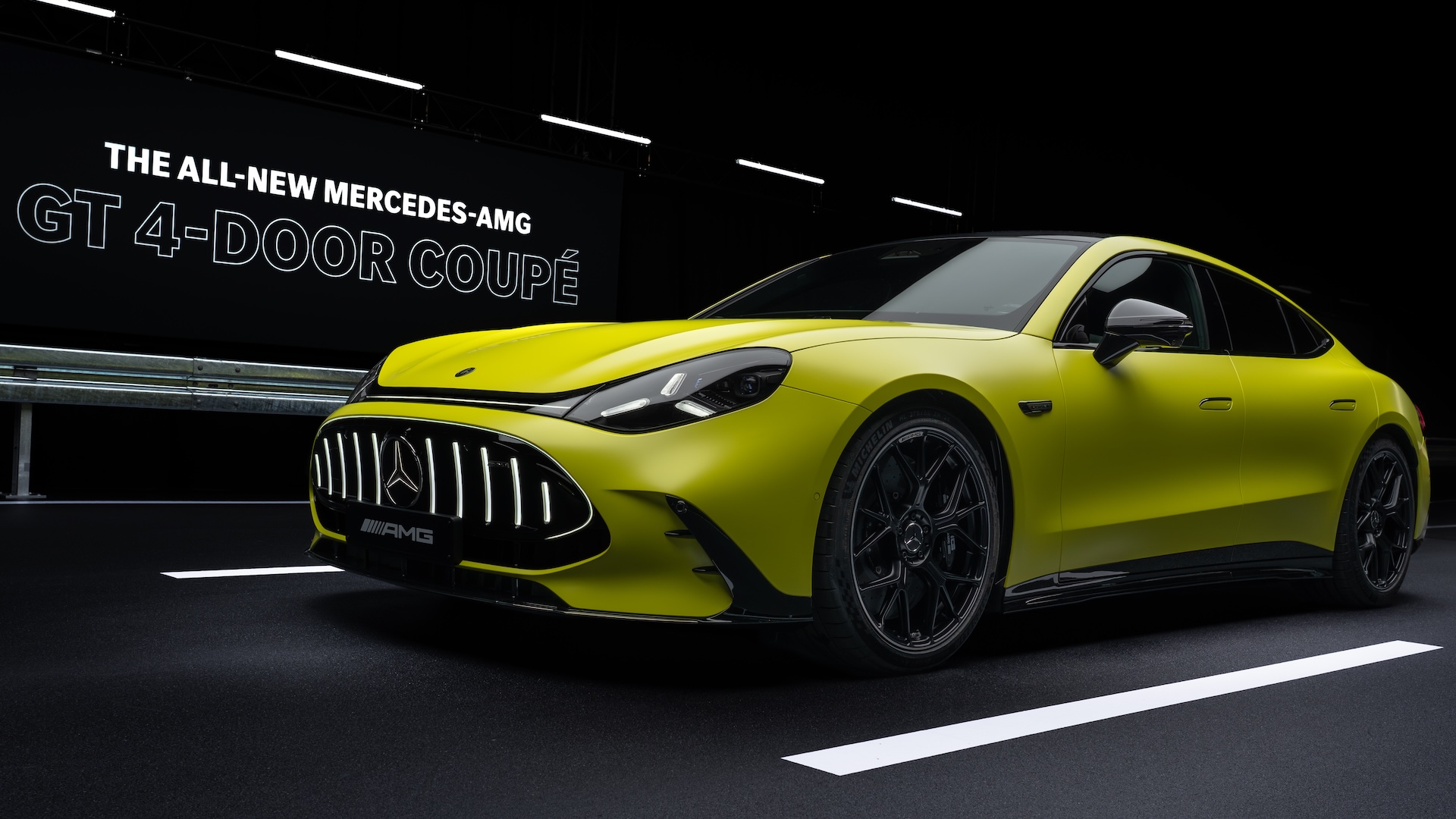
Mercedes-AMG GT 63 4MATIC+
- 1,153hp (860kW)
- 0–100km/h: 2.1 seconds
- 0–200km/h: 6.4 seconds
- Top speed: 300km/h with Driver’s Package
Those numbers are absurd. A Ferrari SF90 suddenly doesn’t look quite so untouchable anymore. Power comes from three new axial-flux motors developed alongside YASA, the British electric motor specialist Mercedes acquired in 2021. Two sit at the rear axle and one at the front.
Unlike conventional electric motors, axial-flux motors are basically pancake-shaped power monsters. They’re thinner, lighter, and have dramatically higher power density. Rear motors are only around 8cm thick, while the front motor measures roughly 9cm in width. Tiny motors with gigantic power figures.
Why Are Axial-Flux Motors A Big Deal?
Because this isn’t another EV with “more battery and more horsepower.” Mercedes claims the architecture itself can support outputs beyond 1,350hp in the future. Mental. The front motor only acts as a booster and disconnects itself during low-load driving to improve efficiency. When you need traction or acceleration, it reconnects in milliseconds.
The rear setup also handles torque vectoring individually between both wheels. No traditional differential. No mechanical drama. Just software deciding how physics works. AMG knows exactly what it’s doing.
Formula 1 Battery Tech Minus The Memes
Mercedes-AMG practically copied homework directly from the paddock. The new AMG High Performance Electric Battery (AMG HP.EB) uses:
- 800-volt architecture
- 2,660 cylindrical cells
- 18 battery modules
- NCMA chemistry
- Silicon-containing anode
- Cell energy density exceeding 298Wh/kg
The cylindrical cells are unusually tall and slim: 105mm tall with a diameter of 26mm. That shape exists for cooling efficiency. AMG surrounds every individual cell with electrically non-conductive oil cooling.
Battery cooling capacity reaches 20kW, compared to roughly 5–8kW in conventional battery systems. As a result, you can hammer it around a racetrack repeatedly, and it won’t suddenly drop the ‘reduced performance mode’ bomb on you.
How Fast Can The Mercedes-AMG GT EV Charge?
Ridiculously fast. The AMG GT can support charging speeds of over 600kW. If you plug it in to the right charger, here are some mind-boggling numbers it achieves:
- 460km of range in 10 minutes
- 10–80% charge in 11 minutes
- Peak charging current over 800 amps
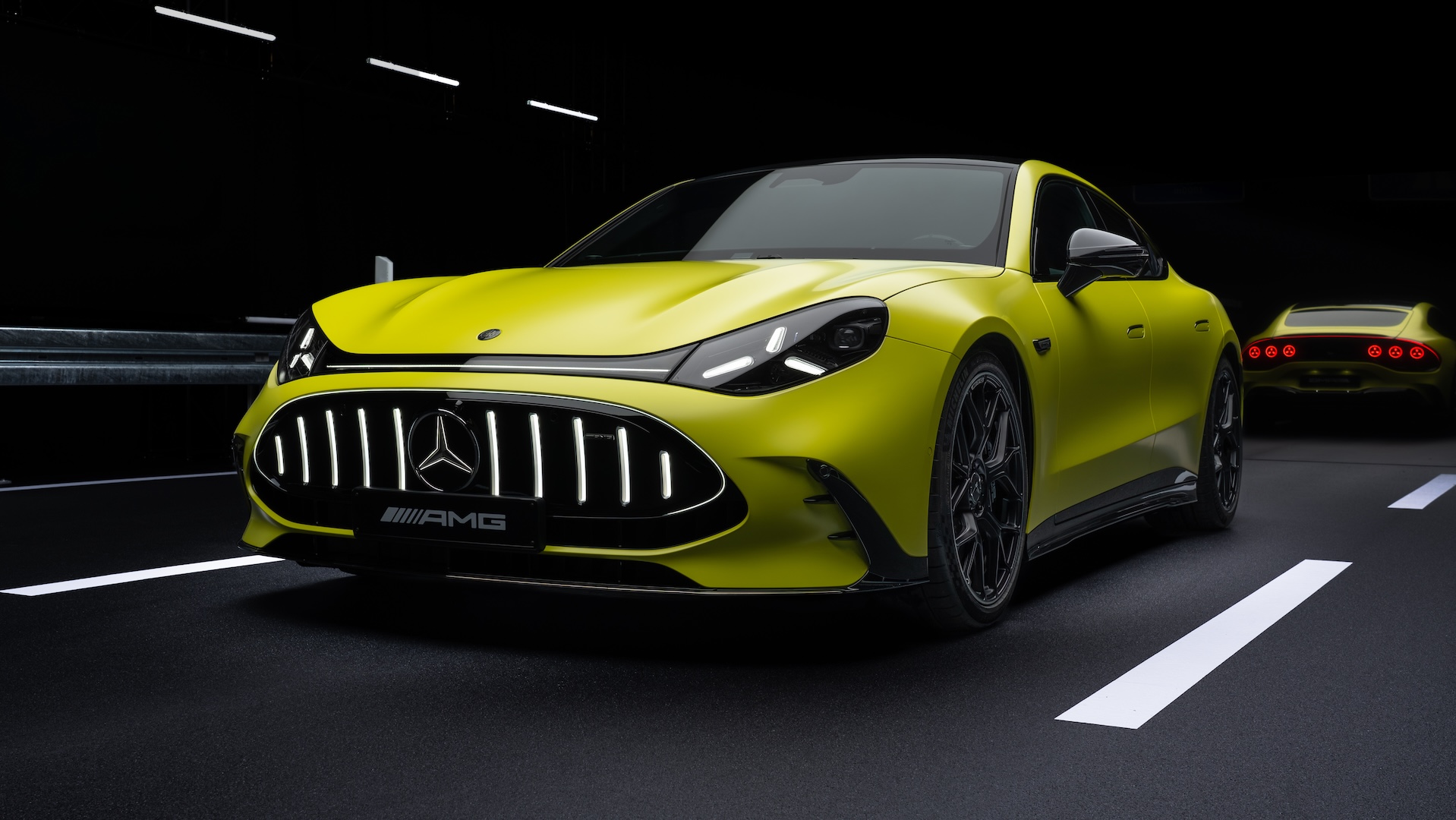
Mercedes has future-proofed the car with support for CCS2, CCS1, NACS, CHAdeMO, and GB/T. There’s another detail hiding beneath all the horsepower headlines. The GT 4-Door Coupé’s battery management system uses virtual sensors rather than relying entirely on physical hardware. Instead of stuffing the battery with more sensors than a modern airport, AMG uses mathematical models to estimate cell temperatures in real time. Oh-so-F1.
Mercedes says this setup also allows faster and more precise thermal management. The battery can heat itself quickly for maximum performance or cool itself aggressively during repeated hard driving.
Does The Mercedes-AMG GT EV Really Fake A V8 Soundtrack?
Yes. And AMG went completely unhinged doing it. The new AMGFORCE S+ mode creates a simulated V8 soundtrack using over 1,600 sound files sampled from AMG’s own V8 models, including the GT R.
You also get:
- simulated gearshifts
- torque interruptions
- paddle-operated shifts
- haptic feedback
- vibration effects
- matching tachometer animations
Normally, fake engine noises deserve public shaming. But AMG seems to have done a brilliant job here. Sure, it’s quite ridiculous. But, AMG has always been a little off the hinge right?
Also Read:
– The Brabus Bodo Is A 1,000HP V12 GT That Honors Founder Bodo Buschmann
– Updated Mercedes-Benz S-Class 2026 Debuts
– All-New Mercedes-Benz C-Class EV Revealed With 483hp, 762km Range, & Hyperscreen
Chassis & Aero Tech That Sounds Like Science Fiction
AMG didn’t stop at horsepower. The GT 4-Door gets AMG ACTIVE RIDE CONTROL, semi-active hydraulic suspension, triple-adjustable air springs, rear-wheel steering up to 6 degrees, active roll stabilisation, torque vectoring, and carbon-ceramic front brakes. At lower speeds, rear wheels steer opposite the fronts for agility. Above 80km/h, they steer in the same direction for high-speed stability and handling.
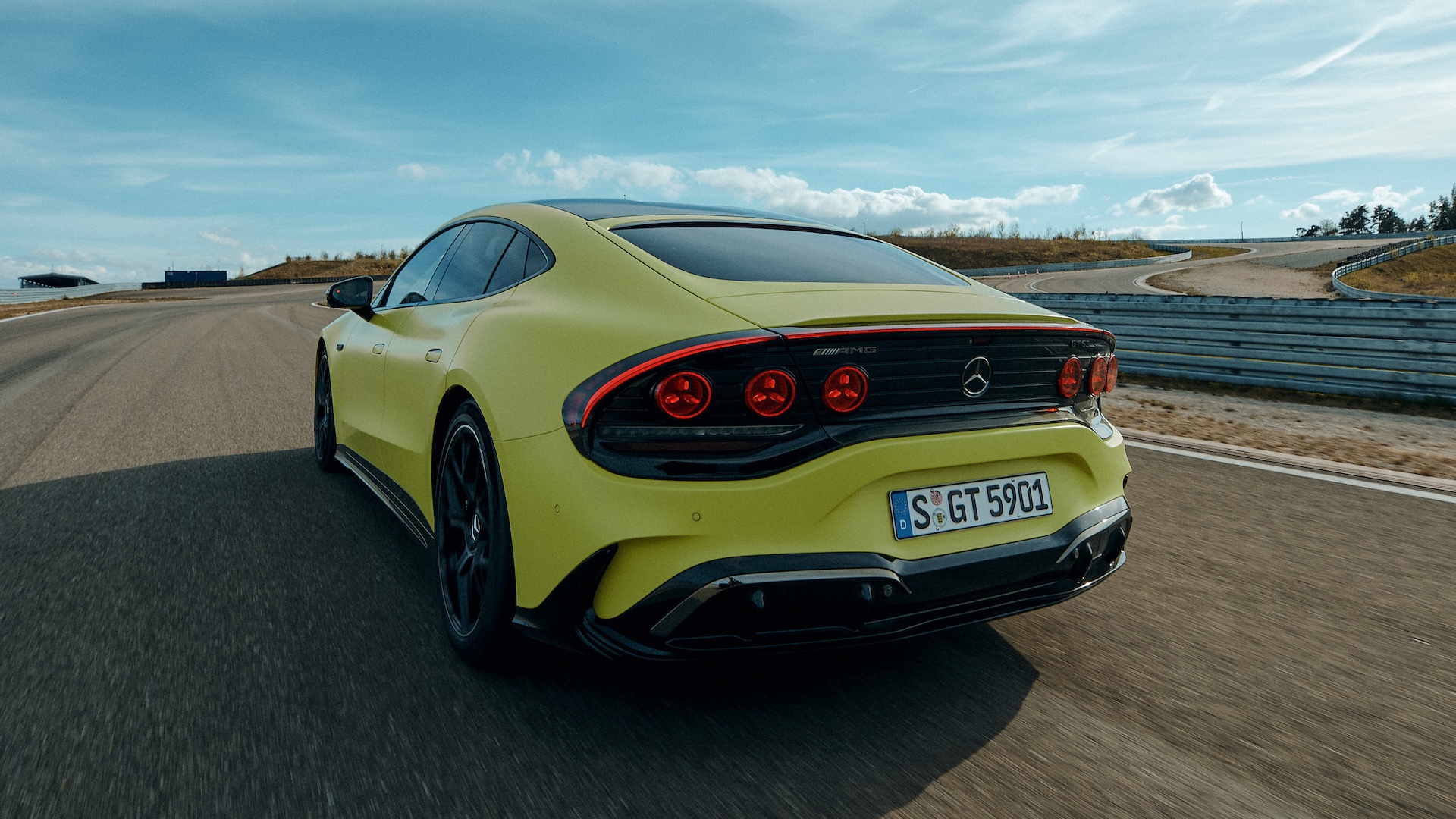
There’s also a fascinating trick hiding within the aerodynamics package. Two active Venturi elements underneath the car deploy at 120km/h and 140km/h respectively. These reshape airflow beneath the floor and create low-pressure zones that effectively suck the car toward the road surface. Race cars have used this trick for decades, and now you get it on a road car.
Then there’s the active rear diffuser, spoiler, and nine-stage Airpanel cooling system. Together, the car constantly reshapes itself depending on speed, cooling demands, and driving conditions. You’re not simply driving around in one aerodynamic setup. You’re driving around in dozens of them. Somewhere underneath all that bodywork, tiny electric actuators are having a much busier day than you are.
What Is AMG RACE ENGINEER & Why Will Track Nerds Love It?
Modern EVs often have a problem. They’re stupidly fast but sometimes feel like giant iPads with launch control. AMG seems determined to avoid that fate. The new GT 4-Door gets something called AMG RACE ENGINEER, essentially a central intelligence system controlling the car’s drivetrain, suspension, torque delivery, and dynamics systems. More importantly, it gives drivers actual physical controls to play with. Proper knobs. In 2026!
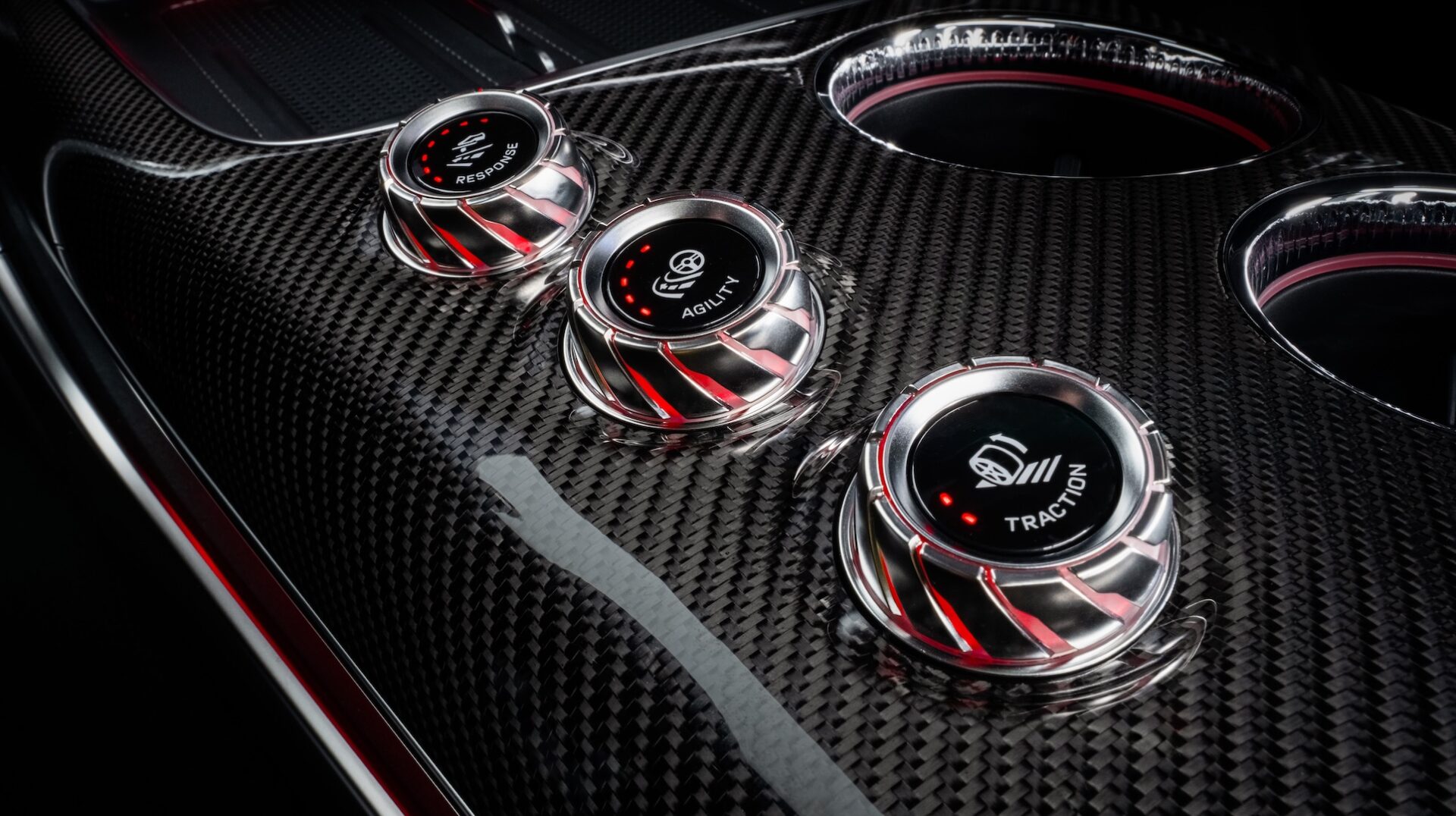
Three rotary controls sit on the centre console, angled toward the driver like fighter-jet controls:
- Response Control changes how aggressively the motors react to your right foot. You can go from smooth grand-touring behaviour to “someone replaced my throttle pedal with a light switch.”
- Agility Control alters torque distribution and effectively changes how the car rotates through corners. AMG says it can create the sensation of a shorter or longer wheelbase. It means you can dial in anything from mild understeer to controlled oversteer depending on how brave you’re feeling.
- Traction Control is adjustable across nine stages. Fans of the AMG GT R and Black Series will already know this setup. Level one if you enjoy living dangerously. Level nine, if you’d rather keep your insurance company relaxed.
The Design Looks Angry Even By AMG Standards
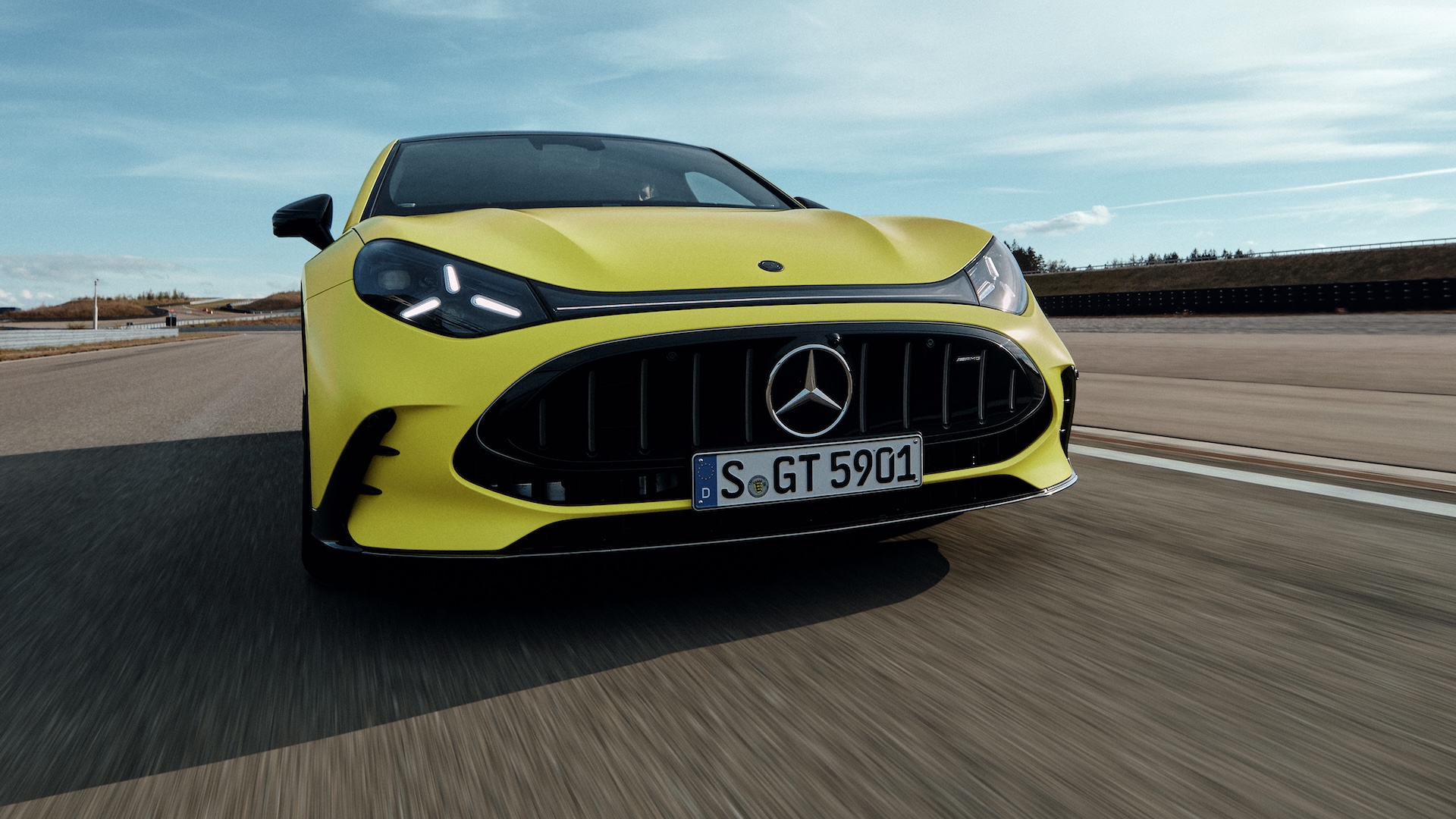
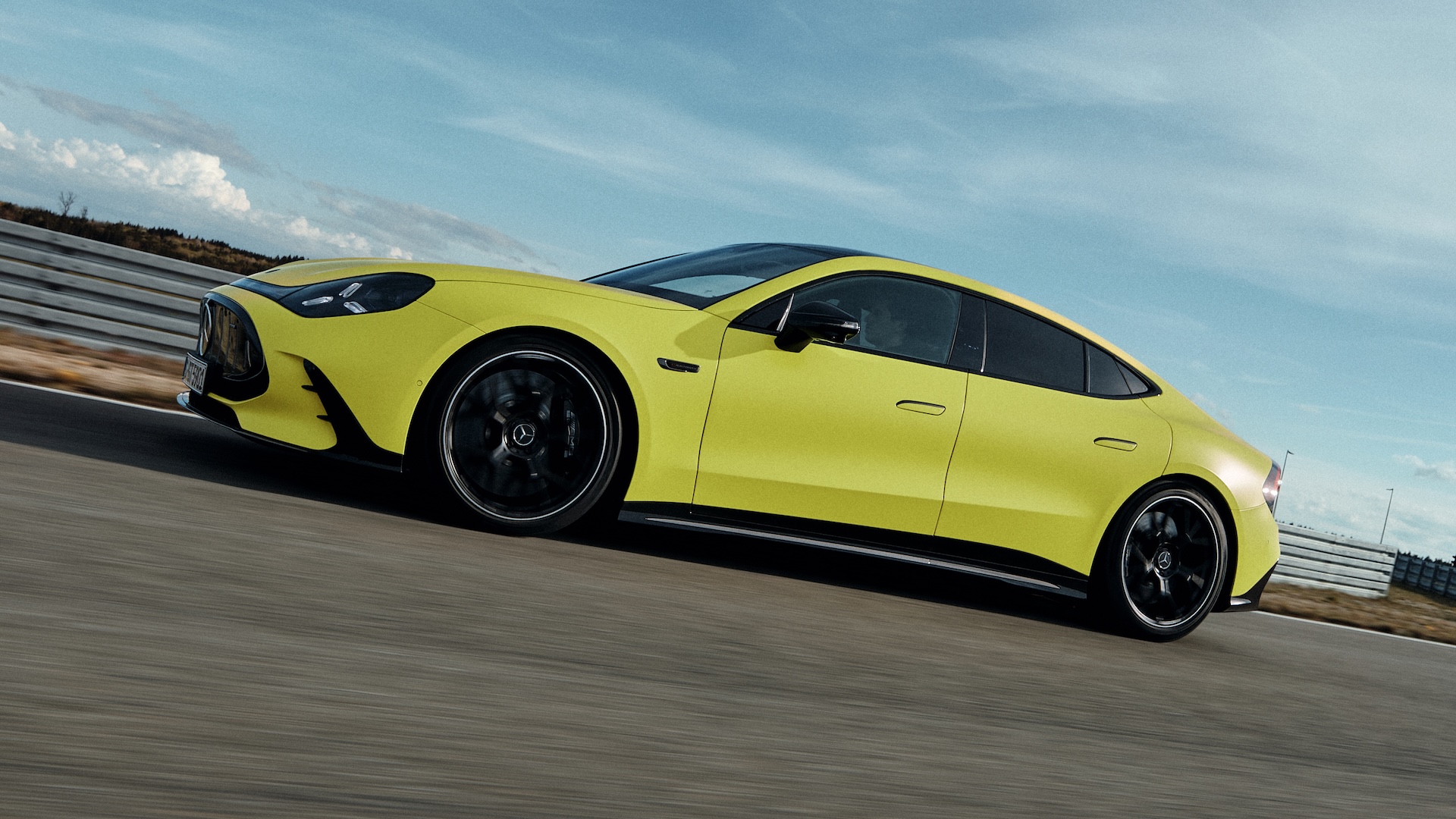
Despite hiding a massive battery beneath the floor, Mercedes somehow made the new GT 4-Door Coupé sit 4cm lower than its predecessor. That matters because EV proportions can sometimes end up looking awkward. This doesn’t. At 5,094mm long, with a stretched bonnet, fastback roofline, and muscular rear haunches, it still looks every bit like an AMG.
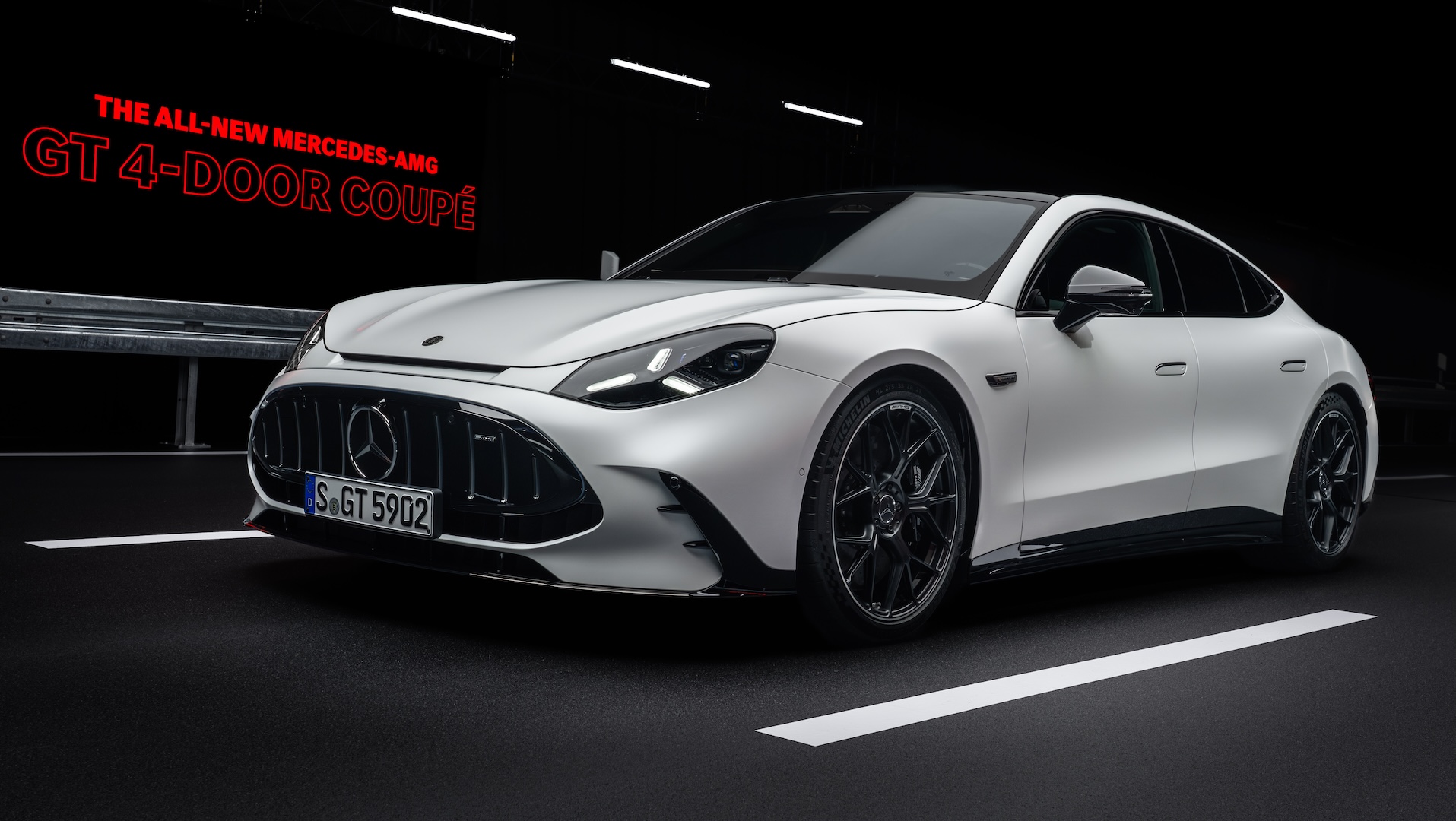
The illuminated grille, star-shaped DRLs, and six circular turbine-style taillights give it an identity that should be instantly recognisable, day or night. The design can be a little polarising, especially at the rear. It also gets a remarkably slippery drag coefficient score of 0.22Cd.
What’s It Like Inside The Cabin?
The dashboard is dominated by a 10.2-inch digital instrument cluster and a 14-inch central display, with an optional 14-inch passenger screen for whoever’s riding shotgun. The whole setup sits beneath a seamless glass panel and looks like something borrowed from a concept car.
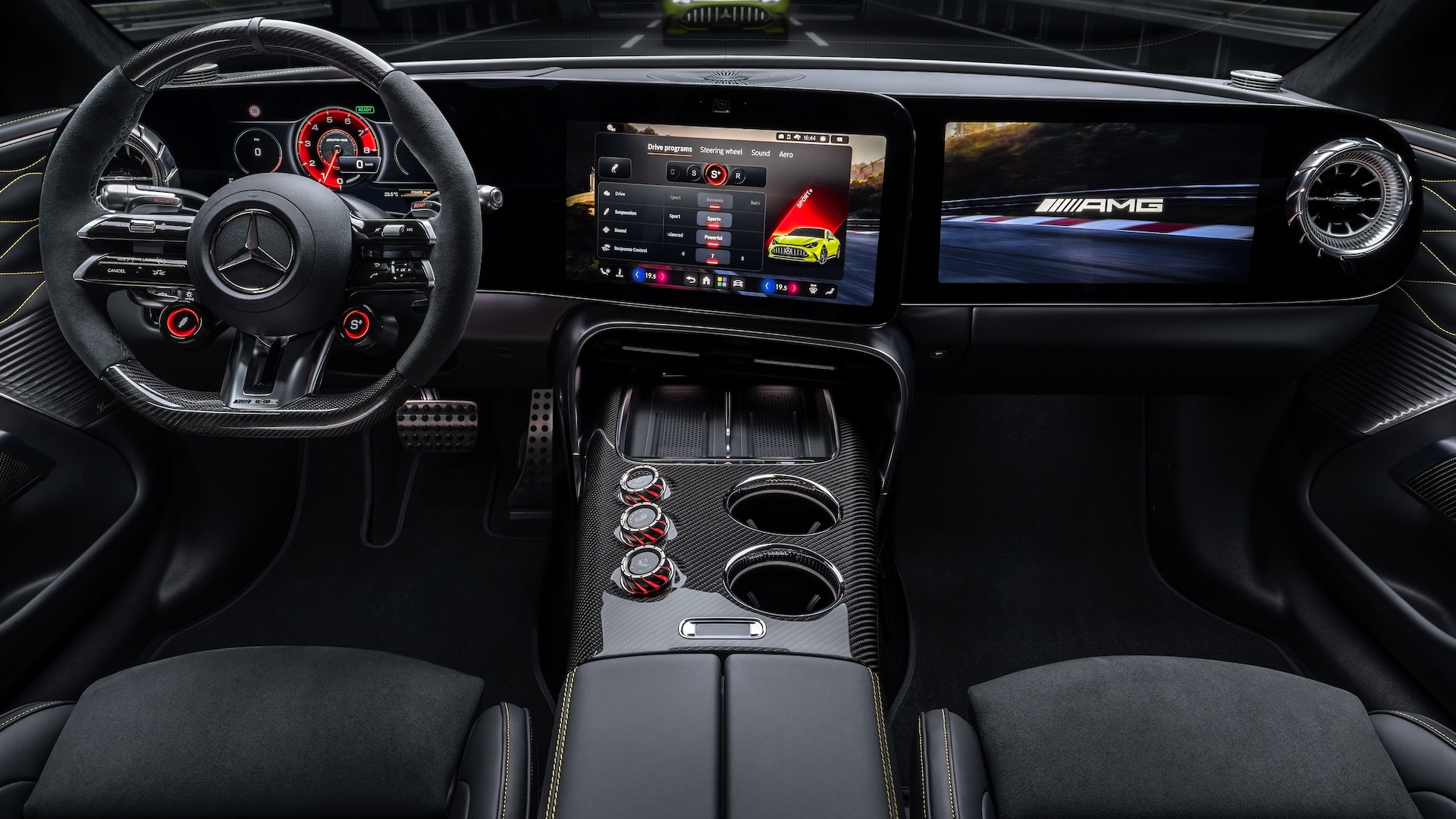
In addition to the AMG RACE ENGINEER knobs, you get AMG Performance seats, configurable ambient lighting, and an optional SKY CONTROL panoramic roof that can project illuminated AMG logos and racing stripes at night.
Thoughts On The AMG GT EV
A 1,169hp electric four-door that fakes gearshifts, synthesises V8 noises, deploys aero tricks underneath itself, talks to AI, and tries very hard to keep traditional AMG lunacy alive. And somehow, against all odds, it sounds like it might actually work. The V8 may be gone. But the drama absolutely isn’t.