

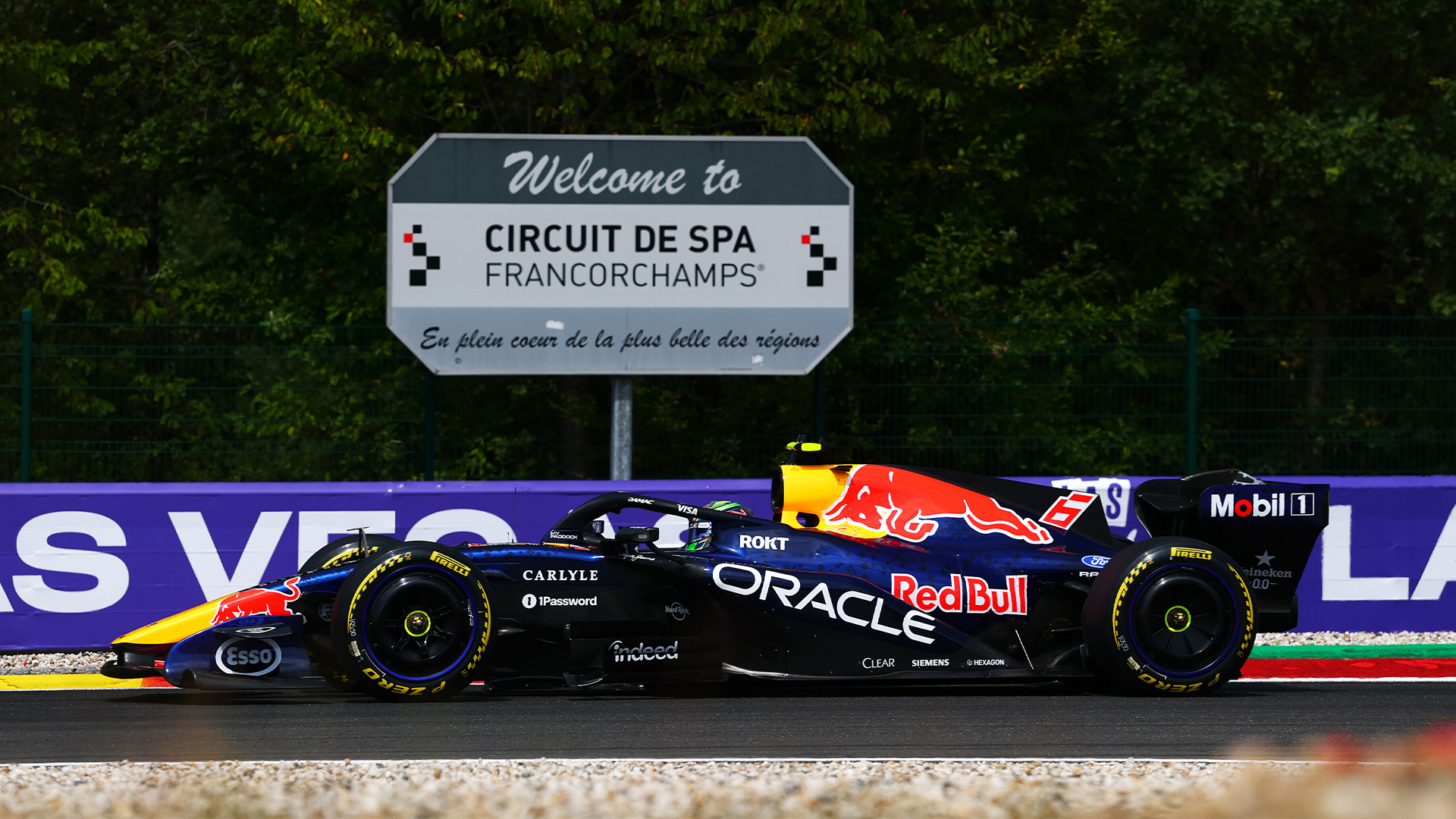
Home to the Belgian Grand Prix, Spa-Francorchamps is the longest circuit on the Formula 1 calendar and one of motorsport’s true icons. From the legendary Eau Rouge to its unpredictable weather, here are five fascinating facts that make Spa unlike any other circuit in the world.
Few circuits command the same respect as Spa-Francorchamps.
For Formula 1 drivers, it is one of the greatest tests of commitment. For engineers, it is one of the most complex circuits to set up a car. And for fans, it consistently delivers some of the most memorable moments in motorsport.
While many modern Formula 1 venues are purpose-built facilities designed on flat terrain, Spa is different. Nestled deep within Belgium’s Ardennes Forest, the 7.004-kilometre circuit follows the natural landscape, creating dramatic elevation changes, blind corners and one of the fastest laps in world motorsport.
Originally created in the 1920s by linking public roads between Spa, Malmedy and Stavelot, the circuit has evolved over more than a century without losing the character that made it legendary.
Whether you follow Formula 1, the FIA World Endurance Championship or GT racing, these are five reasons why Spa-Francorchamps remains one of the world’s greatest racing circuits.
1. Eau Rouge and Raidillon: Motorsport’s Most Iconic Corner Sequence
No corner in modern motorsport is more recognisable than Eau Rouge and Raidillon.
Immediately after the start-finish straight, drivers plunge downhill into Eau Rouge before climbing steeply through the blind crest of Raidillon at speeds exceeding 300 km/h in Formula 1 and Hypercar machinery.
What makes the sequence so extraordinary is the commitment it demands.
Drivers cannot see the exit as they crest the hill, yet they must keep the throttle pinned while experiencing enormous lateral and vertical G-forces. Even the smallest mistake can have huge consequences.
The section has become so iconic that Formula 1 teams regularly use the steep climb beside Eau Rouge as part of their pre-race fitness routines.
Few places in motorsport combine speed, elevation and bravery quite like Spa’s opening corners.
2. One Circuit, Two Different Weather Forecasts
If you’ve watched enough Belgian Grands Prix, you’ve probably heard the phrase: “It’s raining at one end of the circuit.”
At Spa, that’s often true.
Located in the Ardennes Forest, the circuit is famous for its unpredictable microclimate. Because the lap stretches more than seven kilometres, weather conditions can vary dramatically from one sector to another.
The pit straight might be completely dry while heavy rain falls through Stavelot or Blanchimont.
For teams, that unpredictability transforms tyre strategy into an educated gamble. Choosing slicks or intermediates can become a race-defining decision within a single lap.
It’s one of the reasons Spa so often produces unforgettable races.
3. The Longest Circuit on the Formula 1 Calendar
At 7.004 kilometres, Spa-Francorchamps remains the longest circuit on the current Formula 1 calendar.
Its size changes far more than the lap distance.
The Belgian Grand Prix covers just 44 laps, the fewest of any race on the calendar, while the circuit’s length also affects safety procedures, recovery operations and strategy calculations throughout the weekend.
A Safety Car period at Spa looks very different compared to shorter circuits, and teams must carefully account for the extra time required to complete every lap.
The sheer scale of Spa influences almost every strategic decision made during a race weekend.
4. A Setup Nightmare for Engineers
Drivers love Spa. Engineers often don’t. The reason lies in the circuit’s unique layout.
The first and third sectors reward low drag, maximum straight-line speed and aerodynamic efficiency, with long flat-out sections such as the Kemmel Straight and Blanchimont demanding minimal resistance.
The middle sector asks for the complete opposite.
Fast, flowing corners require high downforce, mechanical grip and stable balance through constant direction changes.
Finding the perfect compromise between those conflicting demands is one of the biggest engineering challenges of the Formula 1 season.
A car that’s quick through Sector 1 may struggle badly in Sector 2 and vice versa.
5. More Than a Circuit, A Piece of Motorsport History
Spa-Francorchamps is not simply another stop on the Formula 1 calendar.
Alongside Monaco and Monza, it is widely regarded as one of the sport’s true historic landmarks.
The original circuit stretched to almost 14 kilometres, using public roads that made it one of the fastest and most dangerous racing venues ever created.
Safety concerns eventually led to the shorter configuration introduced in 1979, but the modern layout retained the character that made Spa famous.
Ask almost any Formula 1 driver to name their favourite circuit, and Spa-Francorchamps will almost always feature near the top of the list.
Not because it’s easy.
Because it rewards genuine driving talent.
Spa remains one of the purest expressions of motorsport. More than 100 years after the first layout was created, it continues to challenge the world’s best drivers and remind us why some circuits never go out of style.