

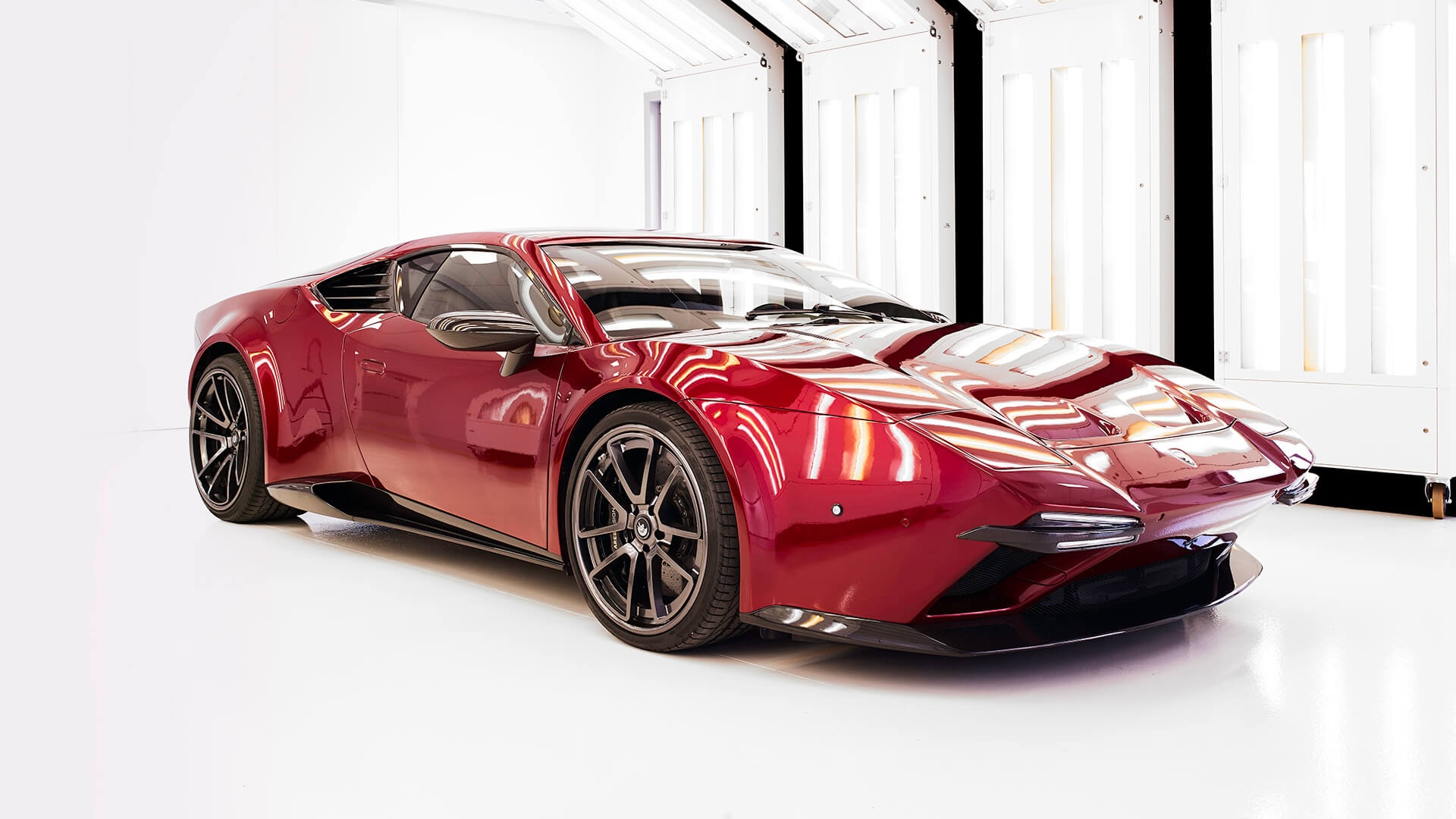
Somewhere in every petrolhead’s head there is a 1970s poster car with a Ford V8 behind the seats and incredible styling outside. The De Tomaso Pantera had the wedge, the noise and a reliability record so colourful that Elvis Presley reportedly once put a bullet into his own when it refused to start. But the glam quotient with the Pantera remains strong enough that, half a century later, a Modena atelier asked a fair question and acted on it: what if the Pantera had been built with a screaming V10, and a carbon body?
That car is the ARES Panther ProgettoUno, and it has just taken third place in the Restomod class at Villa La Massa Excellence, the modern supercar concours held on the Arno outside Florence. Forty-three cars were shortlisted, and the Panther finished third, behind a Touring Superleggera Sciadipersia Cabriolet and a Jaguar F-Type in a class that only joined the programme in 2026.
What Is A Restomod?
A restomod is a classic reimagined with modern engineering underneath. The silhouette from the classic car stays, while the mechanicals bits come from this century. The same obsession drives the Singer restomods that filled the central feature at Goodwood this summer.
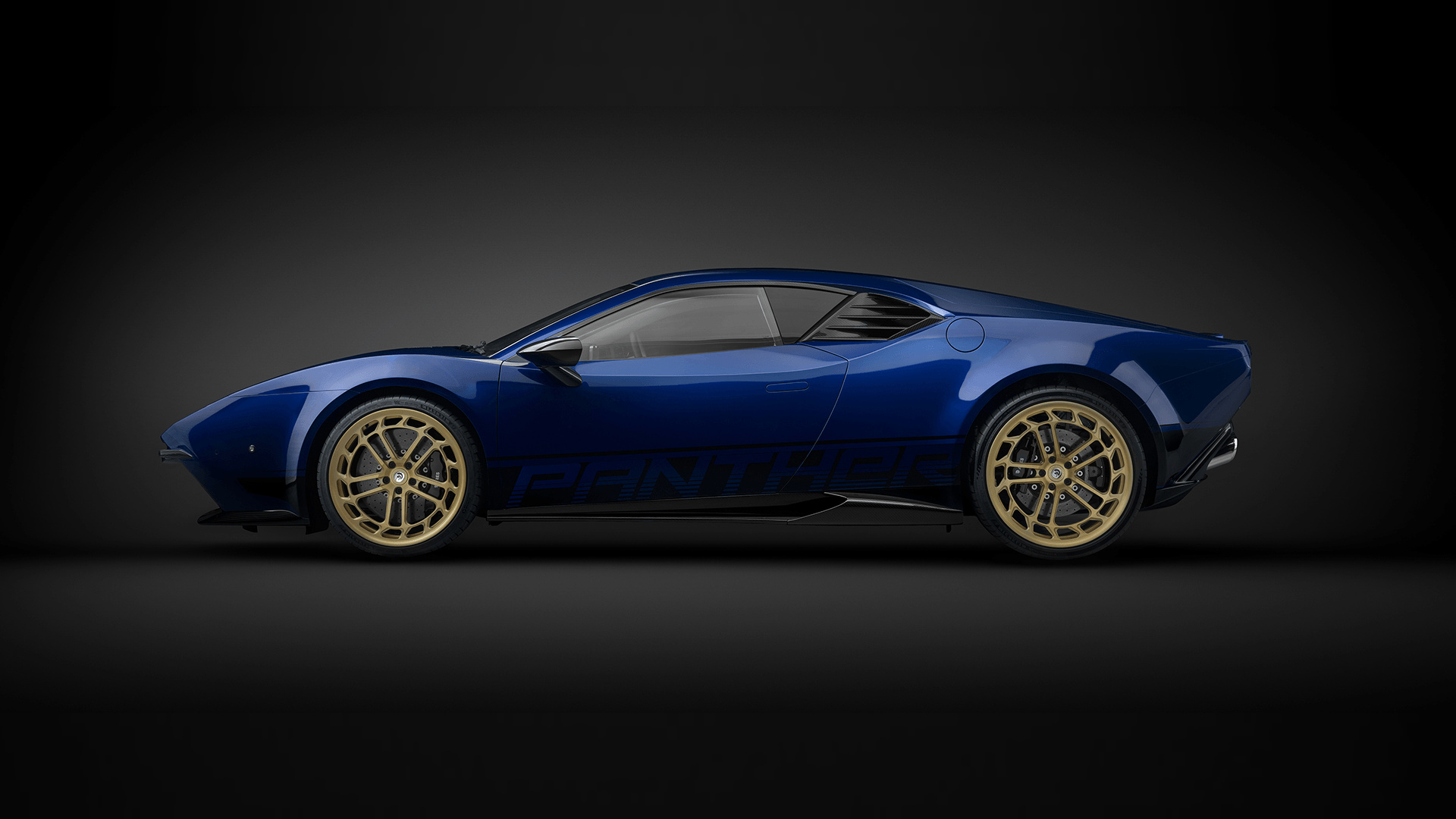
ARES, now trading as ARES Atelier, takes that recipe further than most. The ProgettoUno starts life as a Lamborghini Huracán, rebuilt with the A-pillar moved, and a new steel roll cage and an entirely carbon fibre body added. It is just 120mm longer than the original Pantera but far wider in track, giving it the old car’s proportions with a much meaner stance.
Under The Carbon Skin
The heart is the Huracán’s 5,204 cc naturally aspirated V10, running an ARES-tuned ECU. The claimed output is 650hp at a spine-tingling 8,250rpm, with more than 600Nm at 6,500rpm. Drive goes through a seven-speed dual-clutch gearbox and a Haldex Gen V all-wheel-drive system, with a mechanical limited-slip differential at the rear to keep the tail grippy.
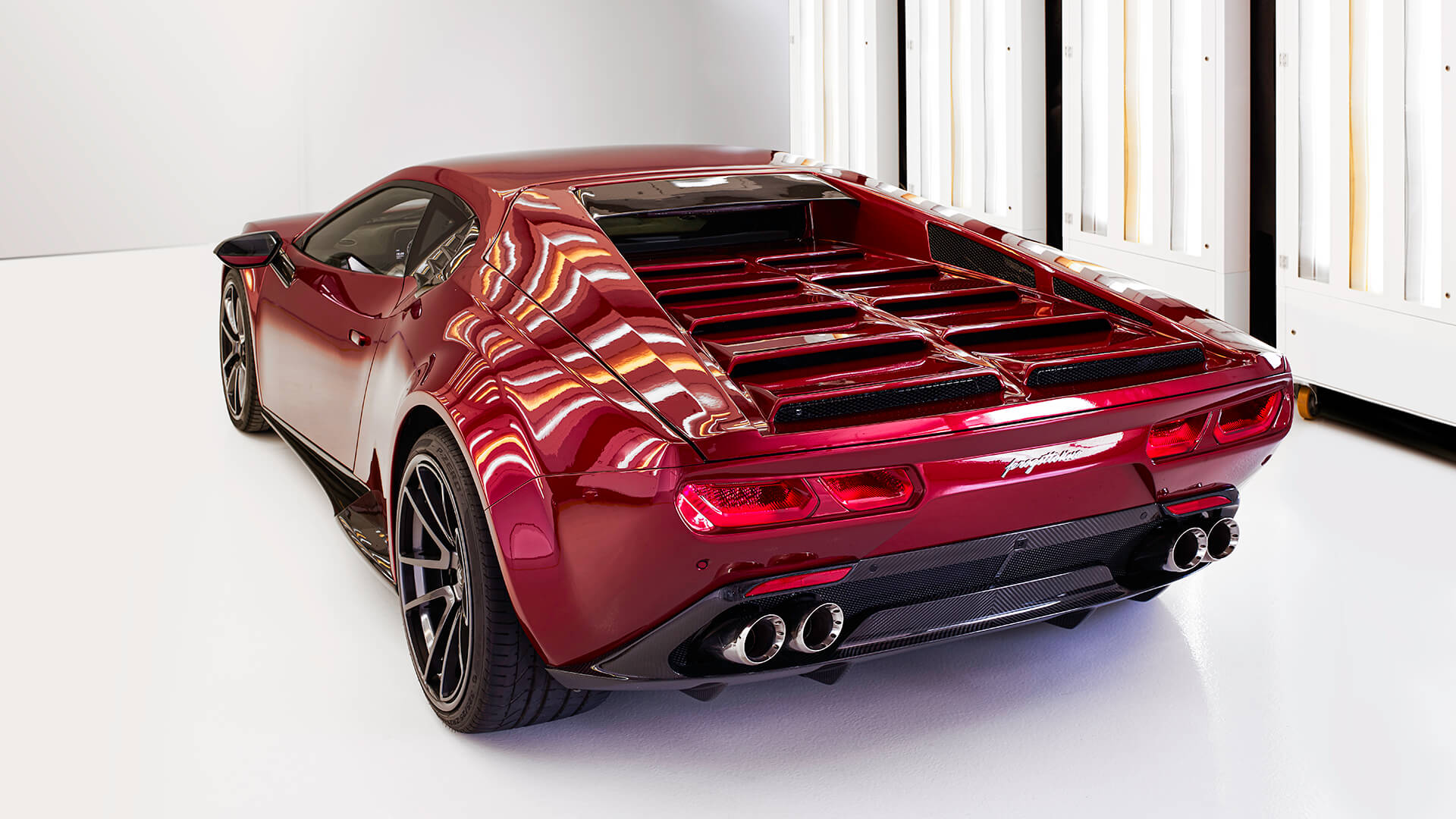
ARES claims 0 to 100 km/h in 3.1 seconds, more than 325 km/h flat out and a dry weight of 1,423 kg, split 43/57 front to rear. The aluminium and carbon hybrid chassis runs passive double wishbones all round on 20-inch front and 21-inch rear wheels. Carbon ceramic discs measure 380mm up front with six-piston calipers and 356mm at the rear with four-piston units, and ARES quotes a drag coefficient of 0.329 at 250 km/h.
The soundtrack is all ARES. The stainless steel exhaust runs a network of adjustable valves, so the V10 stays civil in town and opens up when the road clears. For performance context, an early Pantera made around 325hp from its Cleveland V8, roughly half of what this car claims.
Also Read
- Lola Revives The T70 With New T70S And Road-Legal T70S GT
- Bristol Fighter Makes A Comeback At Salon Privé 2026 With 600hp V10 From The Dodge Viper
- North 9 Dubai Launched: A New Home For Specialist Car Brands
Inside The Cabin
The interior is designed by ARES and trimmed in Nappa leather and Alcantara, with carbon fibre panels throughout. The seats are moulded in carbon before being upholstered to order, and ARES will even reshape their ergonomics to fit the owner’s body.
The centrepiece sits on the transmission tunnel: a newly designed selector that borrows the look of a classic open-gate shifter while working a modern dual-clutch box. It is a lovely little touch for anyone who grew up craving a gated shifter. Audio comes from Daniel Hertz, the Swiss hi-fi house founded by Mark Levinson, with three tweeters, four mid-range drivers and four woofers tuned to the cabin.
The bespoke menu reads like a tailor’s order book: paint matched to a customer’s sample, plus leather, stitching, piping and seat belts to taste. Owners can add monograms, signatures and details taken from their yacht, aircraft or watch, right down to a “One of One” plaque.
The Pantera Behind The Panther
The original was styled by Tom Tjaarda at Ghia and engineered by Gianpaolo Dallara, who would later give the world a racing car dynasty. It put a Ford 351 Cleveland V8 behind the driver, reached American showrooms through Lincoln-Mercury dealers from 1971, and stayed in production until 1992, with about 7,260 built.
ARES was founded in 2014 in Modena by Dany Bahar and Waleed Al Ghafari. The Panther launched ARES’ Legends Reborn line, later joined by the Panther Evo. As for money, reports have put it anywhere between €334,900 for the conversion alone, before the donor Huracán and taxes, and €615,000 for a complete car, but pricing is unconfirmed at the moment.
The Resurrection Of ARES
ARES went through a court-ordered liquidation in May 2025. A year later, in May 2026, Proma Group became majority shareholder and the company relaunched as ARES Atelier. This makes a podium in Florence taste rather sweeter.