There’s a particular kind of Ferrari that petrolheads go misty-eyed over. It’s the stripped-out, louder version of a car that was already plenty, the one you drive to a track day, embarrass a few race cars in, and drive home again. The 360 Challenge Stradale started it in 2003, and the 430 Scuderia, 458 Speciale and 488 Pista kept the idea alive.
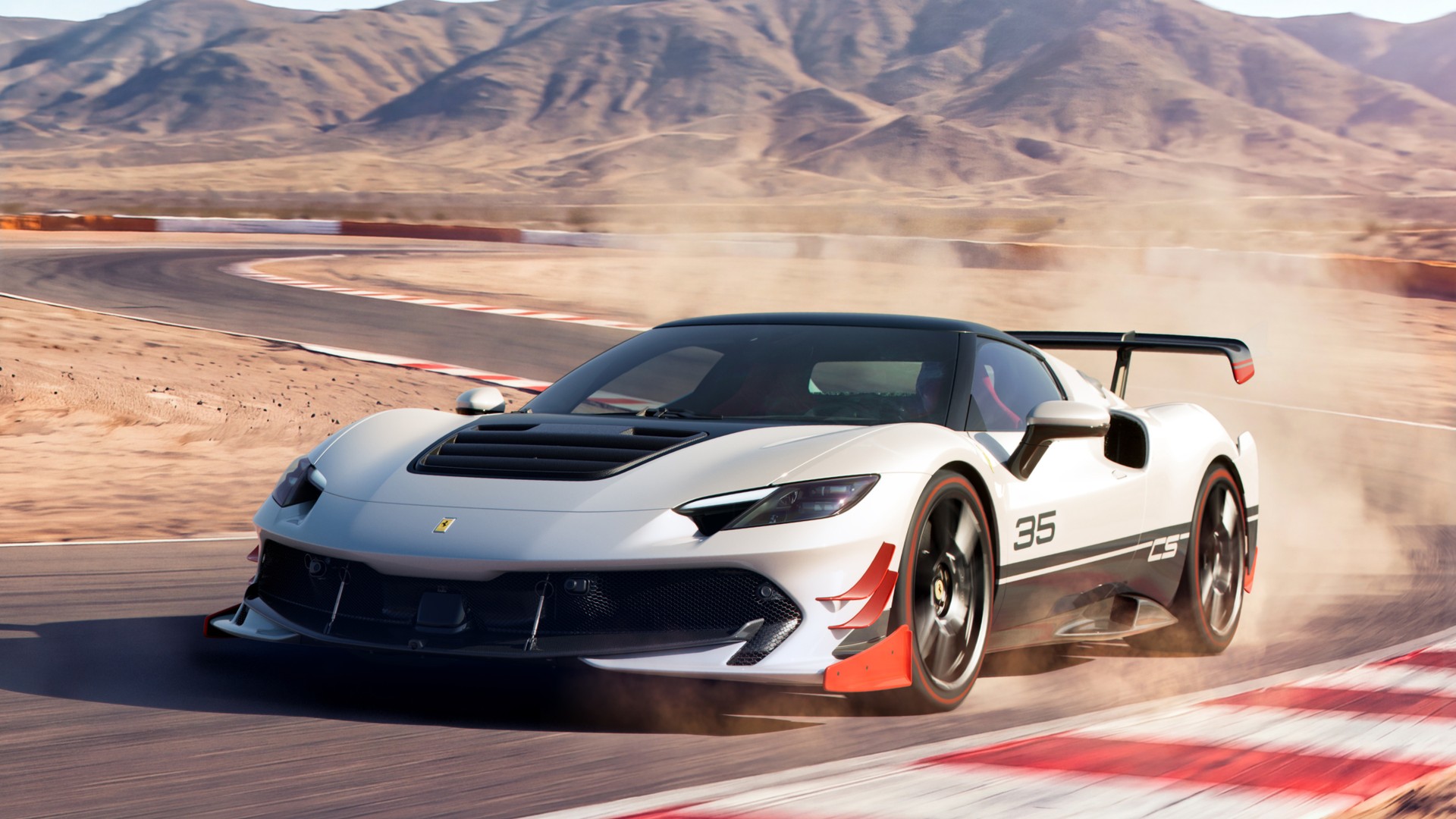
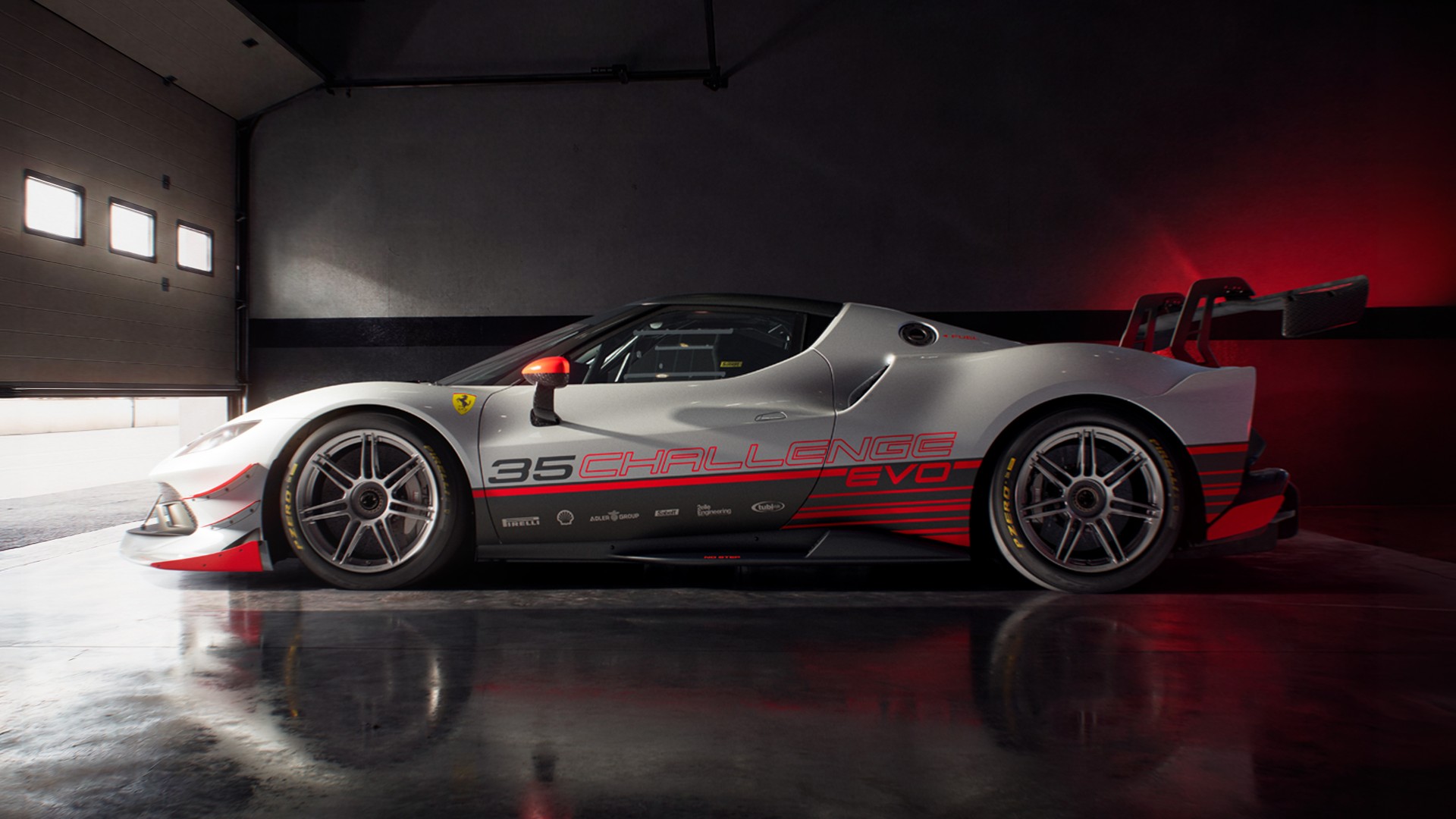
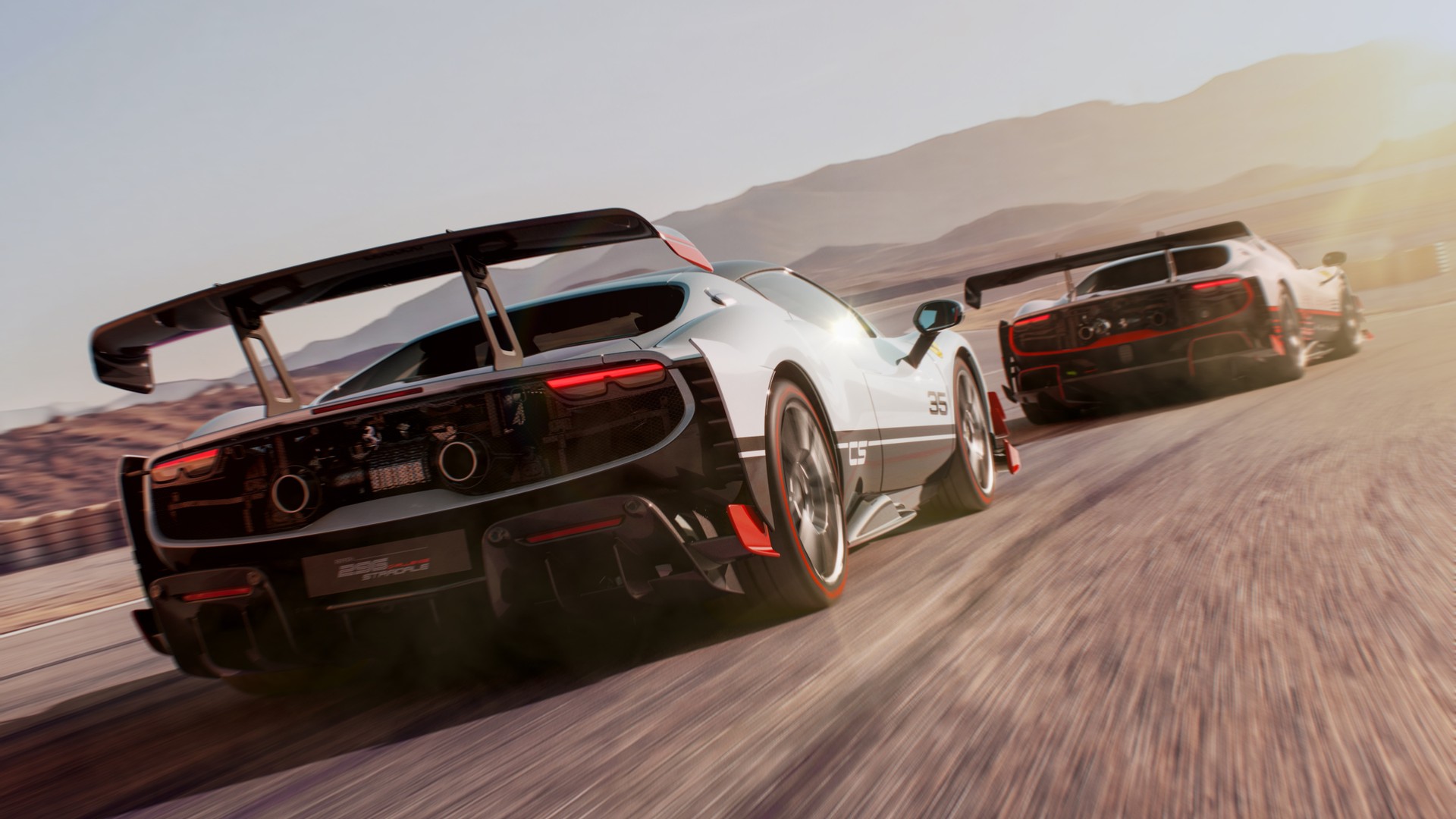
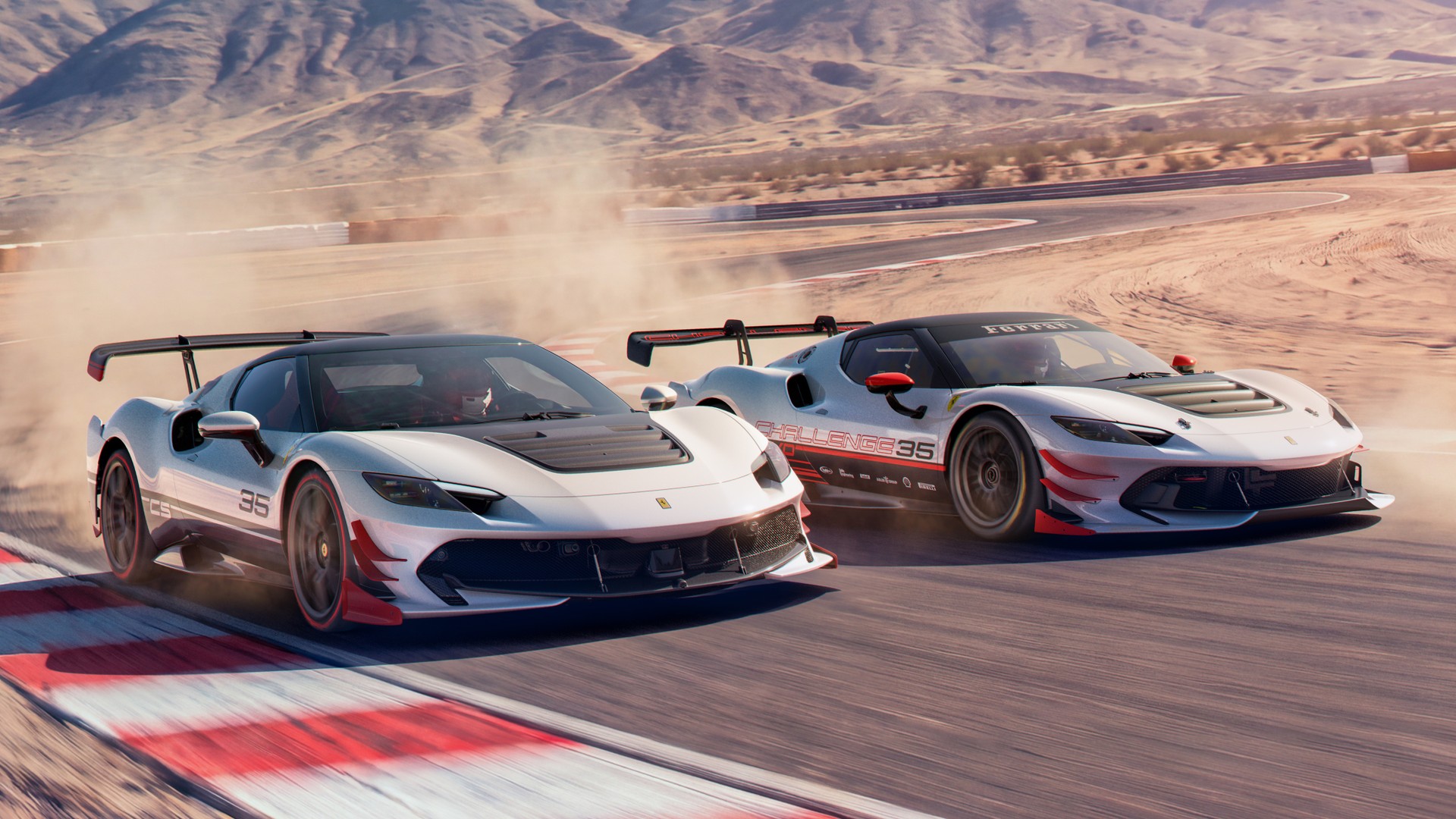
After 23 years away, the Challenge Stradale name is back, on a car that takes technology out rather than adding it. Unveiled on 21 November 2026 at the Ferrari Finali Mondiali at the Circuit de Barcelona-Catalunya, the 296 Challenge Stradale throws out the 296’s plug-in hybrid system entirely. Alongside it, Ferrari revealed the 296 Challenge Evo, the race car that will carry the one-make series into 2027.
No Hybrid, More Bite: What Powers The 296 Challenge Stradale?
The 2,992cc 120-degree twin-turbo V6 runs in the combustion-only setup of the 296 Speciale’s engine, with no e-motor or battery. Here the V6 makes 661hp at 8,000rpm and 740Nm at 6,250rpm, and it revs to 8,500rpm. The turbos and heat shields come straight from the 296 Challenge race car.
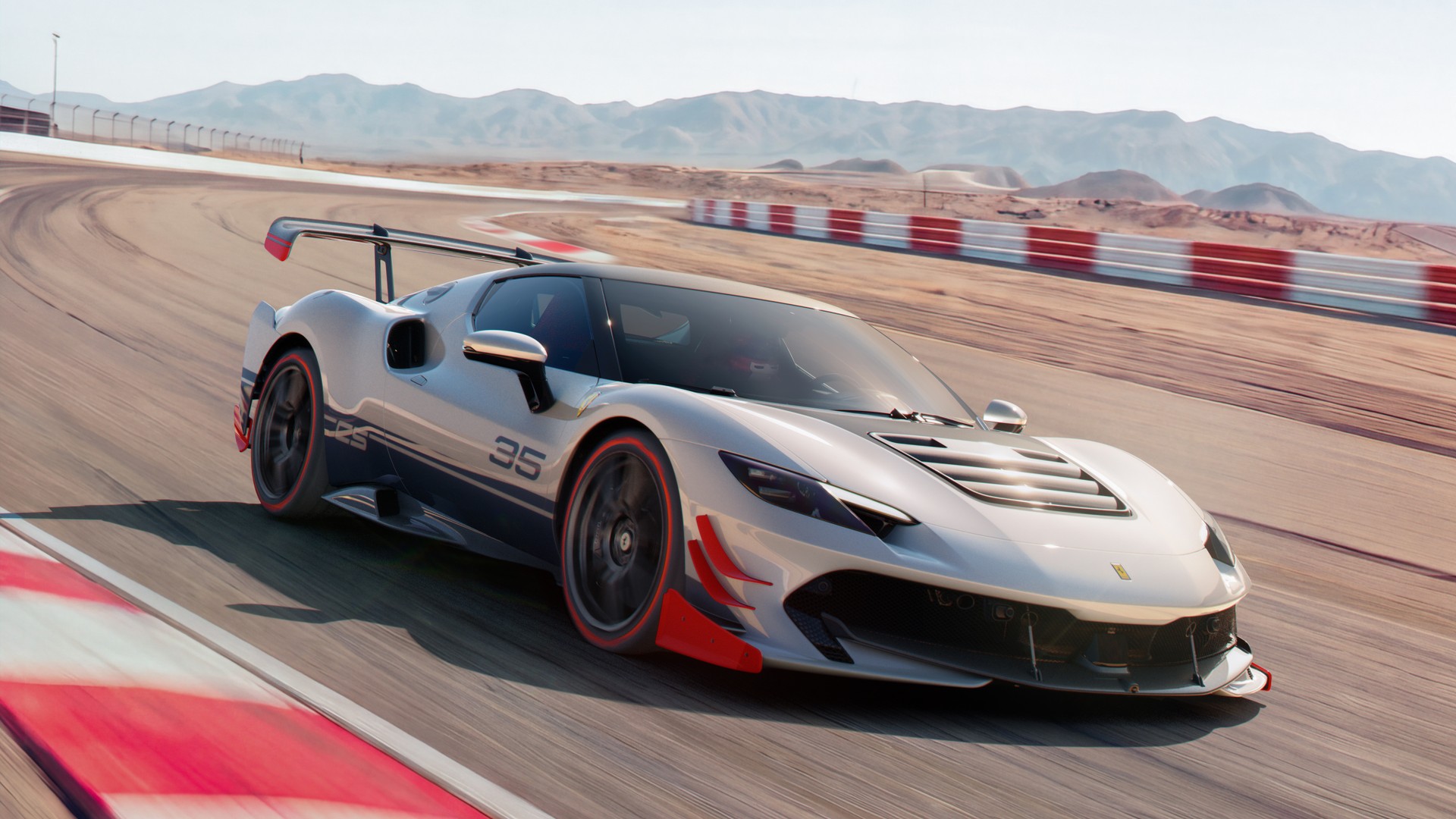
Peak power was never the target. With no e-motor to fill the gaps, Ferrari reworked boost and cam phasing, and says dynamic torque is up by more than 32 percent over the 296 GTB in the same measured driving conditions. The eight-speed dual-clutch gearbox borrows the race car’s shift logic for upshifts of around 170 milliseconds under load. Deleting the hybrid also brought a Belt Starter Generator, which Ferrari says is a first for its road cars.
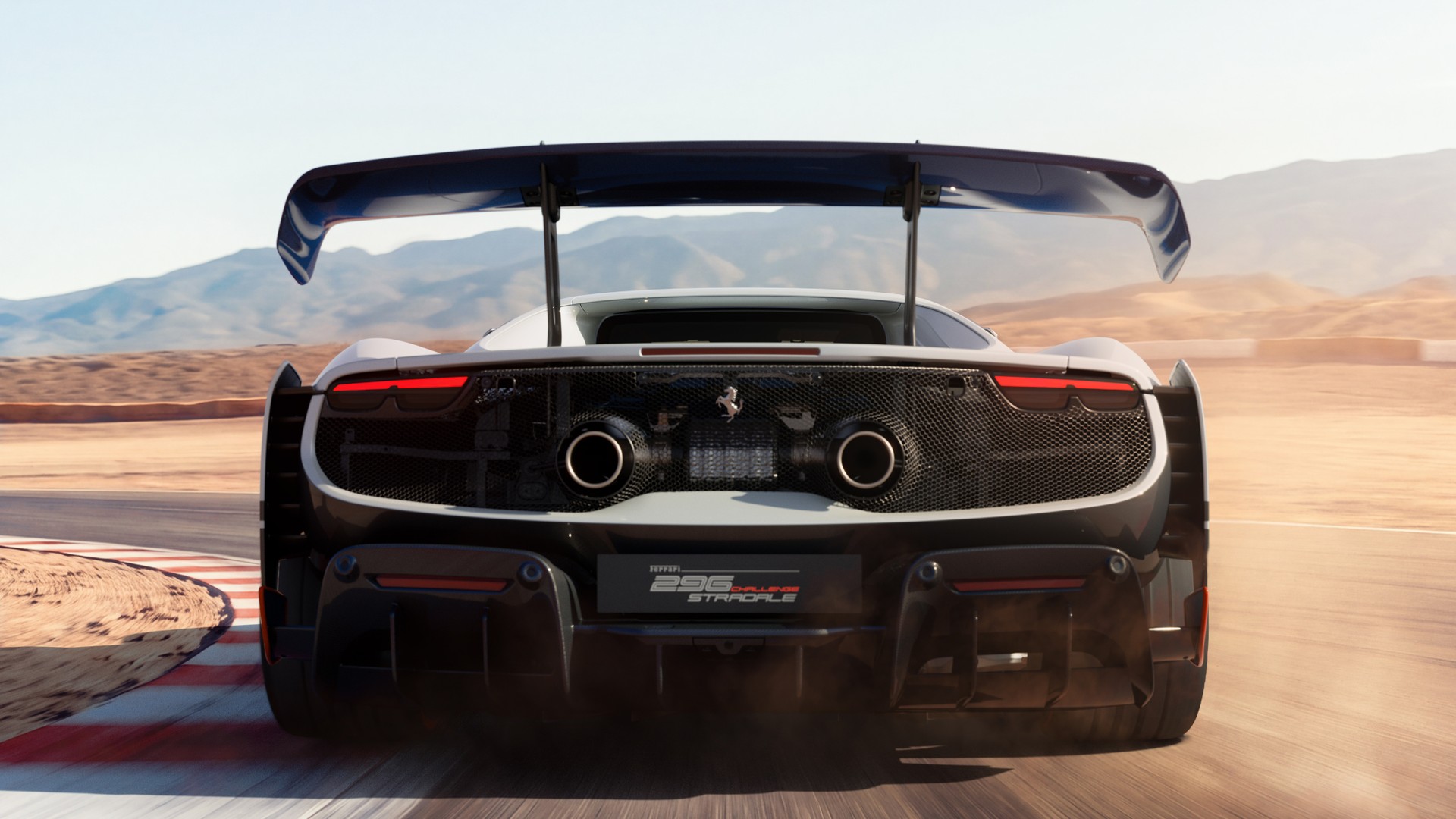
Twin, larger tailpipes peek through a black metal mesh at the rear, a dealer-fit track exhaust is optional, and a “hot tube” pipes the V6’s sound into the cabin.
Ferrari 296 Challenge Stradale: Lighter, Stiffer And Pressed Into The Tarmac
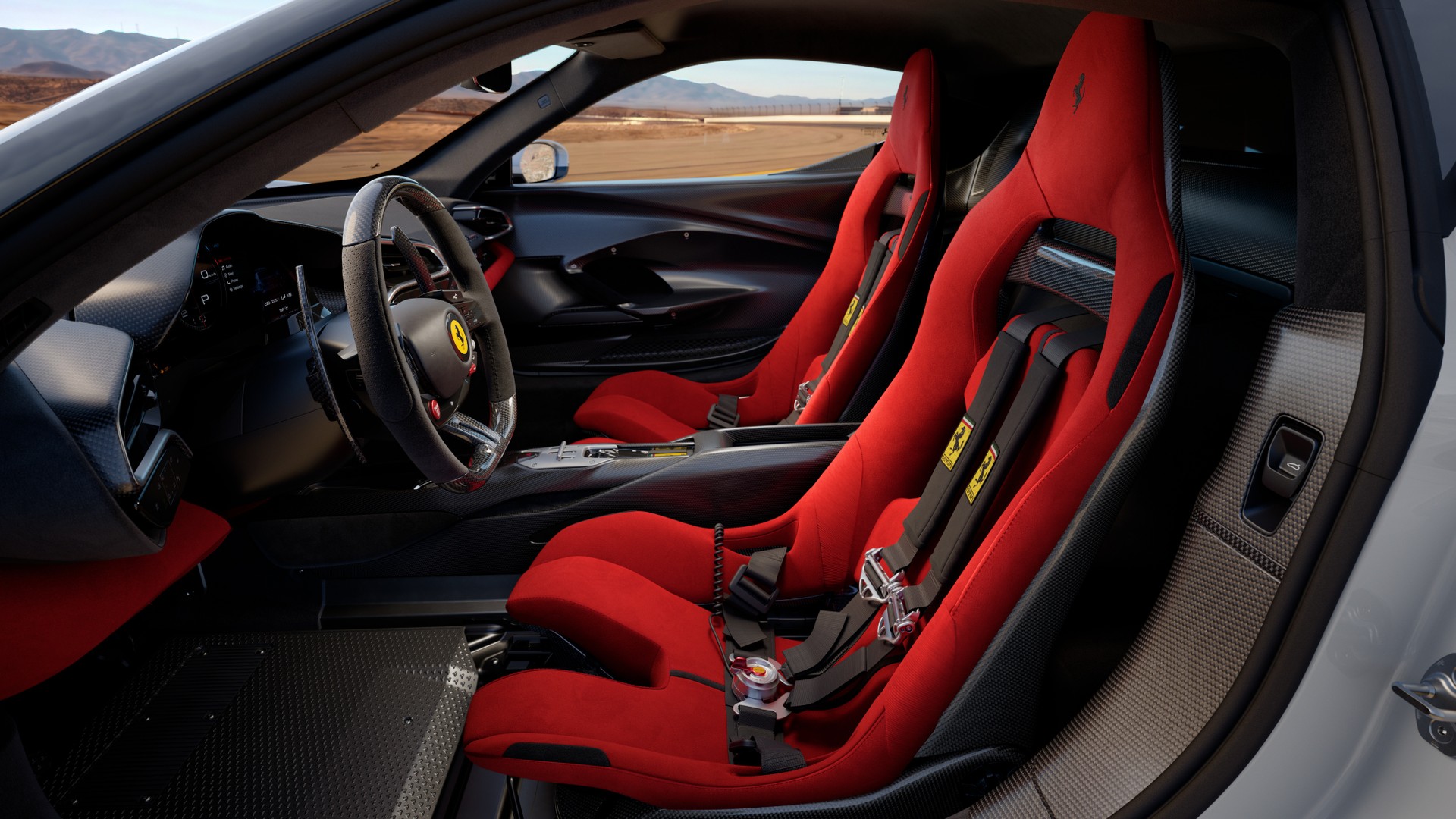
The Challenge Stradale’s dry weight is 1,330kg with options, which is 140 kg less than the 296 GTB and 80kg less than the 296 Speciale. The savings come from the missing hybrid hardware, forged wheels that cut almost 12 kg of unsprung mass, tubular carbon seats first used on the SF90 XX Stradale, and one-piece carbon door panels. An optional spec strips the trim under the seats and console to expose the chassis, which Ferrari calls a production car first.
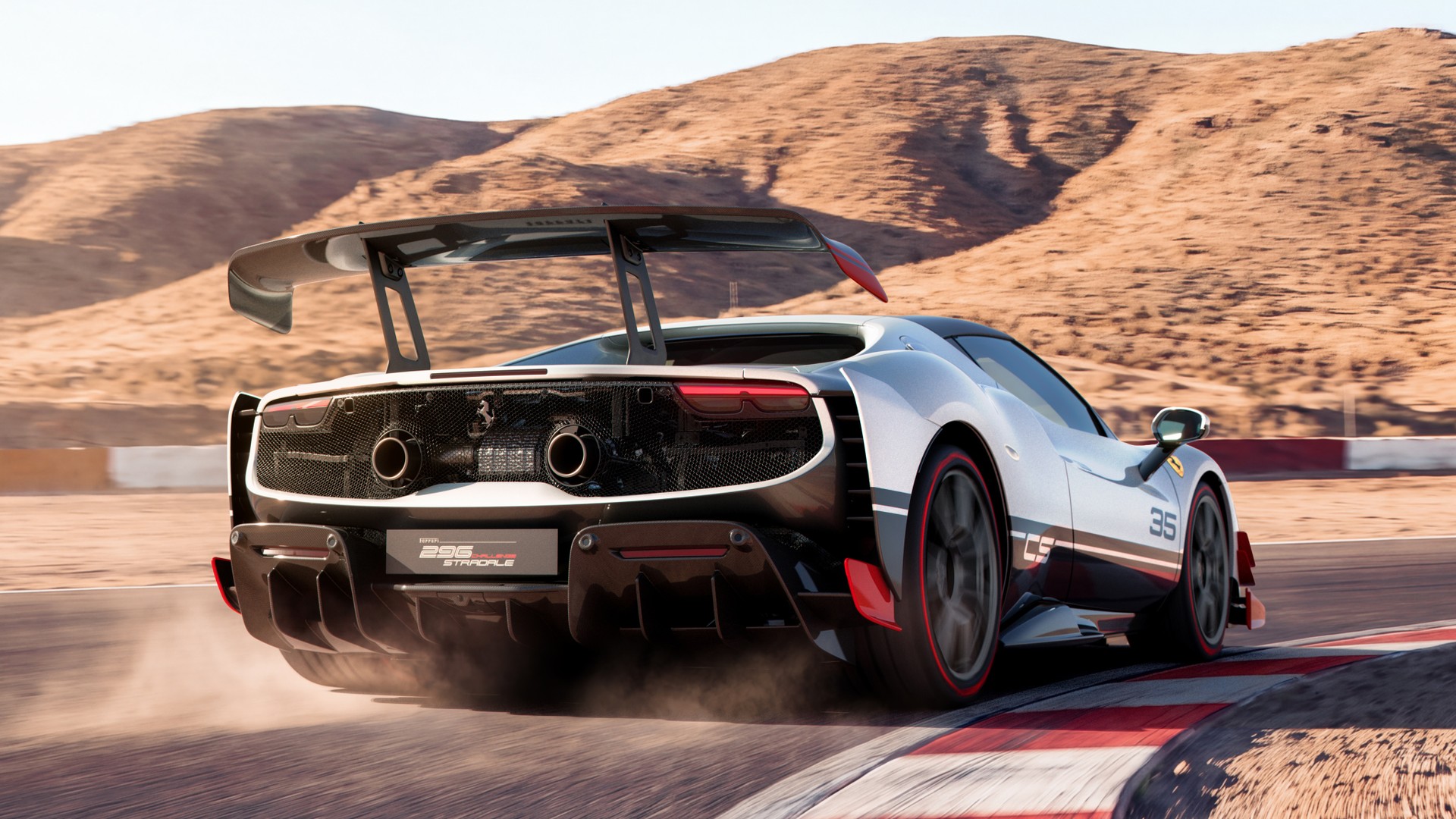
The aero numbers are the headline act. The Stradale makes 617kg of downforce at 250km/h, 72 percent more than the 296 GTB, and the fixed rear wing lifted from the Evo accounts for 270kg of it on its own. The rest comes from a splitter, flicks, an aero damper, vortex generators and a fully enclosed underbody.
Springs are roughly twice as stiff as the GTB’s, and the brakes are carbon-ceramic discs measuring 398mm at the front and 380mm at the rear, enlarged and better cooled to make up for the loss of regenerative braking. Pirelli developed P Zero R and Trofeo RS tyres for its 20-inch wheels. The electronics include FIVE, the vehicle estimator from the F80, and predictive slip control tuned for the track, another Ferrari road car first. The Manettino runs from Wet through Sport and Race to CT-Off and ESC Off.
Also Read:
- Novitec 12Cilindri N-Largo: Ferrari’s V12 GT Gets Bigger Hips & A Ducktail
- Lamborghini Temerario’s 10,000rpm V8 Gets The Akrapovic Treatment
- McLaren McL 820 Announced: New Supercar Arrives In 2027 To Replace The 750S
Is The 296 Challenge Stradale Faster Than The 296 Speciale?
Around Fiorano, yes. Ferrari quotes a lap of 1:18.5, which by Ferrari’s published times is half a second quicker than the 868hp Speciale and 2.5 seconds quicker than the 296 GTB. It hits 100 km/h in 2.8 seconds and 200 km/h in 7.9 seconds, stops from 200 km/h in 101 metres and tops at 300 km/h.
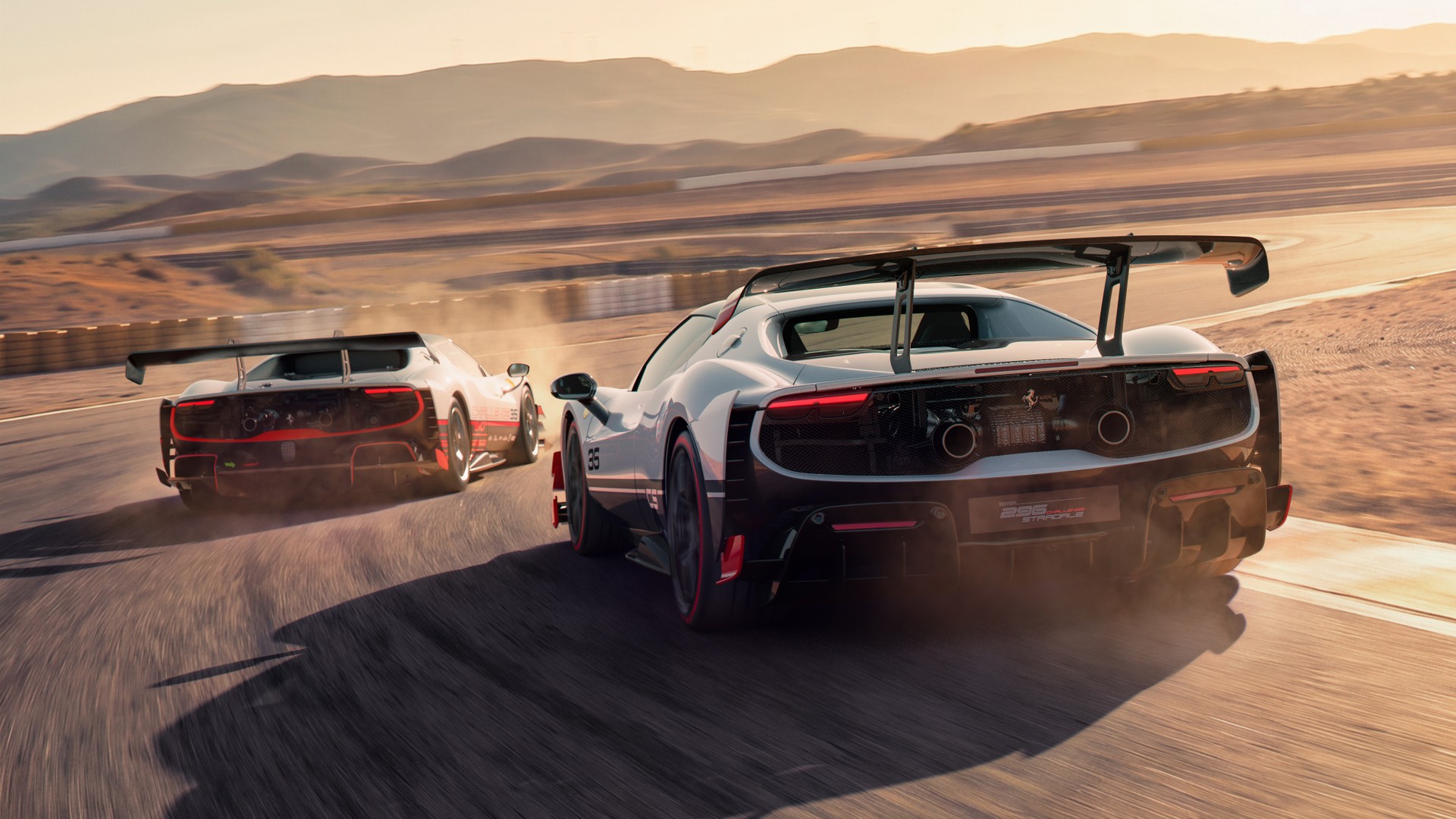
The Speciale reportedly still has the edge on fast circuits such as Monza, where its extra power counts for more than the Stradale’s downforce. It’s the race car you’re allowed to drive home, and it still has adaptive cruise control.
296 Challenge Evo: Same Power, Sharper Racer
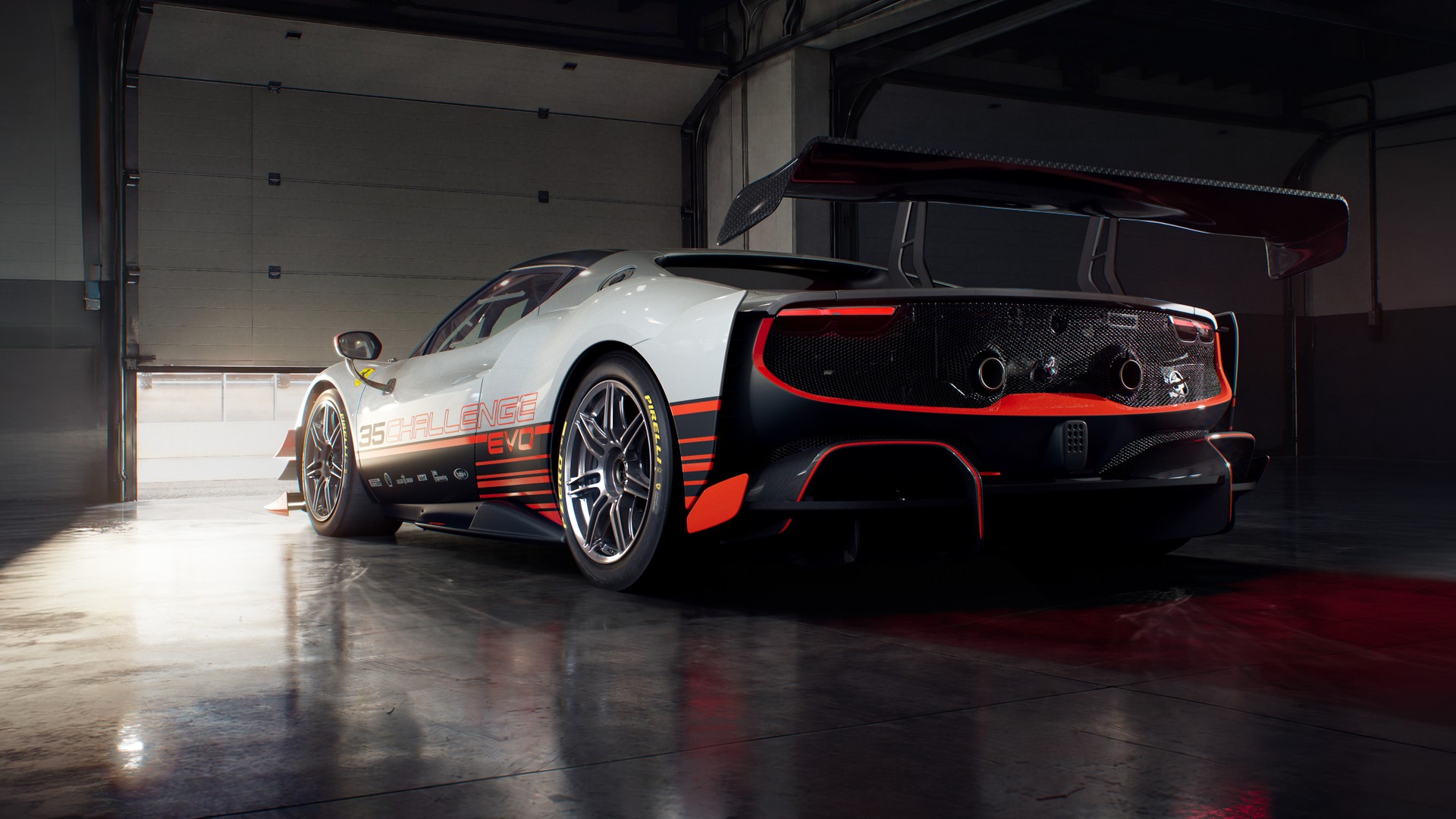
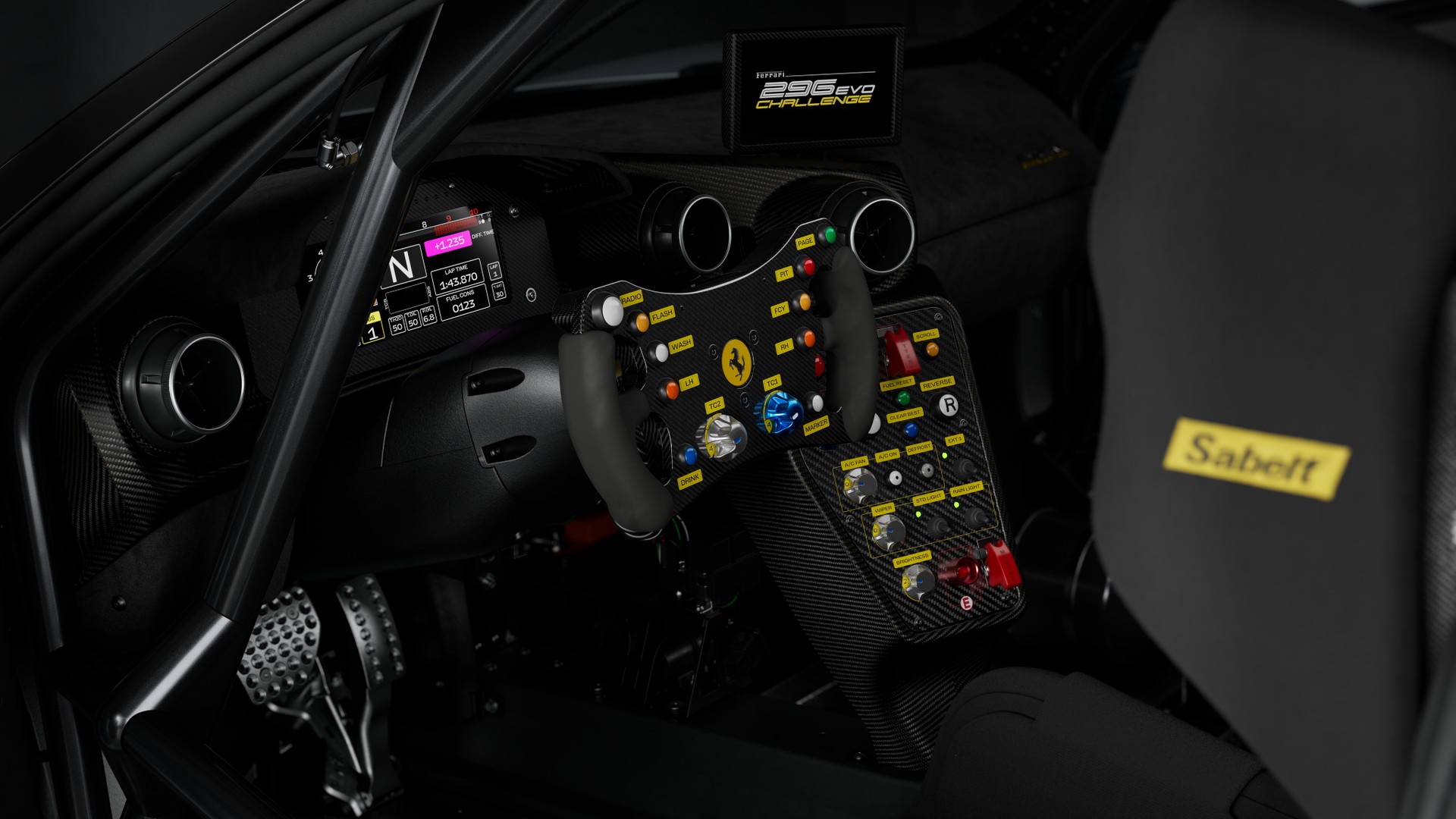
The 296 Challenge Evo is the tenth car in Ferrari Challenge history, a line that began with the 348 Challenge in 1993. It keeps the 690hp V6 and seven-speed gearbox, with its gains coming from aero and electronics. In High Downforce trim, it makes 12 percent more downforce than the 296 Challenge, about 100kg more at 250 km/h. A Low Drag setup trims drag by 4 percent for faster circuits.
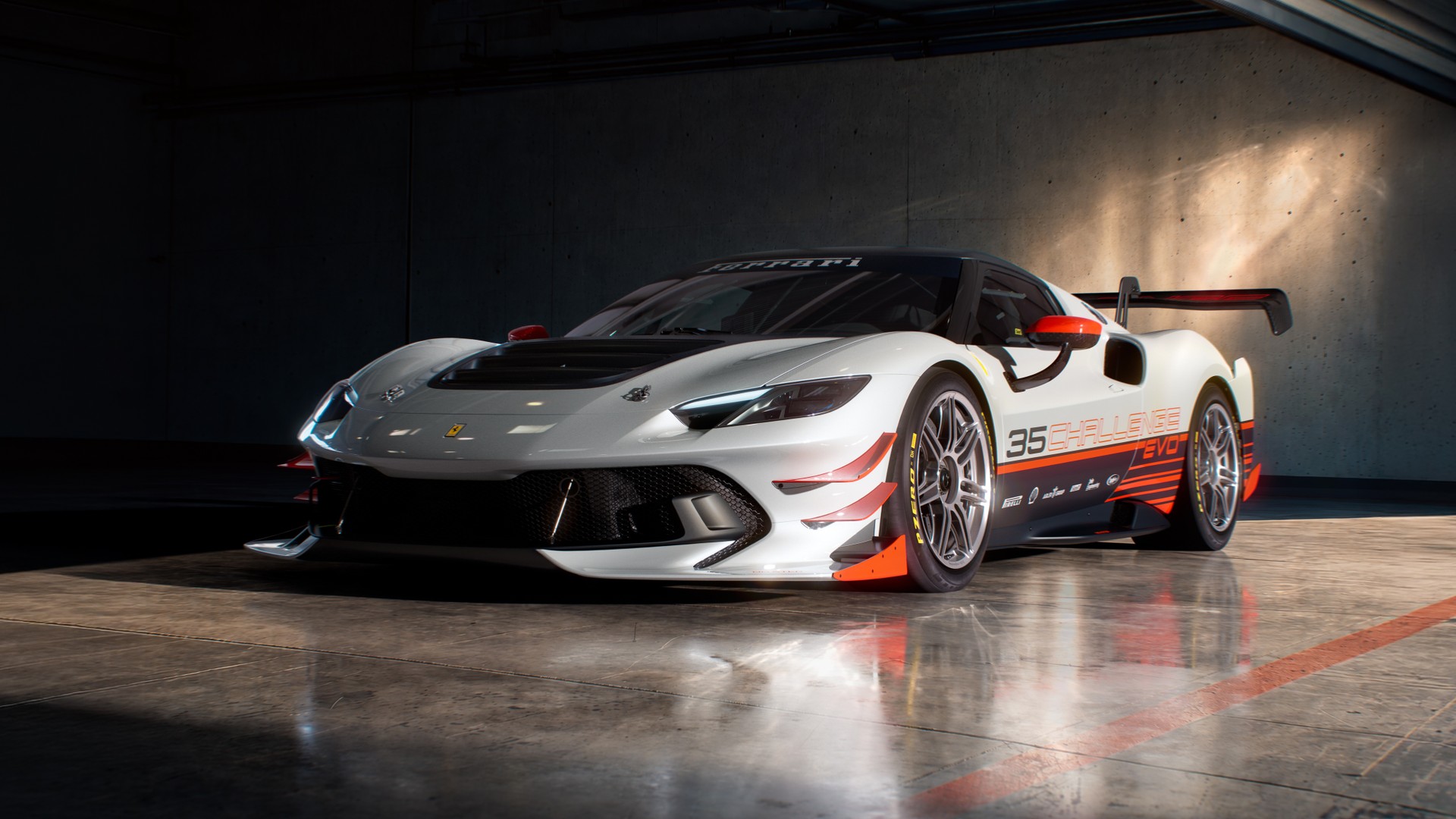
Drivers also get two independent traction control dials, four ABS maps and a recalibrated e-diff. The result, by Ferrari’s account, is a lap 0.8 seconds quicker at Mugello, with less tyre wear over a race. Reports mention about €350,000 plus VAT for a new car, or around €35,000 plus VAT for a kit that updates existing 296 Challenge cars.
The Evo races in Europe and North America from 2027 and reaches the regional series from 2028. Closer to home, the new Ferrari Challenge Middle East kicks off with the current 296 Challenge in Bahrain on 11-12 December 2026, then visits Lusail and Jeddah in January before finishing at Yas Marina on 20-21 March 2027.