

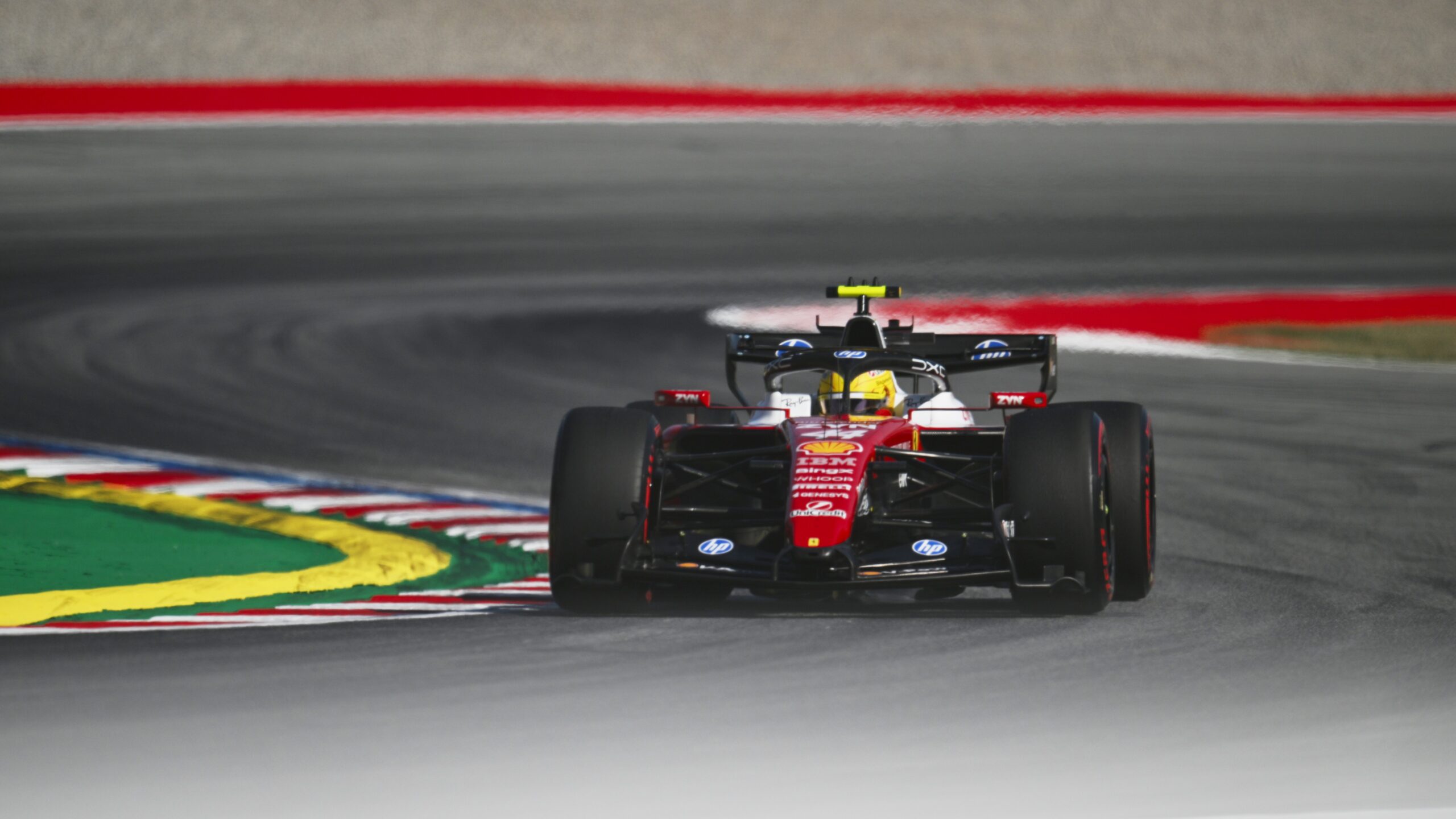
One of Formula 1’s most debated topics has now received official confirmation. FIA President Mohammed Ben Sulayem has announced that the championship will return to V8 power units from 2030, bringing an end to the current era of increasingly complex hybrid engine technology.
The move represents a significant change in Formula 1’s long-term technical direction and comes amid growing criticism of the sport’s latest generation of power units, which rely heavily on electrical energy deployment.
The announcement follows months of discussions regarding the future of Formula 1 engine regulations, particularly after concerns emerged over the 2026 power unit package, where internal combustion and electrical power contribute almost equally to overall performance.
From Hybrid Ambitions to V8 Revival
The idea of reintroducing naturally aspirated-style Formula 1 engines is not new.
Ben Sulayem first raised the possibility of returning to V8 or V10 engines powered by sustainable fuels last year. At the time, however, engine manufacturers opposed the proposal, citing the significant investments already committed to Formula 1’s next-generation hybrid regulations.
Since then, the conversation has evolved.
The FIA President argues that modern Formula 1 power units remain excessively expensive and unnecessarily complex, while the growing weight of battery systems has contributed to increasingly heavy cars.
At the same time, the automotive industry’s outlook has shifted. While electrification remains important, manufacturers have shown renewed interest in sustainable fuels as a pathway towards reducing emissions without abandoning internal combustion technology entirely.
According to Ben Sulayem, these developments have strengthened the case for a return to V8 engines.
“V8 Is Coming Back”
Speaking openly about the future of Formula 1’s engine regulations, Ben Sulayem left little room for interpretation.
“V8 is definitely coming back. It’s only a matter of time,” he said.
The FIA President revealed that 2030 is currently the target date, although he suggested the governing body has the authority to implement the change regardless of manufacturer support once existing agreements expire.
“I’m positive, they want it to happen. But let’s say the manufacturers don’t approve it [for 2030]. The next year, it will happen. In 2031 it’s done anyway.”
He also indicated that demand for simpler engines extends beyond the paddock itself.
Less Complexity, More Performance
A central argument behind the proposed changes is reducing technical complexity.
Formula 1’s previous hybrid era included the MGU-H system, one of the most sophisticated technologies ever seen in motorsport. While highly efficient, it proved extremely costly and never gained meaningful relevance in mainstream road car development.
The current generation has already abandoned the MGU-H, retaining only the MGU-K energy recovery system.
However, Ben Sulayem believes Formula 1 can go even further.
“We want less complexity,” he explained.
Unlike today’s regulations, where electrical power contributes a significant percentage of total output, future V8 engines are expected to feature only a small hybrid component.
“There will be very minimal electrification.”
Why Formula 1 Is Choosing V8 Over V10
Although fans often associate Formula 1’s golden era with screaming V10 engines, Ben Sulayem believes V8s offer a more realistic solution for modern manufacturers.
“The mission will be less complication, not like now. When the MGU-H was there before, it was there to serve a purpose, but none of the manufacturers benefited from it in the real world. Now, with just the MGU-K, it’s the same engine. It’s turbo, it’s 1.6 litre.”
The FIA sees several benefits in a V8 formula:
• Reduced power unit complexity
• Lower development and operating costs
• Lighter Formula 1 cars
• Improved engine sound
• Greater relevance to current automotive technology
• Continued use of sustainable fuels
The combination of sustainable fuel technology and simpler engine architecture is expected to form the foundation of Formula 1’s next regulatory era.
A Defining Moment for Formula 1’s Future
If implemented as planned, the return of V8 engines would become one of the most significant technical shifts in modern Formula 1 history.
For more than a decade, Formula 1 has prioritised increasingly sophisticated hybrid technology as part of its sustainability strategy. However, rising costs, heavier cars and concerns over racing quality have prompted the FIA to reconsider that direction.
While technical details remain to be finalised, one thing appears increasingly certain: Formula 1’s future may sound a lot more like its past.
And according to Mohammed Ben Sulayem, that future could arrive sooner than many expected.