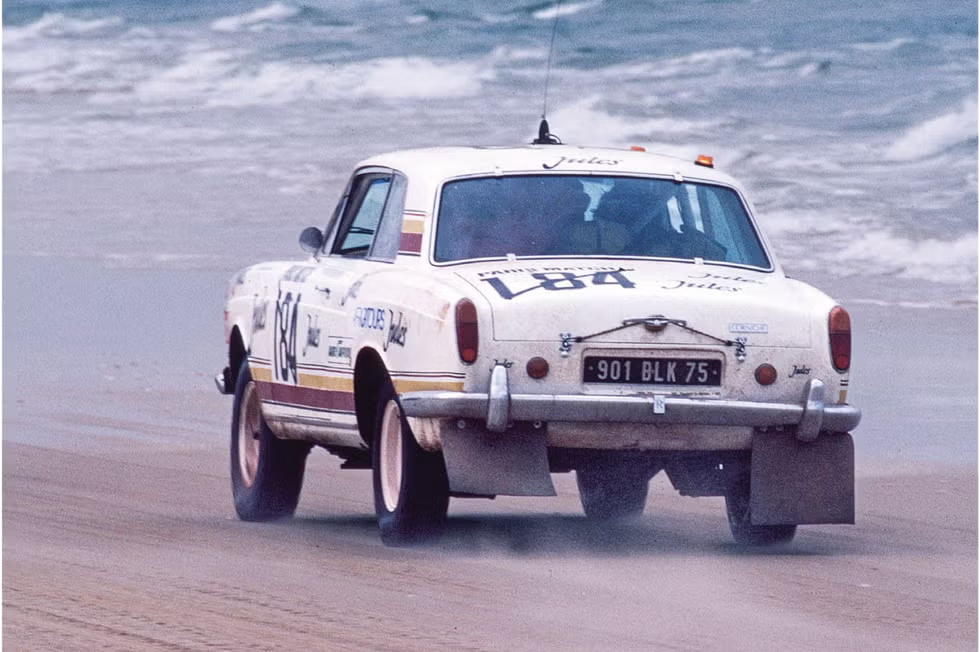

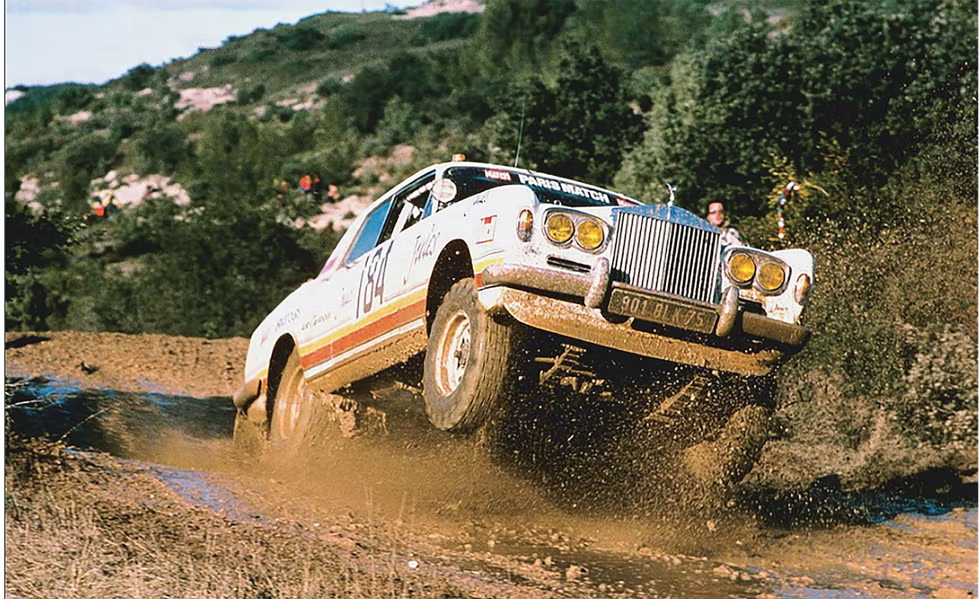
The Paris-Dakar Rally has always rewarded unconventional thinking, but few entries captured that philosophy quite like Thierry de Montcorgé’s Rolls-Royce Corniche. In 1981, the French adventurer entered the luxury coupé in one of motorsport’s toughest endurance events, covering thousands of miles across Europe and Africa in a machine nicknamed “Jules”.
What appeared to be an extravagant Rolls-Royce was, underneath, a purpose-built rally car.
A Rolls-Royce in appearance only
The Corniche’s original 6.8 litre V8 was replaced by a 5.7 litre Chevrolet small block V8 producing around 350 hp.
Its road-going underpinnings were also discarded. Live axles, leaf springs and twin shock absorbers sourced from a Toyota BJ45 Land Cruiser gave Jules the durability and suspension travel required for the Dakar terrain.
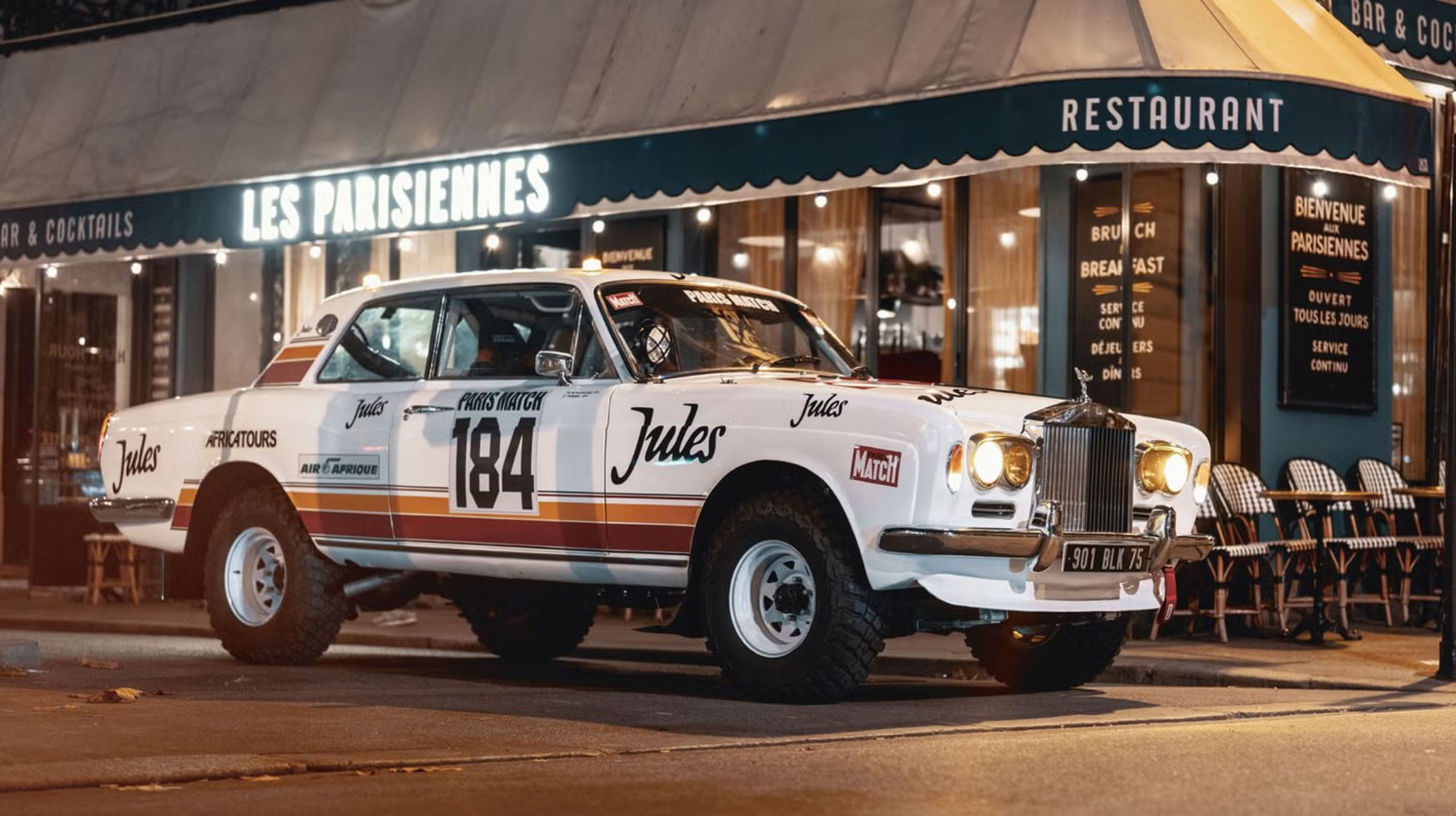
The transformation went considerably further than an engine and chassis swap. The Corniche-shaped body was recreated in lightweight plastic, reducing mass while retaining the unmistakable proportions of the Rolls-Royce.
An 88-gallon fuel tank was installed to provide the range required for a rally stretching roughly 6,000 miles.
Rolls-Royce was not initially impressed
The manufacturer reportedly objected to the project and the use of its identity in the Paris-Dakar Rally.
Montcorgé subsequently secured Christian Dior as a sponsor, giving the unconventional programme considerably greater commercial weight. Rolls-Royce eventually backed away from its objections, allowing Jules to take its place on the Dakar start.
Jules climbed to 13th overall
The Rolls-Royce proved far more competitive than its appearance suggested.
Against a field approaching 300 entrants, Montcorgé climbed as high as 13th overall, demonstrating that the heavily modified Corniche was more than a publicity exercise.
Its run was eventually compromised when Montcorgé crashed into a tree late in the rally. Jules was repaired and continued, allowing the car to complete the route despite losing its chance of a stronger classified result.
The Dakar Rolls-Royce later sold for around $630,000
More than four decades after its desert adventure, Jules returned to prominence as a collector car.
The unique Paris-Dakar Rolls-Royce was offered by Aguttes in December 2024 and sold for approximately $630,000.
Its value lies in something difficult to recreate. Jules belongs to an era when Dakar entries could be radically experimental, combining components from entirely different manufacturers around an idea that would appear improbable by modern competition standards.
A Rolls-Royce silhouette, Chevrolet V8 power and Toyota Land Cruiser hardware made little conventional sense. In the 1981 Paris-Dakar Rally, it was good enough to run 13th overall.