

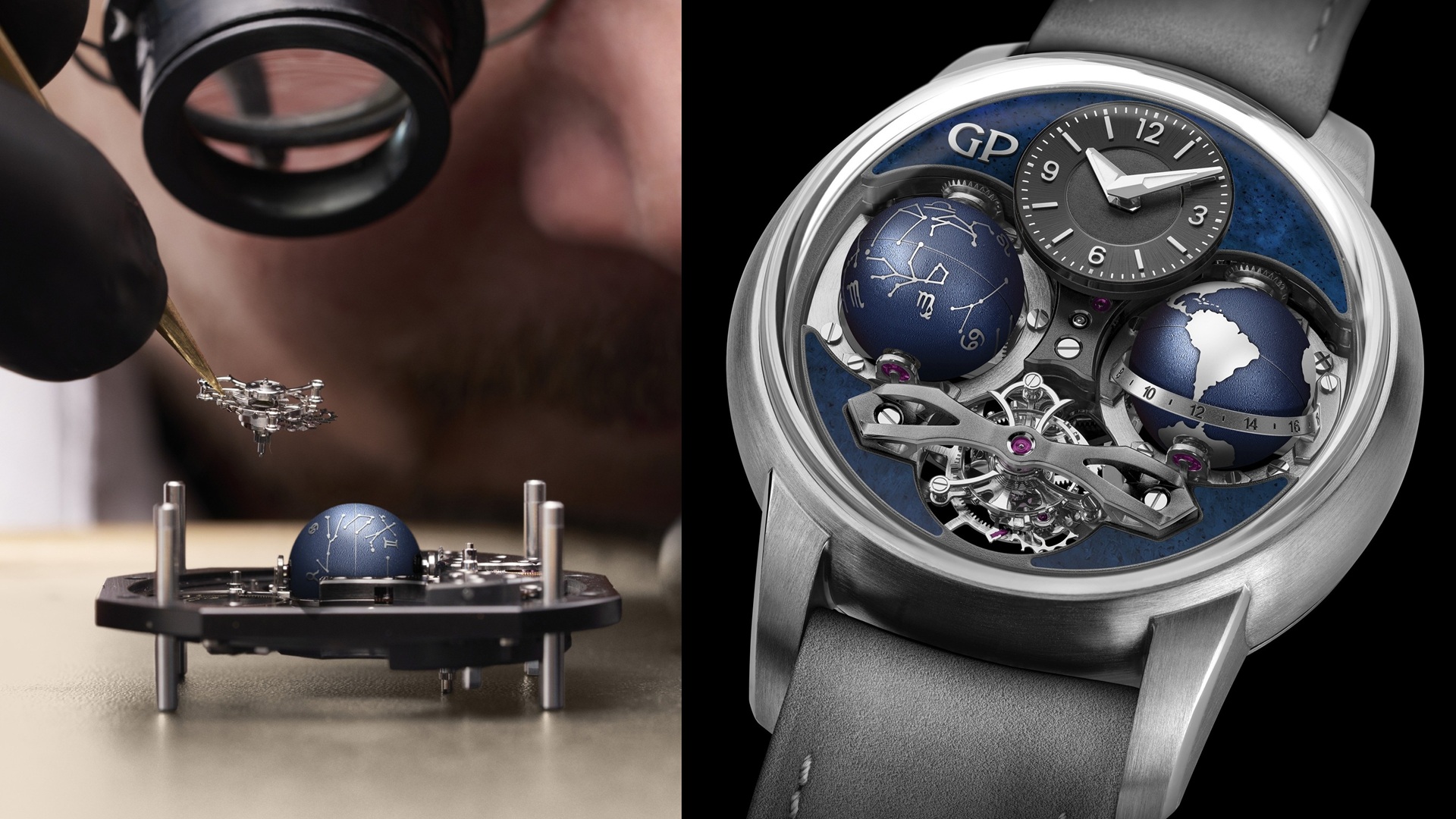
Girard-Perregaux (GP) brings back the Cosmos – an astronomical grand complication first introduced in 2019. It has been crafted in a handful of extremely limited-edition versions featuring materials such as aventurine, obsidian, onyx, combination of spectrolite and aventuring, and black onyx. The three complications include a tourbillon, a terrestrial globe, and a celestial globe. It is part of GP’s Bridges collection and the current version is limited to one piece.
Key Features
Functions
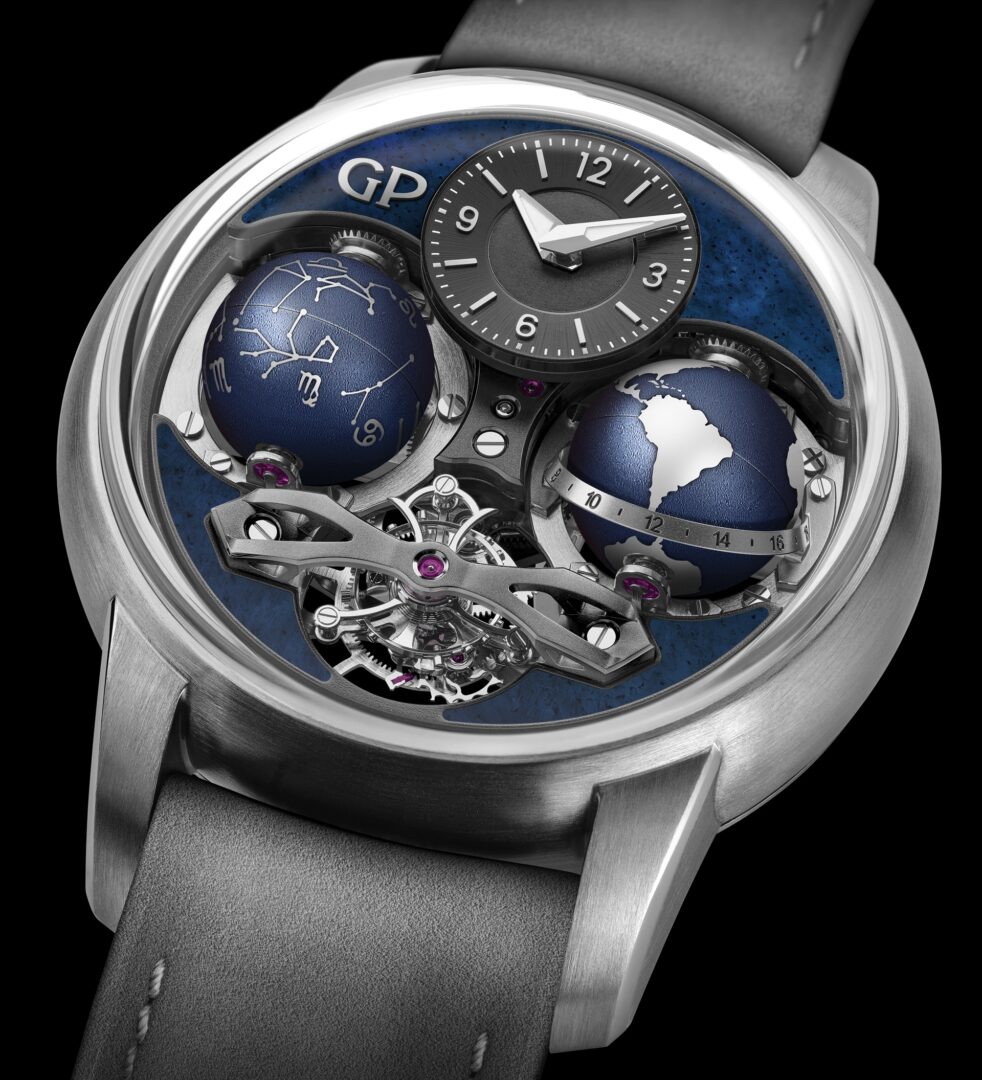
Hours and minutes at 12 o’clock. Tourbillon at 6 o’clock.
Terrestrial globe at 3 o’clock – “offers a day/night indication, with daytime visible on the dial side and night-time on the case-back side. Completing a full rotation in 24 hours, the globe is encircled by an hour ring inspired by Saturn’s rings. This fixed hour ring provides a glimpse of the time.”
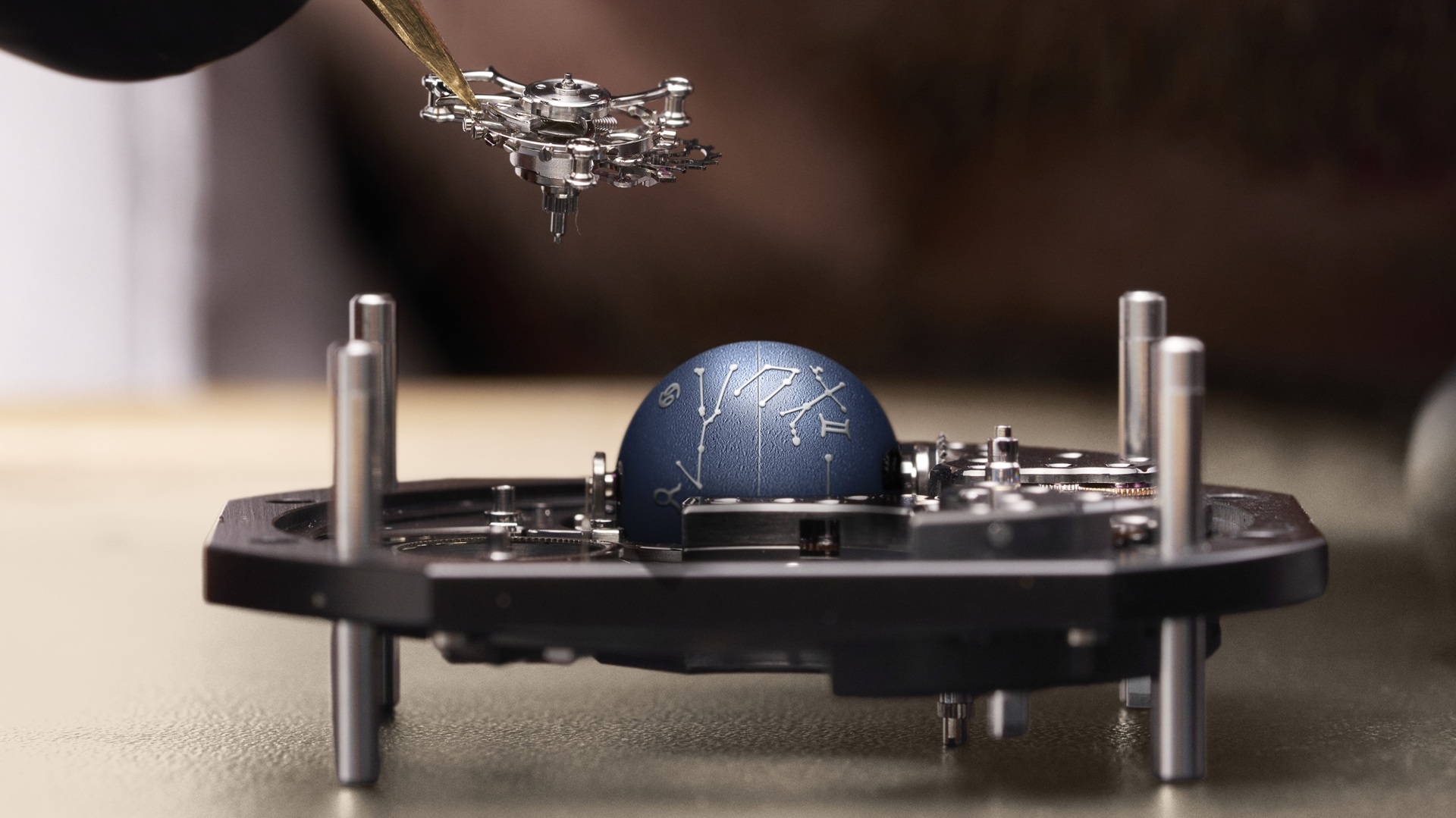
Celestial globe at 9 o’clock – “displays the constellations of the Zodiac and completes a rotation in 23 hours, 56 minutes, and 4 seconds—the duration of a sidereal day, corresponding to a 360° rotation of the Earth on its axis.”
Operations
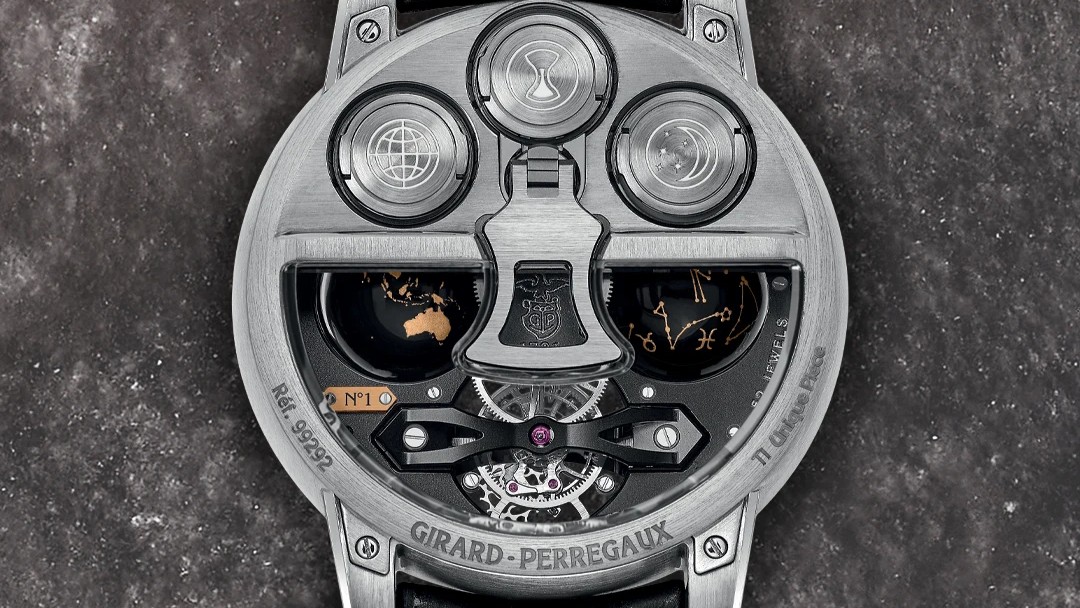
Winding and all settings via four rotating bows or “bélières” located on the caseback. Each is identified by a symbol pertaining to their function. Hourglass symbol is for time-setting. Earth symbol is for the terrestrial globe. Stars with a moon symbol is for the celestial globe.
Dial
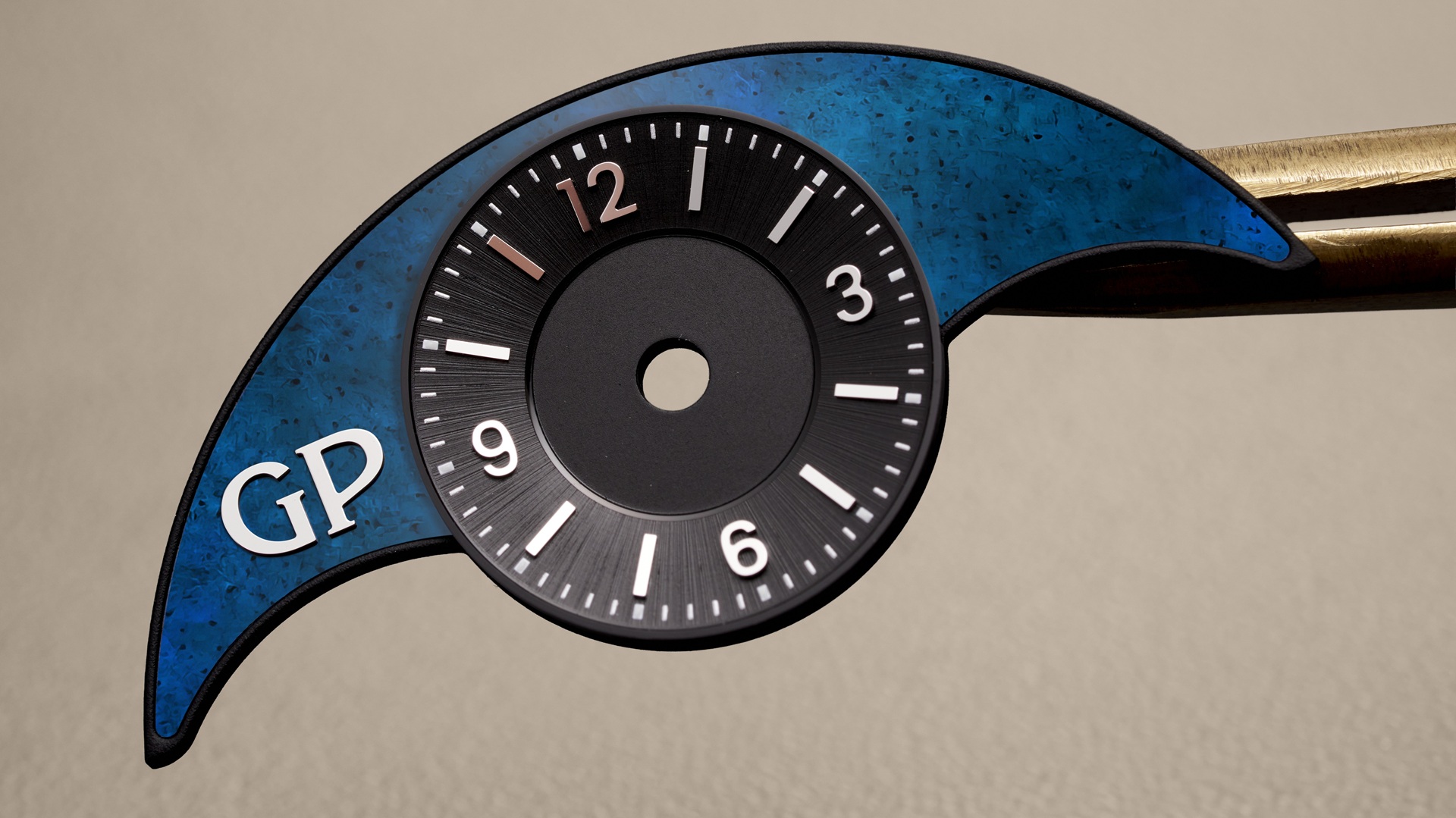
Two-part dial made from Tahitian mother-of-pearl and topped by blue aventurine.
The time dial is composed of a sandblasted middle encircled by a sunray-finished outer ring. The dauphine-shaped hour and minute hands are made from white gold and coated with luminescent material (blue emission). Applied hour-markers are made from white gold. The markers for the 12 hours on the minute scale are coated with luminescent material (blue emission).
The terrestrial and celestial globes are made from titanium “each enhanced with a laser-oxidized finish that lends a rich, textured surface.” Coated with luminescent material.
Movement
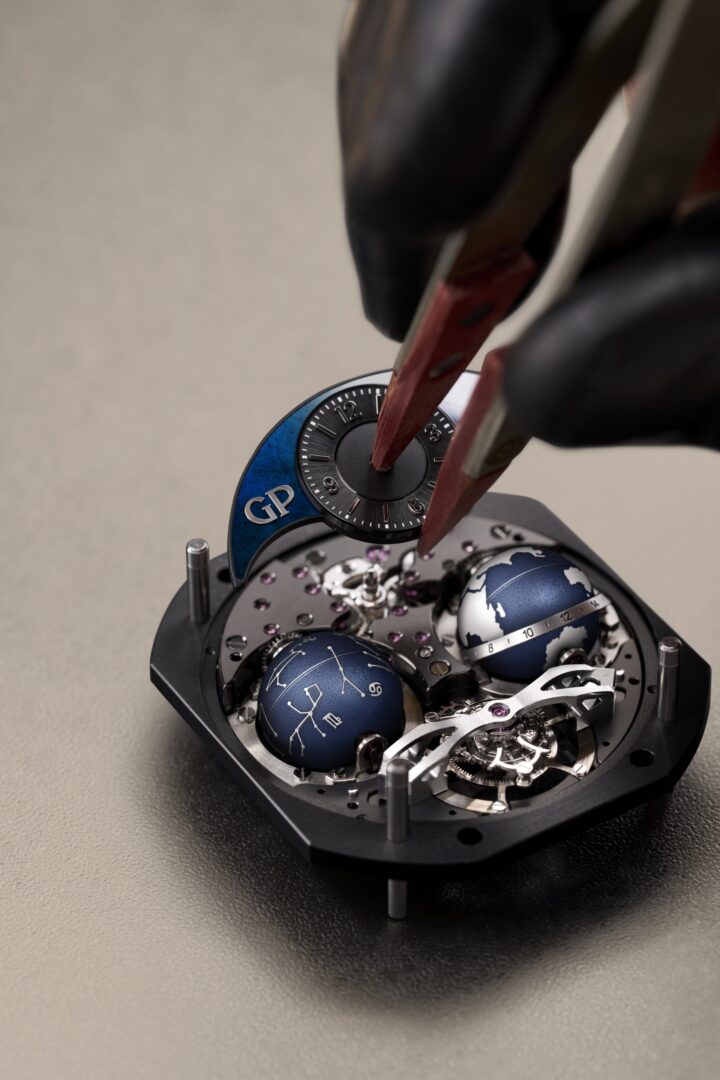
Powered by GP09320-1098, a hand-wound movement that drives the time, tourbillon, terrestrial globe, and celestial globe. Diameter: 37.85 mm. Thickness: 13.10 mm. Parts: 368. Jewels: 52. Frequency: 21,600 vph or 3 Hz. Power reserve: 57 hours (minimum).
Our Thoughts
Girard-Perregaux’s Laureato collection is often what comes to mind when collectors think of the brand. And for good reason. Its octagonal bezel set on a circular base on a tonneau shaped case with an integrated bracelet (also strap versions) evolved into a design icon since its introduction in 1975, 50 years ago. It remains a bestseller for GP.
What many might not be aware of is that GP has considerable heritage and expertise in grand complications, such as the astronomical Cosmos (the brand was founded in 1791). I was fortunate to handle a few of them (Minute repeaters and tourbillons. The Cosmos was not present) at a GP private collectors event hosted by us (both The Cornea Impression and Redbar Group) at Dubai Watch Week 2025. Though I have seen my share of grand complications from several mainstream and independent watch brands, I was equally impressed by what GP can churn out.
While grand complications such as the present unique piece Cosmos are for experienced collectors; they nevertheless allow GP to highlight its “horological prowess” and create aspirational value for collectors – both new and existing – to the brand.
Additional Details
Name: Cosmos
Reference: 99292-21-3587-5CC
Price: Upon request. Prior versions of the Cosmos have been priced at Euro €393,000.
Limited to one piece. “Unique Piece” engraved on the caseback.
Please contact Girard-Perregaux for more information.