
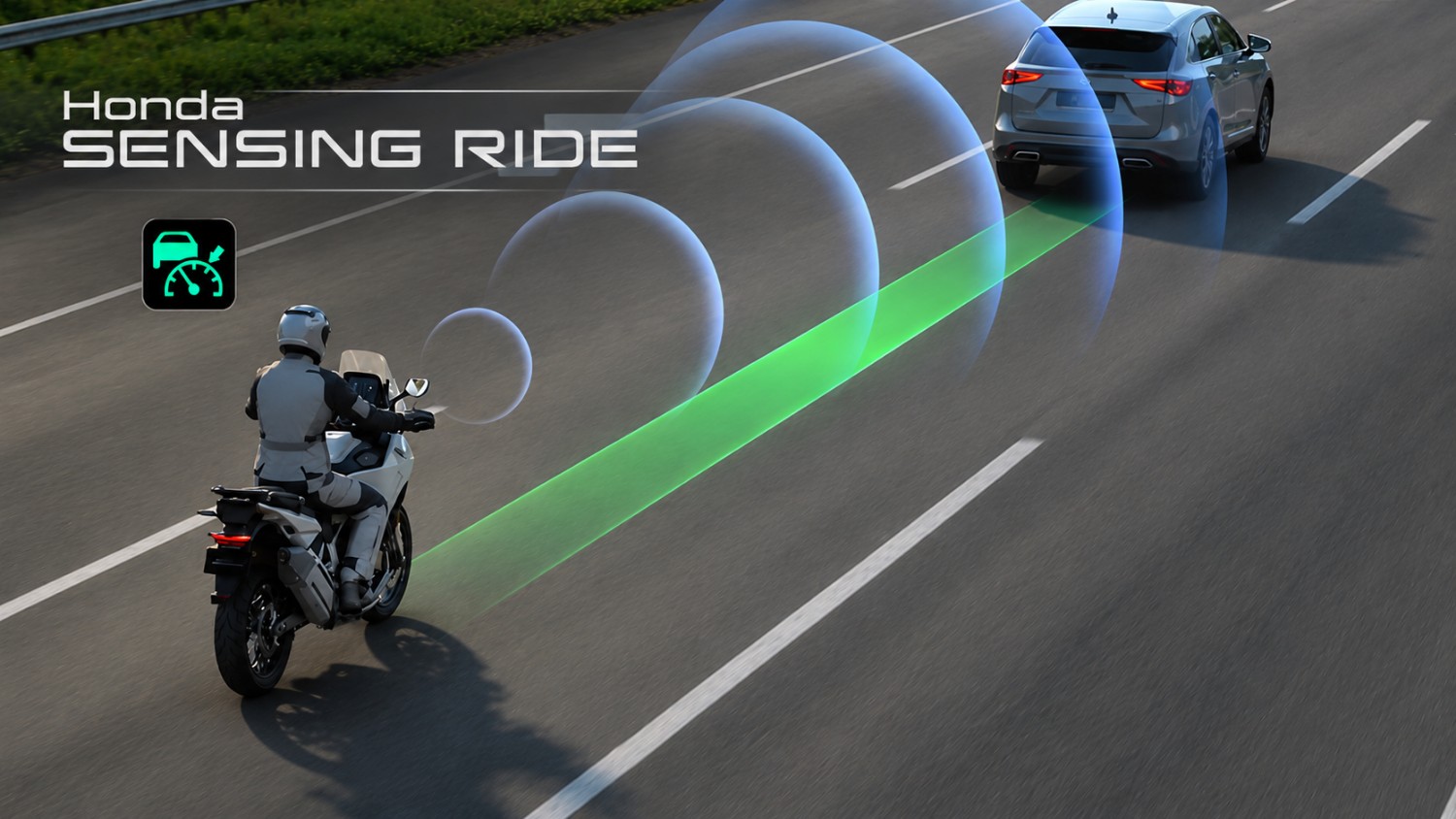
Honda has introduced Honda SENSING RIDE, a new advanced safety and rider-assistance system developed specifically for motorcycles. Unveiled at EICMA 2026, the technology incorporates radar to monitor the motorcycle’s surroundings and provide the rider with assistance via warning notifications and operational aid.
What is Honda SENSING RIDE, and how does it work?
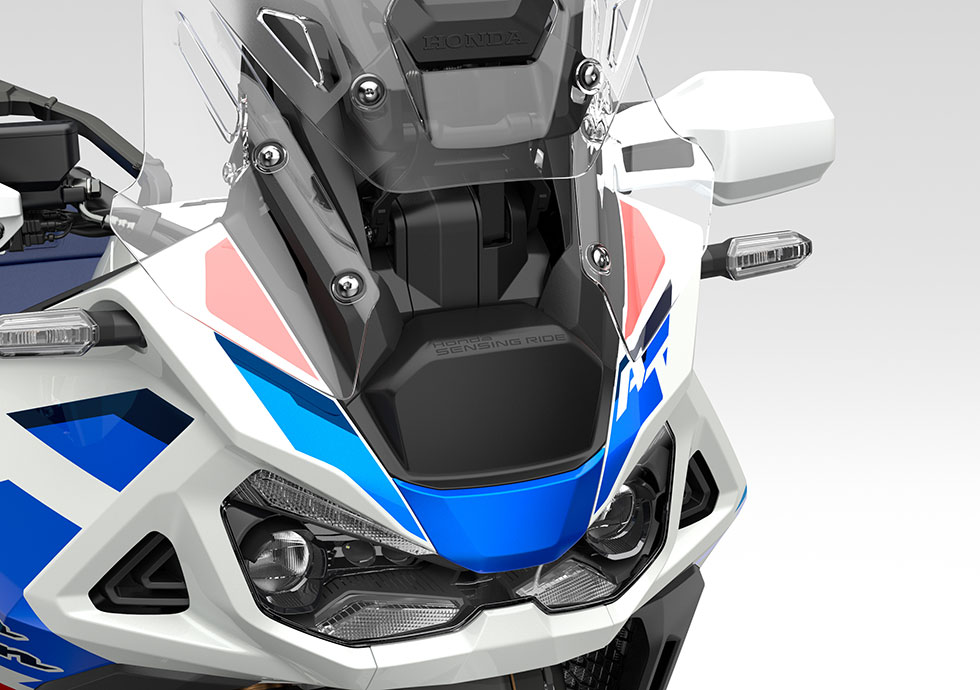
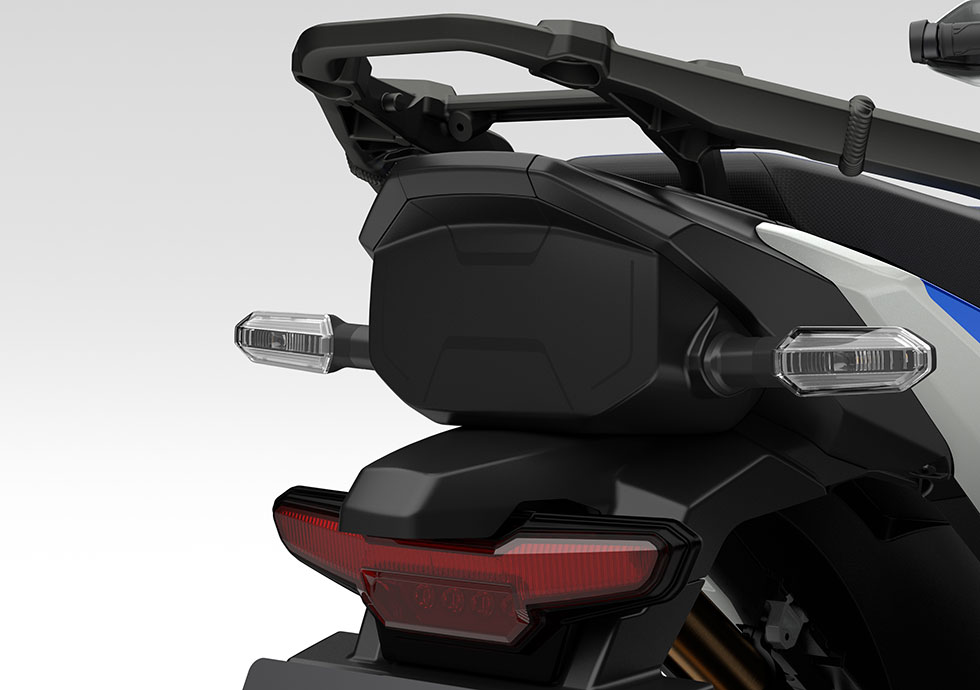
Honda SENSING RIDE is engineered by drawing from the company’s Research & Development experience for SENSING systems for cars, while incorporating functions designed specifically for motorcycles. It uses two millimetre-wave radar units, with one mounted at each end of the motorcycle, to detect surrounding traffic.
The system works based on its assessment of the rider’s and motorcycle’s real-time status and provides assistance intended to support safer and more comfortable riding. It offers ten different functions that cover situations involving vehicles ahead, traffic approaching from behind, and motorcycles travelling together in a group.
Honda has designed the system to provide different levels of support through alerts, warnings and operational assistance rather than relying on a single intervention.
What are the ten functions of Honda SENSING RIDE?
The ten functions include four riding-assistance features, two forward-collision-related features and three rear-traffic monitoring functions, alongside Brake Pulse.
Adaptive Cruise Control (ACC): It helps the rider maintain a predetermined speed and following distance from vehicles ahead by adjusting the motorcycle’s speed to maintain the desired gap.
ACC with Stop & Go: It supports the Adaptive Cruise Control by reducing the frequency of manual acceleration and deceleration inputs. When combined with Honda’s Dual-Clutch Transmission (DCT), it supports the process of stopping and moving off again in congested conditions.
Group Ride Assist: Yet another extension of Adaptive Cruise Control. It helps riders maintain an appropriate following distance when travelling together in a group, including when motorcycles are arranged in a staggered formation.
Distance Assist: This function adjusts the following distance when the motorcycle approaches a vehicle ahead under the rider’s positive throttle input. This function is intended to provide additional support when closing in on traffic.
Emergency Brake Assist: It provides braking assistance when the rider applies the brakes and the system identifies a risk of collision with a vehicle ahead.
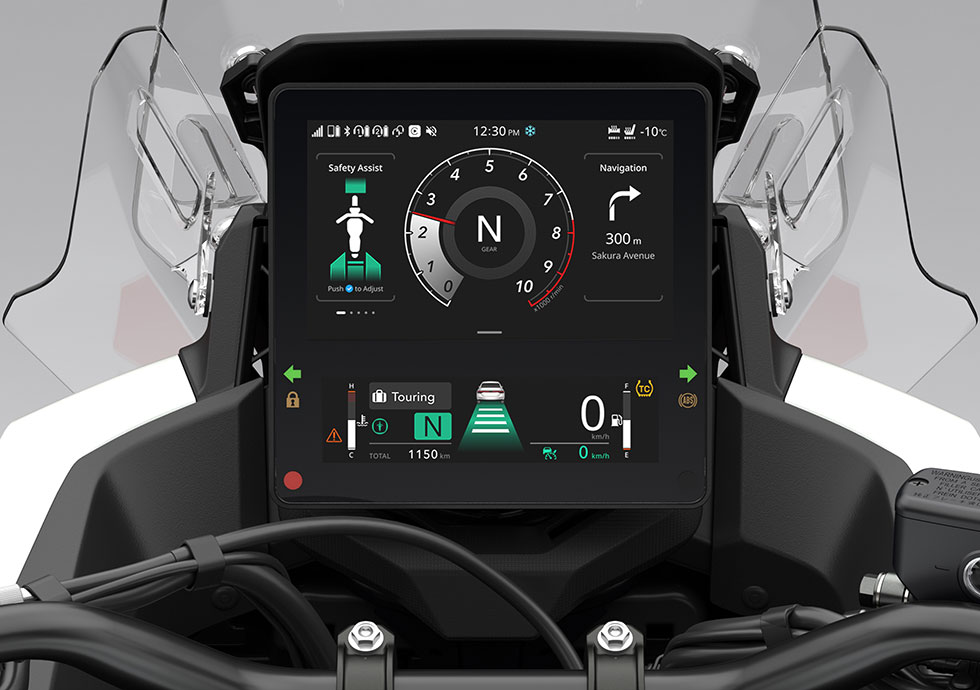
Forward Collision Warning: Alerts the rider through the motorcycle’s instrument display when the system identifies a potential collision with a vehicle ahead.
Brake Pulse: This function works alongside Forward Collision Warning to provide an additional alert and increase the rider’s awareness of a potential collision.
Blind Spot Information: Uses the rear radar to detect vehicles entering the rider’s blind spot diagonally behind the motorcycle. It notifies the rider through an illuminated or flashing indicator on the mirror.
Rear Collision Warning: It uses a series of sensors to predict an imminent collision from the rear and flashes the motorcycle’s indicators to alert traffic approaching from behind.
Rear Distance Information displays a notification on the instrument panel when a vehicle approaches the motorcycle from behind.
Which Honda motorcycle will feature SENSING RIDE first?
At EICMA 2026, Honda debuted the Honda SENSING RIDE technology on its latest 2027 CRF1150L Africa Twin Adventure Sports DCT as an option. During the launch, Honda indicated that it plans to increase the number of motorcycle models equipped with SENSING RIDE over time. However, it has not confirmed a wider model rollout schedule.