
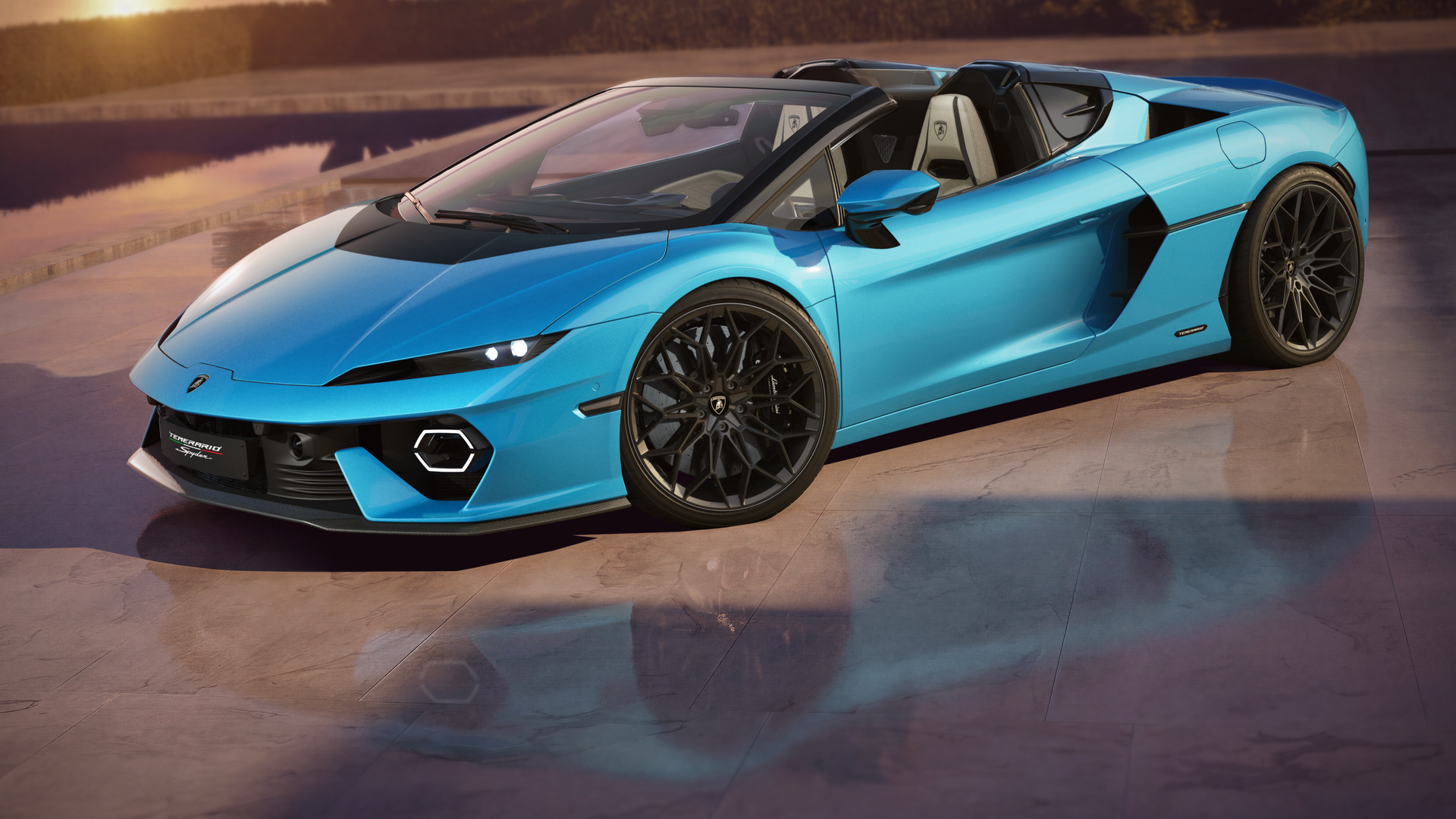
In 1976, Lamborghini rolled a little Bertone-styled targa onto its stand at Geneva and called it the Silhouette. It had a 3.0-litre V8, a roof panel you lifted out by hand and tucked behind the seats, and Lamborghini says just over fifty were made. It was a rare car even by Sant’Agata standards, and it started a line of open-top Lamborghinis that ran through the Jalpa, the Diablo and Murciélago Roadsters, and the Gallardo and Huracán Spyders.
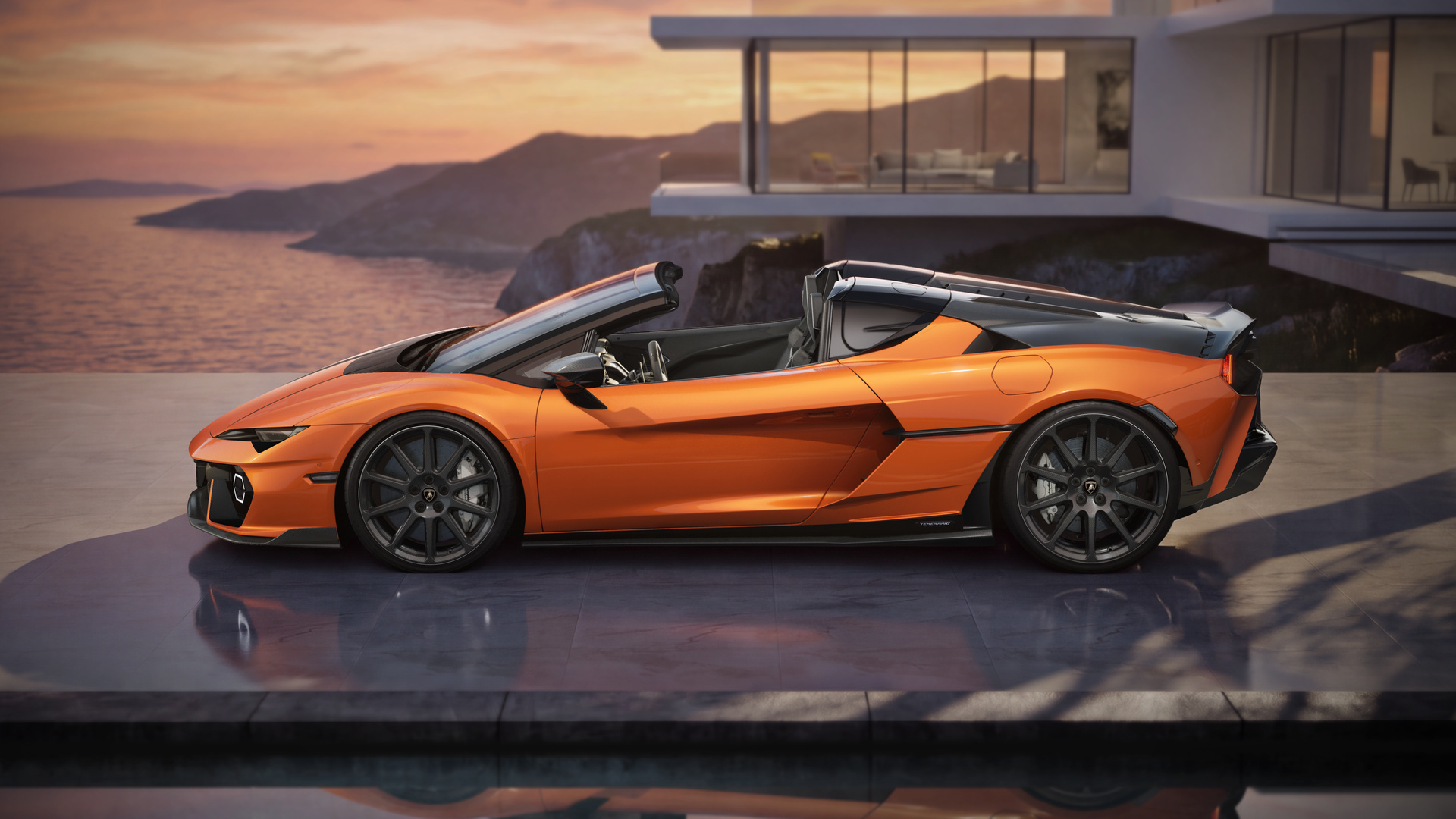
Half a century on, the Temerario Spyder completes the circle. It’s an open-top V8 Lamborghini again, the roof panels still end up behind the seats, but this time ten electric actuators do the lifting. It’s the first Lamborghini with a retractable hard top, and it keeps the coupé’s plug-in hybrid V8 that revs to 10,000rpm, with a combined 907hp.
The First Lamborghini With A Retractable Hard Top
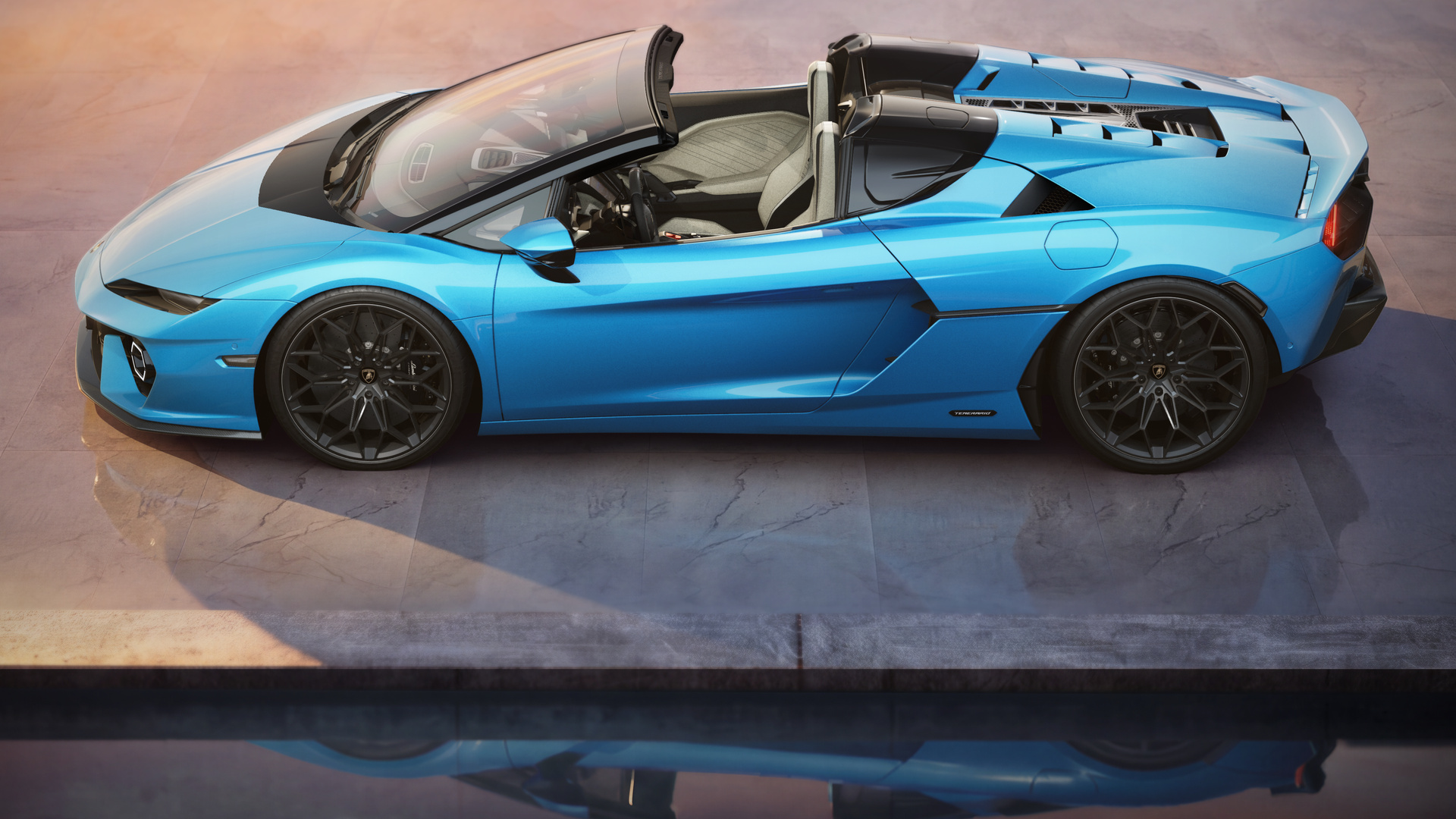
The roof is two panels that stand upright behind the seats instead of lying flat over the engine. Ten electric actuators move it, with no hydraulics, and it opens in 17 seconds at up to 50km/h, so a sudden drizzle doesn’t need a stop on the hard shoulder. A separate rear window drops electrically to let in more of the V8, or rises to keep the wind out.
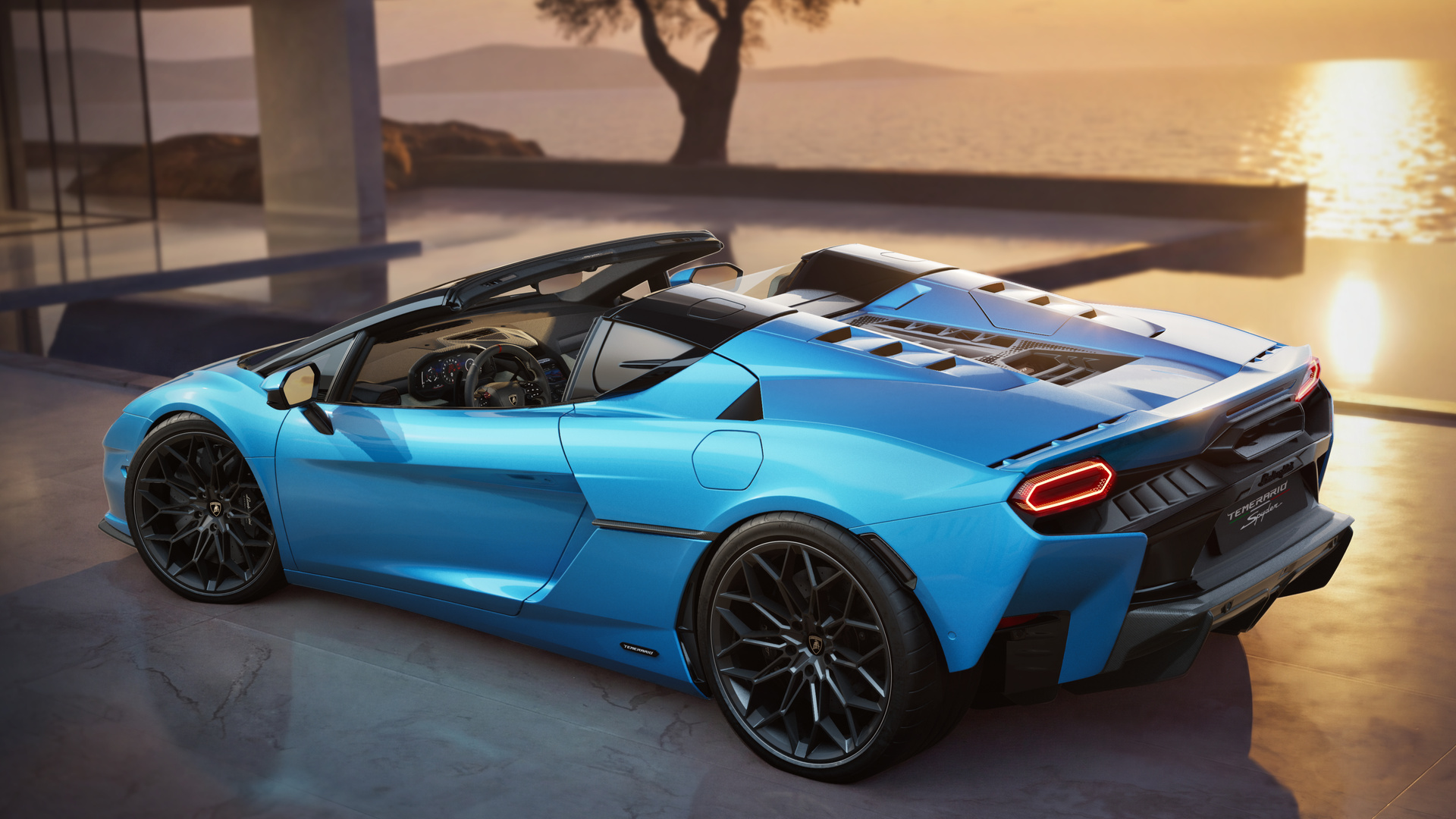
Lamborghini says stowing the roof upright drops the centre of gravity by 3mm and leaves the weight distribution intact. A conventional flat-folding roof would have raised the centre of gravity by about 7mm and moved it 11mm rearwards. Behind the cabin, two hexagonal cowls with a racing profile carry the lines back to a new engine cover that leaves the V8 on show.
Losing the fixed roof hasn’t softened the structure either. Compared with the Huracán Spyder, Lamborghini claims 6% more static torsional rigidity, 9% more dynamic bending stiffness and 6% more dynamic torsional rigidity, along with 20% less secondary vibration.
907hp, 10,000rpm & A Flat-Plane Crank
Powering it is the coupé’s 4.0-litre twin-turbo V8 with a flat-plane crankshaft, good for 789hp and 730Nm on its own. Three axial-flux electric motors take the total to 907hp and 800Nm. The V8 revs to 10,000rpm, and 10,250rpm with Launch Control engaged, which Lamborghini says is the highest engine speed of any series-production open-top super sports car with a turbocharged engine.
Power goes to all four wheels through an eight-speed dual-clutch gearbox. Lamborghini claims 0-100km/h in 2.8 seconds, 0-200km/h in 7.3 seconds, and 343km/h flat out. There are 13 drive modes, and a Drift Mode on the steering wheel dial offers three levels of slip, from a gentle wag of the tail to wider angles for drivers who know exactly what they are doing.
The engineers tuned the sound around the flat-plane V8’s fourth-order harmonic, deep at low revs and sharper as the needle climbs. With the roof down and the rear window lowered, that crescendo to 10,000rpm is the whole point of the car.
Also Read:
- Lamborghini Temerario’s 10,000rpm V8 Gets The Akrapovic Treatment
- Novitec 12Cilindri N-Largo: Ferrari’s V12 GT Gets Bigger Hips & A Ducktail
- Mercedes-AMG GT 4-Door Coupe Launched With Up to 1,169 bhp
Is The Lamborghini Temerario Spyder A Plug-In Hybrid?
Yes. The front e-axle alone makes 220kW (295hp), and in Città mode the Spyder can run on electricity with up to 187hp on tap, so you can leave the villa at dawn without waking the street. Lamborghini hasn’t published the Spyder’s battery size, though the coupé uses a 3.8kWh pack and we assume the Spyder uses the same.
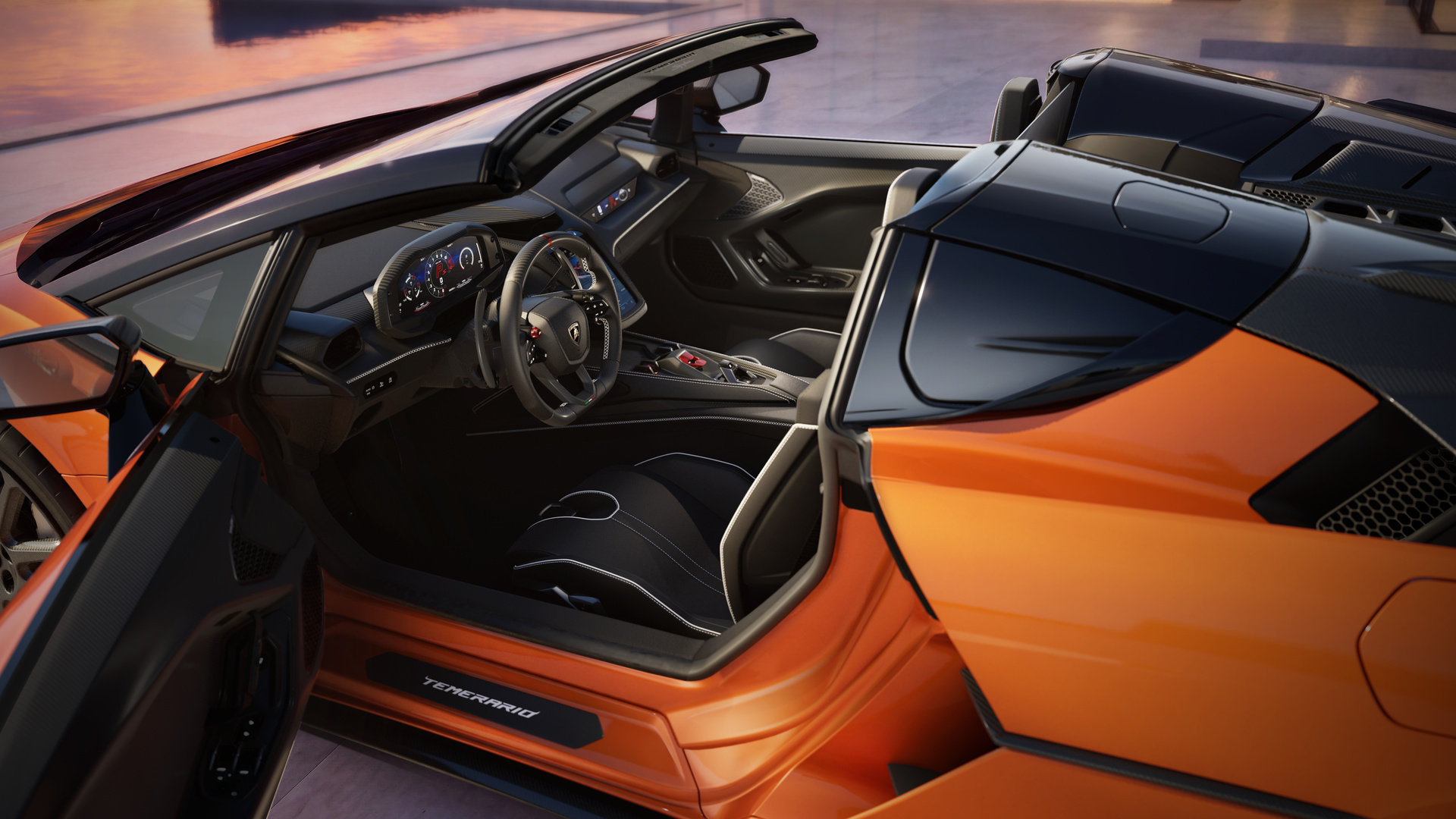
The roof does cost weight. The Spyder’s dry weight is 1,805kg, 115kg more than the coupé, and it takes 0.1 seconds longer to reach 100km/h. Stopping from 100km/h takes 33m, just one metre more than the coupé, with carbon-ceramic brakes using 410mm discs and ten-piston calipers at the front. Magneride dampers and Bridgestone tyres on 20-inch or 21-inch wheels complete the chassis, and Lamborghini claims there’s 233% more rear downforce than the Huracán Spyder.
A Roomier Cabin And A Lighter Alleggerita
Compared with the Huracán EVO Spyder, the cabin gains 46mm of legroom, 22mm of headroom and 9mm of shoulder room. The 112-litre front boot takes two cabin bags, and three-level neck warmers in the seats make open-top driving on a January evening in Hatta perfectly civilised.
The Alleggerita pack swaps in carbon-fibre panels and optional carbon wheels to save 22kg. It launches in Arancio Egon with Shiny Black details and roof, while the standard launch car wears Blu Cepheus with a Bianco Polar cabin. Options include an Akrapovič titanium exhaust weighing 11.4kg, a 750W Sonus faber sound system, and around 400 Ad Personam colours.