

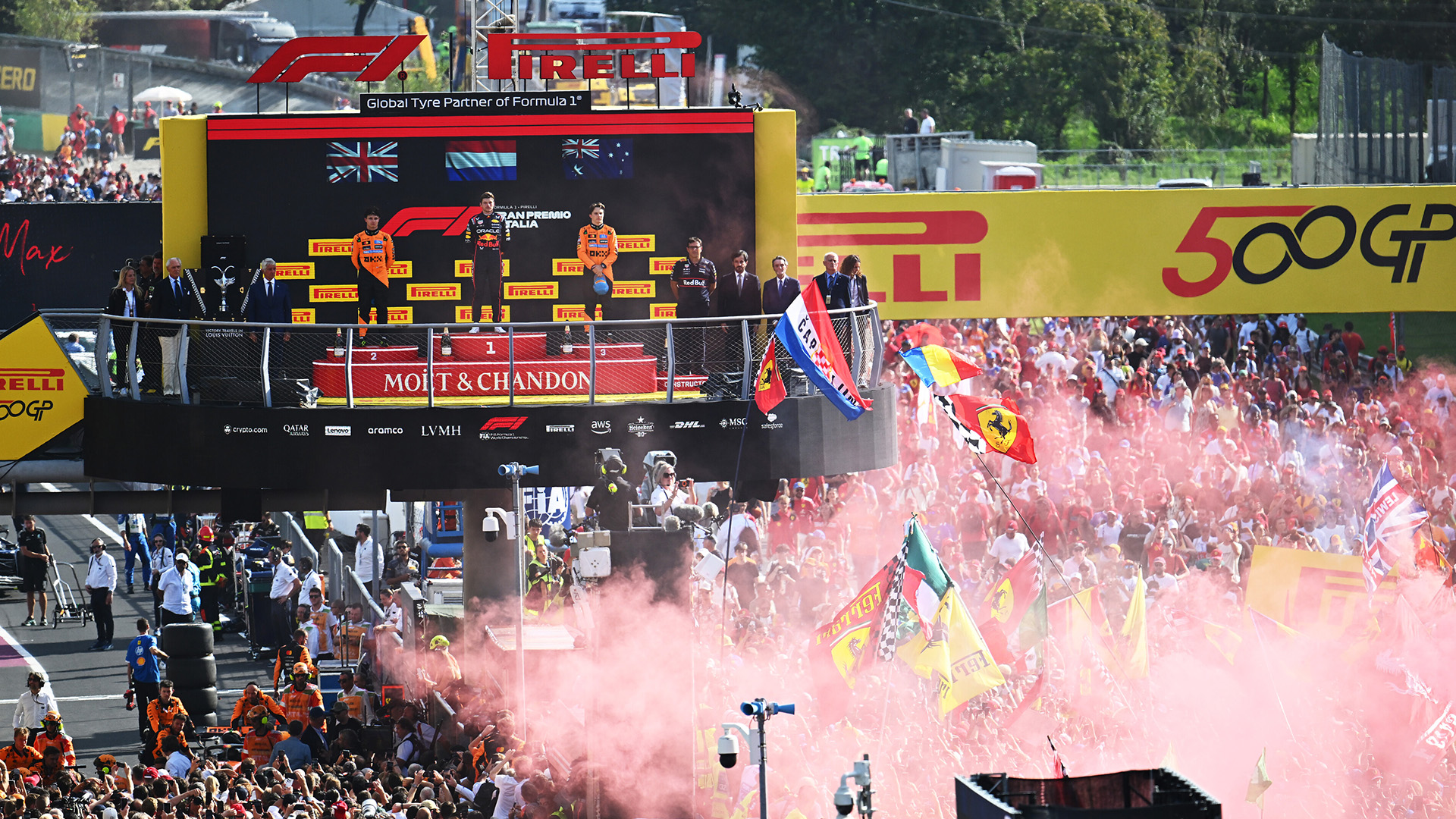
Italy’s Formula 1 legacy stretches from the championship’s first race and the rise of Ferrari to Monza, Imola and a long line of drivers who have shaped the sport across more than seven decades.
Few countries are woven into Formula 1 as deeply as Italy. Its influence reaches far beyond Ferrari, encompassing world champions, historic manufacturers, two of the championship’s most recognisable circuits and a motorsport culture that has been present since the beginning of the Formula 1 World Championship.
Italian machinery won the very first Formula 1 World Championship race in 1950, when Giuseppe Farina drove an Alfa Romeo to victory at Silverstone. By the end of that inaugural season, Farina was world champion, giving Italy the first drivers’ title in Formula 1 history.
Alberto Ascari followed with championships for Ferrari in 1952 and 1953, becoming the second Italian Formula 1 world champion. No Italian driver has won the title since, but the country has continued to produce a long list of Formula 1 names, including Riccardo Patrese, Michele Alboreto, Elio de Angelis, Giancarlo Fisichella, Jarno Trulli, Antonio Giovinazzi and Andrea Kimi Antonelli.
Ferrari remains at the centre of Italy’s Formula 1 identity
No team represents the relationship between Italy and Formula 1 more strongly than Scuderia Ferrari.
Ferrari has competed in every Formula 1 World Championship season since 1950 and has built a record that includes 16 Constructors’ Championships and 15 Drivers’ Championships.
Maranello remains the centre of Ferrari’s Formula 1 operation, but Italy is also home to Racing Bulls. The Red Bull owned team operates from Faenza, continuing a lineage that stretches back through AlphaTauri, Toro Rosso and Minardi.
That makes Italy one of the few countries whose connection to Formula 1 extends across drivers, constructors, engineering bases, circuits and supporters.
Monza has defined the Italian Grand Prix
The Italian Grand Prix has been part of the Formula 1 World Championship since its inaugural 1950 season, with Monza becoming its enduring home.
Built around long straights and traditionally low downforce configurations, the circuit has produced some of Formula 1’s highest speed racing. Its historic banking also remains a visible reminder of a period when circuit design placed outright speed above many of the safety considerations that define modern Formula 1.
Monza has hosted the Italian Grand Prix in every world championship season except 1980, when the race moved to Imola.
Imola later established its own Formula 1 identity through the San Marino Grand Prix and, more recently, the Emilia Romagna Grand Prix.
Italy’s Formula 1 story began with victory
Italy’s influence was already apparent when the Formula 1 World Championship began.
Farina won the opening championship race at Silverstone in 1950 for Alfa Romeo and went on to secure the title. Alfa Romeo dominated much of that first season, winning six of the seven championship rounds.
Ferrari soon developed into its major Italian rival, with Ascari delivering the Scuderia’s first drivers’ championship in 1952 before successfully defending the title the following year.
Those early successes established a connection between Italy and Formula 1 that has survived every major technical era of the championship.
More than 75 years after Farina won Formula 1’s first world championship race, Italy remains central to the sport. Ferrari, Monza, Imola, Faenza and a new generation of Italian drivers continue a racing tradition that began at the very start of the championship and has never truly left it.