

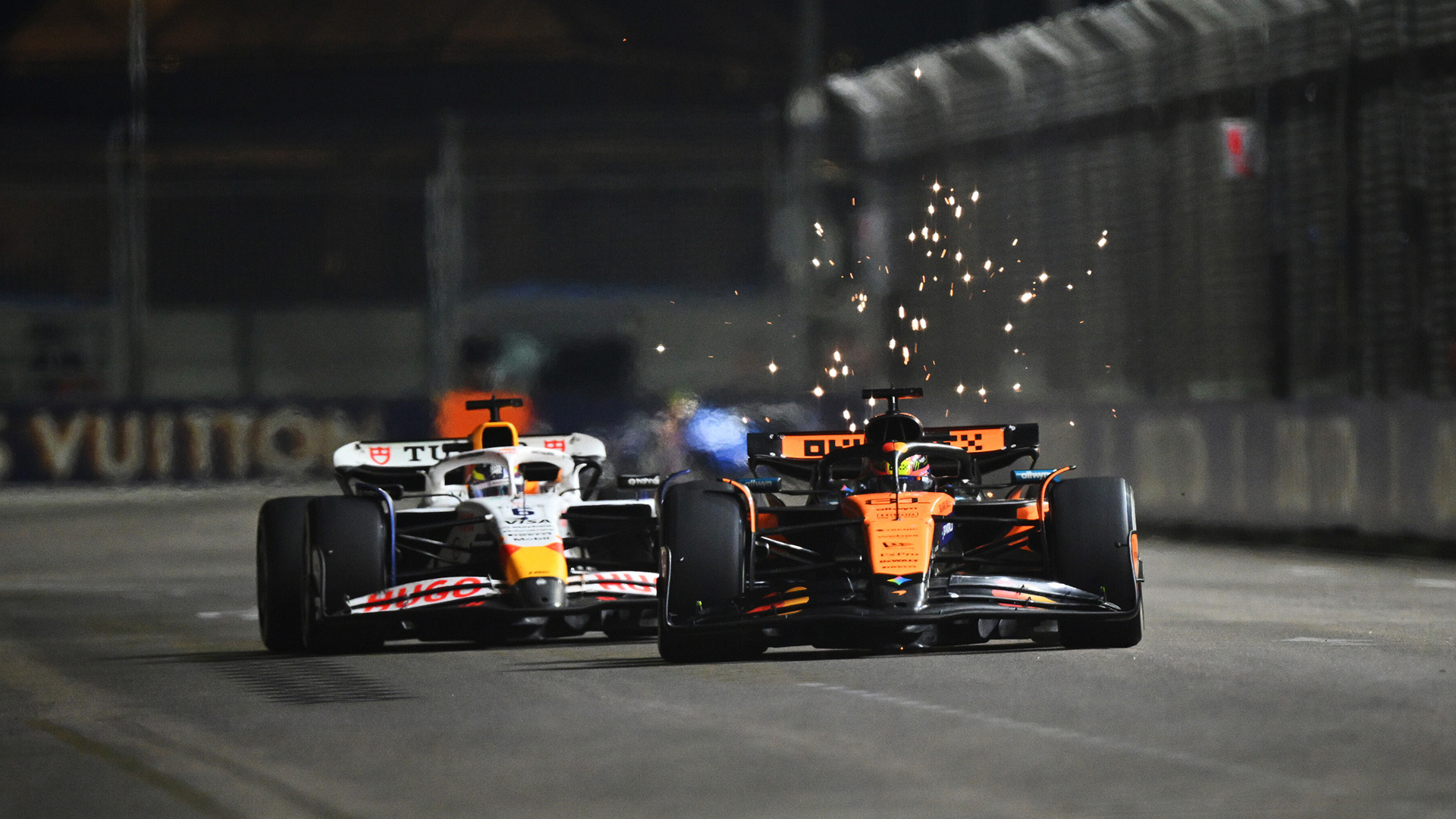
Night racing has become one of Formula 1’s most distinctive spectacles, but cooler conditions, extreme daytime heat and global television schedules all play a role in why certain grands prix start after sunset.
Formula 1’s night races may provide some of the championship’s most striking images, but the decision to race under floodlights is driven by considerably more than aesthetics. From Singapore’s oppressive tropical climate to Las Vegas’s television-friendly start time, racing after dark can influence everything from driver conditions and tyre behaviour to the commercial reach of a grand prix.
Singapore established the template when it joined the Formula 1 calendar in 2008 as the championship’s first night race. Since then, floodlit events have become a familiar part of the schedule, with Bahrain, Saudi Arabia, Qatar and Las Vegas among the venues to have embraced racing after sunset.
The reasons vary from circuit to circuit. In some cases, night racing is primarily about managing temperature. Elsewhere, the timing is designed to place the race in a more attractive broadcast window for Formula 1’s major television markets.
Why Singapore’s Formula 1 race is held at night
Few circuits demonstrate the practical value of night racing better than the Marina Bay Street Circuit.
Singapore sits just over one degree north of the equator, bringing high temperatures and humidity throughout the year. Daytime conditions can become particularly punishing inside an F1 cockpit, where drivers are already dealing with considerable heat generated by the car, protective clothing and the physical demands of a street circuit.
Moving the Singapore Grand Prix into the evening reduces track and ambient temperatures compared with an afternoon start. That does not make Singapore an easy race – humidity and cockpit temperatures still make it one of the most physically demanding events of the season – but it avoids exposing drivers, personnel and spectators to the worst of the daytime heat.
The floodlighting required to make that possible is an engineering exercise in its own right. Marina Bay uses more than 1,500 lighting projectors positioned around the circuit, designed to minimise shadows and glare while providing consistent illumination for drivers travelling at racing speeds.
Night racing changes the technical challenge
A cooler circuit can also alter the way a Formula 1 car behaves.
Lower ambient temperatures mean denser air, which can affect aerodynamic performance while improving cooling efficiency. Power units can benefit from cooler intake temperatures, while teams have greater thermal headroom compared with exceptionally hot daytime conditions.
Tyres present a different problem.
Pirelli’s compounds operate within specific temperature ranges, and a cooler track can make getting the tyres into their optimum working window more difficult. Warm-up therefore becomes a more significant consideration, particularly following pitstops, Safety Car periods or on circuits where the asphalt temperature falls rapidly after sunset.
Teams consequently build expected evening temperatures into their set-up choices, tyre preparation and race strategy long before the cars reach the grid.
Night races can also evolve during the grand prix itself. A race beginning around sunset may start with relatively warm asphalt before temperatures fall progressively, changing grip levels, degradation and tyre behaviour as the event develops.
Television also shapes Formula 1’s night-race schedule
Climate is only part of the equation.
Race start times are commercially important to Formula 1 because the championship operates across multiple continents and time zones. An afternoon race in Asia can fall early in the morning for European viewers, while an evening start can move the event into a more accessible broadcast window.
Singapore’s night schedule helped address that issue while simultaneously creating a distinctive visual identity for the event. The illuminated skyline, barriers and city streets became part of the grand prix itself rather than simply its backdrop.
Las Vegas takes the concept even further.
When the Las Vegas Grand Prix joined the calendar in 2023, it was scheduled deep into Saturday night locally. That allows Formula 1 to showcase the Strip under its famous lighting while positioning the race differently for international audiences.
There is also an obvious promotional advantage. Singapore and Las Vegas are city-centre events, and racing after dark turns their skylines and landmarks into a highly visible part of Formula 1’s television product.
That combination of sporting necessity and commercial value explains why night racing has expanded well beyond its original novelty.