

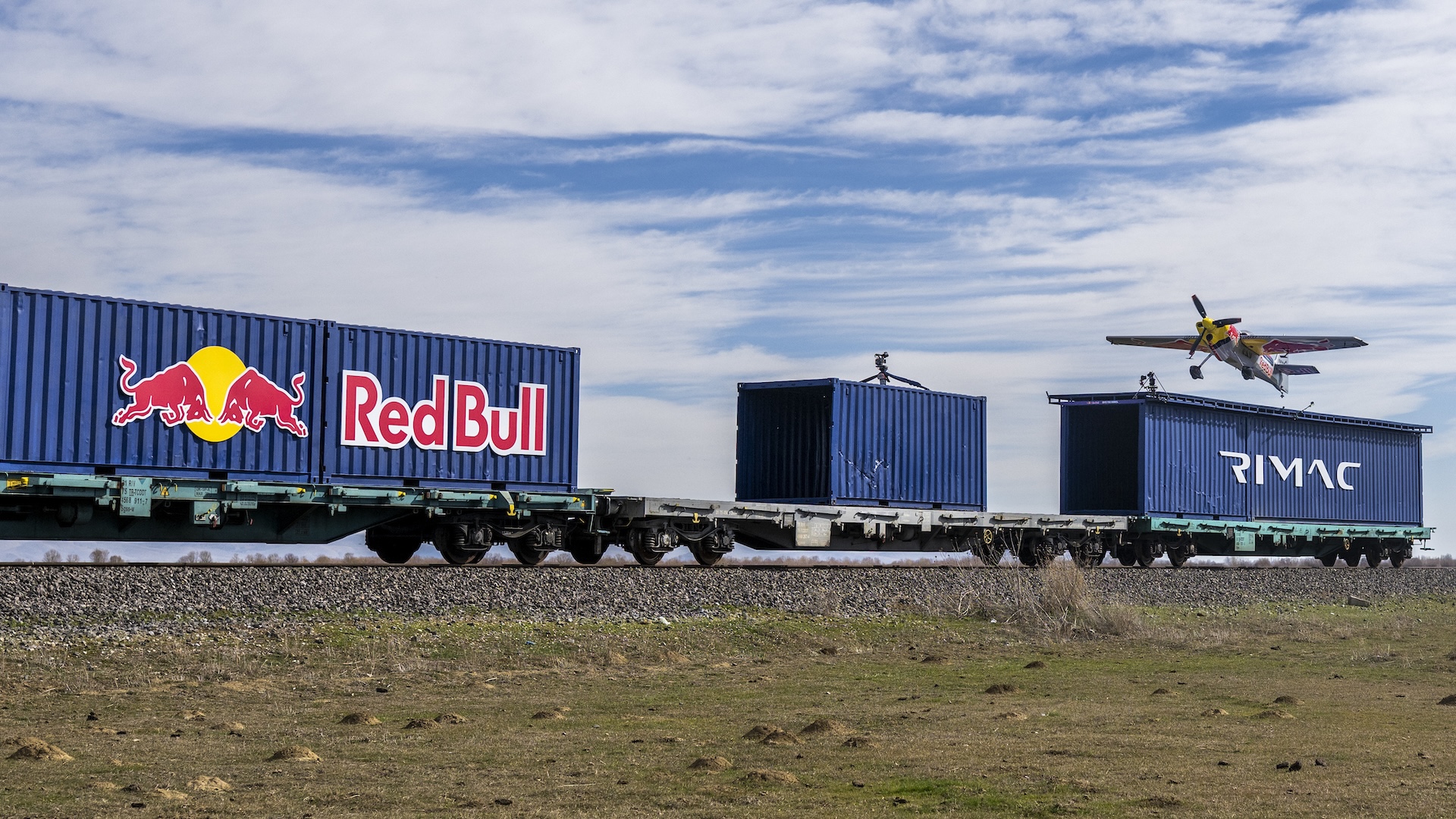
Red Bull Air Race pilot Dario Costa pulled off something no one in aviation history had done before: landing a plane on top of a moving cargo train travelling at 120km/h, then taking off again.
The stunt took place on a 2.5 km railway track in Afyonkarahisar, Türkiye. Costa had just 50 seconds to approach at near-stall speed, manage violent wake turbulence, lock onto a target that was constantly shrinking, land cleanly, and take off again. No second attempt. No reset button.
How Did Rimac Hypercars Become Part Of This Aviation Feat?
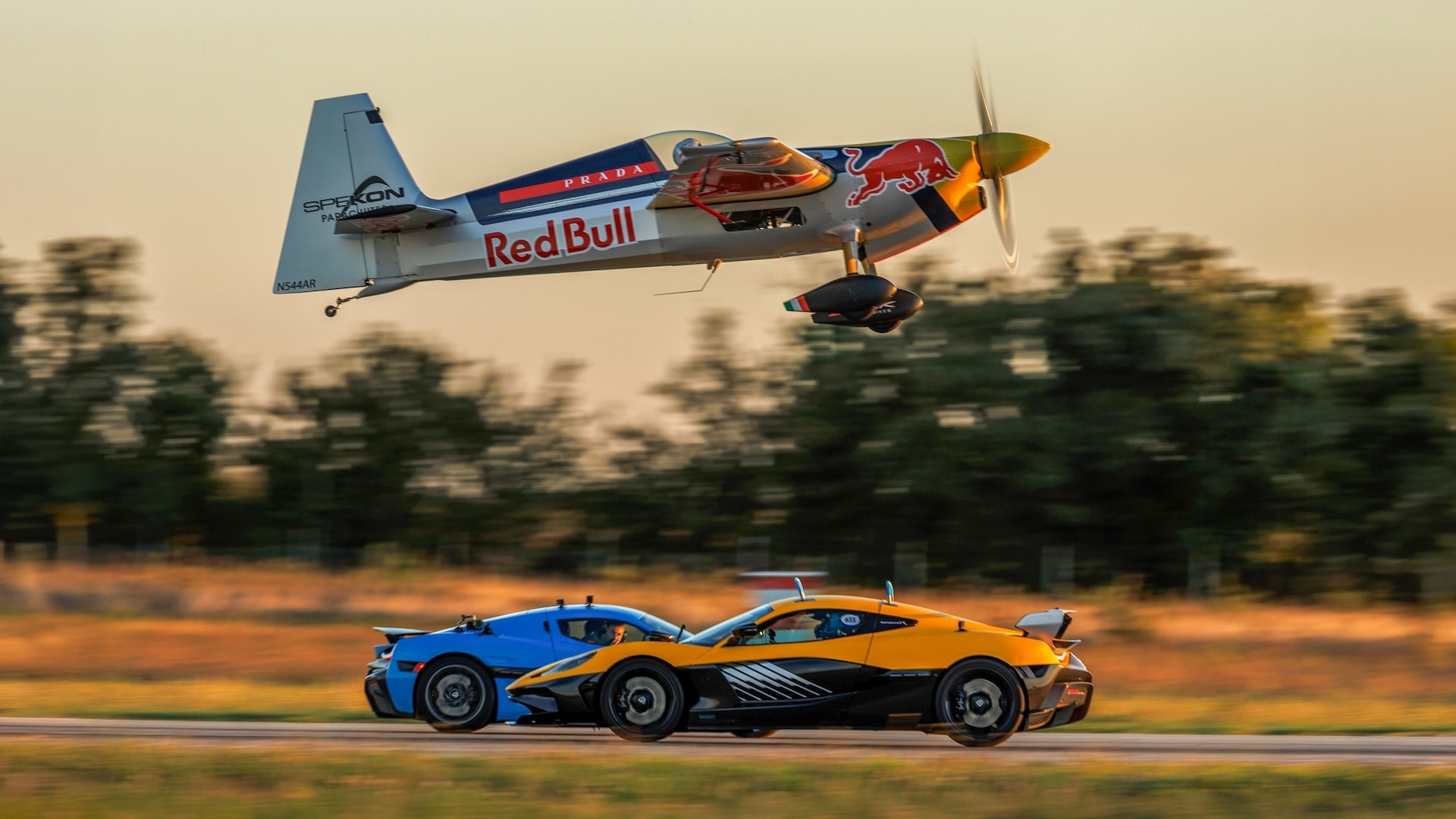
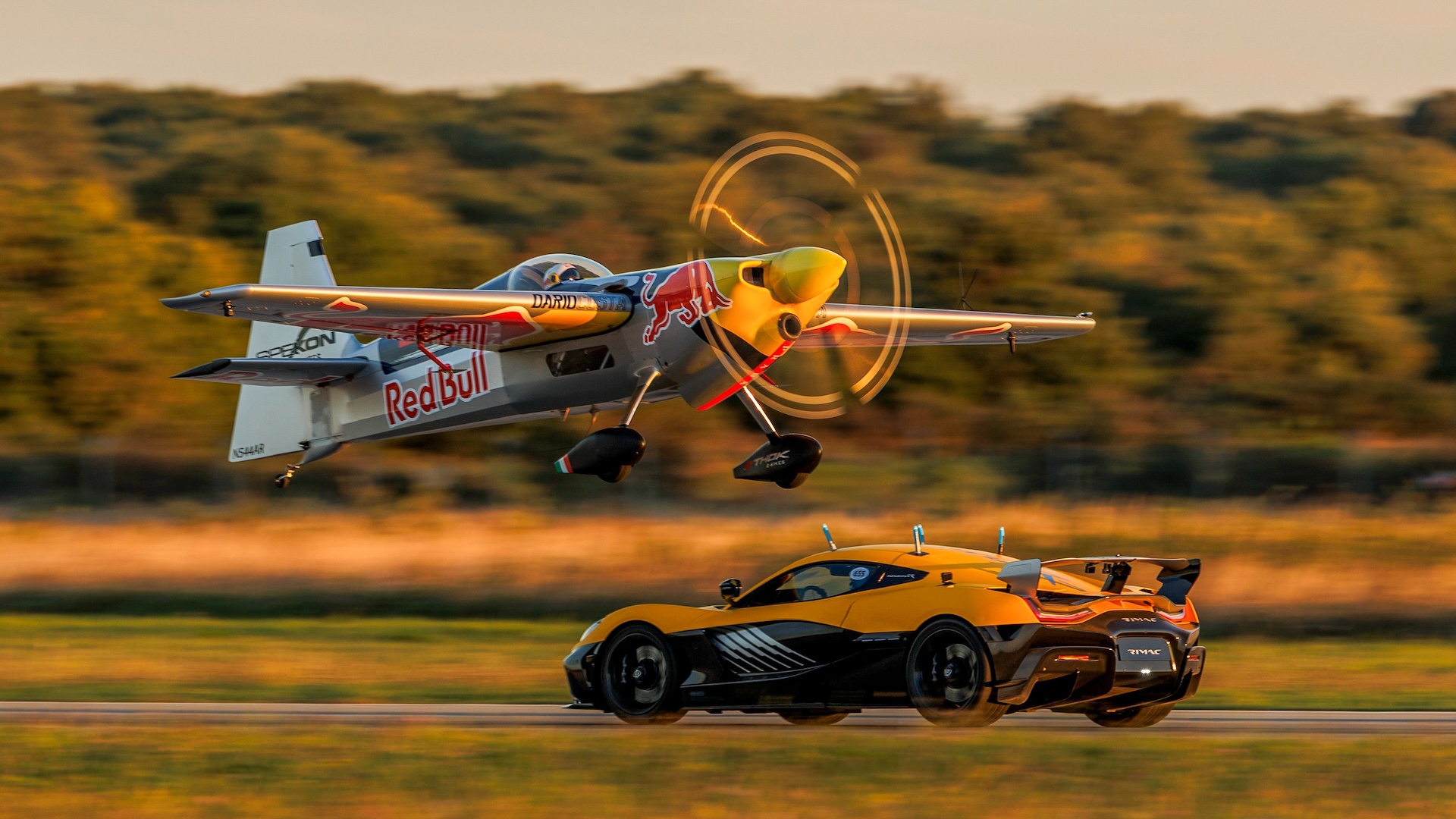
Here’s where it gets properly interesting. To prepare for this world-first, Costa trained in Croatia at Pula Airport with the Rimac Nevera R and the standard Rimac Nevera acting as high-speed, moving reference platforms.
The Nevera R, officially the fastest accelerating production car on the planet, could precisely match the critical speeds Costa needed for his approach. That allowed him to rehearse speed synchronisation, alignment judgement, and reaction timing against a real, moving surface. In simple terms, he trained to land on a hypercar before landing on a train.
What Engineering Support Did Rimac Provide Beyond The Cars?
This wasn’t just about brute acceleration. Under the leadership of Mate Rimac, Rimac’s engineering division designed a fully custom-moulded cockpit seat for Costa’s aircraft. Borrowing from the same composite and ergonomics expertise developed for the Nevera, the team created a seat precisely shaped to Costa’s body and calibrated for maximum stability, control feedback, and reduced fatigue.
As far as publicly known, it marks the first time hypercar-level seat engineering has been applied to a race aircraft cockpit. Rimac engineers also collaborated on aerodynamic optimisation of Costa’s canopy using CFD modelling.
Why Does This Matter For Rimac And Red Bull?
Because this is what both brands stand for: pushing into territory where there’s no rulebook. For Costa, there was no established method to train for landing on a moving train. For Rimac, that meant creating the tools to simulate the impossible. A 1,900+ horsepower electric hypercar capable of hyper-precise speed control became an aviation training instrument.