

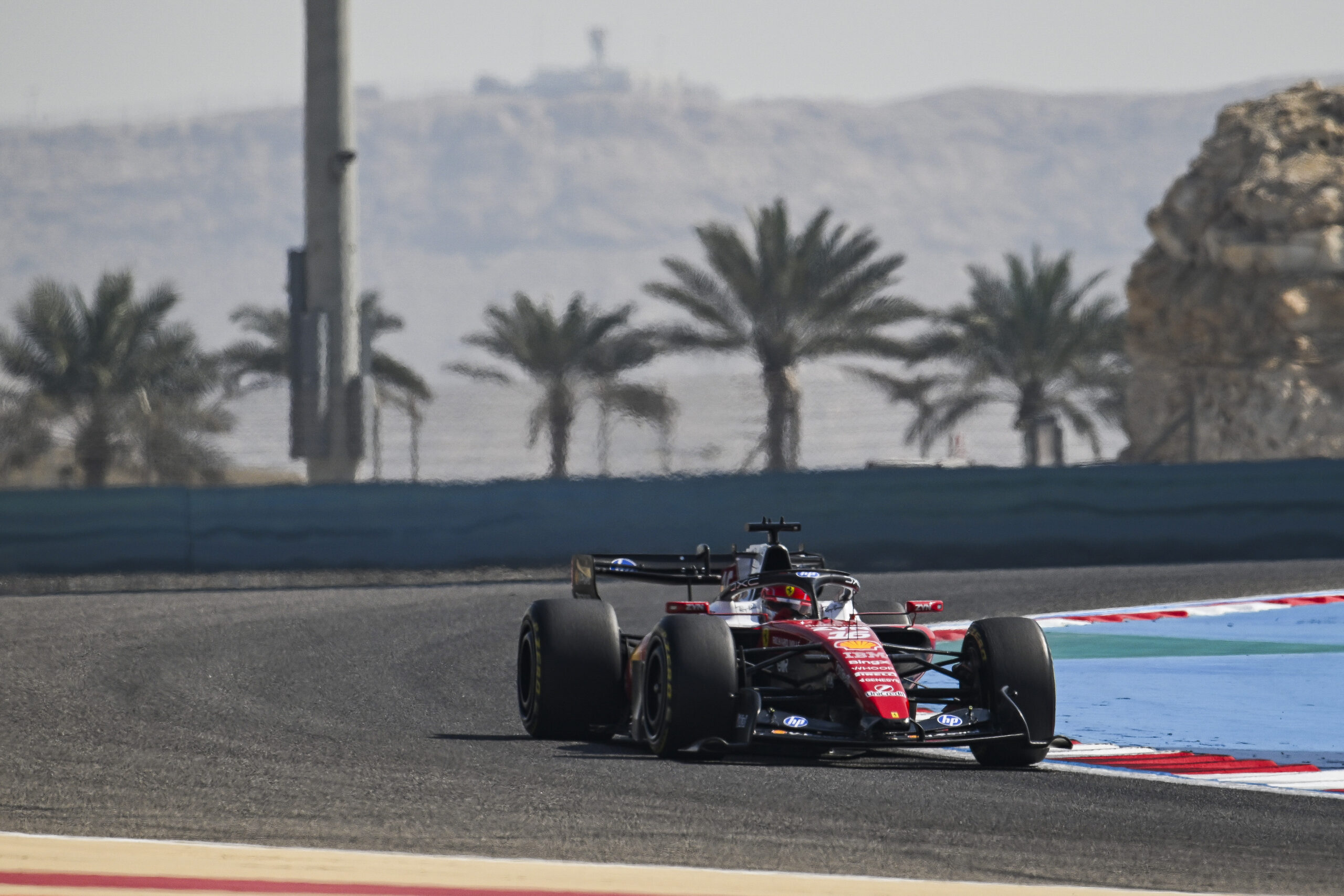
The 2026 Formula 1 pre-season testing programme was unlike anything seen in recent years. Instead of the traditional three-day run, teams completed two separate three-day tests spread across a fortnight, reflecting the scale of the regulatory reset. With both chassis and power unit regulations rewritten, mileage was not simply about optimisation but survival, correlation and understanding entirely new systems. Even after six days of running, several teams left Bahrain knowing there is still more learning to be done.
As always, lap times told only part of the story. Some teams pushed to accelerate adaptation, others concealed performance, and a few were forced into damage-limitation mode. Beneath the surface, however, a competitive picture has already begun to form.
Ferrari appears to have made one of the most aggressive technical leaps. The Scuderia introduced a raft of visible innovations, including a revised diffuser architecture, an unconventional rear-wing concept and a compact turbo solution designed to sharpen launch performance. Their starts during testing were notably strong, suggesting clear gains in initial acceleration. Ferrari’s willingness to bring bold solutions to the track marks a philosophical shift from previous seasons and signals a team determined to capitalise early in the new cycle.
Mercedes, by contrast, looked composed and deliberately understated. The car showed impressive long-run consistency, particularly during race simulations, yet there was a clear sense that the Brackley squad was not revealing their full power unit modes. Observers in the paddock consistently placed Mercedes at or near the front in underlying pace, with strong energy deployment and stable performance across varied conditions. If anything, Mercedes left testing appearing quietly confident rather than spectacular.
McLaren demonstrated solid fundamentals but face questions around weight. The MCL40 logged significant mileage, with Oscar Piastri among the busiest drivers on track, yet the car appeared marginally heavier than its closest rivals. Incremental, less visible updates are expected to address this before the opening rounds. Should that weight reduction materialise, the performance gap to the front could narrow quickly, making McLaren a contender rather than an outsider.
Red Bull’s transition into the new power unit era proved more stable than many anticipated. Pre-season speculation suggested potential struggles, yet the package showed strong reliability and competitive speed in high-energy sections. The car still appears more comfortable in fast corners than in slower complexes, a characteristic that may influence circuit-by-circuit competitiveness, but the overall impression is of a team entering the new regulations on firmer footing than predicted.
In the midfield, Alpine looked revitalised compared with its difficult previous campaign. Benefiting from Mercedes’ power and improved cooling solutions, the car showed respectable race pace, though not yet at a podium-challenging level. Haas also drew attention, bolstered by significant technical collaboration and a broader engineering presence behind the scenes. The team no longer resembles a traditional backmarker as they receive strong support from Toyota, Ferrari, and Dallara and may emerge as a consistent points contender if development continues at this rate.
Audi’s arrival as a works entrant showed promise without polish. Reliability during longer runs was encouraging for a completely new power unit project, but the chassis still appears to be in a developmental phase. The design direction is distinctive, particularly around the sidepod concept, yet refinement will likely continue deep into the early races.
Williams faced a delayed start and carried a noticeable weight disadvantage, estimated to be costing substantial lap time. Updates aimed at addressing this are expected within the opening flyaway rounds, and the team could move forward as the season progresses if those solutions deliver.
Cadillac’s first steps in Formula 1 reflected the reality of a start-up operation. The programme is focused on building foundations rather than chasing immediate results, and the car is likely to spend its early life learning rather than fighting.
Aston Martin endured perhaps the most difficult test period. Limited running, mechanical challenges and energy management issues prevented the team from completing representative simulations. While the chassis concept shows potential, integration of the new powertrain and transmission systems remains an area requiring urgent resolution before performance can be unlocked.
Racing Bulls delivered a steady, unspectacular test, prioritising reliability and data gathering. With rookie Arvid Lindblad joining the line-up, the emphasis appears to be on building consistency rather than chasing early headlines.
Across the grid, one theme stood out: energy management and durability will define the early races of 2026. These cars are complex, the systems are new, and simply reaching the chequered flag may prove decisive in the opening phase of the season.
If testing offered a first glimpse of the competitive order, it also reminded us that Formula 1’s new cycle has only just begun. Melbourne will not provide final answers. It will simply be the first real experiment under racing conditions.
Early prediction from your Paddock Queen? Mercedes and George Russell look poised for a strong opening statement. What are your predictions for the season ahead? Which team and driver will take the first victory? Share your thoughts in the comments and join the discussion.