

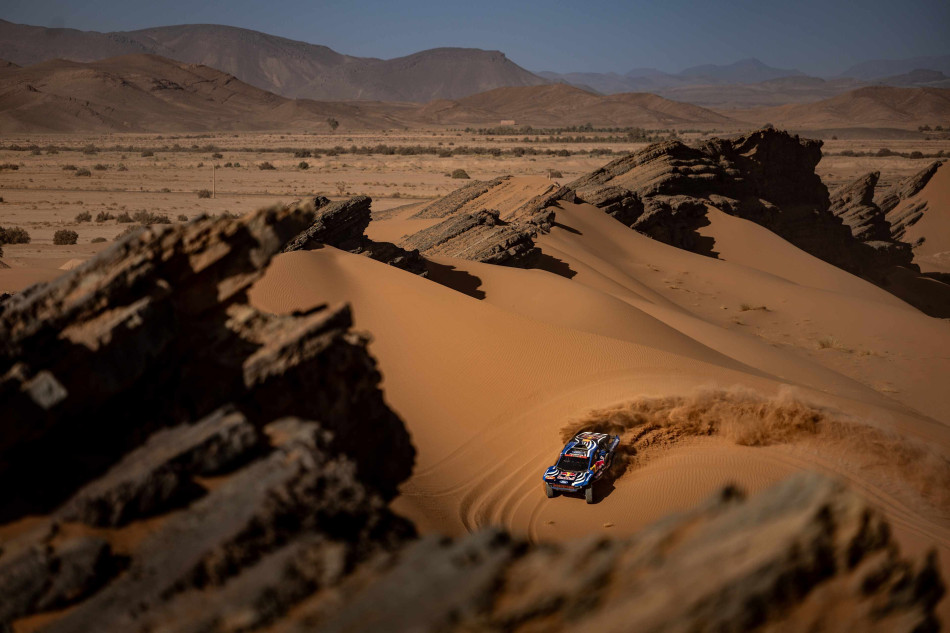
Recognised as the ultimate motorsport challenge and one of the most demanding motorsport events on the planet, the Dakar Rally stands apart as far more than a race. It is a battle of endurance, navigation and resilience, where man, machine and nature are pushed to their absolute limits. Spanning 10 to 15 relentless days and thousands of kilometres across some of the most hostile terrain on Earth, the Dakar unites professionals, amateurs and dreamers in a single pursuit: survival to the finish line.
In 2026, the Dakar returns with one of its most ambitious editions to date. With an expanded route, new competitive formats, enhanced safety measures and a field representing 69 nationalities, the 48th running of the event promises to test every dimension of competition. From Saudi Arabia’s vast deserts to technical canyon stages and marathon bivouacs, Dakar 2026 is set to deliver a defining chapter in the event’s storied history.
The Origins of the Dakar Rally
The history of the Dakar Rally dates back to 1977, when the adventure first took shape. Motorcycle racer Thierry Sabine found himself lost in the Libyan desert during the Abidjan–Nice Rally. Rescued from the sands, he returned to France profoundly captivated by the landscape, determined to share the fascination of the desert with as many people as possible.
Sabine soon conceived a route that would start in Europe, pass through Algiers, cross Agadez, and ultimately finish in Dakar. From this vision came a motto that would define the event’s spirit: “A challenge for those who go. A dream for those who stay behind.” Driven by conviction — and that touch of madness common to all great ideas — the concept rapidly transformed from ambition into reality.
On 26 December 1978, 182 vehicles gathered at the Place du Trocadéro in Paris to begin a 10,000-kilometre journey into the unknown for the inaugural edition. Of the 74 competitors who reached the Senegalese capital, it was Cyril Neveu who claimed victory, riding a Yamaha 500 XT and inscribing the first name on what would become the honours list of the world’s greatest rally. From that moment on, the Dakar continued to evolve, constantly pushing boundaries and captivating the public with stories of ordinary adventurers defying extreme conditions with limited resources.
In 1986, the rally suffered a profound loss with the death of its founder and guiding force, Thierry Sabine. He died as he lived — pursuing adventure — when his helicopter crashed into the Sahara dunes during a sandstorm while searching for competitors. Yet his legacy endured. The event he created continued to grow, establishing itself as the largest and most demanding annual rally-raid in the world.
The Dakar Rally has taken place every year since its inception, with the sole exception of 2008, when it was cancelled due to security concerns. Each edition has added new chapters to its extraordinary history, marked by feats of human endurance and names that have become legend. Among them, Stéphane Peterhansel stands alone with an unparalleled 14 victories across motorcycle and car categories. Ari Vatanen dominated an era with four consecutive wins from 1987 to 1991. And in 2001, Jutta Kleinschmidt made history by becoming the first woman to win the Dakar overall, driving a Mitsubishi, having already broken barriers with a stage victory in 1998.
Looking back, the Dakar’s story can be divided into three distinct chapters, shaped by the landscapes it has crossed and the people it has inspired, a legacy of adventure that continues to define the very essence of rally-raid competition.
Dakar Rally Journey Through the Years
From its inspired beginnings in Europe and its bold expansion into the harsh yet mesmerising landscapes of Africa, the Dakar Rally steadily grew in stature, mythology and global appeal. Crossing 24 countries across Europe and Africa, the event united competitors and fans through a shared spirit of adventure — a collective willingness to venture into the unknown. As the rally’s worldwide profile expanded, however, so too did the logistical and security challenges that came with its scale and reach.
That tension reached a breaking point in 2008, when serious security threats cast a shadow over what would have been the rally’s 30th consecutive edition, forcing its cancellation. Yet the Dakar spirit was never extinguished. Instead, it evolved. In 2009, the rally rose again, reborn on the South American continent, where it was embraced with extraordinary passion by a new generation of motorsport fans.
Over the following decade, the Dakar carved an unforgettable path across South America, stretching from the Pacific to the Atlantic and traversing Argentina, Chile, Peru, Bolivia and Paraguay. Each year, an estimated four million spectators lined the routes, witnessing competitors battle a landscape as diverse as it was unforgiving. Towering sand dunes, extreme altitude, vast salt flats and sudden floods became defining features of this era, as South America etched its own indelible chapter into Dakar history.
In 2020, the Dakar Rally entered a new era with its move to Saudi Arabia, opening a fresh and ambitious chapter in the event’s evolution. The Kingdom’s vast and varied geography quickly proved to be a natural stage for rally-raid competition, presenting competitors with relentless tests across deserts, rocky plateaus, coastal plains and rugged mountain ranges. This terrain pushed both human endurance and mechanical resilience to their limits, reinforcing the Dakar’s reputation as the ultimate off-road challenge.
This modern chapter has also ushered in the Dakar Future Programme, a forward-looking initiative aimed at modernising the event while addressing environmental and social responsibility. Designed to ensure the long-term sustainability of the rally, the programme reflects Dakar’s commitment not only to innovation and competition, but to leaving a meaningful and positive legacy in the regions it visits.
2026 Dakar Rally Route
For the seventh consecutive year, the Dakar Rally returns to Saudi Arabia, continuing its exploration of one of the most expansive and demanding rally-raid landscapes on the planet. The 48th edition of the event unfolds over a colossal 8,000-kilometre loop starting and finishing in Yanbu on the Red Sea coast, with nearly 5,000 kilometres of competitive special stages. It is a route designed for balance rather than spectacle alone — relentless, varied and deeply unforgiving — and one that raises the bar for endurance through two significant regulatory evolutions.
The first is the introduction of Marathon Refuge stages in both Week 1 and Week 2. Blending the philosophy of traditional marathon stages with the intensity of the 48 Hours Chrono, these sections isolate competitors for two full days in stripped-back bivouacs, with no external mechanical assistance. Survival depends entirely on self-reliance, strategic decision-making and cooperation between rivals — a pure expression of the Dakar ethos. The second change sees selected stages feature mid-stage service points, allowing limited tyre changes and rapid repairs, subtly reshaping strategy while maintaining the rally’s brutal character.
Further refinements include the extension of separate FIA and FIM routes to four days, a measure aimed at improving safety and flow for all competitors. While this increases comfort and reduces congestion, it also significantly heightens the challenge for leading cars tasked with opening the road across untracked terrain.
The rally begins in Yanbu, where final scrutineering takes place on January 1 and 2, followed by the official opening ceremony on January 3. A short but decisive prologue featuring 23 kilometres of special stages then sets the competitive order, with the fastest crews earning the strategic advantage of choosing their starting positions for Stage 1.
Week 1 immediately asserts its authority. Stages 1 to 3 sweep north into the dramatic landscapes surrounding Al Ula and Hail, where blackstone, fast gravel and narrow canyons place early stress on tyres, suspension and concentration. Stages 4 and 5 form the first two-day Marathon Refuge, forcing crews to manage fatigue, mechanical wear and navigation as the rally pushes deeper into the desert.
The first half of the rally peaks with Stage 6 — a 920-kilometre behemoth and the longest stage of Dakar 2026. Featuring towering dunes and deep sand corridors, it is a defining endurance test before the field reaches the rest day in Riyadh. From there, the route turns south toward Wadi Ad-Dawasir, a region famed for its vast, rolling dune systems.
Stages 7 and 8 are once again among the most punishing of the entire event. Stage 8, at 481 kilometres, stands as the longest selective section of the rally, demanding absolute precision across sustained, high-risk terrain. Stages 9 and 10 introduce the second Marathon Refuge, with distinct bike and car routes placing renewed emphasis on navigation. Stage 10, in particular, delivers an extended and relentless dune sequence designed to exhaust both man and machine.
Stage 11, running from Bisha to Al-Henakiyah, is already being spoken of as the rally’s decisive moment. Dense canyon networks, concealed tracks and countless intersections create a navigation minefield where one mistake could erase weeks of effort. The final push follows with Stages 12 and 13, fast yet technical runs back toward the coast.
Even the closing day offers no guarantee of safety. A final competitive section along the Red Sea remains capable of reshaping the standings in the very last kilometres. With its circular layout, dual marathon refuges and some of the longest Saudi stages ever assembled, the 2026 Dakar Rally stands as a two-week war of strategy, resilience and survival — where only the strongest will reach the finish line.
Dakar Classic and Dakar Saudi Next Gen Return
Alongside the modern Dakar Rally, the Dakar Classic returns for its sixth edition, reaffirming the event’s commitment to honouring its rich heritage. Around 100 historic vehicles from the 1980s, 1990s and early 2000s will take to the desert on a record-breaking 7,280-kilometre route, including 4,162 kilometres of timed sections. Far from a nostalgic parade, the Dakar Classic is a demanding regularity competition in which crews must maintain precise average speeds while navigating three distinct test formats: regularity stages, navigation challenges and dune sections.
New for 2026 is the introduction of super-regularity tests, significantly raising the level of difficulty. These additions demand heightened precision, adaptability and stamina, pushing both experienced Dakar veterans and enthusiastic newcomers to their limits. The Classic category continues to prove that endurance, strategy and mechanical sympathy remain timeless pillars of rally-raid competition.
While celebrating its past, Dakar also reinforces its vision for the future. Mission 1000, launched in 2021 under the Dakar Future Vision initiative, returns once again as a dedicated platform for alternative energy vehicles. Competing across a 1,000-kilometre course in Saudi Arabia, these prototypes are tested in real-world rally conditions, transforming the desert into a living laboratory for sustainable mobility and next-generation technologies.
Equally important is the return of the Dakar Saudi Next Gen programme, a six-day immersive experience designed to nurture the Kingdom’s emerging motorsport talent. Guided by Dakar experts, participants gain first-hand exposure to the demands of rally-raid competition, with the clear ambition of developing future Saudi champions capable of following in the footsteps of 2025 winner Yazeed Al Rajhi.
In total, Dakar 2026 will bring together 812 competitors and 433 vehicles across all categories, underscoring the scale, diversity and global significance of the world’s toughest rally-raid.
2026 Dakar Rally Participants
The scale of Dakar 2026 is reflected in a vast and diverse entry list that brings together the very best of rally-raid competition. The field includes 118 motorcycles, among them 27 entries in the Original by Motul category, where riders compete without external assistance. Alongside them are 73 Ultimate category vehicles, 38 Challengers, 43 SSVs, 46 trucks and eight Stock vehicles. The Dakar Classic adds further depth, featuring 75 cars and 24 trucks, while the forward-looking Mission 1000 class will include seven motorcycles and one truck.
Beyond the machinery, Dakar 2026 is equally defined by the people who take part. The entry list features 39 female competitors, including 19 in the Dakar Classic, alongside 144 rookies embarking on their first Dakar adventure and 107 Dakar Legends returning to write another chapter in their storied careers. In total, competitors will represent 69 nationalities, reinforcing Dakar’s status as the most international and inclusive event in off-road motorsport.
All of them come together with a shared objective: to push their limits and contribute to the ever-evolving legacy of this extraordinary rally.
An Event Like No Other: Logistics and Organisation
While the Dakar Rally unfolds over two relentless weeks, separated by a single rest day, the true scale of the event begins long before the ceremonial start. Dakar is as much a logistical and organisational feat as it is a sporting challenge, requiring months of preparation behind the scenes.
Approximately one month before the rally, a significant portion of the competing vehicles — along with equipment belonging to the organisers — are shipped from Europe to the host country in a coordinated logistical operation. Around a week before the start, competitors, teams and officials arrive in Saudi Arabia, where preparations intensify ahead of the opening stages.
This leads into the mandatory scrutineering process, held over two days and divided into administrative and technical inspections. Administrative checks ensure compliance with regulatory requirements, including licences, medical documentation and entry validation. Technical scrutineering focuses on the vehicles themselves, verifying safety systems, navigation equipment and conformity with class regulations.
This phase also provides teams with a final opportunity to fine-tune set-ups, recheck critical components and complete last-minute mechanical work before the rally begins in earnest. Once scrutineering is complete, all competitors attend the official race briefing, where crucial information regarding the route, regulations and safety protocols is delivered.
Only after this exhaustive process can competitors finally roll onto the starting podium, tackle the prologue and begin their journey into the desert, where preparation gives way to survival, strategy and endurance.
The Mindset of Dakar: A Battle Between Man and Machine
For those who take the start, the Dakar Rally represents the most intense and demanding two weeks of their lives. No matter where the race is held, its defining pillar has never changed: endurance. Endurance of the body, the mind and the machine.
Covering thousands of kilometres across some of the harshest terrain on earth, competitors are pushed to confront relentless physical fatigue, mental strain and mechanical attrition. It is this uncompromising test that sets Dakar apart from every other form of motorsport. The challenge is so severe that it is not uncommon for more than half of the starting field to fail to reach the finish line.
Yet one of Dakar’s most remarkable qualities lies in its openness. Unlike many elite racing series, Dakar is not reserved solely for champions. The majority of its competitors are amateurs. Entry is governed not by reputation, but by commitment: participants must be over 18 years of age and hold an FIA international licence for cars and trucks, or a FIM international licence for motorcycles.
This accessibility draws an extraordinary cross-section of humanity to the rally each year. From seasoned professionals to first-time privateers, and occasionally even public figures, all arrive with the same ambition to test themselves against the ultimate challenge. What unites them is the spirit of Dakar, a shared understanding that survival often outweighs outright competition.
That spirit is most evident in the camaraderie forged along the route. Despite racing against the clock and one another, competitors routinely stop to assist rivals in distress, knowing that tomorrow the roles may be reversed. In Dakar, cooperation is not weakness, it is survival.
Each evening, this sense of brotherhood converges at the bivouac. More than a campsite, the bivouac is a travelling village that follows the rally across the desert. Between 2,500 and 3,000 people gather each night, including competitors, mechanics, engineers, officials, medical teams and media. It is here, under floodlights and open skies, that repairs are made, stories are shared, and the true essence of Dakar reveals itself, a race not just against terrain and time, but against one’s own limits.
Stages of Dakar: The Difference Between Special and Liaison Sections
Every day at the Dakar Rally begins and ends at the bivouac, but what unfolds in between is divided into two very distinct elements: the Special stage and the Liaison. Together, they define the rhythm of Dakar and the unique demands placed on every competitor.
The Special stages are the heart of the rally. These are the fully timed competitive sections, usually off-road and carved through some of the most hostile terrain imaginable. It is here that the race is truly fought. Across sand dunes, rock fields, and high-speed tracks, competitors push to extract maximum performance while walking a fine line between speed and survival. A single mistake can end a campaign instantly.
Times recorded in the Special stages, combined with any penalties incurred, determine the overall classification. Every second matters. Every decision carries weight. And every kilometre demands absolute focus.
The sections before and after the Special stages are known as Liaison stages. These are non-competitive road sections used to connect the bivouac to the start or finish of the Special. For logistical, safety and security reasons, it is not always possible for the timed section to begin or end directly at the bivouac. During these Liaisons, competitors must respect strict time schedules and road regulations, with penalties imposed for early or late arrival.
Navigation is the defining skill that links both sections, and one of the core pillars of the Dakar Rally. Dakar is not simply a race of speed, it is an exercise in orienteering at extreme pace. Competitors must interpret roadbooks, identify waypoints and thread their way through a constantly changing landscape, all while maintaining momentum.
Success lies in balance. The objective is not only to be fast, but to be precise. Avoiding navigational errors is critical, as a wrong turn can lead to time loss, penalties, mechanical damage or complete disorientation in the desert. At Dakar, speed is vital but discipline, judgement and attention to detail are what ultimately carry competitors to the finish.
Navigation in the Wild: How to Read the Roadbook
To survive the Dakar Rally, speed alone is never enough. Navigation is the true differentiator, and at the centre of it all lies the roadbook the single most important tool in a competitor’s arsenal.
Each competitor is issued with a digital roadbook, provided by the organisers and distributed every morning just five minutes before the start of the stage. Until that moment, the route remains strictly confidential. There is no overview map, no advance briefing of the terrain ahead. Dakar reveals itself kilometre by kilometre, instruction by instruction.
The roadbook does not show the entire course. Instead, it delivers a precise, step-by-step navigation guide between checkpoints and waypoints. Only by following its instructions and validating each waypoint during the stage does the full route gradually unfold. This is what makes Dakar as much an exercise in navigation as it is a test of endurance.
The roadbook is read from left to right and is divided into three distinct columns. The left-hand column displays distance information. The large number indicates the total kilometres completed within the stage, while the smaller figure shows the distance from the previous navigation point. This column also highlights the start and end of speed-controlled zones, as well as checkpoints and waypoints.
At the centre is the tulip, a schematic drawing representing the track, terrain and key landmarks at that exact point on the course. Each tulip is entered from the bottom and must be interpreted with precision. It visually communicates what lies ahead: a junction, a dune, a track split, or a hidden change in direction.
The right-hand column provides observations and critical supplementary information. This includes compass headings (CAP), speed limits, waypoint indicators and warnings. These notes rely on a specific lexicon of symbols established by the organisers, a language every competitor must master to avoid costly mistakes.
As much as Dakar is a physical battle for riders, drivers and navigators, it is equally a mental challenge. Staying focused, alert and disciplined over two relentless weeks is essential. Fatigue blurs judgement, and in Dakar, a moment of inattention can mean getting lost, missing a waypoint or ending a rally.
Navigation is supported by an integrated digital tablet, which combines all essential tools into a single unit. This includes the roadbook itself, a resettable digital odometer and speedometer to track distance accurately, and a compass providing real-time CAP headings. The tablet also houses the Sentinel alert system, which warns competitors of approaching vehicles to facilitate safe overtaking and reduce risk in opposing traffic zones.
In addition, a GPS system operates within defined radiuses, guiding competitors toward waypoints and automatically validating them once reached. This ensures precision while still demanding accurate navigation.
Safety in the Dakar Rally
Beyond navigation, safety remains paramount. Despite the vast remoteness and apparent solitude of competing in the Dakar Rally, no competitor is ever truly alone. Throughout the event, real-time data is continuously transmitted to race headquarters (PCO) based both in Paris and on site in Saudi Arabia. This allows organisers to monitor every vehicle’s position at all times and respond immediately to any potential incident.
If a competitor suddenly stops on stage, the PCO can initiate direct contact via the tracking system. Should the competitor be unable to respond or be injured, medical intervention is triggered without delay. Depending on the severity and location, the PCO may dispatch a medical helicopter, ambulance or ground-based medical unit, while also requesting assistance from a nearby competitor if necessary.
Mutual assistance is deeply ingrained in the DNA of the Dakar Rally. Helping an injured competitor is not only encouraged but protected within the sporting regulations. Competitors do not lose time for stopping to assist in medical emergencies, reinforcing the unique camaraderie that defines the event.
From the moment a distress signal is activated, the response time is remarkably swift. On average, medical teams reach injured competitors in under 15 minutes — a response time faster than in many major world cities, including Paris. Injured riders and drivers are then transported to the medical centre at the bivouac for further evaluation and treatment.
The Dakar medical operation is extensive and highly specialised. Around 85 medical professionals are deployed, including 35 doctors and specialists such as surgeons, emergency physicians, radiologists and anaesthetists. They are supported by approximately 25 nurses and 10 osteopaths. Each bivouac hosts a fully equipped field hospital capable of handling a wide range of medical interventions, from trauma care to diagnostic imaging.
This medical network is reinforced by six medical helicopters, eleven medical cars, one medical aircraft and dedicated firefighting teams equipped with vehicle extrication tools. Together, they form one of the most comprehensive medical operations in global motorsport.
Safety is further enhanced through mandatory onboard systems. All race vehicles are fitted with the Sentinel alert system, which warns competitors of approaching vehicles to facilitate safe overtaking and reduce the risk of collisions, particularly in sections with opposing traffic.
Each vehicle is also equipped with an organiser-supplied GPS unit that consolidates navigation and safety into a single device. This system provides the digital roadbook, distance tracking, compass headings, waypoint validation and speed restriction alerts, ensuring competitors have accurate, real-time information throughout each stage.
The Dakar Rally’s commitment to safety continues to evolve. Since 2021, all motorcycle competitors have been required to wear airbag jackets, significantly reducing the risk of serious injury. Additional measures have also been introduced, including speed reductions in high-risk areas and audible warning alerts placed before particularly dangerous sections of the course.
While the Dakar remains one of the toughest endurance events on the planet, its safety framework reflects decades of learning, innovation and a relentless commitment to protecting competitors, without ever compromising the spirit of adventure that defines the rally.
2026 Dakar Rally Competition Categories
The Dakar Rally features four distinct competition categories, each demanding a unique blend of skill, endurance and mechanical resilience. Competitors can enter on motorcycles, cars, trucks or lightweight cross-country vehicles (side-by-side vehicles), together forming the most diverse competitive field in global motorsport.
The Motorcycles
The motorcycle category is divided into two primary groups. At the pinnacle sits RallyGP, home to the elite of rally-raid racing. These factory-backed riders represent the highest level of competition and are instantly recognisable by their distinctive yellow number plates.
Alongside them is Rally2, a category that forms the backbone of the motorcycle field. While many Rally2 riders are amateurs, entry is governed by a strict selection process to ensure all competitors possess the physical, mental and technical capability required to survive the Dakar’s extreme conditions.
Within the motorcycle category also sits Original by Motul, one of the purest expressions of the Dakar spirit. Competitors in this class race entirely without assistance, managing repairs and maintenance alone with limited tools and resources. As a result, a dedicated set of sporting regulations applies to this group, placing an even greater emphasis on self-reliance and endurance.
The motorcycle category has produced some of Dakar’s most iconic names, including inaugural winner Cyril Neveu, five-time champion Marc Coma, and Stéphane Peterhansel, who claimed six motorcycle victories before becoming the most successful competitor in Dakar history.
The Cars
The car category is split into two distinct groups, each crewed by a driver and navigator.
The first consists of prototype vehicles, built to FIA technical and safety regulations. While they may carry bodywork resembling production models, these machines are purpose-built for competition, heavily modified and engineered for maximum performance. They represent the ultimate expression of rally-raid technology and are the fastest vehicles on the Dakar route.
The second group is the Stock category, based on production vehicles available through dealerships. Although rooted in road-going models, these cars undergo extensive safety-focused preparation, including roll cages, racing seats, reinforced fuel systems and modifications to suspension, chassis and tyres to withstand the brutality of the Dakar.
Legends of the car category include Stéphane Peterhansel, who added eight car victories to his motorcycle success, Nasser Al-Attiyah with five wins, Carlos Sainz with four, and Jutta Kleinschmidt. Kleinschmidt made history in 1998 as the first woman to win a Dakar stage and surpassed that achievement in 2001 by becoming the first female overall winner behind the wheel of a Mitsubishi.
The Trucks
The truck category, like the cars, is divided into two groups and is contested by three-person crews consisting of a driver, navigator and mechanic.
The first group comprises the race trucks, purpose-built to compete for outright victory in the truck classification. Although their external design often reflects the brand identity of production models, these vehicles are lightweight, immensely powerful and almost completely empty inside, with cargo holds stripped for performance. For safety reasons, their top speed is limited, yet they are still capable of overtaking cars during competition.
The second group consists of fast assistance trucks, which act as mobile workshops providing critical support to race vehicles across all categories. While their primary role is assistance, competition among the assistance trucks themselves is often fierce, with crews racing just as hard to reach the next bivouac.
The truck category has been dominated by legendary figures such as Vladimir Chagin, a seven-time winner, and Karel Loprais, who claimed six Dakar victories.
Lightweight Cross-Country Vehicles
Formerly grouped under the car category, lightweight cross-country vehicles now compete in their own dedicated class, introduced in 2017 and rapidly growing in popularity.
Designed to offer a more accessible and cost-effective route into rally-raid racing, this category has become a gateway for amateur competitors while also serving as a talent-spotting platform for major teams and manufacturers.
As with cars, lightweight cross-country vehicles are split into two types. Challengers are lightweight prototype machines, while SSVs are based on series production vehicles. Both are driven by a driver and navigator and demand exceptional precision, navigation skill and mechanical sympathy across Dakar’s unforgiving terrain.
Together, these four categories define the Dakar Rally’s unique competitive landscape — a race where factory-backed champions and private adventurers share the same stages, united by endurance, resilience and the relentless pursuit of the finish line.
A Passion for All
Despite the wide range of categories through which competitors choose to enter, every participant at the Dakar Rally is united by the same fundamental challenge: confronting some of the most unforgiving terrain on the planet. Regardless of machinery or classification, Dakar demands the absolute limit from both man and machine, pushing endurance, resilience and resolve to breaking point.
While the entry list includes professional teams backed by major automotive manufacturers — drawn to Dakar as the ultimate proving ground for vehicles, technology and innovation — the heart of the rally remains firmly rooted in its amateurs and privateers. The majority of the field is made up of passionate individuals who arrive not with corporate armies behind them, but with determination, preparation and belief.
Whether it is a factory-backed prototype engineered at the highest level or a buggy painstakingly assembled in a private garage, Dakar has always been more than a race. It is an expedition into the unknown, a journey of self-discovery that reshapes those who dare to take part and continues to captivate generations of fans more than four decades after its creation.